

'/%3E%3Cpath%20fill='%23b2b2b2'%20d='M241%20382q0%2016%2017%2026%2017%2011%2042%2011t42-11q16-11%2017-26V269H241'/%3E%3Cpath%20fill='%239f7e00'%20d='M241%20379q0%2014%208%2023%209%209%2021%209%2014%200%2021-9%209-9%209-23V269h-59'/%3E%3Cpath%20d='M241%20339v-70h59v110q0%2014-9%2023l-6%205v-68h-15v72q-8%200-14-4v-68zm59%2040c0%2022%2015%2032%2029%2032%2021%200%2030-18%2030-32v-40h-59'/%3E%3Cpath%20fill='%239f7e00'%20d='M266%20277v5h2v12h-3v-5h2v-5h-9v5h2v5h-4v9h3v18h-5v10h34v-10h-5v-18h3v-9h-4v-5h2v-5h-9v5h2v5h-3v-12h2v-5zm42%20101q0%2010%206%2017%206%206%2015%207%2010-1%2016-7%206-7%206-17v-29h-43'/%3E%3Ccircle%20fill='%230044ad'%20cx='329.5'%20cy='372'%20r='6'/%3E%3Cellipse%20fill='%230044ad'%20cx='300'%20cy='340'%20rx='16'%20ry='21'/%3E%3C/svg%3E)
The beauty of the Italian language also lies in its musicality, in its clear and melodious pronunciation that has fascinated foreigners for centuries. However, some phonetic characteristics of Italian represent real challenges for non-native speakers. Mastering these aspects will allow you to distinguish yourself from the mass of Italian students and communicate with surprising naturalness.
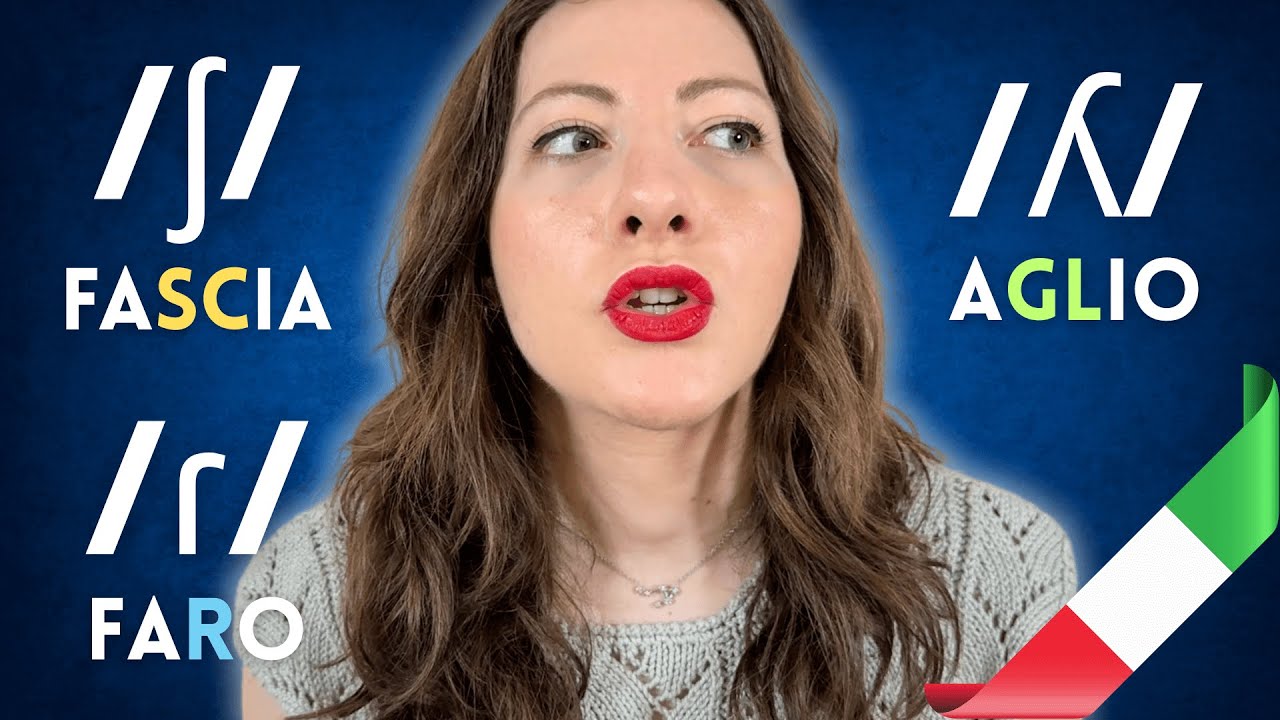
Pronounce Italian Like a True Native Speaker
Double Consonants: The Supreme Challenge of Italian Pronunciation
The double or geminated consonants are perhaps the most difficult aspect of Italian pronunciation for almost all foreigners. The difference between these pairs of words is fundamental for comprehension, but often appears almost imperceptible to untrained ears:
- pala [shovel] and palla [ball]
- caro [dear] and carro [cart]
- casa [house] and cassa [box]
- nono [ninth] and nonno [grandfather]
- eco [echo] and ecco [here is]
The secret of double consonants lies in the duration of the sound: the double consonant should be held approximately twice as long as the single one, creating a slight internal pause in the word. For example, pronounce palla as if it were pal-la, making a small interruption between the two syllables without completely breaking the sound.
Advanced practical exercise: Recite this tongue twister first slowly, then gradually faster: “Trentatré trentini entrarono a Trento tutti e trentatré trotterellando”. Focus on the double consonants “tt” and “tr” to train your tongue muscles.
The “SC” Group Followed by “I” or “E”: The Sound That Doesn’t Exist
The “sc” sound followed by “i” or “e” (as in scienza, scelta, sciare, pesce) creates a /ʃ/ phoneme that doesn’t exist in many languages of the world. This represents a particular challenge for speakers of languages like Spanish, German, or English.
Many foreigners make the mistake of pronouncing it separately as s+c, while in reality it’s a unique and fluid sound, similar to the English “sh” but more “soft” and less sibilant. The tongue should lightly touch the palate, not the teeth.
Learning technique: Start by pronouncing the English “sh” sound, then gradually soften the sound until you make it more musical. Try with this sentence: “Sciascia lascia scivolare il pesce fresco nella scialuppa scivolosa”.
The “GL” of “Aglio” and “Famiglia”: The Complex Palatal Sound
The “gl” sound followed by “i” produces a lateral palatal phoneme /ʎ/ that represents one of the greatest difficulties for foreigners. Words like aglio, foglio, famiglia, voglio require a specific articulation technique.
To pronounce it correctly, you need to position your tongue flattened against the palate, not against the teeth as you would for a normal “l”. The resulting sound should be similar to that of “million” in English, but much softer and more fluid.
Progressive exercise: Start with simple words like agli and egli, then move to more complex sentences: “Voglio una foglia d’aglio e un coniglio bianco in famiglia”. Repeat focusing on tongue position.
The “GN” of “Gnocchi”: The Palatal Nasal Sound
The “gn” combination (as in gnocchi, agnello, bagno, montagna) produces a palatal nasal sound /ɲ/ that is particularly challenging for many foreigners. This sound exists in Spanish (ñ) and Portuguese (nh), but is completely absent in English, German, and many other languages.
The correct technique involves pronouncing an “n” with the tongue against the palate, creating a peculiar nasal resonance. The secret is to never separate the sound into g+n, but maintain it as a single phoneme.
Intensive training sentence: “Ogni gnocco nel bagno ha bisogno del compagno che sogna la montagna”. Practice slowly, then accelerate while maintaining sound fluidity.
The Italian “R”: Between Trill and Tap, the Secret of Naturalness
The Italian “r” presents two main variants: the alveolar trill /r/ (with multiple tongue beats) and the alveolar tap /ɾ/ (a single beat). The choice between the two depends on the position in the word and the phonetic context.
Many foreigners pronounce the Italian “r” like a French “r” (uvular, produced in the throat) or American (retroflex, with the tongue curled), immediately betraying themselves as non-native speakers. The Italian “r” must be produced with the tip of the tongue touching the alveoli (the area behind the upper teeth).
Perfection exercise: Start with the rapid “t-t-t-t” sound, then gradually transform it into “tr-tr-tr-tr”. Practice with: “Tre tigri contro tre tigri, trentatré tronchi di tronco, terra tremula tra le torri”.
If you’re interested in some examples on Italian “R” pronunciation, read this article!
Word Stress: Italian Rhythms and Patterns
Italian stress follows four main patterns that determine the natural rhythm of the language:
- Tronche words (stress on the last syllable): città, perché, caffè, università
- Piane words (stress on the penultimate): casa, amore, finestra, ragazzo
- Sdrucciole words (stress on the antepenultimate): tavolo, medico, rapido, musica
- Bisdrucciole words (stress on the pre-antepenultimate): telefonano, celebrano, abitano
Foreigners tend to transfer the stress patterns of their mother tongue onto Italian, creating an unnatural effect. French speakers tend to stress the last syllable, while English speakers often favor the first.
Rhythm exercise: “Àbitano in una càsa mòlto ùmile ma accogliénte in cittá, vicìno alla univérsitá”. Read aloud clearly emphasizing each tonic stress.
Stop reading Italian.
Start speaking it.
Online lessons in groups of 4, organised by level and goals, with qualified teachers. Pick the day and time that suit you from the available slots.
Max 4 students:
there’s a seat for you
Sentence Intonation: The Musicality That Reveals the Native Speaker
Italian intonation is characterized by distinctive melodic curves that change completely depending on the type of sentence. Mastering these intonational patterns is fundamental to sounding natural.
Statements: Gradual Descending Intonation
Statements in Italian follow a descending pattern that starts high and gradually descends toward the end:
- “Oggi fa caldo” (tone that gradually descends, especially on “cal-do”)
- “Sono andato al mercato” (descending on the final part “ca-to”)
- “Marco è arrivato tardi” (tonic descent on “tar-di”)
Yes/No Questions: Markedly Ascending Intonation
Questions that require a yes/no answer present a clearly ascending intonation toward the end:
- “Hai mangiato?” (tonic rise on the “a” of “gia-to”)
- “Possiamo uscire?” (ascending on the “i” of “sci-re”)
- “Ti piace la pizza?” (marked rise on the “i” of “piz-za”)
- “È arrivato il pacco?” (tone that rises on “ac-co”)
Questions with Interrogative Pronouns: High Beginning, Descending End
Questions that begin with interrogative pronouns (che, quando, perché, come, dove) have a particular pattern:
- “Che cosa hai comprato?” (high tone on “che cosa” and gradual descent, accented on “pra-to”)
- “Quando torni a casa?” (higher on “quan-do” and descending on “ca-sa”)
- “Perché non mi hai chiamato?” (high on “per-ché” and descending toward “chia-ma-to”)
- “Come hai fatto?” (emphasis on “co-me” and descent on “fat-to”)
Exclamations: Strong Emphasis with Rapid Descent
Exclamations require very marked emphasis followed by rapid descent:
- “Che bello!” (very strong emphasis on “bel” and rapid descent on “lo”)
- “Mamma mia!” (first peak on “mam” and second lower on “mi-a”)
- “Incredibile!” (marked emphasis on “di” and descent on “bi-le”)
- “Finalmente!” (peak on “nal” and fall on “men-te”)
Commands: Decisive and Authoritative Tone
Commands present a decisive and descending tone with particular emphasis:
- “Vieni qui!” (strong emphasis on “vie” and decisive descending tone)
- “Dammi quel libro!” (emphasis on “dam” and “li” with descent on “bro”)
- “Ascoltami!” (strong accent on “scol” and tonic fall on “ta-mi”)
- “Apri la finestra!” (emphasis on “a” of “a-pri” and descent on “nes-tra”)
Suspended Sentences: Maintained High Intonation
Incomplete or suspended sentences maintain a high intonation that doesn’t resolve:
- “Se avessi saputo…” (tone that remains suspended high on “to”)
- “Potremmo andare al mare, però…” (maintenance of tonic height on “rò”)
- “Stavo pensando che magari…” (intonation that doesn’t descend on “ri”)
Lists: Rhythmic Alternation of Tones
In lists or enumerations, each element follows a specific rhythmic pattern:
- “Ho comprato pane, latte, frutta e verdura” (each element rises slightly except the last which descends: pa-NE↗, LAT-te↗, FRUT-ta↗, ver-DU-ra↘)
Contrast and Emphasis: Marked Tonal Peaks
To express contrast or particular emphasis, very marked tonal peaks are used:
- “OGGI andiamo al cinema, non domani” (marked tonal accent on “og-gi”)
- “Marco non ha chiamato ME, ha chiamato LEI!” (strong emphasis on contrasted words)
Advanced Techniques for Pronunciation Perfection
To reach a truly advanced level of pronunciation, it’s fundamental to implement specific learning strategies that go beyond simple mechanical repetition.
The Conscious Imitation Method
Choose model Italian speakers (actors, journalists, voice actors) and imitate not only the words, but also the rhythm, pauses, intonation, and even vocal gestures. Record yourself while repeating short segments and compare with the original.
Training with Minimal Pairs
Practice systematically with pairs of words that differ only by one sound: Examples pala/palla, eco/ecco, pesca/pesca [peach/fishing], ancora/àncora. This trains the ear to distinguish and the mouth to produce subtle differences.
The Musical Shadowing Technique
Listen to Italian songs and sing them simultaneously with the original singer, focusing on pronunciation and rhythm. Music helps memorize the natural intonational patterns of the language.
Common Mistakes to Absolutely Avoid
Even advanced students make recurring errors that immediately betray them as non-native speakers:
- Pronouncing all vowels with the same intensity: In Italian some vowels are weaker or even almost mute in unstressed position
- Using mother tongue intonation: Each language has its own specific melodic patterns
- Neglecting final consonants: In Italian every final consonant must be pronounced clearly
- Excessive speed or excessive slowness: Natural Italian rhythm is fluid but not rushed
Regional Variations: When Geography Influences Pronunciation
It’s important to be aware that Italian presents significant regional variations in pronunciation. While standard Italian represents the reference norm, each region has its peculiarities:
- Northern Italy: Tendency to close final vowels, less vibrant “r”
- Central Italy: Pronunciation closer to standard, particularly in Tuscany
- Southern Italy: More open vowels, more marked double consonants
The Role of the Body in Pronunciation: Gestures and Posture
Italian pronunciation doesn’t only involve the mouth, but the entire body. Upright posture, hand gestures, facial expression all contribute to creating the complete “Italian sound”. Italians speak with their whole body, and this physicality is also reflected in voice quality and sound resonance.
The Path to Phonetic Excellence
Remember that perfect pronunciation doesn’t necessarily mean completely eliminating your foreign accent. Many Italians find a slight foreign accent fascinating, as long as it doesn’t hinder communication. The goal is to achieve clear, natural, and comprehensible pronunciation that allows you to communicate effectively and be perceived as competent and sophisticated speakers.
The secret of success lies in constant and conscious practice, active listening to authentic linguistic models, and the patience to gradually perfect every phonetic aspect. With dedication and the right techniques, you can truly distinguish yourself from the mass of Italian students and communicate with the naturalness and elegance that characterize true native speakers.
If you’re interested in knowing whether foreign celebrities speak Italian well, read this article!
Find out your LEVEL: take this free Italian test!
Want the lesson PDF with exercises and solutions?
Join the LearnAmo AcademyCaricamento quiz in corso…
Podcast: Play in new window | Download (Duration: 15:55 — 36.4MB)
Iscriviti: Apple Podcasts | Spotify | Android | iHeartRadio | Podcast Index | TuneIn | Deezer | RSS | Altri...