


Italian course Intermediate level B1/B2
Have you already learned the basics of Italian with our beginner course (A1/A2), but want to take it to the next level? Do it with our video lessons and exercises for intermediate level students! With this course you’ll reach level B2 and communicate in Italian fluently. Once completed, if you feel ready, try to become a true Italian native with our advanced course (C1/C2).
Grammar and vocabulary
170 lessons
Proprio, ancora, appena, allora and già
All the meanings of five tricky little words, with examples to stop mixing them up.
View lesson
Textbook phrases Italians never actually use
Swap stiff textbook Italian for what natives really say, from greetings to magari.
View lesson
Italian conjunctions: coordinating and subordinating
Link your sentences naturally and learn which conjunctions need the subjunctive.
View lesson
Italian pronominal verbs with ci
Tenerci, starci, volerci, metterci and more: sound natural in everyday Italian.
View lesson
Quindi, dunque, insomma, allora, infatti
Five everyday Italian connectors, their many meanings and how natives use them.
View lesson
The Italian double negative: common mistakes
When to use non with nessuno, niente and mai, and the 8 traps learners fall into.
View lesson
Italian verbs in -orre, -urre and -arre
Conjugate tradurre, proporre and attrarre easily by finding their Latin root.
View lesson
5 common Italian pronunciation mistakes
Fix stress, Z sounds, silent I, GLI, GN and double consonants to sound more native.
View lesson
Italian verb prefixes that change the meaning
10 verb pairs with the same root, like prevedere and intravedere, with examples.
View lesson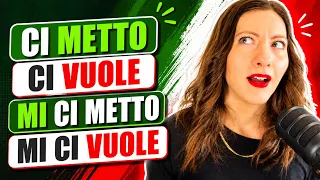
Ci vuole vs ci metto: saying how long it takes
Talk about how long things take, choose the right auxiliary and use mi ci metto.
View lesson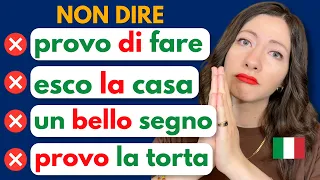
8 common mistakes English speakers make
Impedire or ostacolare, bel or bello, è atterrato: fix errors that sound foreign.
View lesson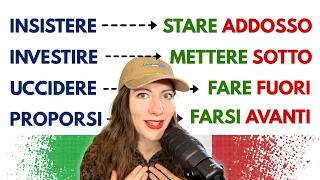
Italian phrasal verbs: andare via, mettere su
Learn the verb + particle combos Italians use daily and where the particle goes.
View lesson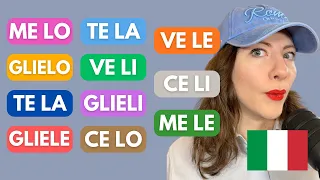
Italian combined pronouns: 5 common mistakes
Get order, glielo forms and position with infinitives and imperatives right.
View lesson
Alternatives to "buona giornata"
10 natural ways to wish someone a good day, from casual to romantic and formal.
View lesson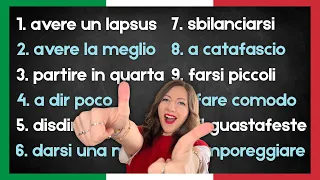
30 Italian idioms to sound like a native
Everyday Italian idioms with meanings and examples to sound more natural.
View lesson
Mi sono mangiato una pizza: affective pronouns
Why Italians say «mi sono bevuto un caffè», with essere and the right agreement.
View lesson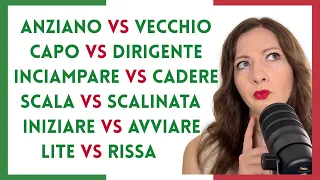
Italian words that look similar but aren't
Ten groups of easily confused words, with examples to pick the right one every time.
View lesson
Passato prossimo or imperfetto?
The 5 most common mistakes with Italian past tenses and how to fix them for good.
View lesson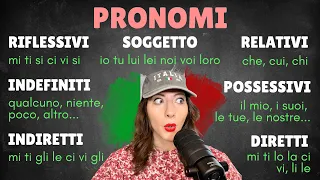
All Italian pronouns explained
Direct, indirect, combined, reflexive pronouns, ci and ne: rules and examples.
View lesson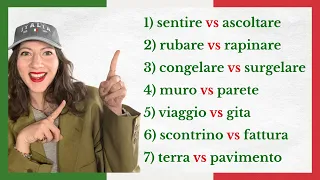
Italian word pairs that are easy to confuse
Sentire or ascoltare, muro or parete, dire or parlare: pick the right word.
View lesson
How to sound natural when speaking Italian
Eight native tricks: collocations, fillers, dislocations, idioms and diminutives.
View lesson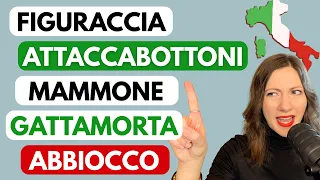
Untranslatable Italian words
13 uniquely Italian words like abbiocco and figuraccia, and what they reveal.
View lesson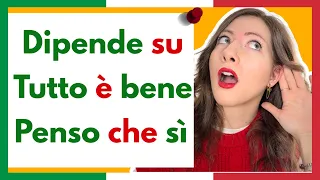
Common Italian mistakes foreigners make
Seven sneaky errors like "dipende su" and "penso che sì", and how to fix them.
View lesson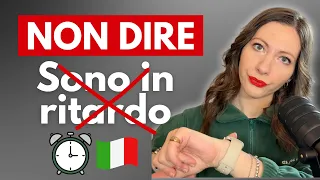
How to say you're late in Italian
12 ways to apologize for being late, from casual texts to formal work emails.
View lesson
How to improve your Italian accent
Double consonants, Z sounds, N to M and other tricks to sound more natural.
View lesson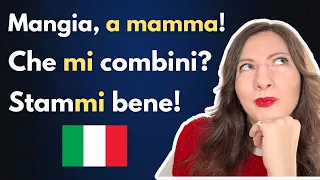
The Italian dativo etico: mi, ti, ci, vi
Add feeling to your Italian with pronouns like "Che mi combini?" and "Mangia, a nonna!"
View lesson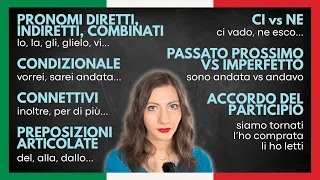
Italian grammar topics for B1-B2 learners
The 8 key grammar topics to master intermediate Italian, with a final quiz.
View lesson
Egli vs lui: which Italian "he" to use
Why egli sounds old, when lui is right, and when to drop the pronoun entirely.
View lesson
5 common grammar mistakes Italians notice
Fix "fa senso", "forse" + subjunctive, "ne" and "a me" to sound more natural.
View lesson
Learning Italian without AI: why it works
Why real conversations beat chatbots, plus practical ways to practice with people.
View lesson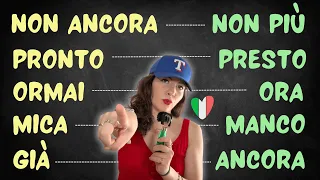
Già, ancora, ormai, mica: confusing pairs
Tell già from ancora, ora from ormai, presto from pronto, mica from manco.
View lesson
The hardest sounds in Italian pronunciation
Double consonants, gl, gn, sc, the rolled r, stress and intonation, with drills.
View lesson
Italian news and newspaper vocabulary
Key words and set phrases of Italian papers and TV news, so you can follow the news.
View lesson
Italian diminutives and augmentatives
How -ino, -one, -uccio and -accio add affection, irony or criticism to words.
View lesson
How to write a book review in Italian
Seven steps to review a book, using Il Gattopardo by Lampedusa as a model.
View lesson
False friends between English and Italian
Nine tricky look-alike words like attualmente and educato, so you avoid mistakes.
View lesson
Synonyms of the Italian verb ingannare
From truffare to fregare: pick the right word for deceiving and avoid repetition.
View lesson
Mi raccomando vs ti raccomando
When to say mi raccomando and how to use raccomandare to recommend something.
View lesson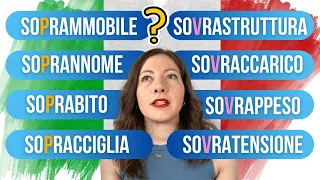
Sovra- or sopra-: which prefix to use
When to use sovra- for excess and sopra- for position, plus key spelling rules.
View lesson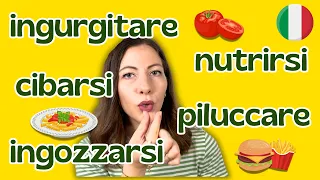
Italian synonyms for mangiare
From nibbling to devouring: 13 verbs to describe eating with the right nuance.
View lesson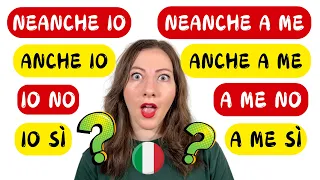
Anche io or anche a me: agreeing in Italian
Say me too, me neither and you too correctly, with examples and a practice quiz.
View lesson
Asking for and giving directions
Phrases, street vocabulary and dialogues to find your way around any Italian city.
View lesson
How to gossip in Italian
Verbs, nouns and idioms Italians use to talk about others behind their backs.
View lesson
How to describe objects in Italian
Adjectives for shape, material, smell, sound and taste to describe any object.
View lesson
How to take a taxi in Italy
Phrases to call, book and pay for a taxi, plus tips to chat with the driver.
View lesson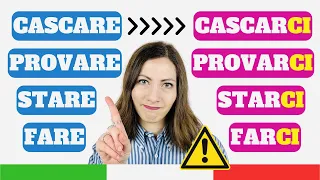
Verbs that change meaning with ci
Metterci, volerci, starci and more: ten verbs whose meaning changes with ci.
View lesson
Italian words for talking about art
Museum vocabulary and adjectives to describe a painting or sculpture you love or hate.
View lesson
Mistakes with qualche, alcuno and nessuno
Avoid five common errors with Italian indefinites, from qualche to double negation.
View lesson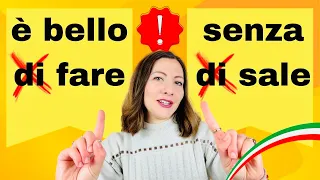
Common mistakes with Italian prepositions
Five preposition errors even advanced learners make, and how to fix them for good.
View lesson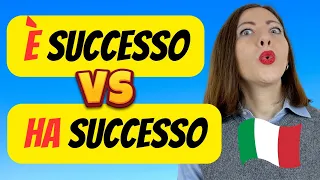
Common mistakes with the verb succedere
Successo or succeduto, è or ha successo: fix the errors learners make most.
View lesson
Music vocabulary in Italian
Canzone, strofa, ritornello, cantautore: the words to chat about music with Italians.
View lesson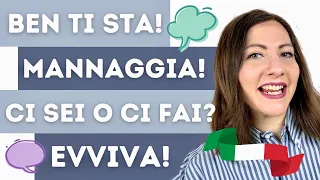
Common Italian exclamations like mamma mia
13 everyday exclamations, what they mean and when to use them to sound natural.
View lesson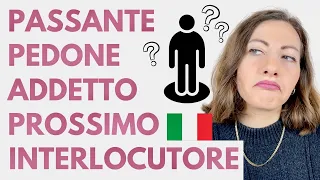
Italian words for talking about other people
From pedone to coinquilino: nouns for people around you, with examples and quiz.
View lesson
Unusual uses of the Italian verb venire
Venire for passives, prices, results and more: the everyday uses natives rely on.
View lesson
Italian conjunctions and how to use them
Coordinating and subordinating conjunctions, with examples and common mistakes.
View lesson
Ci and ne: when to use each one
What ci and ne replace, where to place them and how to avoid repeating words.
View lesson
Ways to say "lazy" in Italian
Ten colourful alternatives to "pigro", from fannullone to pantofolaio.
View lesson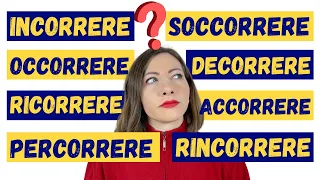
Italian verbs derived from correre
Learn 11 verbs like trascorrere, ricorrere and occorrere, with clear examples.
View lesson
Talking at the pharmacy in Italy
Five real dialogues to ask for remedies, explain symptoms and understand advice.
View lesson
Italian expressions with the verb chiedere
13 everyday phrases like chiedere scusa, venia or la luna, with real examples.
View lesson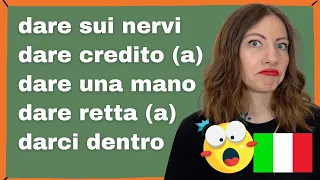
Italian expressions with the verb dare
Learn 16 everyday idioms like dare una mano and dare retta, with real examples.
View lesson
Italian house vocabulary: rooms and furniture
Names of rooms, furniture and appliances to talk about any home in Italy.
View lesson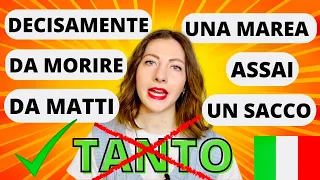
Alternatives to "tanto": molto, un sacco and more
Vary your Italian with synonyms of tanto, from formal assai to casual un botto.
View lesson
Italian alternatives to saying wow
Nine natural ways Italians react with surprise, wonder or shock in conversation.
View lesson
Qualcosa: meaning and common mistakes
Say qualcosa di nuovo, un qualcosa and qualcosa è successo the right way.
View lesson
Italian punctuation mistakes to avoid
Commas, colons, semicolons and ellipses: 12 common errors to fix in your writing.
View lesson
Other ways to say "sono triste"
11 Italian expressions for sadness, from mild gloom to heartbreak, with examples.
View lesson
Other ways to say «ho sonno» in Italian
Casual and polite ways to say you're sleepy, plus everyday idioms with «sonno».
View lesson
Tizio, Caio e Sempronio and Pinco Pallino
Italian names for a random, unspecified person, with origins and real examples.
View lesson
Si tratta di: meaning and common mistakes
How to use trattarsi di correctly and avoid the five errors learners often make.
View lesson
Household chores vocabulary in Italian
Sweep, vacuum, do the laundry, iron: the verbs you need to talk about cleaning.
View lesson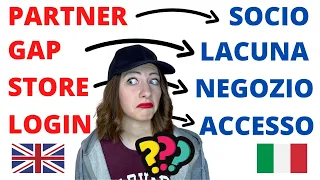
Italian alternatives to English loanwords
Swap common English words Italians use for real Italian ones, topic by topic.
View lesson
Ways to say «sono felice» in Italian
11 Italian expressions for happiness, with origins and examples to sound natural.
View lesson
Valere la pena: 5 common mistakes
Use valere la pena correctly: ne, valso, essere, di or che, and errors to avoid.
View lesson
Mentre or durante: what's the difference
Mentre goes with a verb, durante with a noun: learn both uses with clear examples.
View lesson
Talking about movies and cinema in Italian
Buy tickets, pick a genre and discuss plots with real Italian movie vocabulary.
View lesson
Italian words and phrases at the airport
Check-in, security, delays and on-board requests: dialogues to travel with ease.
View lesson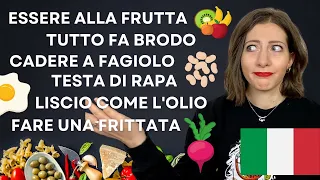
Italian idioms with food
13 food idioms Italians use daily, with their origins and real-life examples.
View lesson
How to start a conversation in Italian
Questions to break the ice with Italians while travelling, at work, at parties.
View lesson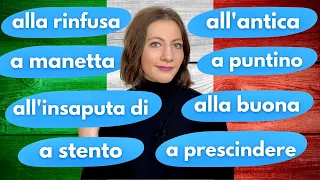
Italian expressions starting with «a»
Learn a squarciagola, a manetta, a prescindere and more, with real examples.
View lesson
Italian vocabulary at the hairdresser's
Words to ask for a trim, color or updo and describe hair problems at the salon.
View lesson
How to roll your R in Italian
Tips and exercises to master the vibrant Italian R, plus regional rotacismo.
View lesson
Italian school vocabulary and expressions
Talk about grades, homework, tests and skipping class like Italian students do.
View lesson
Prima and dopo: grammar rules
When to use prima di, prima che, dopo and dopo che, with infinitive or subjunctive.
View lesson
Alternatives to "non mi piace"
13 formal and casual ways to say you don't like something, with real examples.
View lesson
Alternatives to “per esempio” in Italian
Ten ways to give examples in Italian, like cioè, infatti and tant'è vero che.
View lesson
Migliore or meglio: the difference
Adjective or adverb? When Italians say migliore, meglio, peggiore and peggio.
View lesson
Alternatives to perché in Italian
Say why and because like a native: come mai, siccome, dato che, affinché and more.
View lesson
Italian nouns that change meaning with gender
Banco or banca, il fine or la fine: avoid mix-ups that change what you mean.
View lesson
What "manco" means and how Italians use it
A colloquial word for "not even" and the fixed expressions natives use every day.
View lesson
How to use basta in Italian
From "Adesso basta!" to "basta così": all the everyday uses, with real examples.
View lesson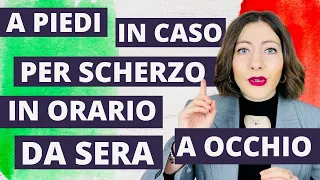
When to omit the article in Italian phrases
Fixed expressions with di, a, da, in, per and su that take no article, with a story.
View lesson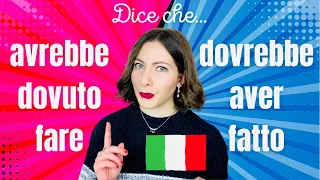
Future in the past in Italian
Why Italians use the past conditional for future-in-the-past, with modal verbs.
View lesson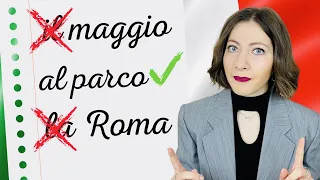
When not to use the article in Italian
Names, places, family, days and materials: the cases where Italian drops the article.
View lesson
What "appunto" means in Italian
Use appunto as "exactly", take appunti, or fare un appunto like a native speaker.
View lesson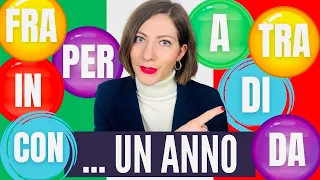
Italian time prepositions with years
Tra, in, per, da, fa, entro: say when and how long something happens, with examples.
View lesson
How to say "I'm busy" in Italian
Natural ways to decline politely, from formal to casual, without sounding rude.
View lesson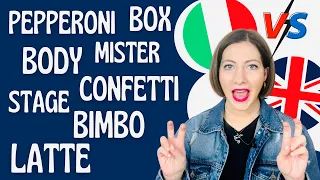
English words with a different Italian meaning
Confetti, latte, box, stage: false friends that can trick you in Italy.
View lesson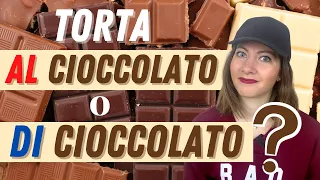
Torta al cioccolato or torta di cioccolato?
When to use di or a with food names, plus an easy chocolate pear cake recipe.
View lesson
Pronto, presto and rapido: the differences
Ready, early or quick? Learn which word to use, from phone calls to «a presto».
View lesson
Alternatives to the verb dire in Italian
Verbs like chiedere, urlare, sussurrare to make your dialogues richer and vivid.
View lesson
Alla fine, infine or finalmente?
Learn which word for "in the end" or "finally" fits each context, with examples.
View lesson
Italian idioms with the verb fare
Learn fixed expressions like farcela and fare bella figura to sound more natural.
View lesson
Alternatives to "circa" in Italian
Say "about" naturally: più o meno, all'incirca, a occhio e croce and more.
View lesson
Qualche, qualsiasi, qualunque and ogni
Learn which indefinite adjective to use and why they all take singular nouns.
View lesson
Other ways to say yes and no in Italian
Sound more natural with phrases like certo, senza dubbio, mi sa di no and scordatelo.
View lesson
26 Italian grammar rules to know
A quick review of key rules: auxiliaries, ci and ne, pronouns, false friends.
View lesson
How to use "ecco" correctly
Learn ecco to point things out, gain time and use phrases like ecco perché.
View lesson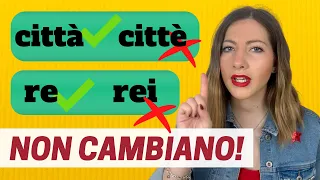
Invariable nouns and adjectives in Italian
Which Italian words never change in the plural, like città, foto, blu and film.
View lesson
Alternatives to bello to express enthusiasm
15 Italian exclamations to react with surprise and joy, from formal to slang.
View lesson
Italian alternatives to saying OK
Va bene, d'accordo, certo, ho capito: the right word for each meaning of OK.
View lesson
Auguri, congratulazioni or complimenti?
Which word to use for birthdays, weddings and achievements, and how to reply.
View lesson
Italian verbs with di, a, per and da
Which preposition follows common Italian verbs before an infinitive, with examples.
View lesson
Short Italian interjections: eh, ah, uffa, già
What eh, ah, oh, uffa and già really mean, so you understand everyday Italian.
View lesson
Finché, fin quando and fino a: the difference
When “non” after finché changes the meaning, and when to use fino a instead.
View lesson
Describing personality in Italian
Positive and negative Italian adjectives for character, with examples to reuse.
View lesson
Italian adverbs and phrases to sound native
Tanto vale, di gran lunga, prima o poi and more to make your Italian sound natural.
View lesson
How to sound like a native Italian speaker
Everyday words like ecco, diciamo, se and ceh to make your spoken Italian natural.
View lesson
Alternatives to "sei bellissima" in Italian
20 Italian compliments from cute to breathtaking, and which ones to avoid.
View lesson
What not to say at work in Italian
Polite Italian phrases to replace "non lo so", "ci provo" and "cosa?" at work.
View lesson
Useful intermediate Italian phrases
Everyday sentences for travel, plans and feelings to move past basic Italian.
View lesson
Phrases that annoy Italians
11 everyday phrases like vabbè and ti faccio sapere that irritate Italians.
View lesson
Italian vocabulary for crime and law
Words for criminals, courts and sentences, from ladro to fedina penale.
View lesson
Direct and indirect pronouns in Italian
Lo, la, gli, le and glielo: where they go in the sentence and how to combine them.
View lesson
Alternatives to "mi piace" in Italian
Eleven ways to say you like something, from mild to strong, with real examples.
View lesson
Verbs derived from venire and their meanings
Avvenire, convenire, prevenire, svenire: what each one means, with clear examples.
View lesson
Alternatives to molto in Italian
Swap “molto + adjective” for one stronger word like torrido, esausto or esilarante.
View lesson
Hard Italian words to pronounce
Tricky words like aiuola and chiacchiericcio, with IPA and two tongue twisters.
View lesson
Circa vs verso: meaning and difference
When to say circa or verso for approximate times and quantities, plus other uses.
View lesson
Polite alternatives to "voglio" in Italian
Ask for things politely with vorrei, gradirei and more, without sounding rude.
View lesson
Alternatives to "penso che" for opinions
Swap "penso che" for richer phrases like "ritengo che" to sound fluent and natural.
View lesson
A fianco, al fianco or affianco?
Three similar forms, three meanings: learn which one means "next to" in Italian.
View lesson
Italian internet vocabulary and text slang
Words like postare, chattare and virale, plus the abbreviations Italians text.
View lesson
Travelling by train in Italy: key words
Buy tickets, ask about trains and platforms at the station with a real dialogue.
View lesson
Polite alternatives to "Cosa?" in Italian
Ask Italians to repeat politely, from casual "Scusa?" to formal "Mi perdoni".
View lesson
Italian verbs with both essere and avere
Learn when cambiare, crescere or salire take essere or avere, with a simple rule.
View lesson
How to apologize in Italian beyond scusa
Informal and formal ways to say sorry, from mi dispiace to sono mortificato.
View lesson
Italian filler words: cioè, insomma, guarda
Starters, medians and finalizers Italians use to buy time and sound natural.
View lesson
Addirittura or a dirittura: the difference
What addirittura means today, how to use it for surprise and when it's ironic.
View lesson
Intervista, colloquio, provino or audizione?
Stop saying intervista for a job interview: learn which Italian word fits when.
View lesson
What piuttosto means and how to use it
Its four meanings, from "quite" to "rather than", plus a common native mistake.
View lesson
Affittare, noleggiare or prendere in prestito
Rent a flat, hire a car, borrow a book: pick the right Italian verb every time.
View lesson
Lei or voi: the Italian courtesy pronoun
When to be formal or informal in Italian, why Lei beats voi, and how to write it.
View lesson
Più, di più, in più: differences and uses
When to use più alone, with di or with in, with clear everyday examples.
View lesson
5 tricky quirks of Italian grammar
Lieto fine, si è + plural, euphonic D, -sta nouns and è/ha piovuto explained.
View lesson
Common mistakes foreigners make in Italian
Preferito, qualche, tra, avere senso, piacere: fix the errors English speakers make.
View lesson
English and French words used in Italian
Words like outfit, password, chic and toilette: how Italians use them every day.
View lesson
What proprio means and how to use it
Own, really, self-employed: three uses of proprio with examples to avoid mistakes.
View lesson
Metterci vs volerci: how long it takes
Learn which verb to use to say how long something takes, in present and past.
View lesson
Ma, però, tuttavia, eppure and bensì
How to express contrast correctly, with examples and a quiz to test yourself.
View lesson
Italian object pronouns: from mi to glielo
Direct, indirect and combined pronouns like me la, glielo, ce li, with examples.
View lesson
Italian swear words and polite alternatives
Common Italian bad words, what they mean and softer options to use instead.
View lesson
Già vs ancora: meaning and use
Learn the five meanings of ancora and when to use it instead of più or già.
View lesson
Già vs ancora: meaning and use
The five meanings of già, from "already" to resigned "yeah", with real examples.
View lesson
Ora, oramai and ormai: what's the difference
Learn when to say ora, ormai or oramai, and how they express resignation.
View lesson
What does mica mean in Italian
Use mica to stress a negation, ask politely, and say mica male or mica tanto.
View lesson
Anzi, anziché, innanzitutto: what they mean
Use anzi to contradict, correct or stress, plus anziché, anzitutto and poc'anzi.
View lesson
What "macché" means and how to use it
Use macché alone, before a noun or a verb to reject what someone just said.
View lesson
When to use the apostrophe in Italian
Qual è, po', un'ape, qualcun altro, '900: the rules and common spelling mistakes.
View lesson
What magari means and how to use it
Six uses of magari, from wishes to maybe, with examples and the right intonation.
View lesson
Mi raccomando: how to use raccomandare
All meanings of raccomandare, plus the one mistake to avoid with mi raccomando.
View lesson
Italian relative pronouns: che, cui, chi
When to use che, cui, il quale and chi to link sentences, with clear examples.
View lesson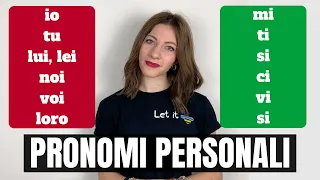
Italian subject and reflexive pronouns
When to use io, tu, lui and mi, ti, si, plus verbs that are always reflexive.
View lesson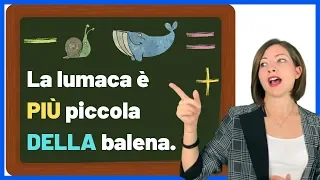
Italian comparatives and superlatives
How to compare with più, meno, come and -issimo, plus migliore, ottimo and more.
View lesson
Italian indefinite adjectives: qualche, ogni
How to express vague quantities with poco, tanto, nessuno and more, plus exercises.
View lesson
Italian ordinal and multiplicative numbers
Primo, ventesimo, doppio, triplo: how to form them, agree them and read Roman numerals.
View lesson
Questo, quello and stesso in Italian
How to point to things and say "the same" correctly, with all forms and examples.
View lesson
Italian possessive adjectives: mio, tuo, suo
How possessives agree with nouns, when to drop the article, and proprio, altrui.
View lesson
Italian phrasal verbs: verbi sintagmatici
Learn verbs like tirare su and fare fuori: literal and idiomatic meanings.
View lesson
Vedere, guardare, osservare, scrutare, fissare
The subtle differences between Italian verbs of seeing, with examples and a quiz.
View lessonVerb tenses and moods
8 lessons
Imperfetto vs passato prossimo
When to use each Italian past tense, with tricky cases like sempre and modal verbs.
View lesson
How to form the Italian passato remoto
Regular and irregular remote past endings, with patterns to spot them fast.
View lesson
Perso or perduto? Tricky past participles
Perso or perduto, visto or veduto: which forms Italians actually use today.
View lesson
Italian conditional: present and past
Form the conditional, learn the irregulars and use it for wishes, advice and if clauses.
View lesson
Italian simple future and future perfect
Form regular and irregular future verbs and use them for plans, guesses and doubts.
View lesson
The Italian gerund: forms and uses
Form present and past gerunds, use them in clauses, and master stare + gerund.
View lesson
All the Italian past tenses and when to use them
Passato prossimo, imperfetto, trapassato and remoto explained through one story.
View lesson
Passato prossimo and irregular past participles
Form the past tense with essere or avere, plus irregular and modal participles.
View lesson