


Dreaming of an Italian summer filled with sunny beaches, blue seas, and Mediterranean traditions? Temperatures can reach up to 40°C, the sun shines bright, and life moves to the seaside. But… what should you pack to enjoy it all without surprises?
Learn the essential vocabulary to get your suitcase ready for the perfect summer in Italy – I’ll teach you in this article!
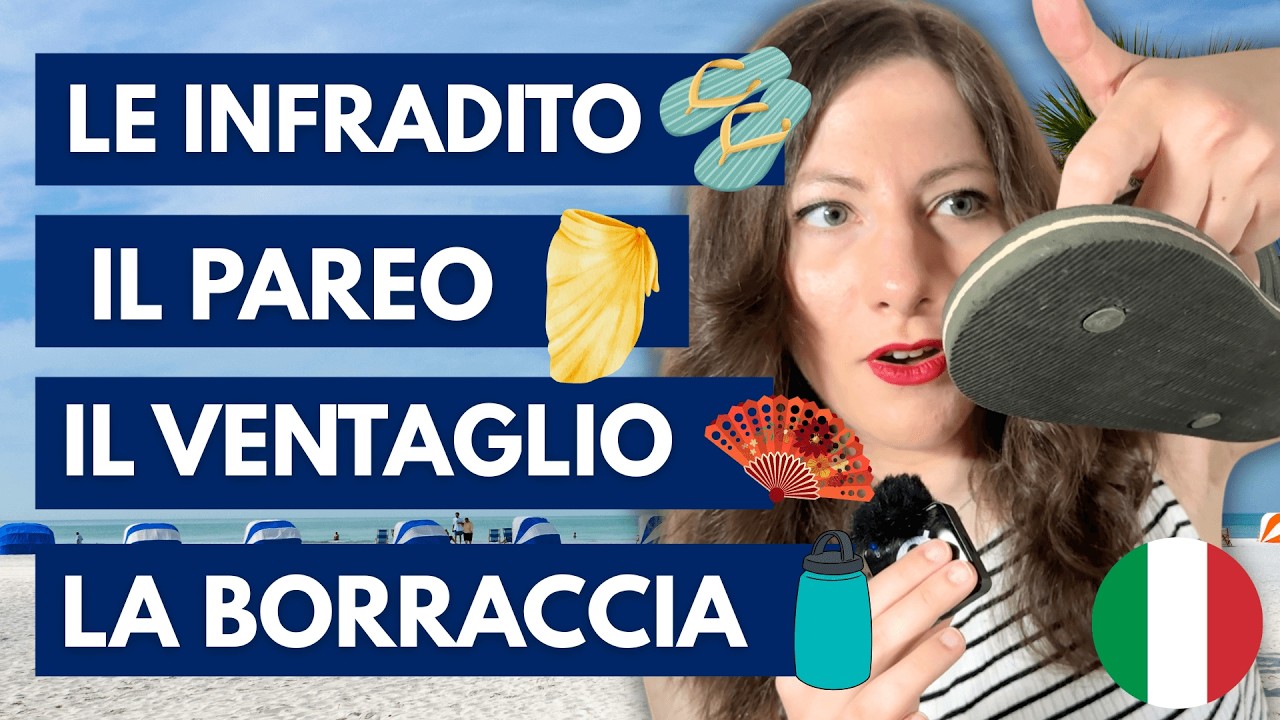
The Perfect Suitcase for Italian Summer: Vocabulary
Essential Clothing: Dressing for Italian Summer
Clothing for Italian summer must be functional and elegant at the same time. Italians pay great attention to their appearance even during holidays, so it’s important to choose appropriate garments for every occasion.
The swimsuit represents the fundamental element of the summer suitcase. In Italian we use different expressions: women wear “il bikini“ [the bikini] or “il costume intero“ [the one-piece swimsuit], while men prefer “i boxer da mare“ [swim boxers] or “il costume a pantaloncino“ [swim shorts]. It’s interesting to note how the word “bikini” is universally accepted even in Italian, but for a more formal register you can use “costume a due pezzi” [two-piece swimsuit].
The flip-flops deserve a special discussion: this word is typically Italian and derives from the position of the foot “between” the toes. In Italian they’re called infradito, and the correct pronunciation is in-fra-DÌ-to, with the accent on the third syllable. They are indispensable for walking on hot sand and represent the casual alternative to more elegant sandals.
Regarding light clothes, opt for natural fabrics like cotton, linen or bamboo. T-shirts (or “magliette” in Italian, though “t-shirt” is now accepted in Italian too), short dresses for women, shorts for everyone are essential elements. A practical tip: bring at least one long-sleeved shirt or blouse to protect yourself from the sun during the hottest hours.
The hat is not just a fashion accessory, but a necessity. You can say “cappello da sole“ [sun hat] to be more specific, or use terms like “berretto“ [cap] for sporty models or “pamela“ for wide-brimmed women’s hats. Remember that on many Italian beaches it’s advisable to always wear head protection.
Sun Protection: Vocabulary and Practical Necessities
The Mediterranean sun is notoriously more intense compared to other latitudes, making sun protection not only advisable but absolutely necessary. The vocabulary related to sun protection is rich in specific terms that every student should know.
The sunscreen is the most important element of your protection. In Italian we also say “protezione solare“ [sun protection] or “filtro solare“ [sun filter]. Avoid using the English term “sunscreen” when speaking Italian: it would sound unnatural. The protection factor is expressed with “SPF” (even in Italian) or “fattore di protezione“ [protection factor]. For example: “Ho comprato una crema solare con SPF 50” [I bought a sunscreen with SPF 50] or “Questa protezione ha un fattore molto alto” [This protection has a very high factor].
The sunglasses are an accessory that Italians consider fundamental not only to protect the eyes, but also to complete the summer look. They can also be called “occhiali scuri“ [dark glasses] in more informal contexts. A typical expression is: “Senza occhiali da sole non esco di casa!” [I don’t leave the house without sunglasses!] which shows how essential they are considered in Italian culture.
Essential Beach Accessories
Italian beach life requires a series of specific accessories that facilitate comfort and fun during days at the sea. Knowing the right terms will help you navigate better in shops and conversations with locals.
The beach bag must be spacious and resistant to salt water. In Italian we also say “borsa da mare“ [sea bag] or “sacca da spiaggia“ [beach sack]. It must contain everything necessary for a perfect day at the sea: from sunscreen to snacks, from water to books for relaxation.
The beach towel is different from the domestic towel: it’s bigger, more colorful and made with materials that dry quickly. It can also be called “telo mare“ [beach cloth] or simply “telo“ [cloth]. A typical phrase: “Hai portato il telo per sdraiarci?” [Did you bring the towel to lie down on?] or “Questo asciugamano è perfetto per la spiaggia” [This towel is perfect for the beach].
The water bottle or water flask is fundamental for hydration. In modern Italian the anglicized term “water bottle” is often used, but it’s always preferable to use Italian terms. A practical tip: thermal flasks are called “borracce isotermiche“ [isothermic flasks] and keep water cool even under the scorching sun.
Technology and Devices for Modern Holidays
The digital era has also transformed the way of taking holidays, introducing new essential objects that require a specific technological vocabulary. These terms are essential for navigating the modern Italian world.
The charger is now as indispensable as the swimsuit. In Italian we can also say “alimentatore“ [power adapter] for larger devices. It’s important to also know the connected expressions: “Il telefono si sta scaricando” [the phone is running out of battery], “Devo mettere in carica il telefono” [I need to charge the phone].
The powerbank is an English term now accepted in Italian, but it can also be called “batteria portatile“ [portable battery] or “caricabatterie portatile“ [portable charger]. It’s particularly useful during long beach days when you don’t have access to electrical outlets.
The headphones for listening to music have become an indispensable accessory. They can also be called “auricolari“ [earbuds] (for the small ones that go in the ear) or “headphones“ (accepted English term). Wireless headphones are called “cuffie senza fili“ [wireless headphones] or “cuffie Bluetooth“ [Bluetooth headphones].
Personal Hygiene and Care Products
After a day at the sea, skin and hair care becomes fundamental. The vocabulary related to personal hygiene includes many specific terms that vary according to Italian regions, but there are standard forms recognized everywhere.
The shower gel is essential to remove sea salt from the skin. In some regions they say “bagnoschiuma“ [bath foam], but both terms are correct and interchangeable. You can say: “Dopo il mare faccio sempre una doccia con il docciaschiuma” [After the sea I always take a shower with shower gel] or “Il bagnoschiuma profumato è perfetto per rilassarsi” [The scented bath foam is perfect for relaxing].
The specific shampoo for hair exposed to sun and sea salt is very important. There are “shampoo doposole“ [after-sun shampoos] formulated specifically to nourish hair stressed by sun exposure and salt water.
The after-sun lotion is a fundamental product often underestimated. In Italian it’s called doposoleil or doposole. This word derives from French “après-soleil” and indicates soothing creams to apply after sun exposure. You can say: “La sera applico sempre il doposoleil” [In the evening I always apply after-sun lotion] or “Questa crema doposole è molto rinfrescante” [This after-sun cream is very refreshing].
Stop reading Italian.
Start speaking it.
Online lessons in groups of 4, organised by level and goals, with qualified teachers. Pick the day and time that suit you from the available slots.
Max 4 students:
there’s a seat for you
Typically Italian Accessories and Local Traditions
Italy has developed over the centuries a unique beach culture that includes specific accessories and traditions. Knowing these elements will allow you to better integrate into local life and understand important cultural aspects.
The fan is a traditional accessory still widely used, especially in the regions of Southern Italy. It can also be called “ventaglino“ [small fan] when it’s smaller in size. It’s elegant, practical and represents a piece of Italian tradition. Typical expressions include: “Fa un caldo che serve il ventaglio!” [It’s so hot that you need a fan!] or “Con questo sole ci vuole almeno un ventaglino” [With this sun you need at least a small fan].
The pareo is a versatile accessory typical of Italian beachwear fashion. This word of Polynesian origin is completely integrated into the Italian vocabulary. The pareo can be used as a cover-up, towel, blanket for beach picnics, or even as an improvised dress for evening aperitifs.
The elegant sandals are fundamental because Italians make a clear distinction between beach clothing and evening social life clothing. During the aperitivo [aperitif] or the passeggiata serale [evening stroll] (unmissable Italian traditions), it’s important to be dressed appropriately. They can be called “sandali da sera“ [evening sandals] or “sandali eleganti“ [elegant sandals].
Useful Expressions for Beach Life
Besides the vocabulary of objects, it’s important to know the idiomatic expressions and typical phrases used during summer holidays in Italy. These expressions will help you communicate more naturally and authentically.
When it’s very hot, Italians say: “C’è un sole che spacca le pietre“ [There’s a sun that breaks stones], “Fa un caldo africano“ [It’s African hot], or “Si muore dal caldo“ [One dies from the heat]. To describe a perfect beach day: “Oggi è una giornata da spiaggia“ [Today is a beach day] or “Che bella giornata per il mare!“ [What a beautiful day for the sea!].
Expressions related to sun protection include: “Mi sono dimenticato la crema e sono diventato un gambero“ [I forgot the cream and became a lobster] (to say that you got sunburned), “Meglio abbondare con la protezione“ [Better to overdo it with protection] (it’s better to use too much cream than too little), “Stai attento al sole delle ore centrali“ [Be careful of the sun during central hours] (avoid the sun between 12 and 4 PM).
Regional Differences in Summer Vocabulary
Italy presents significant regional variations even in vocabulary related to summer holidays. Knowing these differences will allow you to better adapt to the different locations you’ll visit.
In Northern Italy, especially in Veneto and Friuli, flip-flops are called “zattere“ [rafts] or “ciabatte da mare“ [sea slippers]. In Liguria, the beach bag is often called “retina“ [net] when it’s made of mesh. In Emilia-Romagna, the term “bagnarola“ indicates a large bag to carry everything needed for the sea.
In Central Italy, especially in Tuscany, they say “prendere il sole“ [take the sun] instead of “abbronzarsi” [to tan], and after-sun lotion is called “crema calmante“ [soothing cream]. In Southern Italy and the islands, the pareo is also called “scialle da mare“ [sea shawl] and flip-flops can be called “salamelle“ in Sicily.
Practical Tips for Shopping in Italy
When you need to buy these objects in Italy, it’s useful to know the typical selling places and the specific vocabulary for shopping. This will allow you to manage in any situation and get exactly what you’re looking for.
Italian supermarkets usually have a section dedicated to summer products called “reparto mare“ [sea department] or “angolo estate“ [summer corner]. Pharmacies sell higher quality sun products and can recommend the protection suitable for your skin type. Clothing stores often have “beachwear“ or “moda mare“ [sea fashion] sections.
Useful phrases for shopping include: “Cerco una crema solare ad alta protezione“ [I’m looking for a high protection sunscreen], “Avete costumi da bagno della mia taglia?“ [Do you have swimsuits in my size?], “Vorrei un cappello che protegga bene dal sole“ [I’d like a hat that protects well from the sun], “Questo prodotto è resistente all’acqua?“ [Is this product water-resistant?], “Quanto costa questo asciugamano da mare?“ [How much does this beach towel cost?].
The Art of Living Italian Summer
Preparing the perfect suitcase for Italian summer means much more than choosing the right objects: it means immersing yourself in a culture that has made living well and enjoying summer pleasures a refined art. Every object you put in your suitcase tells a story, carries centuries-old traditions and connects you with millions of Italians who share the same summer rituals.
The vocabulary you’ve learned is not just a list of words: it’s the key to authentically entering Italian summer life. When you ask “Scusi, dove posso comprare un doposoleil?“ [Excuse me, where can I buy after-sun lotion?] in a pharmacy, when you comment “Che belle infradito!“ [What beautiful flip-flops!] admiring those of an Italian friend, when you say “Ho dimenticato il pareo in albergo“ [I forgot the pareo at the hotel] before going out to the beach, you’ll be using the language as real Italians use it, with naturalness and spontaneity.
Italian summer is not just sun, sea and fun: it’s a way of living that celebrates beauty, conviviality and the pleasure of being together. Your perfect suitcase, prepared with care and attention to detail, will allow you to live this experience completely and authentically, enriching not only your vocabulary but also your understanding of Italian culture.
If besides vacation terms you’re interested in a guide to traveling by public transport in Italy, read this article!
Buy our new book: “Parole Di Casa Mia: Un Viaggio Nei Colloquialismi Italiani“, and learn all the colloquial expressions to speak like a true native speaker!
Want the lesson PDF with exercises and solutions?
Join the LearnAmo AcademyCaricamento quiz in corso…
Podcast: Play in new window | Download (Duration: 12:00 — 16.8MB)
Iscriviti: Apple Podcasts | Spotify | Android | iHeartRadio | Podcast Index | TuneIn | Deezer | RSS | Altri...