

'/%3E%3Cpath%20fill='%23b2b2b2'%20d='M241%20382q0%2016%2017%2026%2017%2011%2042%2011t42-11q16-11%2017-26V269H241'/%3E%3Cpath%20fill='%239f7e00'%20d='M241%20379q0%2014%208%2023%209%209%2021%209%2014%200%2021-9%209-9%209-23V269h-59'/%3E%3Cpath%20d='M241%20339v-70h59v110q0%2014-9%2023l-6%205v-68h-15v72q-8%200-14-4v-68zm59%2040c0%2022%2015%2032%2029%2032%2021%200%2030-18%2030-32v-40h-59'/%3E%3Cpath%20fill='%239f7e00'%20d='M266%20277v5h2v12h-3v-5h2v-5h-9v5h2v5h-4v9h3v18h-5v10h34v-10h-5v-18h3v-9h-4v-5h2v-5h-9v5h2v5h-3v-12h2v-5zm42%20101q0%2010%206%2017%206%206%2015%207%2010-1%2016-7%206-7%206-17v-29h-43'/%3E%3Ccircle%20fill='%230044ad'%20cx='329.5'%20cy='372'%20r='6'/%3E%3Cellipse%20fill='%230044ad'%20cx='300'%20cy='340'%20rx='16'%20ry='21'/%3E%3C/svg%3E)
When we study Italian as a foreign language, we often focus on grammar, vocabulary, and pronunciation, but we rarely stop to reflect on the origin of the country’s name itself. “Italia” is a word we pronounce thousands of times, but where does this musical name come from? The answer takes us back in time over 2000 years, on a fascinating journey through ancient legends, Roman conquests, and linguistic curiosities that will amaze you.
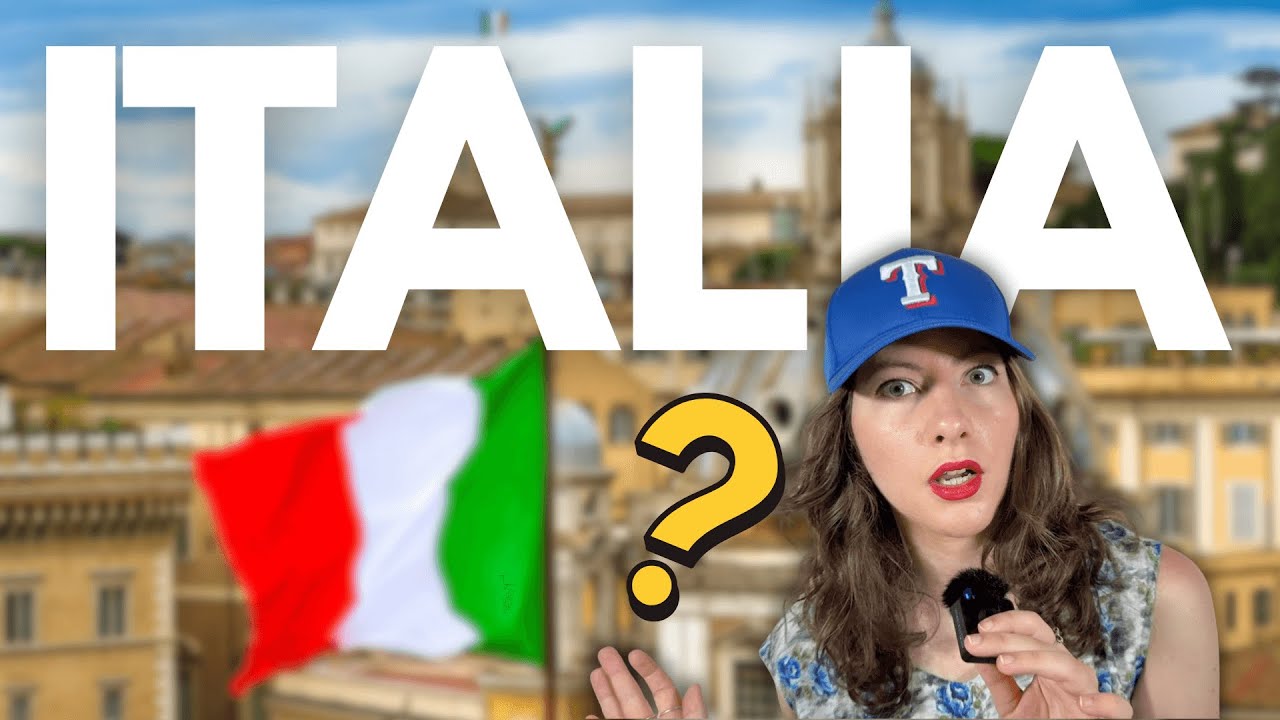
Why is Italy called like this? A Journey into the History of the Beautiful Country’s Name
The Greek Origin: The Land of Calves
The most accepted theory by historians traces the name “Italia” back to the Greek word “Italós” (Ἰταλός), which literally meant “land of calves” or “land of bulls”. But why specifically calves? The explanation is as simple as it is fascinating.
In the 8th century BC, when Greek navigators and colonizers landed on the coasts of southern Calabria (what we now call the “tip of the boot”), they were struck by the sight of magnificent cattle grazing freely in the green pastures of the region. These animals were symbols of wealth, fertility, and prosperity – fundamental values for ancient agricultural societies.
To give an example that foreign students can easily understand: imagine arriving in a new country and being struck by the most evident characteristic of that territory. It’s like when today we say “Silicon Valley” for the silicon valley in California, because it’s famous for technology, or “Costa del Sol” for southern Spain, because it’s known for the sun. The ancient Greeks did the same thing with Italy!
Roman Expansion: From Local Region to National Name
Initially, the term “Italia” referred only to southern Calabria, that small portion of land where the Greeks had established their first colonies. But how did this local name become the name of the entire peninsula?
The answer lies in Roman expansionism. When the Romans began their conquest of the Italian peninsula (between the 4th and 3rd centuries BC), they maintained many of the local names they found. It was an intelligent political strategy: respecting local traditions facilitated the integration of conquered peoples into the empire.
A fundamental moment was when Emperor Augustus, in 27 BC, decided to administratively reorganize the peninsula by dividing it into 11 regions. From that moment, “Italia” officially became the name of the entire territory extending from the Alps to Sicily.
Alternative Theories: Volcanoes, Legendary Kings, and Other Explanations
Although the “calves” theory is the most accepted, there are other fascinating explanations for the origin of the name Italy that are worth knowing, especially for those learning Italian and wanting to understand the cultural richness of the country.
The Vitelia Theory
Some linguists propose that “Italia” derives from the Latin form “Vitelia”, directly from Latin “vitulus” (calf). This theory is very similar to the Greek one, but suggests a directly Latin origin rather than a loan from Greek. For an Italian student, it’s interesting to note how the word “vitello” is still part of Italian culinary vocabulary today!
Aitalia: The Burning Land
Another fascinating theory suggests that “Italia” might derive from “Aitalia”, a Greek word that would mean “burning land” or “smoking land”. This explanation refers to the numerous active volcanoes of the peninsula: Vesuvius near Naples, Etna in Sicily, Stromboli in the Aeolian Islands.
For foreign students, this theory offers a perfect opportunity to learn Italian vocabulary related to volcanoes: “vulcano”, “lava”, “eruzione”, “magma”, “cenere vulcanica”. Words that are still in common use in Italian media when talking about these natural phenomena.
The Myth of King Italo
Ancient mythology tells us of a legendary King Italo, a wise and just sovereign who would have ruled over ancient Calabria. According to this legend, he would have given his name to the region and, subsequently, to the entire peninsula.
Although this explanation is probably just a legend created after the fact (it’s typical of ancient cultures to invent stories to explain the origin of place names), it offers Italian students an interesting window into Italian mythology and folklore. It’s the same process we see with names like “Roma” (from Romulus) or “Atene” (from the goddess Athena).
From Ancient Name to Modern Nation: A Temporal Paradox
One of the most surprising aspects of the history of the name “Italia” is that this term is much older than the Italian nation itself. This concept may seem strange to foreign students, but it’s fundamental to understanding Italian history.
The name “Italia” is over 2000 years old, while Italy as a united nation is only 163 years old (since 1861). For centuries, the Italian peninsula was divided into numerous states, kingdoms, duchies, and republics, each with its own name and identity:
- Regno di Sardegna [Kingdom of Sardinia] (Piedmont and Sardinia)
- Stato Pontificio [Papal States] (Rome and much of central Italy)
- Regno delle Due Sicilie [Kingdom of the Two Sicilies] (Southern Italy and Sicily)
- Regno Lombardo-Veneto [Kingdom of Lombardy-Venetia] (under Austrian control)
- Granducato di Toscana [Grand Duchy of Tuscany]
- Ducato di Parma [Duchy of Parma], Ducato di Modena [Duchy of Modena], and many other small states
To make a comparison that foreign students can easily understand: it’s as if today the name “Europa” had existed for 2000 years, but the “Stati Uniti d’Europa” [United States of Europe] as a single nation were born only yesterday. All these states used different languages (dialects), different currencies, different laws, but the land they stood on was always called “Italia”.
Italy and Its Historical Nicknames
Over the centuries, Italy has received many poetic nicknames that enrich its linguistic and cultural heritage. For Italian students, knowing these appellations means learning not only new vocabulary but also coming into contact with Italian literary tradition.
Il Bel Paese
“Il Bel Paese” [The Beautiful Country] is perhaps Italy’s most famous nickname, made famous by Dante Alighieri in the Divine Comedy. This expression is still in common use today and students will often encounter it in texts, newspapers, and daily conversations. It’s interesting to note that there’s also a famous Italian cheese that bears this name!
Hesperia: La Terra del Tramonto
The ancient Romans also called Italy “Hesperia”, which means “terra del tramonto” [land of sunset] or “terra occidentale” [western land]. This name derived from Italy’s position relative to Greece: looking from east (from Greece) towards west (towards Italy), one could see the sun setting behind the Italian peninsula.
Lo Stivale
The nickname “lo Stivale” [The Boot] is probably the most known by foreign students today, but it’s interesting to know that this image hasn’t always existed. The ancient Romans saw the shape of the peninsula as a human leg, not as a boot. The boot image became popular only during the Renaissance, when shoes with elongated shapes were fashionable.
For Italian students, “lo stivale” is an excellent word to learn because it’s masculine singular and follows standard grammatical rules: “lo stivale, gli stivali, dello stivale, negli stivali”. Moreover, it’s a word you’ll surely use when talking about Italian geography!
The Influence of the Name Italia on Modern Language
The name “Italia” has generated a word family that foreign students encounter continuously during their Italian language learning journey. Let’s see the main derivations and their modern use.
Italiano/Italiana – Adjectives and Nouns
“Italiano” can be both an adjective and a noun, and changes according to gender and number, following Italian grammatical rules:
- Italiano (masculine singular): “Marco è italiano” [Marco is Italian] / “Parlo italiano” [I speak Italian]
- Italiana (feminine singular): “Sofia è italiana” [Sofia is Italian] / “La cucina italiana” [Italian cuisine]
- Italiani (masculine plural): “I ragazzi italiani” [The Italian boys] / “Gli italiani amano il calcio” [Italians love soccer]
- Italiane (feminine plural): “Le città italiane” [Italian cities] / “Le tradizioni italiane” [Italian traditions]
Italianismo e Italianismi
An “italianismo” is an Italian word or expression used in other languages. Famous examples are: “pizza”, “spaghetti”, “cappuccino”, “ciao”, “bravo”. For foreign students, it’s fun to discover how many Italian words are already used in their mother tongue!
Italianizzare
The verb “italianizzare” means to make something more Italian or adapt something to the Italian style. It’s a regular verb of the first conjugation: “io italianizzo, tu italianizzi, egli italianizza…” [I italianize, you italianize, he italianizes…]
Linguistic Curiosities for Italian Students
Knowing the origin of the name “Italia” opens the door to many linguistic curiosities that can help foreign students better memorize Italian vocabulary and understand the connections between apparently different words.
The “Bovine” Word Family
If “Italia” really derives from “terra dei vitelli” [land of calves], then it shares the root with many Italian words related to cattle. Here’s a useful list to expand vocabulary:
- Vitello – the young of a cow (also veal meat)
- Vitellone – young calf (also type of lazy person)
- Bovino – relating to cattle
- Manzo – adult bull meat
- Mucca – female of cattle
- Toro – male of cattle
Country Names and Their Origins
Learning the origin of the name “Italia” can inspire students to explore the etymology of other country names. Here are some interesting examples:
- Francia – from the Franks (Germanic people)
- Germania – from the Germans (ancient populations)
- Spagna – from “Hispania” (land of rabbits in Phoenician)
- Grecia – from “Graecia” (Roman name)
- Russia – from the “Rus” (Viking populations)
This type of knowledge helps students develop an etymological sensitivity that will help them better understand Italian and its connections with other European languages.
How to Use This Knowledge in Learning Italian
The history of the name “Italia” is not just a cultural curiosity, but can become a very effective learning tool for foreign students. Here are some practical ways to use this knowledge.
Memorization Techniques
When you need to learn words related to Italy and Italian culture, create mental connections with the history of the name. For example:
- When you learn the word “vitello” (vitellone alla milanese [Milanese-style veal cutlet]), remember that it shares the root with “Italia”
- When you study Italian geography, think of the ancient Greeks who saw this land for the first time
- When you encounter words like “pastore” [shepherd], “pascolo” [pasture], “allevamento” [breeding], connect them to the concept of “terra fertile” [fertile land] that gave origin to the name
Conversations and Discussions
Use this knowledge to start interesting conversations with native Italian speakers. Phrases like:
- “Sapevi che Italia significa terra dei vitelli?” [Did you know that Italy means land of calves?]
- “È interessante che il nome Italia sia più antico dell’Italia unita” [It’s interesting that the name Italy is older than united Italy]
- “Perché si dice ‘il Bel Paese’?” [Why do we say ‘the Beautiful Country’?]
This type of questions demonstrate a deep cultural knowledge that goes beyond simple grammar study, and Italians greatly appreciate this interest in their history and culture.
Writing and Composition
When you write texts in Italian, you can use this knowledge to enrich your essays. For example, in an essay about Italy you could start with: “L’Italia, il cui nome deriva dall’antica parola greca che significava ‘terra dei vitelli’, ha una storia millenaria che…” [Italy, whose name derives from the ancient Greek word that meant ‘land of calves’, has a millenary history that…]
Italy in the World: The Evolution of a Name
The name “Italia” has traveled well beyond the peninsula’s borders, becoming part of a global linguistic heritage. For foreign students, it’s fascinating to see how this ancient name has become universally recognizable.
Little Italy and Italian Communities Around the World
In many cities around the world there are neighborhoods called “Little Italy” (Piccola Italia), where Italian immigrant communities have settled. These names demonstrate how “Italia” has become synonymous with a culture, a lifestyle, a culinary tradition that transcends geographical boundaries.
Famous examples include:
- Little Italy a New York [Little Italy in New York] (Manhattan)
- North Beach a San Francisco [North Beach in San Francisco] (also called Little Italy)
- Little Italy a Toronto [Little Italy in Toronto] (Canada)
- Carlton a Melbourne [Carlton in Melbourne] (Australia, known as Little Italy)
Italy as a Cultural Brand
Today “Italia” has become a true “brand culturale” [cultural brand] that evokes quality, style, tradition. Expressions like “Made in Italy”, “Italian style”, “Italian food” are recognized worldwide and have enormous commercial value.
For Italian students, this means that learning the Italian language opens doors not only to a millenary cultural heritage, but also to professional opportunities in sectors like:
- Fashion and design (Prada, Versace, Armani, Ferrari)
- Gastronomy (restaurants, food products)
- Cultural tourism (guides, tour operators)
- Art and culture (museums, conservation, translation)
Frequently Asked Questions about the Origin of the Name Italy
Has the name Italy always been the same in all languages?
No, the name “Italia” changes slightly in different languages, but always maintains a recognizable form. Examples: Italy (English), Italie (French), Italien (German), Italia (Spanish), Италия (Russian). This similarity demonstrates the common Latin origin of the name.
When did Italians start calling themselves “italiani”?
The process was gradual. During the Roman Empire, the inhabitants of the peninsula identified more as “romani” [Romans]. The “italiana” [Italian] identity as we understand it today developed slowly, reaching full maturity only with the Unification of Italy in 1861. Before then, people identified primarily with their city or region: fiorentini [Florentines], veneziani [Venetians], napoletani [Neapolitans], etc.
Are there other countries with names deriving from animals?
Yes! Spain probably derives from a Phoenician word that meant “terra dei conigli” [land of rabbits]. The Canary Islands derive from Latin “canis” (dog), not from canaries as one might think. This demonstrates that the ancients often named places based on the characteristic animals of the territory.
How do you pronounce “Italia” correctly in Italian?
The correct pronunciation is [i-TA-li-a] with the accent on the second syllable “TA”. It’s important not to pronounce it like in English “Italy” [AI-tuh-lee], but to maintain all the vowels clear and distinct, typical of Italian pronunciation. For foreign students: I-ta-li-a, with four well-pronounced syllables.
One Name, One History, A Cultural Heritage
The history of the name “Italia” is much more than a simple etymological curiosity: it’s a fascinating journey through over 2000 years of history, culture, and linguistic changes. For foreign students learning Italian, understanding these roots means coming into contact with the deepest essence of Italian culture.
From the pastures of ancient Calabria, where the Greeks first saw those magnificent cattle, to the modern “Little Italy” scattered around the world, the name “Italia” has carried with it values of fertility, beauty, creativity, and passion that continue to characterize the country’s image.
When you pronounce the word “Italia”, you’re not just naming a country on a map: you’re evoking millennia of history, art, literature, music, gastronomy, and traditions. You’re speaking of Dante and Michelangelo, of Pavarotti and Fellini, of Leonardo da Vinci and Federico Fellini, of pizza and pasta, of Colosseum and Gondolas.
For those studying Italian as a foreign language, this awareness transforms every lesson into an encounter with history. Every Italian word you learn carries with it centuries of cultural evolution, every phrase you build connects you to a linguistic tradition that has its roots in antiquity.
And so, the next time you write or pronounce the word “Italia”, remember that you’re using a term born from the admiration of ancient Greek navigators for the beauty and prosperity of a distant land. A name that has survived empires, wars, revolutions, and epochal changes, maintaining its evocative power and charm intact.
L’Italia is not just a name: it’s a promise of beauty, a guarantee of culture, an invitation to discovery. And now that you know its history, you can carry this knowledge with you in every conversation, in every trip, in every moment of your Italian language learning journey.
Find out your LEVEL: take this free Italian test!
If you’re interested in other curiosities about Italian national culture, read this article about the meaning of the Italian national anthem!
Want the lesson PDF with exercises and solutions?
Join the LearnAmo AcademyCaricamento quiz in corso…
Podcast: Play in new window | Download (Duration: 8:48 — 12.4MB)
Iscriviti: Apple Podcasts | Spotify | Android | iHeartRadio | Podcast Index | TuneIn | Deezer | RSS | Altri...