


What is Made in Italy really?
A prestigious brand the world envies… or a myth that’s slowly collapsing?
Once a synonym for excellence, quality, and creativity, today Made in Italy seems to be facing a deep crisis: production moving abroad, fierce global competition, historic brands falling into foreign hands.
So, what’s truly left of the identity that made Italy a symbol of style and perfection? We explore it in this article.
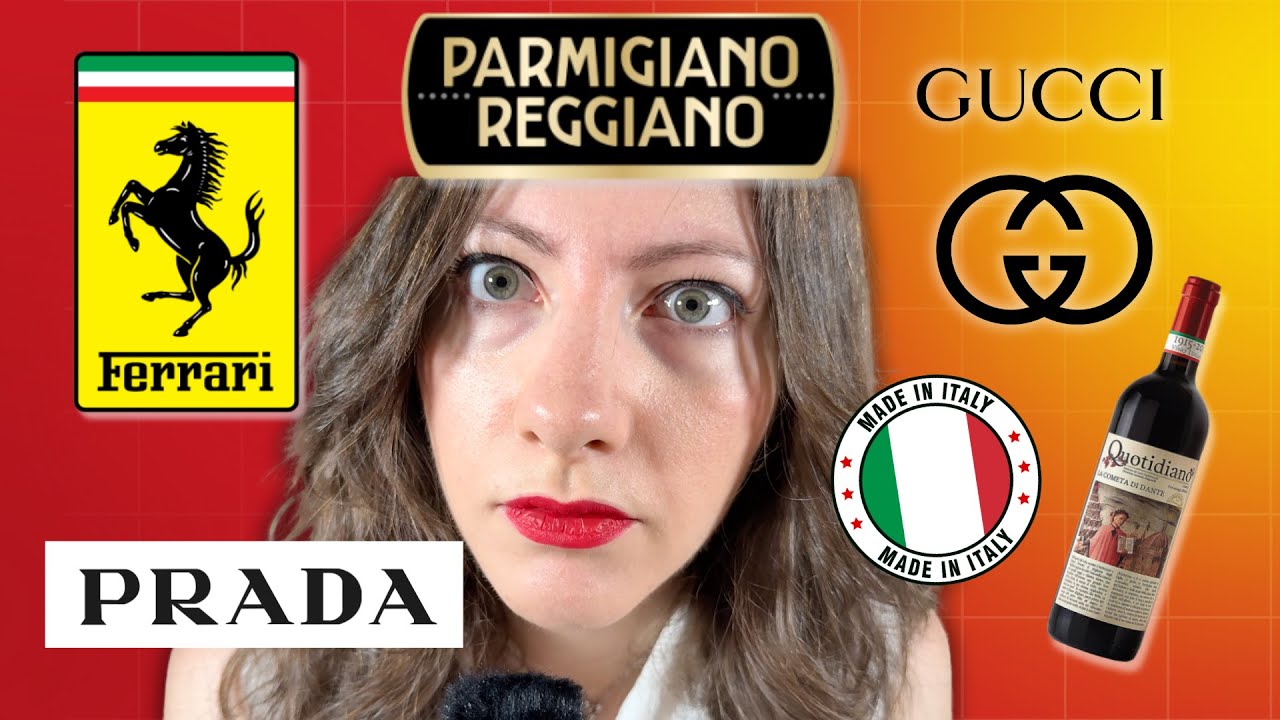
Is Made in Italy dying?
The Great Italian Fear
Every morning, millions of Italians wake up with the same concern: “What if Made in Italy is really dying?” While they sip their rigorously Italian espresso (but made with a Chinese machine), they wonder if Italian tradition is destined to disappear like the dinosaurs or their ability to arrive on time for appointments.
The Symptoms of the “Disease”
The signs of this alleged decline are everywhere, according to the most pessimistic. Let’s look at the sectors most affected by this alleged Italian identity crisis.
Fashion in Identity Crisis
Gucci is French-owned, Bulgari is under the LVMH umbrella, and even some famous designers prefer to produce abroad. “How is this possible?” complains Mrs. Maria at the hairdresser, “Our clothes should be sewn by Italian grandmothers, not by Asian machines!”
Example: The word ombrello [umbrella] here doesn’t mean the object for rain! It’s used figuratively to indicate “control” or “protection”. Examples: “L’azienda è sotto l’ombrello del gruppo internazionale” [The company is under the umbrella of the international group] or “Questa organizzazione lavora sotto l’ombrello dell’ONU” [This organization works under the UN umbrella].
Food and the Foreign Invasion
McDonald’s has more restaurants in Italy than the chain of Neapolitan pizzerias, and more and more young people prefer sushi to pasta. The national trauma is such that some politicians have proposed to ban pineapple on pizza by law (proposal still under discussion in Parliament).
This phenomenon represents a real cultural shock for a country that considers cuisine an integral part of its national identity. Seeing a young Italian order a poke bowl instead of a plate of spaghetti carbonara can cause sincere existential concerns in parents.
The Lost Technology
Olivetti, once a computing giant, is just a memory, while we all use Korean smartphones and American computers. The only consolation is that at least we use them to watch videos of grandmothers making homemade pasta.
This sector perhaps represents the deepest wound to Italian technological pride. Olivetti was considered a symbol of world excellence, and its disappearance from the global technological landscape is seen by many as a metaphor for Italian industrial decline.
The Reality of Numbers
But let’s stop for a moment. The data tells a completely different story from that narrated by the most ardent pessimists.
| Sector | Italy’s Position in Europe | Market Value |
|---|---|---|
| Manufacturing | 2nd place | €680 billion |
| Luxury Sector | World leader | €90+ billion |
| Food & Beverage | Constant growth | €140 billion |
| Total Exports | Record levels | €590+ billion |
In short, perhaps the patient is not as sick as it seems. In fact, it might be healthier than we think!
Evolution, Not Extinction
Today’s Made in Italy is not the same as fifty years ago, and this is not necessarily a bad thing. Like a good wine, traditions too must evolve so as not to become vinegar.
Example: The expression diventare aceto [become vinegar] is metaphorical. Wine, if not properly preserved, becomes vinegar (turns sour). Here it means that traditions, if they don’t adapt to the times, become obsolete and useless.
Innovation in Tradition
Companies like Ferrari continue to produce dream cars, but now they also include hybrid and electric engines. Parmigiano Reggiano and Prosciutto di Parma maintain their traditional recipes from centuries ago but constantly improve production processes to ensure ever-superior quality.
This ability to innovate while respecting tradition is perhaps the true secret of Italian success: it’s not about staying stuck in time, but about carrying forward the essence of what makes us unique while adapting it to modern needs.
New Creative Interpretations
Italian chefs around the world reinterpret traditional cuisine, creating new dishes that respect the Italian essence but surprise the modern palate. Brilliant examples include gourmet carbonara, fusion ravioli and modern interpretations of Neapolitan pizza that conquer even the strictest purists.
The Italian Digital Revolution
Even the most traditional grandmother now sells her products online, reaching customers worldwide. Small family businesses that once sold only in the local market now export their artisanal products through globalized e-commerce, maintaining Italian quality but enormously expanding their target market.
The Real Problems (and Possible Solutions)
Of course, not everything is roses and flowers. Made in Italy faces real and concrete challenges that require attention and targeted strategies to be overcome.
Counterfeiting: Enemy Number One
Fake products that imitate Italian ones seriously damage the reputation of the national brand. “Gucci” bags sold on the street for 20 euros, “Parmigiano” produced in Germany or “Prosciutto di Parma” made in China represent an economic damage estimated at over 100 billion euros per year.
The solution requires a multidisciplinary approach: greater border controls, education of international consumers about authentic products, and anti-counterfeiting technologies like blockchain and QR codes to certify authenticity.
Example: Contraffazione [counterfeiting] derives from “contraffare” which means “to illegally imitate”. Don’t confuse it with “falsificazione” [falsification] (altering documents) or “imitazione” [imitation] (copying legally). Counterfeiting is always illegal and harmful.
Global Competition
Other countries have learned to make quality products at competitive prices. South Korea dominates electronics, Germany automotive engineering, France luxury. How can Italy respond?
The Italian response must focus even more on uniqueness and quality, elements that no algorithm or mass production can replicate. Italy must capitalize on what makes it inimitable: craftsmanship, creativity, design and that particular combination of functionality and aesthetics that characterizes our approach to production.
The Generational Turnover
Young Italians often emigrate or choose other sectors, preferring careers in digital or services rather than traditional manufacturing. This missing generational turnover risks breaking the chain of transmission of artisanal skills.
Concrete incentives and new opportunities are needed to keep them in the Italian production system: modern training that combines tradition and innovation, startup incubators dedicated to technological Made in Italy, and policies that make it convenient to stay and invest in Italy.
Example: Ricambio generazionale [generational turnover] means the replacement of older people with younger ones in a work sector. It’s like when the grandfather baker teaches the trade to his grandson who then continues the family business.
Contemporary Success Stories
While some mourn the end of Made in Italy, many Italian companies are writing extraordinary success stories that demonstrate how tradition can perfectly marry innovation.
Ferrero continues to conquer the world with Nutella and Kinder, Armani remains a global fashion icon, Barilla brings Italian pasta to every continent. These companies have understood that the secret is not to remain motionless in time, but to evolve while maintaining identity.
New realities like Cucinelli in luxury cashmere or Eataly in catering have shown that it’s possible to create global commercial empires starting from Italian traditions and reinterpreting them for the modern market.
The Final Verdict
Is Made in Italy dying? Absolutely not, it’s transforming. Like a butterfly emerging from its cocoon, it might appear different but maintains its deepest essence and its ability to fly toward new horizons.
Example: Bozzolo [cocoon] is the casing that protects the butterfly during transformation from caterpillar. This is a metaphor: Made in Italy is transforming (like the butterfly) but always remains beautiful and precious.
The real question is not whether Made in Italy will survive, but how it will evolve. And whether we can still call it “Made in Italy” when the creativity is Italian, the design is Italian, the quality control is Italian, but part of the production takes place elsewhere.
Perhaps the answer is simple: Made in Italy is not just a place of production, it’s a way of thinking, creating and living. And that, dear readers, is really hard to copy or kill.
The New Frontiers of Made in Italy
The future of Made in Italy lies not only in preserving the past, but in innovating the present. Emerging sectors like green technology, sustainable design and food biotechnology are seeing Italian companies conquer positions of world leadership.
Italian sustainable fashion is redefining global standards, Italian tech startups are developing innovative solutions for Industry 4.0, and our designers continue to win international awards in every field, from architecture to product design.
Italian Sounding: An Involuntary Compliment
The phenomenon of “Italian Sounding” – foreign products that imitate Italian names and styles – is paradoxically proof of the value of Brand Italy. When everyone tries to look Italian, it means that being Italian still has an invaluable worth in the world.
From “Mama Mia” restaurants in New York to Australian “Parmesano” cheeses, imitation remains the sincerest form of flattery. The fact that everyone wants to appear Italian demonstrates that Italy continues to be synonymous with quality, style and authenticity.
Conclusion (with a Pinch of Irony)
So, the next time someone tells you that Made in Italy is dying, remind them that pizza was also “invented” in New York (according to some Americans), but no one in the world makes it like Italians. And if this isn’t Made in Italy, then what is?
Made in Italy is not dying: it’s simply learning to dance the tango with modernity, keeping the rhythm of tradition but adding new and surprising steps.
P.S.: Pineapple on pizza remains a crime against humanity, regardless of where it’s produced.
Useful Vocabulary
| Word/Expression | Meaning | Usage Example |
|---|---|---|
| Sorseggiare | To sip slowly | “Sorseggio il caffè mentre leggo” [I sip coffee while reading] |
| Ombrello (figurative) | Control, protection | “L’azienda è sotto l’ombrello del gruppo” [The company is under the group’s umbrella] |
| Declino | Decrease, deterioration | “Il declino delle vendite preoccupa” [The decline in sales is worrying] |
| Contraffazione | Illegal imitation of products | “La contraffazione danneggia il brand” [Counterfeiting damages the brand] |
| Ricambio generazionale | Replacement of elderly with young | “Serve ricambio generazionale in azienda” [Generational turnover is needed in the company] |
| Bozzolo | Cocoon of transformation | “Uscire dal bozzolo” [Coming out of the cocoon] = to transform |
Find out your LEVEL: take this free Italian test!
If you’re interested in learning more about Italy’s richest family, read this article dedicated to the fun facts about the Ferrero family!
Want the lesson PDF with exercises and solutions?
Join the LearnAmo AcademyCaricamento quiz in corso…
Podcast: Play in new window | Download (Duration: 9:24 — 21.5MB)
Iscriviti: Apple Podcasts | Spotify | Android | iHeartRadio | Podcast Index | TuneIn | Deezer | RSS | Altri...