Skip to content

Graziana Filomeno

25 Italian Phrases to Keep a CONVERSATION Going Naturally

    Have you ever tried to speak Italian and felt stuck on the same four phrases as always? It’s normal: when we speak, we all tend to use the simplest and most familiar expressions. But to sound truly natural and feel comfortable in every situation, you need a richer vocabulary. In this guide you’ll find 25 useful phrases for everyday conversation, organized in five typical moments: greeting, catching up, getting to know someone better, keeping in touch and saying goodbye. They are expressions slightly more refined than the usual ones, that Italians often use in real life and that will help you make a quality leap in speaking.

    YouTube thumbnail

    The Origin of Italian Surnames: History, Meanings and Main Categories

      Have you ever wondered where your surname comes from? And has it ever happened to you to come across an Italian surname and think: “But why would someone be called that?”? Behind every surname hides a little story made of jobs, places, physical features, and even good wishes. Let’s discover together where Italian surnames come from and why some are truly curious.

      YouTube thumbnail

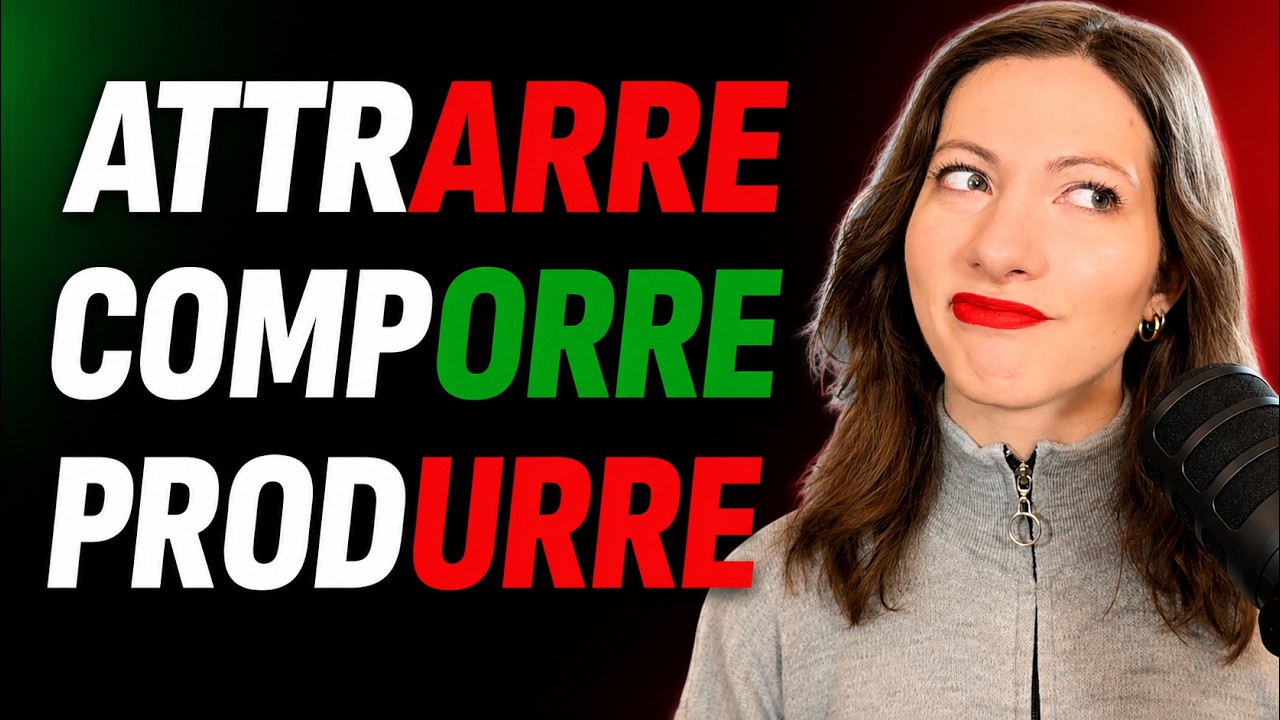
      Italian Verbs in -ORRE, -URRE and -ARRE: Where They Come From and How They Are Conjugated

        Have you ever read verbs like tradurre, proporre, attrarre and thought: “But these don’t end in -ARE, or -ERE, or -IRE — where do they come from?” They are among the most feared verbs in the entire Italian language. But they have a secret that, once understood, makes everything much simpler. In this article you will learn to recognise and correctly conjugate Italian verbs ending in -ORRE, -URRE and -ARRE — the ones that, if you make mistakes with them, immediately make it clear that the speaker is not a native.

        YouTube thumbnail

        All the Alternatives to “BUONA FORTUNA” in Italian

          How many times have you written “buona fortuna!” [good luck] in a message and thought: is there something more natural? The answer is yes, and there are tons of them! Italians rarely use “buona fortuna” in daily life: it sounds almost translated from English, a bit stiff, dictionary-like. Those who speak the language every day have an entire palette of expressions at their disposal: warmer, livelier, more nuanced. In this guide you’ll find 23 alternatives organized by tone and context, with practical examples and grammar notes. By the end you’ll know exactly which wish to choose in every situation.

          YouTube thumbnail