


If you really want to speak like a true Italian, you need to know these 10 magic words that you’ll hear thousands of times every day. You won’t find them in traditional grammar books, but they are absolutely essential for understanding and participating in everyday Italian conversations. These expressions make the difference between someone who speaks “textbook” Italian and someone who communicates naturally and spontaneously like a native speaker.
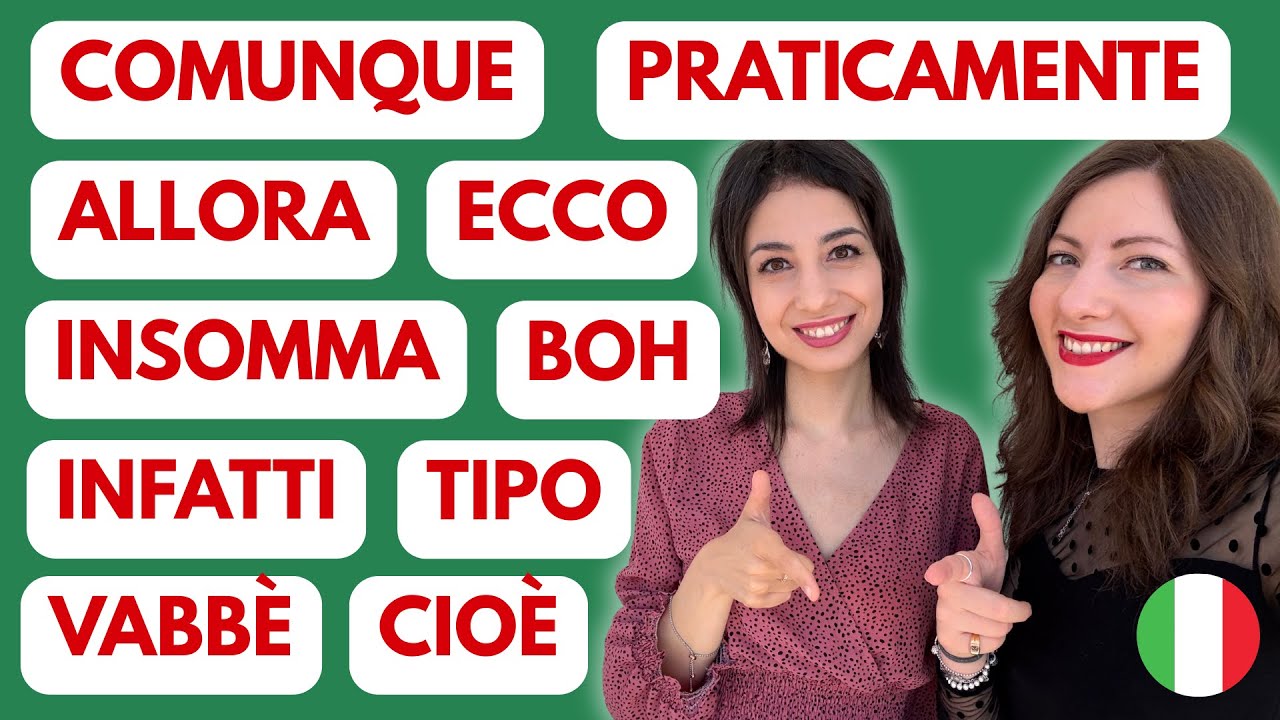
10 Magic Words Italians Use Every Day: The Complete Guide to Speaking Like a True Italian
1. TIPO – The Italians’ All-Purpose Word
“Tipo” is probably one of the most versatile words in colloquial Italian. It has replaced many more formal expressions and has become a true linguistic wild card that Italians use in countless contexts.
To approximate and indicate an indefinite quantity or time (equivalent to “about”, “more or less”): Examples “Ci vediamo tipo alle otto” [We’ll meet around eight], “Costa tipo 50 euro” [It costs about 50 euros], “Abito tipo a 10 minuti da qui” [I live about 10 minutes from here]. In this case, “tipo” softens the information making it less precise and more colloquial.
To give concrete examples (replaces “come” or “per esempio” [like or for example]): Examples “Mi piacciono i film tipo quelli di Tarantino” [I like movies like Tarantino’s], “Vorrei un lavoro tipo quello di mio fratello” [I’d like a job like my brother’s], “Ho bisogno di scarpe tipo quelle che hai tu” [I need shoes like the ones you have]. This function is particularly useful when you don’t want to be too specific.
To soften and make what you’re saying less categorical: Examples “Era tipo nervoso” [He was kind of nervous], “Mi sembra tipo strano” [It seems kind of strange to me], “È tipo il mio cantante preferito” [He’s kind of my favorite singer]. This use shows uncertainty or politeness, avoiding overly direct statements.
2. COMUNQUE – The Perfect Bridge Between Ideas
“Comunque” is the universal connector of spoken Italian. It’s a word that allows you to manage the flow of conversation elegantly and naturally, facilitating topic changes and transitions.
To change topic when you want to move to something different: Examples “Comunque, ti volevo dire una cosa importante” [Anyway, I wanted to tell you something important], “Comunque, lasciamo perdere questo discorso” [Anyway, let’s drop this topic], “Comunque, hai saputo di Marco?” [By the way, did you hear about Marco?]. It’s the most natural way to introduce a new topic without seeming abrupt.
To return to the main point after a digression: Examples “Comunque, come ti dicevo prima” [Anyway, as I was telling you before], “Comunque, il fatto è che” [Anyway, the fact is that], “Comunque, tornando a noi” [Anyway, getting back to us]. This function is essential for maintaining discourse coherence.
To conclude a discussion or summarize: Examples “Comunque sia, ci sentiamo domani” [In any case, we’ll talk tomorrow], “Comunque, la decisione è presa” [Anyway, the decision is made], “Comunque, vediamo che succede” [Anyway, let’s see what happens]. In this case it has a conclusive value and often indicates that you don’t want to elaborate further.
3. CIOÈ – The Expression of Strong Emotions
“Cioè” is much more than a simple explanatory conjunction. In colloquial language it has become a powerful expressive tool that conveys intense emotions and allows you to manage conversational timing.
To express surprise and disbelief: Examples “Cioè, hai vinto davvero alla lotteria?!” [I mean, did you really win the lottery?!], “Cioè, mi stai dicendo che non hai studiato niente?” [I mean, are you telling me you didn’t study anything?], “Cioè, è già finito il weekend?” [I mean, is the weekend already over?]. Tone of voice is fundamental for conveying the level of amazement.
To explain better and clarify a concept: Examples “È simpatico, cioè mi fa sempre ridere” [He’s nice, I mean he always makes me laugh], “Non è antipatico, cioè non mi ha mai fatto niente di male” [He’s not unpleasant, I mean he’s never done anything bad to me], “È intelligente, cioè capisce tutto al volo” [He’s smart, I mean he understands everything immediately]. In this case it maintains the original meaning of “that is”.
To buy time while thinking about what to say: Examples “Cioè… come dire… è complicato” [I mean… how to say… it’s complicated], “Cioè… non so se è una buona idea” [I mean… I don’t know if it’s a good idea]. It functions as a filler pause that gives time to organize thoughts.
To express shock and indignation: Examples “Cioè… sul serio? Ma era ingegnere!” [I mean… seriously? But he was an engineer!], “Cioè, ma come ti permetti?” [I mean, how dare you?]. In these cases it’s often followed by a pause and has a decidedly more dramatic tone.
4. PRATICAMENTE – The King of Summaries
“Praticamente” has become the ultimate introducer of explanations and summaries in colloquial Italian. It’s a word that signals to the listener that they’re about to receive a simplified version of a complex situation.
To summarize a complex situation: Examples “Praticamente, alla fine non è venuto nessuno alla nostra festa” [Basically, in the end nobody came to our party], “Praticamente mi hanno licenziato senza preavviso” [Basically they fired me without notice], “Praticamente siamo rimasti bloccati in ascensore per due ore” [Basically we were stuck in the elevator for two hours]. It indicates that you’re going straight to the essential point.
To begin a story or explanation: Examples “Praticamente è successo che ieri sera…” [Basically what happened was that last night…], “Praticamente il problema è questo…” [Basically the problem is this…], “Praticamente ti devo raccontare una cosa assurda” [Basically I have to tell you something absurd]. It prepares the listener for a narration.
To simplify and get to the point (equivalent to “essentially”, “substantially”): Examples “Praticamente siamo rimasti senza benzina” [Basically we ran out of gas], “Praticamente non ho capito niente della lezione” [Basically I didn’t understand anything from the lesson], “Praticamente dobbiamo ricominciare da capo” [Basically we have to start over].
5. VABBÈ – The Contraction That Says Everything
“Vabbè” is the contraction of “va bene” [okay/alright] and has become one of the most characteristic expressions of informal Italian. Its expressive power depends heavily on tone of voice and context, being able to express an incredible range of emotions and attitudes.
To express resignation and acceptance of an unpleasant situation: Examples “Vabbè, lascia perdere” [Oh well, forget about it], “Vabbè, ormai è andata così” [Oh well, that’s how it went], “Vabbè, ci riproverò domani” [Oh well, I’ll try again tomorrow]. The tone is often slightly discouraged but not dramatic.
To accept a proposal or give in to a request: Examples “Vabbè dai, facciamo come dici tu” [Alright then, let’s do as you say], “Vabbè, se proprio ci tieni” [Alright, if you really insist], “Vabbè, pago io stavolta” [Alright, I’ll pay this time]. In this case it can indicate either genuine acceptance or good-natured surrender.
To conclude a conversation or topic: Examples “Vabbè, ci sentiamo dopo” [Alright, we’ll talk later], “Vabbè, ne parliamo domani” [Alright, we’ll talk about it tomorrow], “Vabbè, ora devo scappare” [Alright, now I have to run]. It functions as a gentle way to close.
Important note: Tone can completely transform the meaning of “vabbè”! It can be neutral, disappointed, ironic, sarcastic or even aggressive. It’s essential to pay attention to intonation to understand the true message.
6. BOH – The Onomatopoeia of Uncertainty
“Boh” is a purely Italian interjection that has no direct equivalents in other languages. It’s the perfect expression for communicating uncertainty, doubt or indifference quickly and effectively.
To express genuine uncertainty: Examples “Che ora è?” “Boh, le tre?” [What time is it?” “Dunno, three?], “Dov’è finito Marco?” “Boh, sarà a casa” [Where did Marco end up?” “Dunno, he’s probably at home], “Quanto costa?” “Boh, sui 20 euro?” [How much does it cost?” “Dunno, around 20 euros?]. It indicates that you’re making a supposition without being sure.
To express indifference or lack of preferences: Examples “Cosa vuoi fare?” “Boh, quello che vuoi” [What do you want to do?” “Dunno, whatever you want], “Che film vediamo?” “Boh, scegli tu” [What movie should we watch?” “Dunno, you choose], “Dove andiamo a cena?” “Boh, dove capita” [Where are we going for dinner?” “Dunno, wherever]. It conveys a relaxed and flexible attitude.
“Boh” can also be used to express perplexity or annoyance when someone asks a difficult or inappropriate question: Example “Perché hai fatto così?” “Boh…” [Why did you do that?” “Dunno…”] (with a dry tone).
7. INFATTI – The Universal Confirmer
“Infatti” is a word that often creates confusion among those studying Italian because its colloquial use is very different from its literal meaning. Attention: it doesn’t mean “in fact” as in English, but rather “exactly”, “that’s right” or “as expected”!
To confirm a supposition or prediction: Examples “Paolo non è venuto a lavoro oggi. Pensavo fosse malato. E infatti avevo ragione” [Paolo didn’t come to work today. I thought he was sick. And indeed I was right], “Dicevi che sarebbe piovuto? Infatti sta iniziando a piovere” [You said it would rain? Indeed it’s starting to rain]. It indicates that something has occurred as expected.
To agree with someone and confirm their version: Examples “Da quello che ho capito, la situazione è complicata” “Sì infatti, è proprio così” [From what I understand, the situation is complicated” “Yes exactly, that’s right], “Mi sembrava di aver chiuso a chiave” “Infatti, la porta era chiusa” [I thought I had locked it” “Indeed, the door was locked].
To introduce a confirmation of what was being said: Examples “Marta è in ritardo… Infatti mi ha appena scritto che è bloccata nel traffico” [Marta is late… Indeed she just texted me that she’s stuck in traffic], “Pensavo di aver dimenticato il portafoglio… Infatti non ce l’ho” [I thought I had forgotten my wallet… Indeed I don’t have it].
Stop reading Italian.
Start speaking it.
Online lessons in groups of 4, organised by level and goals, with qualified teachers. Pick the day and time that suit you from the available slots.
Max 4 students:
there’s a seat for you
8. INSOMMA – The Master of Nuances
“Insomma” is an extremely versatile word that can take on very different meanings depending on context and tone. It’s particularly useful for expressing complex concepts with a single word.
To summarize a situation or draw conclusions: Examples “Insomma, non è andata come speravo” [In short, it didn’t go as I hoped], “Insomma, alla fine abbiamo deciso di non partire” [In short, in the end we decided not to leave], “Insomma, il problema è risolto” [In short, the problem is solved]. It has conclusive and summary value.
To conclude a discourse without being too definitive: Examples “Insomma, vediamo cosa succede” [Well, let’s see what happens], “Insomma, ne riparliamo” [Well, we’ll talk about it again], “Insomma, speriamo bene” [Well, let’s hope for the best]. It leaves things open but closes the conversation.
To express a “so-so” or mediocre evaluation: Examples “Com’era il film?” “Insomma…” [How was the movie?” “So-so…], “Ti è piaciuto il ristorante?” “Insomma…” [Did you like the restaurant?” “So-so…], “Come va il nuovo lavoro?” “Insomma…” [How’s the new job going?” “So-so…”]. Tone and facial expression are crucial for communicating the degree of dissatisfaction.
9. ECCO – The Emotional Pointer
“Ecco” is much more than a simple adverb of place. In colloquial language it has become a powerful tool for emphasizing, explaining and highlighting important moments in conversation.
To emphasize an important or central point: Examples “Ecco, questo è proprio quello che volevo dire” [There, that’s exactly what I wanted to say], “Ecco il problema principale” [There’s the main problem], “Ecco perché non sono d’accordo” [That’s why I disagree]. It draws attention to something crucial.
To emphasize a moment of discovery or realization: Examples “Ecco, ho trovato le chiavi che stavo cercando!” [There, I found the keys I was looking for!], “Ecco, è arrivata finalmente Marta!” [There, Marta finally arrived!], “Ecco la soluzione che stavamo cercando!” [There’s the solution we were looking for!]. It expresses satisfaction and resolution.
To explain the causes of a situation: Examples “Ieri la mia macchina non si metteva in moto. Ecco perché non sono venuta alla tua festa” [Yesterday my car wouldn’t start. That’s why I didn’t come to your party], “Non ho ricevuto il tuo messaggio. Ecco perché non ti ho risposto” [I didn’t receive your message. That’s why I didn’t reply].
Special forms with pronouns: When “ecco” is accompanied by a direct pronoun, it joins to form a single word: Eccomi! [Here I am!], Eccola! [There she is!/There it is!], Eccoci! [Here we are!], Eccoli! [There they are!].
10. ALLORA – The Conversation Organizer
“Allora” is the orchestra conductor of Italian conversations. It’s a word that allows you to manage discourse flow, organize ideas and establish logical connections between concepts.
To start a discourse or introduce a topic: Examples “Allora, cosa facciamo stasera?” [So, what are we doing tonight?], “Allora, vi racconto cos’è successo” [So, let me tell you what happened], “Allora, cominciamo questa riunione” [So, let’s start this meeting]. It captures attention and signals the beginning of something important.
To introduce a logical consequence: Examples “Non hai studiato? Allora non puoi uscire” [You didn’t study? Then you can’t go out], “Piove? Allora prendiamo l’ombrello” [It’s raining? Then let’s take the umbrella], “Sei stanco? Allora riposati” [You’re tired? Then rest]. It establishes a clear and immediate cause-effect relationship.
To resume a topic after an interruption: Examples “Allora, come ti stavo dicendo…” [So, as I was telling you…], “Allora, dove eravamo rimasti?” [So, where were we?], “Allora, tornando al discorso di prima” [So, getting back to the earlier discussion]. It naturally reestablishes the thread of discourse.
Why These Words Are So Important
These ten words represent much more than simple conversational fillers. They are the tools that allow Italians to communicate in a fluid, natural and emotionally rich way. Mastering them means:
• Better managing the timing of conversation, knowing when to enter and exit a discussion
• Expressing emotional nuances that would otherwise require entire sentences
• Sounding more natural and less “foreign” to Italian ears
• Better understanding subtexts and implicit meanings in conversations
• Creating empathy and connection with native speakers
How to Use These Words: Practical Tips
To effectively integrate these words into your Italian, start by listening carefully to how Italians use them in films, TV series and real conversations. Observe the tone of voice, facial expression and context: these elements are often more important than the words themselves.
Start using one word at a time, focusing on the simplest contexts before moving on to more nuanced uses. Remember that these words are characteristic of informal register: avoid them in very formal situations or official writing.
The secret is gradualness: don’t try to use all ten words in one conversation, but integrate them naturally when you feel they fit the context. Over time they will become a natural part of your way of expressing yourself in Italian.
Practical Dialogue: The 10 Words in Action
Here’s an authentic dialogue that shows how these words are used naturally in a conversation between Italians. Notice how each word contributes to making the discourse fluid and rich in nuances:
Angela: Ciao! Allora, com’è andata oggi in ufficio? [Hi! So, how did it go at the office today?]
Graziana: Cioè, non ci crederai mai! Il mio capo mi ha chiesto di rifare tutto il progetto. [I mean, you’ll never believe it! My boss asked me to redo the entire project.]
Angela: Ma no! Praticamente devi ricominciare da zero? [No way! Basically you have to start from scratch?]
Graziana: Infatti! E la scadenza è domani… Boh, non so proprio come farò. [Exactly! And the deadline is tomorrow… Dunno, I really don’t know how I’ll manage.]
Angela: Ma che stress! E tipo, quante ore ci vorranno? [What stress! And like, how many hours will it take?]
Graziana: Insomma, se lavoro tutta la notte forse ce la faccio. Comunque, basta parlare di lavoro. Tu come stai? [Well, if I work all night maybe I can make it. Anyway, enough talk about work. How are you?]
Angela: Vabbè, io tutto bene. Ah, ecco, mi sono ricordata! Hai visto che Marco ha aperto un ristorante? [Oh well, I’m fine. Ah, there, I remembered! Did you see that Marco opened a restaurant?]
Graziana: Davvero? Tipo quello che studiava economia con noi? [Really? Like the one who studied economics with us?]
Angela: Infatti, proprio lui! Praticamente ha mollato tutto e ora fa il cuoco. [Exactly, that’s him! Basically he dropped everything and now he’s a cook.]
Graziana: Cioè, ma è pazzo! Lasciare un lavoro sicuro per aprire un ristorante… [I mean, he’s crazy! Leaving a secure job to open a restaurant…]
Angela: Boh, a me sembra coraggioso. Comunque ho sentito che va abbastanza bene. [Dunno, to me he seems brave. Anyway I heard it’s going quite well.]
Graziana: Insomma, meglio per lui. Io non avrei mai il coraggio di fare una cosa del genere. [Well, good for him. I would never have the courage to do something like that.]
Angela: Ecco, questo è il problema! Noi pensiamo troppo. Allora, che ne dici se andiamo a provare il suo locale stasera? [There, that’s the problem! We think too much. So, what do you say if we go try his place tonight?]
Graziana: Tipo adesso? Ma io dovrei lavorare… [Like now? But I should work…]
Angela: Vabbè, dai! Un’oretta di pausa non ti ammazzerà. Infatti quando si lavora troppo si rende meno. [Come on! An hour break won’t kill you. Actually when you work too much you’re less productive.]
Graziana: Cioè, mi stai convincendo… Allora d’accordo, ma tipo verso le otto, va bene? [I mean, you’re convincing me… So okay, but like around eight, is that good?]
Angela: Perfetto! Ecco, così ci rilassiamo un po’. Comunque sono curiosa di vedere com’è diventato. [Perfect! There, this way we relax a bit. Anyway I’m curious to see how he’s become.]
Graziana: Infatti, anch’io! Praticamente non lo vedo da anni. Boh, chissà se si ricorderà di noi! [Indeed, me too! Basically I haven’t seen him in years. Dunno, who knows if he’ll remember us!]
Angela: Insomma, eravamo nella stessa classe per tre anni! Allora ci vediamo tipo alle otto sotto casa tua? [Come on, we were in the same class for three years! So we’ll meet like at eight under your house?]
Graziana: Ecco, perfetto! Comunque, ora devo proprio scappare. Vabbè, a dopo! [There, perfect! Anyway, now I really have to run. Alright, see you later!]
Angela: Cioè, già vai via? Allora ciao, a stasera! [I mean, you’re already leaving? So bye, see you tonight!]
If you want to further expand your vocabulary, read this article on the sexiest words in the Italian language!
Find out your LEVEL: take this free Italian test!
Want the lesson PDF with exercises and solutions?
Join the LearnAmo AcademyCaricamento quiz in corso…
Podcast: Play in new window | Download (Duration: 12:19 — 17.2MB)
Iscriviti: Apple Podcasts | Spotify | Android | iHeartRadio | Podcast Index | TuneIn | Deezer | RSS | Altri...