


In the 1970s and 1980s, Italy experienced deep social and cultural changes. Despite the political tensions of the “Years of Lead,” new youth cultures emerged, family customs evolved, and there was a major artistic boom. For Italian language learners, understanding this period is key to grasping today’s Italian identity.
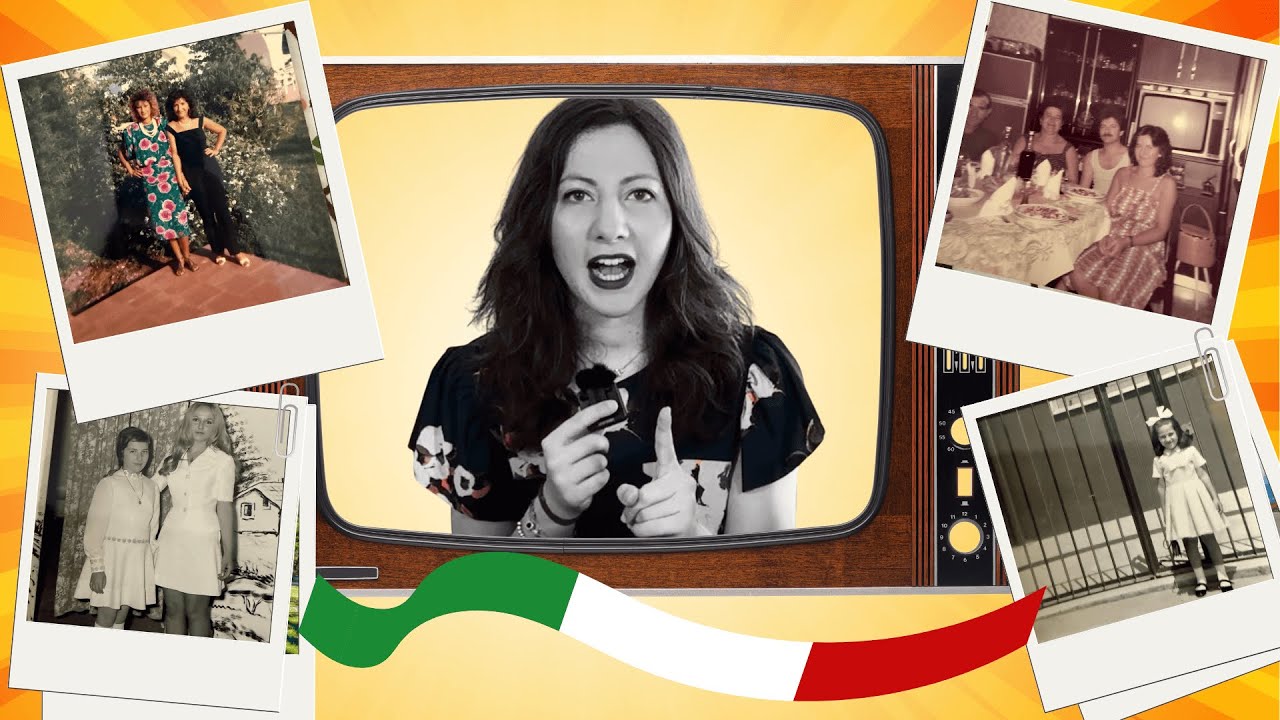
Italy in the ’70s and ’80s: A Journey into Life, Music, Culture and Family of the Belpaese
Daily Life between Tradition and Change
The daily life of Italians in the 1970s underwent epochal transformations. The traditional patriarchal family model began to be questioned, while women conquered increasingly greater spaces in society. In 1975, the family law reform was approved, which recognized equality between spouses and introduced the concept of shared parental authority.
Italian homes filled with new appliances: the washing machine became common even in middle-class families, while color television began to spread at the end of the decade. The landline telephone became a status symbol, and many families queued to install it. Kitchens modernized with the arrival of refrigerators with freezers and the first microwave ovens, although the latter remained a luxury for few.
A typical example of a family day in the 1970s began with morning coffee prepared with the Bialetti moka pot, which had become an icon of Italian design. Children often went to school accompanied on foot by their mothers, while fathers went to work in Fiat 500 or 126, the most popular cars of the era. Shopping was still done in neighborhood stores: at the baker for fresh bread, at the butcher for meat, at the greengrocer for seasonal vegetables and fruit.
A typical conversation at the greengrocer: “Buongiorno signora Maria, oggi cosa le servo?” – “Mi dia due chili di arance, un chilo di mele e mezzo chilo di banane, per favore.” – “Ecco a Lei, sono 3.500 lire in totale.” [Good morning Mrs. Maria, what can I serve you today?” – “Give me two kilos of oranges, one kilo of apples and half a kilo of bananas, please.” – “Here you are, that’s 3,500 lire in total.”] Notice how the Italian lira was still used and relationships were very personal and cordial.
When an unexpected guest arrived, it was common to say: “Ti faccio subito un caffè!” [I’ll make you coffee right away!] Italian hospitality always included the immediate offer of coffee or something to eat. It was considered rude not to accept at least a coffee, even if you didn’t feel like it.
The Musical Revolution: From Beat to the New Italian Song
Italian music in the 1970s experienced a true revolution. The phenomenon of cantautori [singer-songwriters] was born, artists who wrote and performed their own songs, often with texts of strong social and political commitment. Fabrizio De André published legendary albums like “Non al denaro non all’amore né al cielo” (1971) and “Rimini” (1978), telling stories of outcasts and outsiders with poetry that elevated the song to a form of literary art.
Francesco Guccini became the voice of the 1968 generation with songs like “Dio è morto” and “Locomotive”, while Lucio Battisti revolutionized Italian pop with innovative melodies and sophisticated arrangements in collaboration with lyricist Giulio Rapetti, known as Mogol. Songs like “Il mio canto libero” (1972) and “Amarsi un po'” (1977) entered the Italian collective imagination.
The 1980s brought a new wave of energy with the arrival of the Italian new wave. Vasco Rossi exploded onto the scene with “Colpa d’Alfredo” (1980) and “Vita spericolata” (1983), becoming the idol of young people with his nonconformist rock. Renato Zero conquered the audience with theatrical shows and extravagant costumes, while bands like Litfiba and Skiantos brought punk rock to Italy.
Light music found new protagonists in Adriano Celentano, who in the 1970s reinvented himself as a television showman, and in Mina, still considered today one of the most important voices in the history of Italian music. The Festival di Sanremo maintained its importance as a showcase for Italian songs, launching hits that became soundtracks to the daily life of Italians.
During house parties it was common for someone to say: “Metti su un po’ di musica!” [Put on some music!] and the stereo would be turned on with cassettes or records. It was normal for everyone to sing along to the most famous songs, especially those from Sanremo that “everyone knew by heart”.
Auteur Cinema and Italian Comedy
Italian cinema in the 1970s reached extraordinary artistic heights with directors like Federico Fellini, who made masterpieces like “Roma” (1972) and “Amarcord” (1973), the latter winning the Oscar for best foreign film. Michelangelo Antonioni continued his research on modern incommunicability, while Pier Paolo Pasolini provoked scandals and debates with films like “Il Decameron” (1971) and “Salò o le 120 giornate di Sodoma” (1975).
The commedia all’italiana [Italian comedy] experienced its golden period with actors like Alberto Sordi, Ugo Tognazzi, Nino Manfredi and Vittorio Gassman. Films like “Amici miei” (1975) and “La Grande Abbuffata” (1973) became cult classics, representing with irony and bitterness the vices and virtues of Italians. Roberto Benigni began his career precisely in this period, bringing a physical and surreal comedy that renewed the Italian comic genre.
Italian genre cinema conquered the world with Sergio Leone’s spaghetti western and Dario Argento’s horror films. “Suspiria” (1977) by Argento became a classic of international horror cinema, while spaghetti western films with Clint Eastwood continued to influence world cinema.
At the cinema it was common to hear phrases like: “Andiamo a vedere l’ultimo film di Bud Spencer e Terence Hill?” [Shall we go see the latest Bud Spencer and Terence Hill film?] This pair of actors was beloved by children and families. During the screening, the audience actively participated by laughing and applauding the funniest scenes.
Many cinemas had “prima visione” [first run] (newly released films) and “seconda visione” [second run] (older films at reduced prices). It was normal to ask: “Quanto costa il biglietto per la prima visione?” [How much does a first-run ticket cost?] Cinemas were places of social gathering, especially for young people who went in groups.
Television: From Pedagogy to Variety Shows
RAI (Radio Televisione Italiana) was the only national television broadcaster and performed a fundamental educational and cultural function. Programs like “Non è mai troppo tardi” by teacher Alberto Manzi helped millions of adult Italians learn to read and write, contributing to the fight against illiteracy that still affected part of the population, especially in the South.
The 1970s saw the birth of programs that entered the history of Italian television: “Canzonissima” brought great variety shows with international stars into Italian homes, while “Odeon” proposed television versions of classic theatrical works. “Carosello”, the evening advertising program, became a fixed appointment for families and launched jingles and characters that remained in the collective imagination.
The 1980s brought the revolution of commercial television by Silvio Berlusconi. Canale 5 (1980), Italia 1 (1982) and Rete 4 (1984) radically changed the Italian television landscape, introducing more commercial programming with quiz shows, American TV series and spectacular variety shows. Programs like “Drive In” and “Colpo Grosso” scandalized and fascinated the Italian public.
During “Carosello” (the advertising program at 8:50 PM), children always said: “Dopo Carosello tutti a letto!” [After Carosello everyone to bed!] This phrase had become a national saying. Children eagerly awaited the advertising sketches because they were fun and creative.
When commercial TV arrived, families would hear discussions like: “Stasera cosa guardiamo? Il film su Rai 1 o il varietà su Canale 5?” [What shall we watch tonight? The film on Rai 1 or the variety show on Canale 5?] The phenomenon of “zapping” (constantly changing channels) was born, which often created small family arguments over control of the remote.
The Italian Family between Tradition and Modernity
The Italian family in the 1970s maintained many traditional characteristics but began to undergo important transformations. The large family was still common, especially in the southern regions, where it was not uncommon to find family units with five or six children. The nonna [grandmother] often lived in the same house or building as married children, playing a central role in the education of grandchildren and domestic management.
The Italian Sunday followed established rituals: morning mass for many Catholic families, followed by Sunday lunch that could last for hours. The typical menu included a primo piatto [first course] (often homemade pasta), a secondo [second course] with meat and side dish, fruit and dessert. The afternoon was often spent visiting relatives or taking walks in the city center, an activity called “struscio” or “passeggiata” [stroll].
In the 1980s there was a progressive modernization of family relationships. Women began working outside the home in increasing numbers, changing the traditional family dynamic. The introduction of divorce in 1970 and its confirmation in the 1974 referendum marked a turning point in Italian customs, although divorce remained still uncommon for cultural and religious reasons.
Young Italians began to claim greater autonomy. The phenomenon of “vacanze dei giovani” [youth holidays] was born, with groups of young people traveling together to seaside resorts like Rimini, Riccione or Costa Smeralda. Discoteche [discos] became places of social gathering, where people danced to international and Italian disco music hits.
During Sunday lunches it was normal to hear conversations like: “Nonna, puoi passarmi il secondo?” [Grandma, can you pass me the second course?] or “Mamma, questo sugo è squisito!” [Mom, this sauce is delicious!] Sunday lunch lasted for hours and all family members, including aunts, uncles and cousins, gathered around the table to eat and chat.
When young people wanted to go out at night, they always had to ask permission: “Papà, posso andare in discoteca con gli amici? Torno prima delle due!” [Dad, can I go to the disco with friends? I’ll be back before two!] Parents were much more protective and the return time was always a matter of negotiation, especially for girls.
Fashion and Lifestyle
The 1970s introduced international fashion influences to Italy. Jeans, initially considered a symbol of youth rebellion, spread rapidly among young people of all social classes. Girls began wearing miniskirts and bell-bottom pants, scandalizing the more conservative generation but asserting a new expressive freedom.
Italian fashion began to gain international prestige. Designers like Giorgio Armani, who opened his fashion house in 1975, Gianni Versace and Valentino laid the foundations of “Made in Italy” in the haute couture sector. Milan established itself as one of the world’s fashion capitals, rivaling Paris and New York.
The 1980s saw the explosion of the “paninari” phenomenon, a Milanese youth subculture that influenced the entire country. The paninari frequented fast food restaurants (an absolute novelty for Italy), wore specific clothing brands like Timberland, Best Company and El Charro, and communicated with a particular slang rich in expressions like “wow”, “che figo” [how cool] and “sciallo” [chill].
The paninari greeted each other with expressions like: “Ciao bello, tutto sciallo?” [Hi handsome, everything chill?] or “Che figo il tuo bomber!” [How cool is your jacket!]. They had a very characteristic way of speaking that mixed Italian and English.
When they went shopping, young people in the ’80s said: “Andiamo a vedere se c’è qualcosa di figo in vetrina” [Let’s go see if there’s something cool in the shop window] or “Questi jeans sono troppo tamarro!” [These jeans are too tacky!] Fashion had become very important for expressing one’s personality and belonging to a group.
Gastronomy: Between Regional Tradition and Innovation
Italian cuisine in the 1970s was still strongly regional and seasonal. Northern families mainly consumed rice and polenta, while in the South pasta was the staple food. Pizza was considered a Neapolitan specialty and only towards the end of the decade did it begin to spread in pizzerias throughout Italy.
Neighborhood grocery stores sold bulk products: cheese was cut to order, cold cuts sliced on request, and many products were kept in glass or metal containers. Daily shopping was still a common practice, especially for bread, milk and fresh vegetables. The weekly local market remained a social as well as commercial institution.
The 1980s brought the first supermarkets and hypermarkets, which revolutionized Italian habits. Chains like Standa and Upim opened outlets in the suburbs of major cities. Frozen and packaged products also began to spread, although many families remained faithful to traditional fresh products.
The coffee culture was strengthened with the opening of new bars and innovation in espresso machines. Cappuccino and brioche in the morning became an essential ritual, while the evening aperitivo began to spread as a moment of socialization, anticipating a trend that would characterize the following decades.
At the bar it was normal to hear orders like: “Un cappuccino e una brioche, per favore” [A cappuccino and a brioche, please] in the morning, or “Un caffè corretto” [A “corrected” coffee] (with a drop of grappa or sambuca). Baristas knew the tastes of regular customers and often prepared coffee even before it was ordered.
During shopping at the market you could hear phrases like: “Quanto vengono questi pomodori?” [How much are these tomatoes?] or “Me ne dia due chili, ma scelga quelli più belli!” [Give me two kilos, but choose the nicest ones!] It was normal to bargain over prices and develop a personal relationship with sellers who remembered customers’ preferences.
Stop reading Italian.
Start speaking it.
Online lessons in groups of 4, organised by level and goals, with qualified teachers. Pick the day and time that suit you from the available slots.
Max 4 students:
there’s a seat for you
Sports and Leisure Time
Football confirmed its role as a national passion. The 1970s saw the triumph of Giovanni Trapattoni’s Juventus and the Italian national team that finished fourth at the 1978 World Cup in Argentina. Francesco Totti had not yet been born, but stars like Roberto Bettega, Franco Causio and Dino Zoff entered the legend of Italian football.
In the 1980s, Italian football experienced one of its most glorious periods with the arrival of foreign champions like Diego Armando Maradona at Napoli (1984) and Michel Platini at Juventus (1982). The Serie A championship became the most watched and competitive in the world, while Italy won the 1982 World Cup in Spain with a team led by Enzo Bearzot.
Other sports gained popularity: tennis with Adriano Panatta, winner of Roland Garros 1976, Formula 1 with drivers like Clay Regazzoni and later Michele Alboreto, and cycling which maintained its tradition with champions like Francesco Moser and Giuseppe Saronni.
Leisure time diversified: the first shopping centers were born in urban suburbs, game rooms with the first videogames spread, and mass tourism brought more and more Italians to spend their summer holidays in the seaside resorts of the Adriatic or Tyrrhenian Sea.
Football fans gathered in bars to watch matches and shouted: “Gol! Gol! L’ha fatta!” [Goal! Goal! He scored!] or “Arbitro cornuto!” [Referee, you bastard!] when they disagreed with a decision. Football was (and still is) a passion that united and divided entire families and cities.
In game rooms, kids challenged each other at videogames saying: “Tocca a me!” [My turn!] or “Ho fatto il record!” [I set the record!] Tokens cost 100-200 lire and many kids spent their weekly allowance to play Pac-Man, Space Invaders or Asteroids.
The Italian Language: Evolution and Modernization
The 1970s and 1980s marked a crucial moment for the evolution of the Italian language. Television and mass schooling helped spread a standard Italian throughout the country, progressively reducing the exclusive use of regional dialects. However, many families continued to speak in dialect at home, creating a situation of bilingualism that characterized most Italians.
Many English expressions entered common use, especially in the fields of music (rock, pop, disco), technology (computer, stereo, walkman) and fashion (jeans, t-shirt, sneakers). This phenomenon worried some intellectuals, who feared excessive “contamination” of Italian, but reflected Italy’s openness to international culture.
The youth language was enriched with new expressions: terms like “gasato” [excited], “tamarro” [tacky person], “figo” [cool, interesting] entered common language. Young people continuously invented new sayings, often inspired by songs, films or television programs.
In schools, greater attention began to be paid to spoken Italian as well as written, recognizing the importance of oral communication in modern society. Educational television programs like “L’Albero Azzurro” helped children learn correct and modern Italian.
In many families you could hear: “A casa si parla in italiano, non in dialetto!” [At home we speak Italian, not dialect!] Parents wanted their children to learn standard Italian to have better job opportunities. However, with grandparents they often continued to speak in dialect.
Young people began using English expressions like: “Che rock questo disco!” [How rock this record is!] or “È molto cool quella ragazza” [That girl is very cool]. Adults often didn’t understand and asked: “Cosa significa ‘cool’?” [What does ‘cool’ mean?] creating a small generational gap in language.
Expressions and Sayings of the Era
To better understand the language of the era, here are some typical expressions from the 1970s and 1980s that help foreign students understand the cultural context:
“Fare il ponte” [make the bridge] meant taking a day off between a holiday and the weekend to create a longer rest period. “Andare in disco” [go to disco] was the expression for going to a discotheque. “Essere in fissa” [being fixated] indicated being obsessed with something or someone. “Avere la botta” [having the hit] meant being madly in love with someone.
“Fare una telefonata in bianco” [make a blank phone call] was calling someone and hanging up as soon as they answered, a way to let them know you had arrived home without spending money on the call. “Registrare con il mangianastri” [recording with the tape eater] meant using the cassette player to record music from the radio. “Fare la collezione” [making a collection] was a popular activity among children and adults who collected stickers, stamps or various objects.
Social and Cultural Movements
The 1970s were characterized by intense social movements that transformed Italian society. The feminist movement claimed gender equality and achieved important victories: in 1978 the law on voluntary termination of pregnancy was approved, after years of battles and demonstrations. Women took to the streets to claim the right to work, higher education and political participation.
The student movement, born from 1968, continued to influence society with demands for university and school reform. Student assemblies were born and the practice of occupations spread as a form of protest. Students demanded a more democratic school and a university open to working-class children.
The workers’ movement reached its apex with the “Hot Autumn” of 1969 which extended into the early 1970s. Workers achieved important victories: the 40-hour work week, the Workers’ Statute (1970) which protected union rights, and significant salary improvements.
In the 1980s new movements emerged: environmentalists began to raise public awareness about ecological problems, while the peace movement organized large demonstrations against the nuclear arms race. The first volunteer associations were born that dealt with social marginalization and assistance to the elderly.
During student demonstrations you could hear slogans like: “Vogliamo studiare, non memorizzare!” [We want to study, not memorize!] or “Università libera per tutti!” [Free university for everyone!] Students protested to have more say in university decisions and for more democratic education.
In feminist demonstrations they shouted: “Tremate, tremate, le streghe son tornate!” [Tremble, tremble, the witches have returned!] or “Il corpo è mio e me lo gestisco io!” [My body is mine and I manage it myself!] These slogans expressed women’s demand for autonomy and equality in all aspects of social life.
Technology and Innovations in Daily Life
The arrival of modern technology gradually changed the lives of Italians. In 1975, color television was born in Italy, although many families continued to watch black and white sets for economic reasons. The remote control was still a luxury, and often children served as “human remote controls” to change channels.
The 1980s brought revolutionary innovations: the Sony Walkman allowed for the first time to listen to music on the move with headphones, radically changing young people’s relationship with music. VHS videocassettes transformed film consumption, allowing people to watch movies at home and record television programs.
The first home computers began to appear in wealthier homes: the Commodore 64 and Amstrad CPC were the most widespread models in Italy. Many kids learned the first rudiments of programming with languages like BASIC, while the first home videogames spread.
The microwave oven timidly began to enter Italian kitchens, although many housewives remained skeptical of this new cooking method. The dishwasher became a desired appliance for middle-class families, while air conditioners were still a luxury for the privileged few.
When the first Walkman arrived in the family, kids said: “Papà, mi compri le pile per il walkman?” [Dad, will you buy me batteries for the Walkman?] or “Non sento, ho le cuffie!” [I can’t hear, I have headphones on!] It was revolutionary to be able to listen to music while walking, and you often saw young people walking “in time” to music on the street.
With the arrival of VHS videocassettes, families said: “Stasera guardiamo il film che abbiamo registrato” [Tonight we’ll watch the film we recorded] or “Ricordati di programmare il videoregistratore!” [Remember to program the video recorder!] Recording a film from TV was a complex operation that required setting the date, time and channel.
Holidays and Mass Tourism
Summer holidays became a mass phenomenon in the 1970s. The Riviera Romagnola with Rimini, Riccione and Cattolica established itself as the preferred destination for Italian families. Beach establishments offered complete services: umbrellas and loungers, bathrooms, bars, restaurants and entertainment for children.
The phenomenon of popular “villeggiatura” [summer residence] was born: entire families moved for a month to rented apartments by the sea, often shared with relatives or friends. Beach life followed precise rhythms: morning at the beach, lunch at home with a frugal “pranzetto” [light lunch], afternoon rest and another swim in the late afternoon.
The 1980s saw the diversification of tourist destinations. The Costa Smeralda in Sardinia became the symbol of luxury tourism, while Versilia in Tuscany attracted a more sophisticated audience. The first mass trips abroad also began: Spain and Greece became accessible destinations even for the middle class.
Winter tourism developed with the increase in passion for skiing. Resorts like Cortina d’Ampezzo, Madonna di Campiglio and the Dolomites became popular destinations during Christmas and Easter holidays. The first organized “settimane bianche” [white weeks] for groups and families were born.
Upon arrival at seaside hotels, families asked: “A che ora si serve la colazione?” [What time is breakfast served?] or “C’è l’animazione per i bambini?” [Is there entertainment for children?] Beach establishments offered complete services and many families always chose the same place for holidays, creating friendships that lasted for years.
At the beach it was common to hear: “Mamma, posso fare il bagno?” [Mom, can I go swimming?] followed by the response: “Aspetta almeno due ore dalla digestione!” [Wait at least two hours after digestion!] Italian mothers were very careful about water safety rules and “digestion” was a sacred moment to respect after meals.
Useful Vocabulary for Foreign Students
| Word/Expression | Meaning | Example of use |
|---|---|---|
| Villeggiatura | Holiday period, especially summer | “La famiglia Rossi fa la villeggiatura a Rimini” [The Rossi family spends their summer holidays in Rimini] |
| Struscio | Evening stroll through the city center streets | “Dopo cena facciamo lo struscio sul corso” [After dinner we’ll stroll down the main street] |
| Cantautore | Musician who writes and performs their own songs | “Fabrizio De André era un grande cantautore” [Fabrizio De André was a great singer-songwriter] |
| Mangianastri | Cassette player, tape recorder | “Ho registrato la canzone con il mangianastri” [I recorded the song with the tape recorder] |
| Figo/Figa | Cool, interesting, fashionable | “Che macchina figa che hai!” [What a cool car you have!] |
| Gasato | Enthusiastic, positively excited | “Sono gasato per il concerto di stasera” [I’m excited about tonight’s concert] |
| Tamarro | Person with bad taste, vulgar | “Quel vestito è proprio tamarro” [That dress is really tacky] |
| Paninaro | Young person from the ’80s who followed a specific fashion | “I paninari si ritrovavano al Burghy” [The paninari used to meet at Burghy] |
The Legacy of an Unrepeatable Era
The 1970s and 1980s represent an unrepeatable period in Italian history, in which tradition and modernity met creating a unique synthesis. These two decades forged contemporary Italian identity, introducing values, customs and languages that are still present in today’s society. For those studying Italian as a foreign language, understanding this period means entering the heart of modern Italian culture, understanding the origins of expressions, habits and cultural references that continue to characterize the Belpaese. The Italy of those years, with its contradictions, its passions and its transformations, continues to live in collective memory as an era of creativity, change and vitality that left an indelible mark on the country’s history.
If you are interested in typical Italian products, you might be interested in this vlog about orecchiette from Bari!
Buy our new book: “Parole Di Casa Mia: Un Viaggio Nei Colloquialismi Italiani“, and learn all the colloquial expressions to speak like a true native speaker!
Want the lesson PDF with exercises and solutions?
Join the LearnAmo AcademyCaricamento quiz in corso…
Podcast: Play in new window | Download (Duration: 17:50 — 40.8MB)
Iscriviti: Apple Podcasts | Spotify | Android | iHeartRadio | Podcast Index | TuneIn | Deezer | RSS | Altri...