


The consecutio temporum (or sequence of tenses) is one of the fundamental pillars of Italian grammar. It consists of a set of rules that determine which verb tense must be used in subordinate clauses in relation to the tense of the verb in the main clause, in order to express a specific temporal relationship.
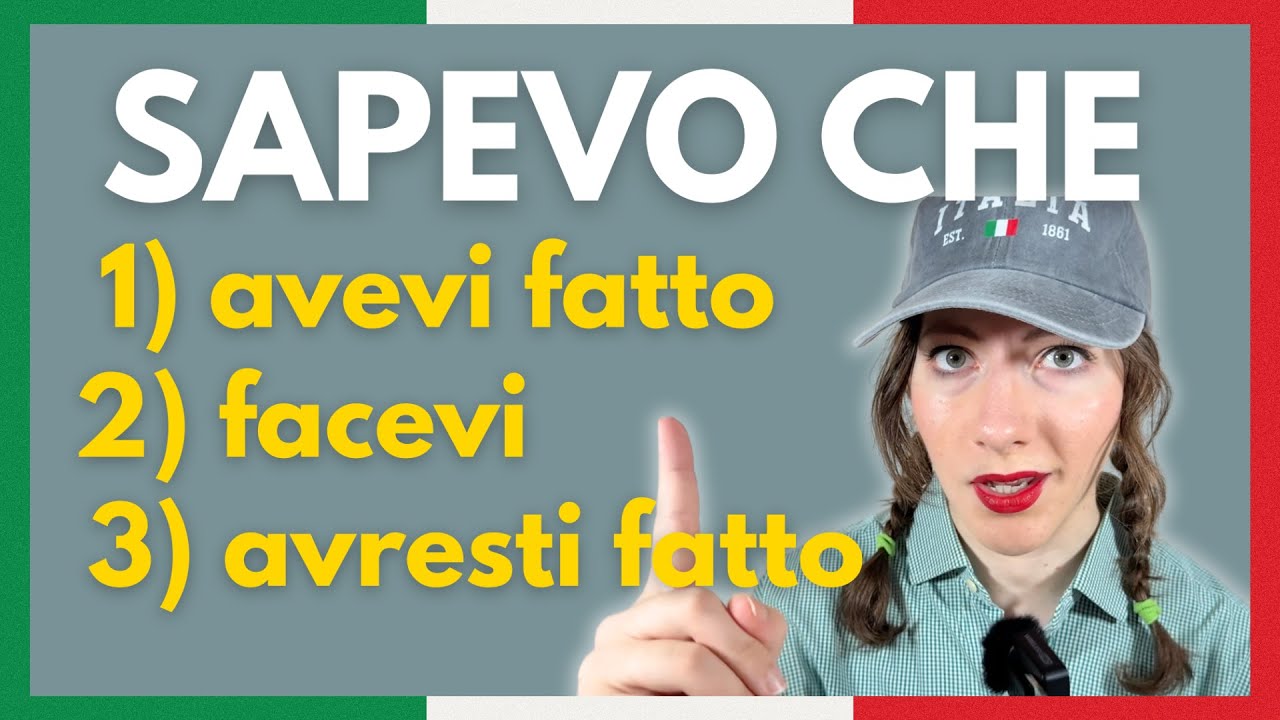
La Consecutio Temporum: Sequence of Tenses in Italian
What is the Consecutio Temporum
The consecutio temporum determines the temporal relationship between the action of the main clause (or governing clause) and that of the subordinate clause. This relationship can express three fundamental temporal relations: contemporaneity (the actions occur at the same time), anteriority (the action of the subordinate clause occurs before), and posteriority (the action of the subordinate clause occurs after).
The Italian consecutio temporum system mainly distinguishes between two modes: agreement with the indicative (to express real and certain facts) and agreement with the subjunctive (to express possibility, doubts, wishes, or dependencies on verbs that require the subjunctive).
The Consecutio Temporum with the Indicative
When the main clause has the verb in the indicative, the subordinate clause also uses the indicative to express real and concrete actions. The choice of tense depends on the temporal relationship between the two actions.
When the Main Clause is in the Present
If the verb of the main clause is in the present indicative, in the subordinate clause we use:
- Present for contemporaneity: “So che Maria studia in biblioteca” [I know that Maria studies in the library]
- Passato prossimo or imperfetto for anteriority: “So che Maria ha studiato ieri” [I know that Maria studied yesterday] / “So che Maria studiava quando l’hai chiamata” [I know that Maria was studying when you called her]
- Futuro semplice for posteriority: “So che Maria studierà domani” [I know that Maria will study tomorrow]
When the Main Clause is in the Past
If the verb of the main clause is in a past tense (passato prossimo, imperfetto, passato remoto, trapassato prossimo), in the subordinate clause we use:
- Imperfetto for contemporaneity: “Sapevo che Marco lavorava in banca” [I knew that Marco worked in a bank]
- Trapassato prossimo for anteriority: “Sapevo che Marco aveva lavorato fino a tardi” [I knew that Marco had worked until late]
- Condizionale passato for posteriority: “Sapevo che Marco avrebbe lavorato tutto il weekend” [I knew that Marco would work all weekend]
When the Main Clause is in the Future
If the verb of the main clause is in the futuro semplice, in the subordinate clause we use:
- Futuro semplice or presente for contemporaneity: “Saprò se Giovanni arriverà in tempo” [I will know if Giovanni will arrive on time] / “Saprò se Giovanni arriva in tempo” [I will know if Giovanni arrives on time]
- Futuro anteriore or passato prossimo for anteriority: “Saprò se Giovanni sarà arrivato” [I will know if Giovanni will have arrived] / “Saprò se Giovanni è arrivato” [I will know if Giovanni has arrived]
- Futuro semplice for posteriority: “Saprò quando Giovanni partirà” [I will know when Giovanni will leave]
The Consecutio Temporum with the Subjunctive
The congiuntivo (subjunctive) is used in subordinate clauses that depend on verbs expressing opinion, doubt, desire, fear, will, or after conjunctions like “sebbene” [although], “benché” [although], “affinché” [so that], “prima che” [before]. The consecutio temporum with the subjunctive follows precise rules that are particularly important for communicating correctly in Italian.
When the Main Clause is in the Present or Future
If the verb of the main clause is in the present or future, in the subordinate clause we use:
- Congiuntivo presente for contemporaneity or posteriority: “Spero che tu stia bene” [I hope that you are well] / “Penso che domani piova” [I think that tomorrow it will rain]
- Congiuntivo passato for anteriority: “Credo che Laura sia partita ieri” [I believe that Laura left yesterday]
When the Main Clause is in the Past
If the verb of the main clause is in a past tense, in the subordinate clause we use:
- Congiuntivo imperfetto for contemporaneity or posteriority: “Pensavo che tu fossi a casa” [I thought that you were at home] / “Credevo che arrivasse più tardi” [I believed that he would arrive later]
- Congiuntivo trapassato for anteriority: “Pensavo che Marco fosse già partito” [I thought that Marco had already left]
When the Main Clause is in the Conditional
If the verb of the main clause is in the condizionale presente, in the subordinate clause we use:
- Congiuntivo imperfetto for contemporaneity or posteriority: “Vorrei che tu venissi con me” [I would like you to come with me]
- Congiuntivo trapassato for anteriority: “Vorrei che tu mi avessi chiamato prima” [I wish you had called me before]
If the verb of the main clause is in the condizionale passato, in the subordinate clause we use:
- Congiuntivo trapassato for contemporaneity, anteriority and posteriority: “Avrei voluto che tu fossi venuto alla festa” [I would have liked you to come to the party]
Summary Table: Consecutio Temporum with the Subjunctive
To facilitate understanding, here is a summary table of the main rules of the consecutio temporum with the subjunctive:
| Tense of Main Clause | Temporal Relationship | Tense of Subordinate Clause | Example |
|---|---|---|---|
| Present/Future | Contemporaneity/Posteriority | Congiuntivo presente | Spero che venga [I hope he/she comes] |
| Present/Future | Anteriority | Congiuntivo passato | Penso che sia arrivato [I think he/she has arrived] |
| Past | Contemporaneity/Posteriority | Congiuntivo imperfetto | Speravo che venisse [I hoped he/she would come] |
| Past | Anteriority | Congiuntivo trapassato | Pensavo che fosse arrivato [I thought he/she had arrived] |
| Condizionale presente | Contemporaneity/Posteriority | Congiuntivo imperfetto | Vorrei che venisse [I would like him/her to come] |
| Condizionale presente | Anteriority | Congiuntivo trapassato | Vorrei che fosse venuto [I wish he/she had come] |
| Condizionale passato | All relationships | Congiuntivo trapassato | Avrei voluto che fosse venuto [I would have liked him/her to come] |
Verbs that Require the Subjunctive
It is essential to know which verbs and expressions require the use of the subjunctive in the subordinate clause. These include verbs that express:
- Opinion: credere [to believe], pensare [to think], ritenere [to consider], supporre [to suppose], immaginare [to imagine]
- Doubt: dubitare [to doubt], non essere sicuro [not to be sure]
- Desire: volere [to want], desiderare [to desire], sperare [to hope], augurarsi [to wish]
- Fear: temere [to fear], avere paura [to be afraid]
- Expectation: aspettare [to wait], attendere [to await]
- Necessity: bisogna che [it is necessary that], è necessario che [it is necessary that], occorre che [it is needed that]
- Possibility: è possibile che [it is possible that], può darsi che [it may be that]
- Emotions: essere contento/felice/triste che [to be happy/sad that], dispiacersi che [to be sorry that]
Example: “È importante che gli studenti capiscano bene queste regole” [It is important that students understand these rules well]
Conjunctions that Require the Subjunctive
Some subordinating conjunctions always require the subjunctive in the clause they introduce:
- Concession: benché [although], sebbene [although], nonostante [despite], malgrado [despite], anche se [even if] (with concessive value)
- Condition: purché [provided that], a condizione che [on condition that], a patto che [on condition that], qualora [in case]
- Purpose: affinché [so that], perché [so that] (with final value), in modo che [so that]
- Time: prima che [before], senza che [without]
- Exception: a meno che [unless], tranne che [except that]
Example: “Ti presto il libro purché tu me lo restituisca entro una settimana” [I’ll lend you the book provided that you return it to me within a week]
Stop reading Italian.
Start speaking it.
Online lessons in groups of 4, organised by level and goals, with qualified teachers. Pick the day and time that suit you from the available slots.
Max 4 students:
there’s a seat for you
Common Mistakes by Foreign Students
Foreign students learning Italian often make some typical mistakes in applying the consecutio temporum:
Incorrect Use of Tense in the Subordinate Clause
One of the most frequent errors is using the wrong tense in the subordinate clause, especially when the main clause is in the past.
- Mistake: “Pensavo che lui è a casa” [I thought that he is at home] ❌
- Correct: “Pensavo che lui fosse a casa” [I thought that he was at home] ✓
Confusion between Congiuntivo Imperfetto and Trapassato
Many students confuse the use of congiuntivo imperfetto (for contemporaneity/posteriority) with congiuntivo trapassato (for anteriority).
- Mistake: “Credevo che lui avesse studiato ieri sera” [I believed that he had studied last night] (when instead he was studying) ❌
- Correct: “Credevo che lui studiasse ieri sera” [I believed that he was studying last night] ✓
Forgetting the Subjunctive After Certain Verbs
Sometimes students forget to use the subjunctive after verbs that require it, using the indicative instead.
- Mistake: “Spero che tu stai bene” [I hope that you are well] ❌
- Correct: “Spero che tu stia bene” [I hope that you are well] ✓
Indirect Speech and the Consecutio Temporum
An important application of the consecutio temporum is found in indirect speech, when we report someone’s words. In this case, we must be careful to correctly transform the verb tenses.
From Direct Speech to Indirect Speech
When we transform direct speech into indirect speech, the verb tenses change according to the consecutio temporum:
- Direct speech: Maria dice: “Studio italiano” [Maria says: “I study Italian”] → Indirect speech: Maria dice che studia italiano [Maria says that she studies Italian]
- Direct speech: Maria disse: “Studio italiano” [Maria said: “I study Italian”] → Indirect speech: Maria disse che studiava italiano [Maria said that she studied Italian]
- Direct speech: Luca dice: “Ho finito il progetto” [Luca says: “I finished the project”] → Indirect speech: Luca dice che ha finito il progetto [Luca says that he finished the project]
- Direct speech: Luca disse: “Ho finito il progetto” [Luca said: “I finished the project”] → Indirect speech: Luca disse che aveva finito il progetto [Luca said that he had finished the project]
Special Cases and Exceptions
The Italian consecutio temporum presents some special cases that deserve special attention.
The Hypothetical Period
In the periodo ipotetico (hypothetical period), the consecutio temporum follows specific rules:
- Reality (Type I): “Se piove, resto a casa” [If it rains, I stay at home] (indicative + indicative)
- Possibility (Type II): “Se piovesse, resterei a casa” [If it rained, I would stay at home] (congiuntivo imperfetto + condizionale presente)
- Impossibility (Type III): “Se fosse piovuto, sarei restato a casa” [If it had rained, I would have stayed at home] (congiuntivo trapassato + condizionale passato)
When the Subjunctive is Not Necessary
In some cases, even after verbs that normally require the subjunctive, we can use the infinitive when the subject of the main clause and the subordinate clause is the same:
- “Spero di arrivare in tempo” [I hope to arrive on time] (same subject: I hope, I arrive)
- “Spero che tu arrivi in tempo” [I hope that you arrive on time] (different subjects: I hope, you arrive)
Strategies for Mastering the Consecutio Temporum
For foreign students, here are some effective strategies for learning and correctly applying the consecutio temporum:
Identify the Temporal Relationship
Before choosing the tense of the subordinate clause, ask yourself: when does the action occur in relation to the main clause? Is it contemporaneous, anterior or posterior? This question will guide you to the correct choice.
Memorize the Verbs that Require the Subjunctive
Create a personal list of verbs and expressions that require the subjunctive. Review it regularly and practice with example sentences.
Read and Listen to Authentic Italian
Continuous exposure to written and spoken Italian will help you internalize the structures of the consecutio temporum naturally. Pay attention to how sentences are constructed in movies, TV series, books and articles.
Transform Sentences from Present to Past
An excellent exercise consists in taking sentences in the present and transforming them to the past, correctly applying the consecutio temporum. For example: “Penso che sia importante” [I think that it is important] → “Pensavo che fosse importante” [I thought that it was important].
Frequently Asked Questions (FAQ)
Why is the consecutio temporum so important?
The consecutio temporum is fundamental for expressing with precision the temporal relationships between actions. Incorrect use can lead to grammatically incorrect sentences or misunderstandings in meaning. Mastering these rules is essential to communicate effectively in Italian, especially in formal and written contexts.
What happens if I use the wrong tense in the subordinate clause?
The use of a wrong tense can alter the meaning of the sentence or make it grammatically incorrect. For example, “Pensavo che tu sei qui” [I thought that you are here] is incorrect and sounds unnatural to a native speaker. The correct form is “Pensavo che tu fossi qui” [I thought that you were here], which respects the consecutio temporum with the congiuntivo imperfetto.
Is the subjunctive disappearing from spoken Italian?
In colloquial Italian there is a tendency to replace the subjunctive with the indicative, especially in informal conversations. However, the subjunctive remains essential in written Italian, formal contexts and many communicative situations. For foreign students it is important to know it and use it correctly.
Must I always use the subjunctive after “penso che”?
It depends on the degree of certainty. If you are expressing a personal opinion or a doubt, use the subjunctive: “Penso che sia giusto” [I think that it is right]. If you are stating a fact with greater certainty, you can use the indicative: “Penso che è giusto” [I think that it is right] (although the subjunctive is always preferable and more correct).
How can I know if a conjunction requires the subjunctive?
Some conjunctions always require the subjunctive (benché [although], affinché [so that], prima che [before], purché [provided that], a meno che [unless]), while others depend on the context. The best solution is to memorize the conjunctions that always require the subjunctive and practice with example sentences.
The Consecutio Temporum: A Key to Linguistic Excellence
The consecutio temporum represents one of the most complex but also most fascinating aspects of Italian grammar. For foreign students, mastering it means making a qualitative leap in linguistic competence, moving from basic communication to articulated and precise expression. It is not just about applying rules mechanically, but about understanding the subtle temporal relationships that link the actions and thoughts expressed in a complex sentence. With constant study, careful practice and immersion in authentic language, the consecutio temporum will progressively become more natural, allowing you to communicate in Italian with the same precision and nuance as native speakers. Remember: every mistake is a learning opportunity, and mastery of these structures will open the doors to a deep understanding of the Italian language and culture.
If you are interested in deepening your knowledge of Italian verbs, read this article on all Italian verb modes and tenses!
Do you want to take Italian lessons with our qualified native teachers? Purchase your Italiano Intensivo package!
Want the lesson PDF with exercises and solutions?
Join the LearnAmo AcademyLoading quiz…
Podcast: Play in new window | Download (Duration: 24:51 — 34.4MB)
Iscriviti: Apple Podcasts | Spotify | Android | iHeartRadio | Podcast Index | TuneIn | Deezer | RSS | Altri...