


Has it ever happened to you to say a sentence in Italian that’s grammatically perfect, but the Italian in front of you made that face that says: “I understand you, but no one talks like that“? In textbooks you learn correct expressions that, in real life, almost no one uses. Let’s discover together the sentences that immediately give you away as a foreigner and what native speakers really say instead.
10 Expressions to Replace to Sound Like a Native Speaker
There are sentences that foreigners use constantly because they learned them from books, but that a native Italian speaker would practically never say. Let’s look at them one by one, with many natural alternatives to enrich your Italian and speak like a native.
How to Really Answer “Come Stai?” [How Are You?]
The dialogue “Come stai? – Sto bene, grazie, e tu?” [How are you? – I’m fine, thank you, and you?] is the first one you learn, and it’s the first one that gives you away. It’s not wrong, but it’s incredibly rigid and school-like. To expand your vocabulary, you can check out the guide on alternatives to “Come stai” to start a conversation.
What Italians Really Say
The most natural alternatives are:
- “Eh, tutto bene, tu?” [Good, you?]
- “Si tira avanti!” [Getting by!] or “Non c’è male.” [Not bad.]
- The fatal “Insomma…” [So-so…], which means “kind of” and usually introduces an incoming complaint.
There’s also a little word that will make you sound very Italian: “Tutto a posto?“ [Everything ok?] as a greeting. You’re not asking if there’s a problem, it’s just an informal way of saying “hi, how’s it going?”. For example: “Ehi, tutto a posto? – Tutto a posto, e tu?” [Hey, everything ok? – Everything ok, and you?].
“Desidero” [I Desire]: the Period Film Verb
The verb desiderare [to desire] is found in every book for making polite requests. But if you walk into a store and use it, the shop assistant will think they’ve ended up in a period film. “Desiderare” is rather used by the shop assistant, directed at you: “Desidera?” [Can I help you?].
| To avoid | Natural |
|---|---|
| “Desidero comprare delle scarpe” [I desire to buy some shoes] | “Sto cercando delle scarpe” [I’m looking for some shoes] |
| “Desidero un’informazione” [I desire some information] | “Volevo un’informazione, per favore” [I wanted some information, please] |
The Trick of “Volevo” [I Wanted] in Imperfetto
Did you notice that volevo in the imperfetto? It seems strange to use the past for something you want now, but it’s one of the most typical tricks in Italian to soften a request. For example: “Volevo chiederti una cosa” [I wanted to ask you something] sounds much more polite than “voglio chiederti una cosa” [I want to ask you something]. Or at the restaurant: “Volevo ordinare, grazie” [I wanted to order, thanks].
A small note on vorrei [I would like]: this one works perfectly well and is actually very polite. It’s the condizionale of “volere”, perfect for polite requests: “Vorrei un caffè” [I’d like a coffee], “Vorrei provare queste scarpe” [I’d like to try these shoes]. Between “voglio” [I want] (a bit blunt) and “vorrei” [I would like] (polite), always choose “vorrei”. In requests, “volevo” and “vorrei” are almost interchangeable.
“Molto Bene!” [Very Good!] and Other Teacher Phrases
Many foreigners, to say “ok, perfect, alright“, say “Molto bene!“ [Very good!]. It’s not incorrect, but it sounds like a teacher approving an assignment. Among Italians, an avalanche of more natural alternatives is used, typical of everyday colloquial expressions.
For example:
- “Ci vediamo alle otto? – Va bene!” [See you at eight? – Alright!] or “Top!” [Awesome!]
- “Facciamo così? – Dai, ci sta!” [Shall we do it this way? – Sure, works for me!]
The Magical “Dai!” [Come On!]
That “Dai!“ is wonderful and almost untranslatable. It has so many meanings:
| Meaning | Example |
|---|---|
| Encouragement | “Dai, ce la fai!” [Come on, you can do it!] |
| Disbelief | “Ma dai, davvero?!” [No way, really?!] |
| Simple agreement | “Andiamo? – Dai!” [Shall we go? – Yeah!] |
“Toilette” or “Bagno”? What Italians Say
Toilette is one of those words you find on signs or in fancy restaurants, but in normal conversation Italians simply say “il bagno” [the bathroom].
For example:
- At friends’ house: “Scusa, dov’è il bagno?” [Sorry, where’s the bathroom?]
- At the restaurant: “Mi scusi, il bagno?” [Excuse me, the bathroom?] (yes, even just like that, with a gesture!)
A little geographical curiosity: in the North many say “vado in bagno” [I’m going to the bathroom], in the Center-South you’ll also hear “vado un attimo di là” [I’m going over there for a moment]. But “toilette” sounds too chic, and “gabinetto” is now a bit outdated. Play it safe with “bagno”.
Stop reading Italian.
Start speaking it.
Online lessons in groups of 4, organised by level and goals, with qualified teachers. Pick the day and time that suit you from the available slots.
Max 4 students:
there’s a seat for you
Introducing Yourself: When “Piacere” [Nice to Meet You] Is Enough
When meeting someone, foreigners often say “Sono molto contento di conoscerti” [I’m very happy to meet you], word for word like in the books. It’s correct, but Italians are quicker.
For example:
- You shake hands and just say “Piacere!” [Nice to meet you!]
- Or you repeat your name: “Marco!” – “Giulia, piacere!” [Marco! – Giulia, nice to meet you!]
Watch Out for Greetings
Here’s a classic mistake:
- “Buona giornata!” [Have a good day!] (said in the evening) → “Buona serata!” [Have a good evening!]
Buongiorno and buona giornata are used during the day; in the evening you switch to buonasera and buona serata. It seems like a small thing, but it’s one of those details that makes the difference between someone who studies Italian and someone who lives it.
“Sono d’Accordo con Te” [I Agree with You]: How to Confirm Naturally
To agree with someone, foreigners almost always say “Sì, sono d’accordo con te” [Yes, I agree with you]. Correct, of course, but very school-like and too “complete” compared to how native speakers talk. For other formulas, you can read the guide on how to express agreement and disagreement in Italian.
| To avoid | Natural |
|---|---|
| “Sì, sono d’accordo con te” [Yes, I agree with you] | “Esatto! / Hai ragione” [Exactly! / You’re right] |
| “Sì, è vero quello che dici” [Yes, what you’re saying is true] | “Eh, infatti! / Appunto!” [Yeah, indeed! / Exactly!] |
That “Eh, infatti” is loved by Italians: it’s used to confirm with a hint of “I was thinking the same thing”. For example: “Fa un caldo assurdo oggi! – Eh, infatti…” [It’s absurdly hot today! – Yeah, indeed…]. Or: “Quel film era noioso. – Appunto! L’ho detto subito!” [That movie was boring. – Exactly! I said it right away!]. The more you use them, the more natural you sound.
“Che Cosa Significa?” [What Does It Mean?]: Asking for Clarifications
When they don’t understand a word, foreigners ask “Che cosa significa questo?” [What does this mean?] or “Non comprendo” [I don’t comprehend]. It’s perfectly correct, but again: too formal, too “by the book”. Italians are much more direct and quick.
| To avoid | Natural |
|---|---|
| “Che cosa significa questo?” [What does this mean?] | “Che vuol dire? / In che senso?” [What does it mean? / In what sense?] |
| “Non comprendo” [I don’t comprehend] | “Non ho capito / Cioè?” [I didn’t get it / Meaning?] |
That “In che senso?” is super useful when someone says something unclear or ambiguous. For example: “Ci sentiamo dopo, ho da fare. – In che senso dopo?!” [Let’s talk later, I have things to do. – In what sense later?!]. Or, if you get lost in a conversation, a simple “Cioè?” [Meaning?] is enough to ask “explain better”. One word and you’re saved.
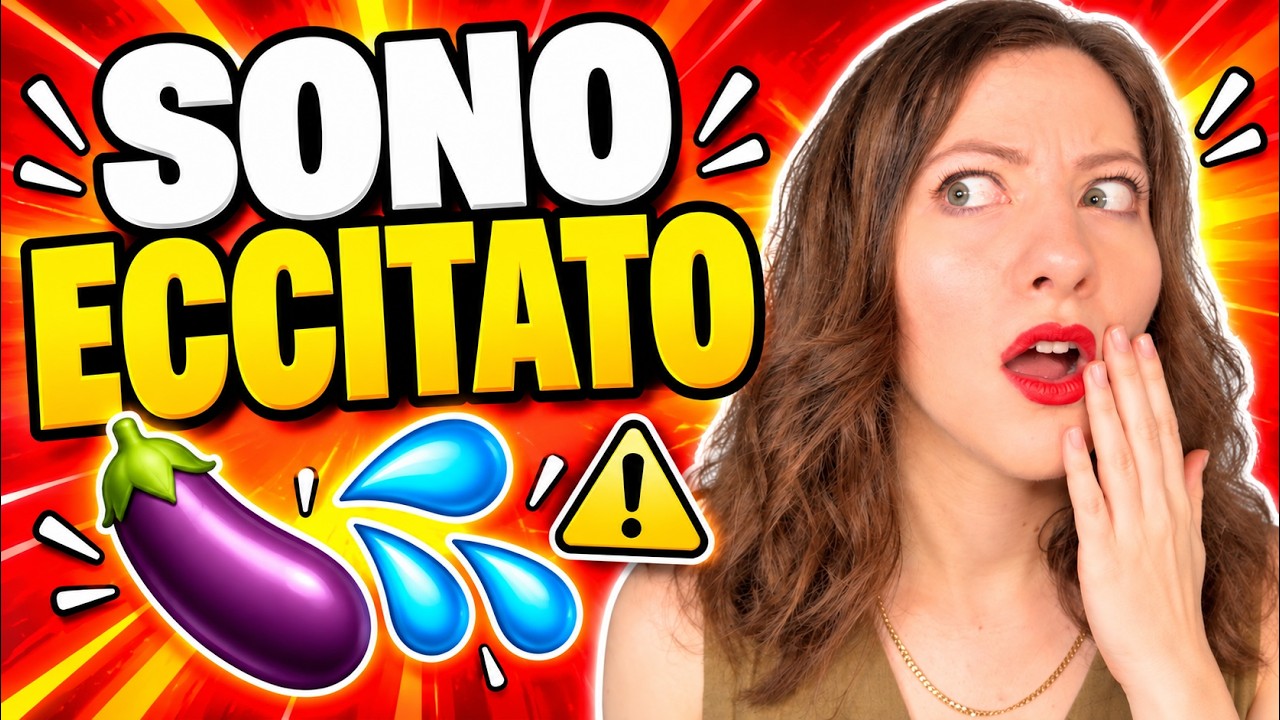
“Eccitato” [Excited]: the Most Embarrassing False Friend
Here’s a false friend that creates embarrassing situations. Many foreigners, translating the English excited, say “Sono eccitato”. But in Italian eccitato almost always has a sexual connotation, so you risk a memorable embarrassment. To avoid others, you can check out the guide on false friends in Italian.
How to Express Enthusiasm Correctly
| To avoid | Natural |
|---|---|
| “Sono eccitato per la festa!” [I’m excited for the party!] | “Non vedo l’ora della festa!” [I can’t wait for the party!] |
| “Sono eccitato per il viaggio!” [I’m excited for the trip!] | “Sono super emozionato per il viaggio!” [I’m super excited for the trip!] |
“Non vedo l’ora“ in particular is the perfect expression: it means exactly “I can’t wait”. By replacing “eccitato” with “non vedo l’ora” you’ll save yourself more than one embarrassed smile. For other formulas, there’s a dedicated guide on how to express enthusiasm in Italian.
“Simpatico” and “Sensibile”: Other Traitor Adjectives
Another classic false friend: simpatico doesn’t mean sympathetic (understanding, supportive), but nice, fun, likeable. To use it well along with other adjectives, you can check out the guide on Italian adjectives for character and personality.
For example:
- If you want to say that a person is fun and pleasant: “È molto simpatico!” [He’s very likeable!]
- If you want to say they’re understanding and supportive: “È simpatico con me” → “È molto comprensivo” [He’s very understanding] or “Mi capisce sempre.” [He always understands me.]
The Trap of “Sensibile” [Sensitive]
In Italian sensibile means sensitive (emotional), not sensible (reasonable).
- “È una persona molto sensibile” [He’s a very sensitive person] = he’s easily moved.
- To say “sensible”: “È una persona ragionevole / assennata.” [He’s a reasonable / sensible person.]
Adjectives that look the same as in English are often little traitors.
“È No?” and the Magical World of “Magari”
Many foreigners, to seek confirmation, literally translate “isn’t it?”, “n’est-ce pas?”, “¿no?” with an “è no?” stuck everywhere. In Italian there are much more natural ways.
| To avoid | Natural |
|---|---|
| “La pizza è buona, è no?” | “La pizza è buona, vero?” [The pizza is good, right?] |
| “Andiamo, è no?” | “Andiamo, no? / Andiamo, eh?” [Let’s go, no? / Let’s go, eh?] |
“Magari”: One Word, a Thousand Uses
Magari is one of the most beloved words by Italians and almost never taught well. It has many uses, as explained in the guide on the meaning of “magari” in Italian.
| Meaning | Example |
|---|---|
| Maybe | “Magari stasera esco” [Maybe tonight I’ll go out] |
| Strong wish | “Vinci alla lotteria? – Magari!” [Win the lottery? – I wish!] |
| Even just | “Magari un caffè veloce e poi vado” [Even just a quick coffee and then I’ll go] |
If you learn to use magari, you’ll make an instant level jump.
Summary Table of the 10 Expressions
Here’s a table that summarizes the 10 textbook phrases and their natural alternatives.
| Textbook phrase | Natural alternative |
|---|---|
| “Sto bene, grazie, e tu?” | “Eh, tutto bene, tu? / Tutto a posto?” |
| “Desidero comprare delle scarpe” | “Sto cercando delle scarpe” |
| “Molto bene!” | “Va bene! / Dai, ci sta!” |
| “Dove si trova la toilette?” | “Dov’è il bagno?” |
| “Sono molto contento di conoscerti” | “Piacere!” |
| “Sì, sono d’accordo con te” | “Esatto! / Eh, infatti!” |
| “Che cosa significa questo?” | “Che vuol dire? / In che senso?” |
| “Sono eccitato per la festa!” | “Non vedo l’ora della festa!” |
| “È simpatico con me” (= understanding) | “È molto comprensivo” |
| “La pizza è buona, è no?” | “La pizza è buona, vero?” |
Frequently Asked Questions
Why Does “Sto Bene, Grazie, e Tu?” Sound Strange?
It’s not wrong, but it’s a very school-like formula. In real life Italians use more relaxed alternatives like “Eh, tutto bene, tu?” [Good, you?], “Si tira avanti!” [Getting by!] or a simple “Tutto a posto?” [Everything ok?].
What’s the Difference between “Volevo” and “Vorrei”?
Both serve to make polite requests and are practically interchangeable. Volevo is in the imperfetto and softens the request in spoken language; vorrei is the condizionale and is slightly more formal. Both are much better than “voglio” [I want].
Why Don’t You Say “Sono Eccitato” in Italian?
Because in Italian eccitato almost always has a sexual connotation. To express enthusiasm, “Non vedo l’ora” [I can’t wait] or “Sono super emozionato” [I’m super excited] are used.
What Does “Simpatico” Really Mean?
Simpatico means nice, fun, likeable, that is, fun and pleasant. It doesn’t mean sympathetic: to say “understanding, supportive” you use comprensivo.
How Do You Ask for Confirmation in Italian?
You don’t say “è no?”. The correct formulas are vero?, no? or eh? at the end of the sentence. For example: “La pizza è buona, vero?” [The pizza is good, right?] or “Andiamo, no?” [Let’s go, no?].
Want the lesson PDF with exercises and solutions?
Join the LearnAmo AcademyLoading quiz…
Podcast: Play in new window | Download (Duration: 28:45 — 14.1MB)
Iscriviti: Apple Podcasts | Spotify | Android | iHeartRadio | Podcast Index | TuneIn | Deezer | RSS | Altri...