


You’ve been studying Italian for months, maybe years, but when you talk to a real Italian you feel lost? The problem is often not grammar, but those little words that Italians insert everywhere and that are never found in textbooks. If you want to understand real Italian, the kind spoken on the street, these five words are absolutely essential!
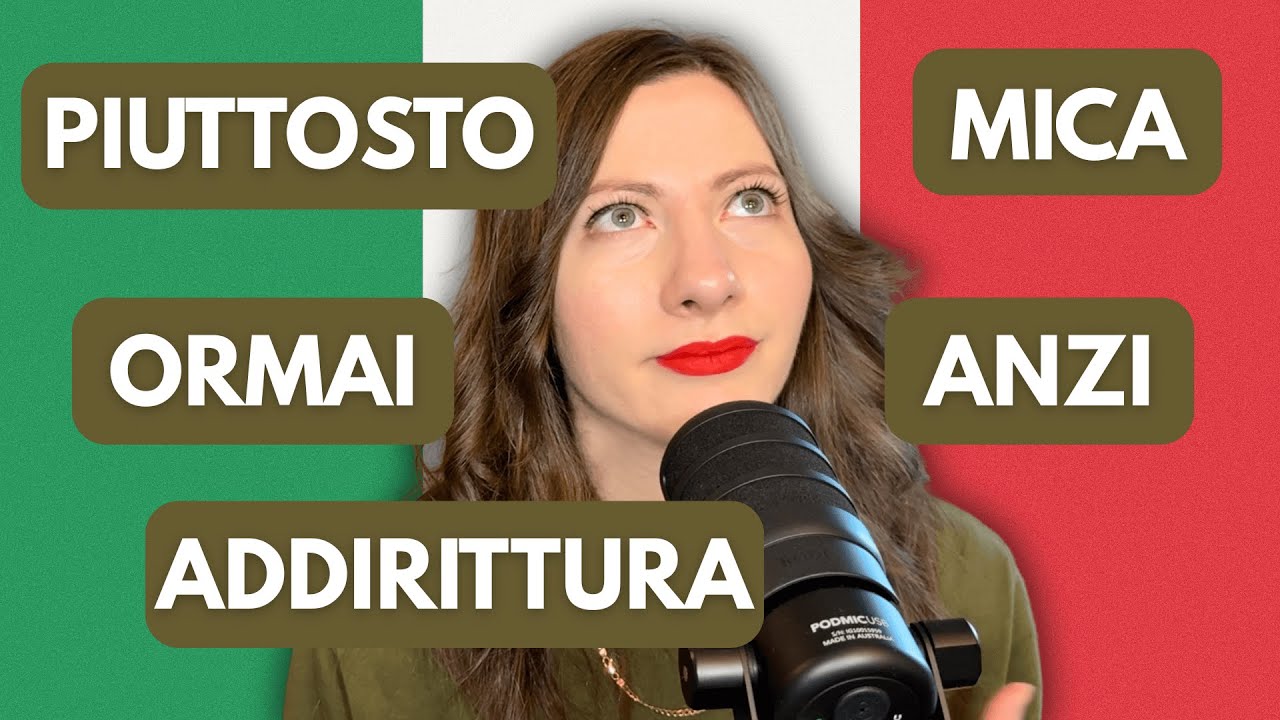
5 Italian Words You MUST Know to Speak Like a Native
1. Mica
Let’s start with a word that foreigners almost never know, but that Italians use all the time: “mica”.
Definition and Origin
“Mica” is an adverb that derives from the Latin “mica”, which meant “crumb” — so originally it indicated something very small, almost nothing. Today it is mainly used to strengthen a negation, to negate something on its own, or in questions with the meaning of “by any chance”. It is a word typical of the informal and colloquial register, so you will hear it especially in everyday speech. Depending on the context, it can be replaced by synonyms such as “per niente” [not at all], “affatto” [at all], or “per caso” [by any chance].
A) Strengthening a Negation
When you want to give more force to a negative sentence, use the structure “non + verb + mica”. In this case, “mica” means “not at all”, “absolutely not”.
| Example | Meaning |
|---|---|
| Questo esercizio non è mica difficile! [This exercise isn’t difficult at all!] | It’s not difficult at all, it’s very easy! |
| Marco non è mica stupido, sa quello che fa. [Marco isn’t stupid at all, he knows what he’s doing.] | Marco is absolutely not stupid. |
| Non ho mica tempo per queste sciocchezze! [I don’t have time at all for this nonsense!] | I absolutely don’t have time. |
B) Replacing the Negation “non”
Sometimes “mica” can stand alone, without “non”, and functions as a complete negation.
| Example | Meaning |
|---|---|
| Ti è piaciuto il film? — Mica tanto. [Did you like the movie? — Not really.] | Not much, not very much. |
| Com’è il nuovo ristorante? — Mica male! [How’s the new restaurant? — Not bad!] | Not bad, pretty good! |
| Mica ho capito cosa vuoi dire. [I didn’t understand what you mean.] | I didn’t understand. |
C) In Questions with the Meaning of “By Any Chance”
When you use “mica” in a question, you’re asking something in a polite way, like saying “by any chance”.
| Example | Meaning |
|---|---|
| Non avresti mica un caricatore per il telefono? [You wouldn’t happen to have a phone charger?] | By any chance do you have a charger? |
| Hai mica sentito che ore sono? [Did you happen to hear what time it is?] | By any chance do you know what time it is? |
2. Addirittura
Let’s move on to the second word, one of the most expressive in the Italian language: “addirittura”.
Definition and Characteristics
“Addirittura” is an adverb used to emphasize something surprising, unexpected, or extreme. When you use it, you want to communicate that the information you’re giving goes beyond normal expectations. It can be used within a sentence or on its own as an exclamation of amazement. It is a neutral register adverb, so you can use it freely in both spoken and written language. It has some useful synonyms to know, such as “perfino” [even], “persino” [even], or “nientemeno” [no less].
A) To Introduce Extraordinary Information
| Example | Meaning |
|---|---|
| Laura ha studiato tanto e ha addirittura preso 30 e lode all’esame! [Laura studied a lot and even got 30 cum laude on the exam!] | Not only did she pass the exam, but she got the highest grade! Incredible! |
| Ieri ho cucinato per la prima volta e mia madre ha addirittura chiesto il bis! [Yesterday I cooked for the first time and my mother even asked for seconds!] | My mother asked to eat more! Amazing! |
| Il mio gatto ha addirittura imparato ad aprire le porte. [My cat has even learned to open doors.] | Even this he has learned! |
B) As an Exclamation (On Its Own)
You can use “addirittura!” on its own to express surprise and amazement. It works in both positive and negative contexts.
| Context | Example |
|---|---|
| Positive surprise | Ho vinto 1000 euro alla lotteria! — Addirittura! Che fortuna! [I won 1000 euros in the lottery! — Really! How lucky!] |
| Negative surprise | Il volo è stato cancellato e dovrò aspettare 8 ore. — Addirittura! Che sfortuna! [The flight was canceled and I’ll have to wait 8 hours. — Really! How unlucky!] |
3. Ormai
Third word: “ormai”. Get ready, because you’ll hear this one at least ten times a day in Italy!
Definition and Characteristics
“Ormai” is a time adverb that indicates a point of no return, a moment when things have changed definitively. It expresses the idea that we have reached a certain situation and we cannot (or it doesn’t make sense to) go back. It often carries a nuance of resignation or acceptance, but it’s not always negative. It is a neutral register adverb, very common in both spoken and written language. There is also an alternative form, “oramai”, which means exactly the same thing. Depending on the context, it can be replaced by expressions such as “a questo punto” [at this point], “già” [already], or “quasi” [almost].
A) To Indicate That It’s Too Late to Change Something
Often “ormai” expresses a certain resignation, the idea that we can no longer do anything.
| Example | Meaning |
|---|---|
| Volevo comprare i biglietti per il concerto, ma ormai sono finiti. [I wanted to buy tickets for the concert, but by now they’re sold out.] | It’s too late, I can no longer buy them. |
| Avrei voluto studiare medicina, ma ormai ho 50 anni. [I would have liked to study medicine, but by now I’m 50 years old.] | At this point in my life, it’s too late to start over. |
| Il treno parte tra 2 minuti, ormai non ce la faccio. [The train leaves in 2 minutes, by now I won’t make it.] | It’s pointless to run, I won’t get there in time. |
B) Without Negative Connotation
“Ormai” is not always negative! It can simply indicate that we have reached a certain point of evolution or change.
| Example | Meaning |
|---|---|
| All’inizio il caffè italiano mi sembrava troppo forte, ma ormai mi piace tantissimo! [At first Italian coffee seemed too strong to me, but by now I love it!] | Now, at this point, I’ve gotten used to it. |
| Ormai conosco Roma come le mie tasche. [By now I know Rome like the back of my hand.] | At this point, after so much time, I know it very well. |
C) With the Meaning of “Already”
| Example | Meaning |
|---|---|
| Sono ormai tre mesi che studio italiano. [It’s been three months now that I’ve been studying Italian.] | Three months have already passed. |
| È ormai un anno che non vedo i miei genitori. [It’s been a year now that I haven’t seen my parents.] | A year has already passed. |
D) With the Meaning of “Almost”
| Example | Meaning |
|---|---|
| La cena è ormai pronta, mancano solo cinque minuti. [Dinner is almost ready, just five minutes left.] | Dinner is almost ready. |
Stop reading Italian.
Start speaking it.
Online lessons in groups of 4, organised by level and goals, with qualified teachers. Pick the day and time that suit you from the available slots.
Max 4 students:
there’s a seat for you
4. Anzi
Fourth word: “anzi”. This one is fantastic because it saves you every time you say something and then change your mind!
Definition and Characteristics
“Anzi” is an adversative conjunction that mainly serves to contrast two ideas or to correct what has just been said. Its basic meaning is “on the contrary”, but it can also mean “or rather” when you want to rectify or clarify something. It is a very versatile and extremely common word, of neutral register, so you will find it in both informal conversations and written texts. Among its most common synonyms are “al contrario” [on the contrary], “o meglio” [or rather], and “invece” [instead].
A) Means “On the Contrary” (After a Negative Sentence)
Use “anzi” to say the opposite of what you just said.
| Example | Meaning |
|---|---|
| Questo libro non è noioso, anzi, è appassionante! [This book isn’t boring, on the contrary, it’s captivating!] | On the contrary, it’s very interesting. |
| Non sono arrabbiato con te, anzi, ti ringrazio per la tua sincerità. [I’m not angry with you, on the contrary, I thank you for your honesty.] | On the contrary, I’m grateful. |
| La grammatica italiana non è impossibile, anzi! [Italian grammar isn’t impossible, on the contrary!] | On the contrary, it can be learned! |
B) To Correct Yourself (Means “Or Rather”)
When you say something and want to modify it, use “anzi”. Often “no” is added (if the previous sentence was affirmative) or “sì” (if it was negative).
| Example | Meaning |
|---|---|
| Prendo un tè, anzi no, preferisco un caffè. [I’ll have a tea, actually no, I prefer a coffee.] | I’m correcting myself, I want a coffee. |
| Non voglio uscire stasera. Anzi sì, dai, usciamo! [I don’t want to go out tonight. Actually yes, come on, let’s go out!] | I’ve changed my mind, let’s go out. |
| Ci vediamo alle 8, anzi, facciamo alle 8 e mezza. [Let’s meet at 8, actually, let’s make it 8:30.] | I’m correcting myself, better at 8:30. |
C) To Emphasize
“Anzi” can also be used to strengthen and intensify what you just said.
| Example | Meaning |
|---|---|
| Questo tiramisù è buono, anzi buonissimo! [This tiramisu is good, actually really delicious!] | It’s not just good, it’s exceptional! |
| Marco è intelligente, anzi è un genio! [Marco is smart, actually he’s a genius!] | Not just smart, much more! |
5. Piuttosto
And we arrive at the last word: “piuttosto”. This is the most complicated of the five, so maximum concentration!
Definition and Characteristics
“Piuttosto” is a very versatile adverb with different meanings depending on the context. It can indicate a moderate quantity (like “quite”), it can be used to change the subject, it can express a preference, or it can be used to correct yourself. It is a neutral register word, common in both spoken and written language, but requires some attention because it changes meaning based on how it’s used in the sentence. Depending on the context, it can be replaced by “abbastanza” [quite], “parecchio” [rather/quite], “invece di” [instead of], “preferibilmente” [preferably], or “o meglio” [or rather].
A) Means “Quite”, “Rather”
It is mainly used with adjectives and adverbs.
| Example | Meaning |
|---|---|
| L’esame di oggi era piuttosto difficile. [Today’s exam was rather difficult.] | It was quite difficult. |
| Questa borsa è piuttosto cara. [This bag is rather expensive.] | It’s quite costly. |
| Il film è finito piuttosto tardi. [The movie ended rather late.] | It ended quite late. |
Warning! It is not used with nouns or verbs alone. You can’t say “c’è piuttosto gente” ❌, but “c’è parecchia gente” [there are quite a lot of people] ✓.
B) To Change the Subject
“Piuttosto” is very useful when you want to shift the conversation to another topic.
| Example | Meaning |
|---|---|
| Va bene, ho capito cosa è successo. Piuttosto, hai parlato con Luca? [Okay, I understand what happened. Anyway, did you talk to Luca?] | Changing the subject… |
| Ok, lasciamo perdere questo argomento. Piuttosto, cosa facciamo stasera? [Okay, let’s drop this topic. Anyway, what are we doing tonight?] | Changing the topic… |
C) “Piuttosto che” = Instead of, Rather than
It is used to indicate the option that we DON’T prefer.
| Example | Meaning |
|---|---|
| Piuttosto che prendere l’autobus, preferisco camminare. [Rather than take the bus, I prefer to walk.] | Instead of taking the bus… |
| Piuttosto che litigare, è meglio parlare con calma. [Rather than argue, it’s better to talk calmly.] | Instead of arguing… |
D) To Express a Strong Preference
In this case, “piuttosto” expresses that you would do anything else to avoid something.
| Example | Meaning |
|---|---|
| Non sopporto il caldo. Piuttosto vado in vacanza in montagna! [I can’t stand the heat. I’d rather go on vacation to the mountains!] | I much prefer the mountains. |
| Mangeresti gli insetti? — Piuttosto! [Would you eat insects? — I’d rather not!] | Rather than eat insects, I would do anything else! |
E) “O Piuttosto” = Or Rather (To Correct Yourself)
| Example | Meaning |
|---|---|
| Parlo bene l’inglese. O piuttosto, me la cavo. [I speak English well. Or rather, I get by.] | Or rather, I don’t speak perfectly but I manage. |
Summary Table of the 5 Words
| Word | Category | Main Meanings | Synonyms |
|---|---|---|---|
| Mica | Adverb | Strengthens negation; replaces “non”; means “by any chance” in questions | Per niente, affatto, per caso [not at all, at all, by any chance] |
| Addirittura | Adverb | Expresses surprise, something unexpected or extreme | Perfino, persino, nientemeno [even, no less] |
| Ormai | Time adverb | Point of no return; too late; also means “already” or “almost” | A questo punto, già, quasi [at this point, already, almost] |
| Anzi | Adversative conjunction | On the contrary; to correct yourself; to emphasize | Al contrario, o meglio, invece [on the contrary, or rather, instead] |
| Piuttosto | Adverb | Quite; change subject; instead of; strong preference; correct yourself | Abbastanza, parecchio, invece di, o meglio [quite, rather, instead of, or rather] |
Frequently Asked Questions
What Is the Difference Between “Mica” and “Non”?
“Non” is the standard negation in Italian, while “mica” adds a nuance of emphasis and is mainly used in colloquial language. “Mica” can strengthen the negation (“non è mica stupido” [he’s not stupid at all] = he’s absolutely not stupid) or replace it completely in informal contexts (“mica male!” [not bad!] = not bad!). In practice, “mica” makes the negation more expressive and typically Italian.
Can I Use “Addirittura” in Formal Contexts?
Yes, “addirittura” is a neutral register adverb, so you can use it freely in both formal and informal contexts, in spoken and written language. Unlike “mica“, which is more colloquial, “addirittura” is also appropriate in academic, journalistic, or professional texts when you want to emphasize something surprising or unexpected.
Are “Ormai” and “Oramai” Interchangeable?
Yes, “ormai” and “oramai” mean exactly the same thing and are completely interchangeable. “Ormai” is the more common and modern form, while “oramai” has a slightly more literary or traditional feel, but both are grammatically correct and widely used.
How Do I Know When “Piuttosto” Means “Quite” and When It Means “Instead of”?
The key is to observe the structure of the sentence. When “piuttosto” is directly followed by an adjective or adverb, it means “quite” (e.g., “piuttosto difficile” [rather difficult] = quite difficult). When instead it is followed by “che” and a verb in the infinitive, it means “instead of” (e.g., “piuttosto che studiare” [rather than study] = instead of studying). If it appears alone at the beginning of a sentence, it often serves to change the subject.
Are These Words Used More in Northern or Southern Italy?
All five of these words are used throughout Italy, without significant regional differences. They are part of the standard Italian vocabulary and you will hear them as much in Milan as in Naples, in Rome as in Palermo. There may be slight variations in frequency of use or pronunciation, but the meaning remains identical everywhere.
Is It Possible to Use “Anzi” at the Beginning of a Sentence?
Absolutely yes! “Anzi” can be used at the beginning of a sentence to contrast the idea with what was said in the previous sentence. It’s very common in conversations: first you say something, then you start a new sentence with “anzi” to correct, contradict, or emphasize. For example: “Non mi piace questo film. Anzi, lo odio!” [I don’t like this movie. Actually, I hate it!] or “Non vengo alla festa. Anzi sì, ci sarò!” [I’m not coming to the party. Actually yes, I’ll be there!]
If these 5 words have intrigued you, don’t miss the article dedicated to the words that we Italians always use!
Do pronominal verbs trip you up and fill you with doubts? Turn confusion into confidence with our exclusive course: “Da «Non ce la faccio più» a «Ora me la cavo»: i verbi pronominali in 30 giorni.” With fun, bite-size lessons and targeted practice, you’ll learn to use them naturally in just one month.
Want the lesson PDF with exercises and solutions?
Join the LearnAmo AcademyLoading quiz…