


How many times have you said “dipende su” or “sono sposato a Maria“? These mistakes are so sneaky that they often go unnoticed, yet to an Italian ear they sound completely wrong. In this article, you’ll discover those mistakes that almost nobody mentions, but that practically all foreigners make.
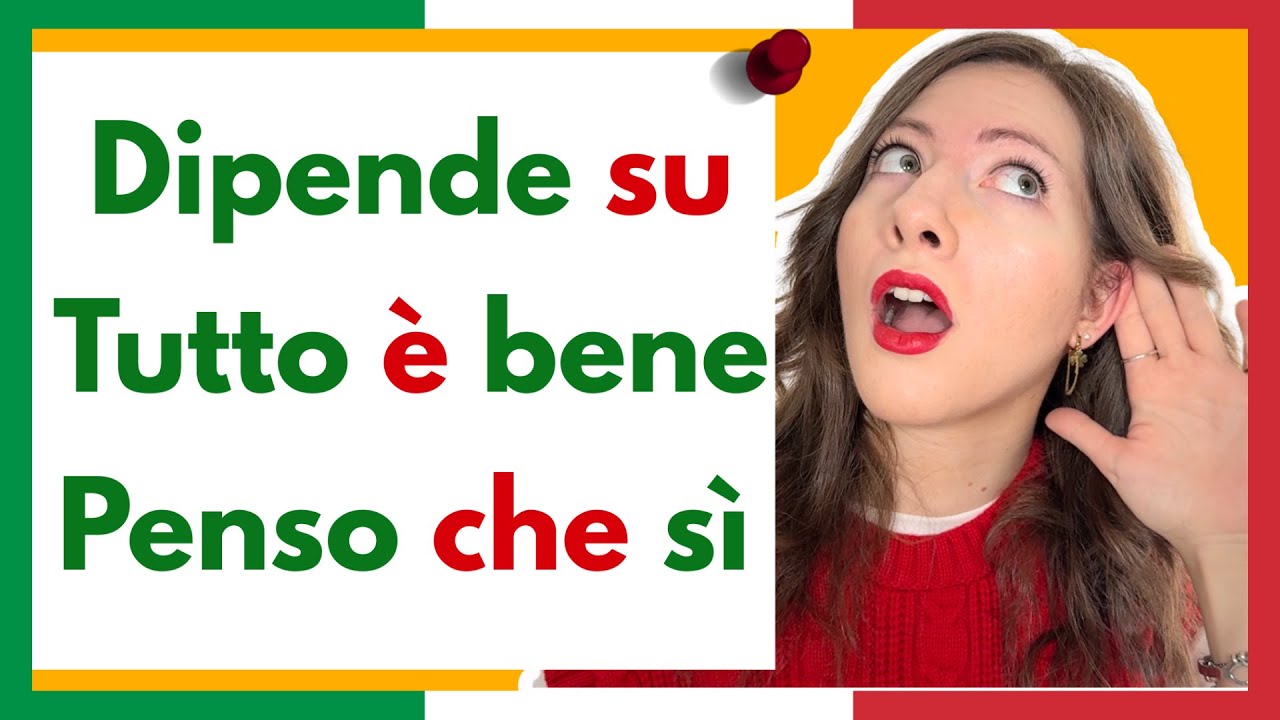
7 HIDDEN Mistakes That Immediately Give Away Foreigners
1. EFFICACE vs EFFICIENTE: Due Parole Apparentemente Gemelle [Effective vs Efficient: Two Seemingly Twin Words]
Let’s start with two words that seem almost identical, but actually have profoundly different meanings. Confusing them is one of the most frequent mistakes among Italian learners, regardless of their native language.
The Meaning of EFFICACE [Effective]
EFFICACE [Effective] means that something works well, that it produces the desired effect. When you say something is efficace, you’re stating that it achieves its goal, that it gets the hoped-for results.
Example:
Questa medicina è molto efficace contro il mal di testa. [This medicine is very effective against headaches.] (= It works, the headache goes away.)
Il suo discorso è stato efficace: tutti hanno cambiato idea. [His speech was effective: everyone changed their mind.] (= It achieved the hoped-for result.)
The Meaning of EFFICIENTE [Efficient]
EFFICIENTE [Efficient], on the other hand, refers to something or someone that works well, without wasting time, energy or resources. Efficiency concerns the way in which a result is achieved, not the result itself.
Examples:
Questa lavatrice è molto efficiente: consuma poca energia. [This washing machine is very efficient: it uses little energy.] (= It works well and doesn’t waste.)
Marco è un impiegato efficiente: finisce sempre tutto in anticipo. [Marco is an efficient employee: he always finishes everything ahead of time.] (= He works productively.)
Why Is It Wrong to Confuse Them?
Because they have different meanings and apply to different contexts.
| Word | Meaning | Focus |
|---|---|---|
| EFFICACE [Effective] | Works, produces results | On the result obtained |
| EFFICIENTE [Efficient] | Works well, without waste | On the process and resources used |
Let’s make a practical example. A medicine cures your headache.
Is that medicine efficace [effective]? Yes! Because it worked, it cured you.
Is it efficiente [efficient]? The question doesn’t really make sense. A medicine doesn’t “work quickly” or “save energy.” It simply works or it doesn’t.
Another example. An employee finishes all his work in half the time, without errors.
Is that employee efficiente [efficient]? Yes! He works well and doesn’t waste time.
Is he efficace [effective]? It depends. Did he achieve the results the boss wanted? If so, then he’s also efficace [effective]!
Something can be efficace [effective] but not efficiente [efficient] (or vice versa!). For example, going to work by helicopter is certainly efficace [effective] (you arrive!), but it’s not efficiente [efficient] (it costs too much!).
2. Sposarsi CON Qualcuno (Non A!) [To Get Married WITH Someone (Not TO!)]
This mistake is very common and it’s easy to understand why: in many languages a preposition similar to “a” [to] is used. But in Italian, you get married CON [with] someone. Always. Without exceptions in modern standard Italian.
Examples:
Mi sono sposato a Maria.
Mi sono sposato con Maria. [I got married to Maria.]
Vuole sposarsi a un italiano.
Vuole sposarsi con un italiano. [She wants to marry an Italian.]
The same applies to “essere sposato” [to be married]:
Sono sposato a Lucia da 10 anni.
Sono sposato con Lucia da 10 anni. [I’ve been married to Lucia for 10 years.]
Why Is It Wrong to Use “A”?
In Italian, the preposition “a” generally indicates a direction, a movement toward something or someone:
Examples:
Vado a Roma. [I’m going to Rome.] (= I’m moving toward Rome)
Do un regalo a Marco. [I’m giving a gift to Marco.] (= the gift goes toward Marco)
But marriage is not a movement toward someone! Marriage is a union, something you do together with another person. And that’s exactly why CON is used, the preposition of companionship and reciprocity:
Examples:
Vivo con Marco. [I live with Marco.] (= together with Marco)
Lavoro con Anna. [I work with Anna.] (= together with Anna)
Mi sono sposato con Giulia. [I got married to Giulia.] (= together with Giulia)
Linguistic Curiosity
In old Italian and in some Southern Italian dialects, you might hear “sposarsi a“. But in modern standard Italian? No. It’s CON. Always CON.
3. Penso DI Sì / Penso DI No (Non CHE!) [I Think So / I Don’t Think So (Not THAT!)]
This mistake is extremely frequent! Many students say:
Penso che sì.
Credo che no.
But in Italian you say:
Penso di sì. [I think so.]
Credo di no. [I don’t think so.]
Why Is It Wrong to Use “CHE”?
This is a matter of Italian grammar. After the conjunction “che” [that], you always need a complete sentence, with a subject and a verb:
Examples:
Penso che Marco venga alla festa. [I think Marco is coming to the party.] (Subject: Marco. Verb: venga. Complete sentence!)
Credo che pioverà domani. [I believe it will rain tomorrow.] (Implied subject. Verb: pioverà. Complete sentence!)
But “sì” [yes] and “no” [no] are simple adverbs, they’re not sentences! They don’t have a verb, they don’t have a subject. So they can’t come after “che”:
Penso che sì. (“Sì” is not a sentence! Where’s the verb?)
The preposition “di”, on the other hand, can introduce short elements, without needing a complete sentence:
Examples:
Penso di sì. [I think so.] (= I think the answer is yes)
Credo di no. [I don’t think so.] (= I believe the answer is no)
Spero di sì! [I hope so!] (= I hope the answer is yes)
Everyday Usage Examples
– Verrai alla festa? [Will you come to the party?]
– Penso di sì! [I think so!]
– Pioverà domani? [Will it rain tomorrow?]
– Credo di no, ma non sono sicuro. [I don’t think so, but I’m not sure.]
– Ti è piaciuto il film? [Did you like the movie?]
– Direi di sì. [I would say so.] (more uncertain, less decisive)
4. Dipende DA (Non SU!) [It Depends ON (Not ON TOP OF!)]
Here’s another very frequent mistake, especially among English speakers (“depends on” → “dipende su“? No!).
In Italian, the verb DIPENDERE [to depend] takes the preposition DA.
Examples:
Dipende su di te.
Dipende da te. [It depends on you.]
Il risultato dipende sul tempo.
Il risultato dipende dal tempo. [The result depends on the weather.]
Tutto dipende su cosa decidi.
Tutto dipende da cosa decidi. [Everything depends on what you decide.]
Why Is It Wrong to Use “SU”?
In Italian, “su” indicates a position above something, a surface:
Examples:
Il libro è sul tavolo. [The book is on the table.] (= above the table)
Cammino sulla spiaggia. [I’m walking on the beach.] (= on top of the beach)
But when something “depends” on another thing, there’s no surface, no “above”! Instead, there’s an idea of origin, of cause, of source. And in Italian, to express origin and cause, DA is used:
Examples:
Vengo da Roma. [I come from Rome.] (= origin)
Questo problema deriva da un errore. [This problem stems from an error.] (= cause)
Dipende da te. [It depends on you.] (= you are the cause)
Think of it this way: what does something depend on? On another thing! The preposition already gives you the answer.
Examples:
La mia felicità non dipende dai soldi. [My happiness doesn’t depend on money.]
Dipende da come ti senti. [It depends on how you feel.]
Dipende dalle circostanze. [It depends on the circumstances.]
5. PERDERE vs PERDERSI vs SPRECARE [To Lose vs To Get Lost vs To Waste]
These three verbs create a lot of confusion among Italian students. Let’s look at the fundamental differences.
PERDERE [To Lose]: To No Longer Have Something
PERDERE [to lose] means to no longer have something that you had, to be unable to find something, or to miss an opportunity:
Examples:
Ho perso le chiavi. [I lost my keys.] (= I can’t find them anymore)
Abbiamo perso la partita. [We lost the game.] (= we didn’t win)
Non voglio perdere questa occasione! [I don’t want to miss this opportunity!] (= I don’t want to let it slip away)
PERDERSI [To Get Lost]: To Get Lost
PERDERSI [to get lost] (reflexive form) means to get lost, to no longer know where you are or to be unable to follow something:
Examples:
Mi sono perso nel centro della città. [I got lost in the city center.] (= I no longer knew where I was)
Mi sono persa nella spiegazione. [I got lost in the explanation.] (= I couldn’t follow anymore)
SPRECARE [To Waste]: To Use Poorly
SPRECARE [to waste] means to use poorly, not to make the most of something, to consume uselessly:
Examples:
Non sprecare l’acqua! [Don’t waste water!] (= don’t use it unnecessarily)
Hai sprecato un’ottima opportunità. [You wasted an excellent opportunity.] (= you didn’t make good use of it)
Non voglio sprecare il mio tempo. [I don’t want to waste my time.] (= I want to use it well)
The Key Difference
| Verb | Meaning | Example |
|---|---|---|
| PERDERE [To lose] | To no longer have, to misplace | Ho perso il portafoglio [I lost my wallet] |
| PERDERSI [To get lost] | To get lost, to lose one’s way | Mi sono perso in città [I got lost in the city] |
| SPRECARE [To waste] | To use poorly, not to make the most of | Non sprecare il tuo talento [Don’t waste your talent] |
Warning: “Perdere tempo” [to lose time] and “sprecare tempo” [to waste time] have different nuances!
Ho perso tempo [I lost time] = time passed without my realizing or without results.
Ho sprecato tempo [I wasted time] = I used my time poorly, I could have done something better.
6. Tutto VA Bene (Non “È Bene”!) [Everything IS GOING Well (Not “IS Well”!)]
This is an interesting and very common mistake. Many students say:
Tutto è bene.
Tutto va bene. [Everything is fine.]
In Italian, to say that things are positive, that there are no problems, you use the verb ANDARE [to go]:
Examples:
Come stai? [How are you?] — Tutto va bene, grazie! [Everything’s fine, thanks!]
Come va il lavoro? [How’s work going?] — Va tutto bene! [Everything’s going well!]
Va bene così? [Is this okay?] — Sì, sì, va benissimo! [Yes, yes, it’s perfect!]
Why Is It Wrong to Say “Tutto È Bene”?
In Italian, “andare bene” [to go well] and “essere bene” [to be good] have different meanings.
- “Andare bene” [to go well] describes how things are going, the general situation, the course of events:
Examples:
Come va? [How’s it going?] — Va bene! [It’s going well!] (= Things are proceeding without problems)
L’esame è andato bene. [The exam went well.] (= The exam was a success)
- “Essere bene” [to be good] (or rather, “è bene che…” [it’s good that…]) expresses a moral judgment, an opinion about what is right or appropriate to do:
Examples:
È bene che tu sappia la verità. [It’s good that you know the truth.] (= It’s right, it’s appropriate)
È bene arrivare puntuali. [It’s good to arrive on time.] (= It’s a good thing)
Non è bene parlare così. [It’s not good to talk like that.] (= It’s not appropriate)
So, if someone asks you “Come stai?” [How are you?] and you answer “Tutto è bene” [Everything is good], you’re saying something philosophical, almost moral… as if everything in the universe were right and appropriate.
What you want to say is: “Things are going well, I have no problems“. And for this you use ANDARE [to go]: Tutto va bene! [Everything is going well!]
Curiosity
When something is going VERY well, what do you say? “Tutto va a gonfie vele!” [Everything is going swimmingly! / Literally: Everything goes with full sails!] — like a boat pushed by the wind.
Stop reading Italian.
Start speaking it.
Online lessons in groups of 4, organised by level and goals, with qualified teachers. Pick the day and time that suit you from the available slots.
Max 4 students:
there’s a seat for you
7. PARTIRE vs LASCIARE vs ANDARE VIA [To Depart vs To Leave Behind vs To Go Away]
We come to the last distinction. Three verbs that express the idea of “leaving”, but with different nuances and, above all, different grammatical structures.
PARTIRE [To Depart/Leave]: To Start a Journey
PARTIRE [to depart/leave] means to start a journey, to set off toward a destination:
Examples:
Domani parto per Parigi. [Tomorrow I’m leaving for Paris.]
Il treno parte alle 8. [The train leaves at 8.]
Quando parti per le vacanze? [When are you leaving for vacation?]
It’s an intransitive verb (it doesn’t have a direct object) and focuses on the moment when the journey begins.
ANDARE VIA [To Go Away]: To Go Away
ANDARE VIA [to go away] means to move away from a place, not to stay:
Examples:
È tardi, devo andare via. [It’s late, I have to go.]
Perché sei andato via dalla festa così presto? [Why did you leave the party so early?]
Vai via! Non ti voglio vedere! [Go away! I don’t want to see you!]
The emphasis is on leaving the place where you are, not necessarily to take a trip.
LASCIARE [To Leave Behind]: To Leave Behind
LASCIARE [to leave behind] means to abandon, not to take with you, to stop being in a place:
Examples:
Ho lasciato le chiavi a casa. [I left the keys at home.]
Ha lasciato il lavoro il mese scorso. [He left his job last month.]
Quando hai lasciato l’Italia? [When did you leave Italy?]
It’s a transitive verb (it has a direct object): you leave something or someone or a place.
Why Is It Wrong to Confuse Them?
Because each verb has a different grammatical structure!
- PARTIRE [to depart] is intransitive. This means it CANNOT have a direct object. You can’t “partire something“:
Examples:
Parto. [I’m leaving.]
Parto da Milano. [I’m leaving from Milan.] (da = starting point)
Parto per Londra. [I’m leaving for London.] (per = destination)
Parto Milano. (ERROR! Milano cannot be a direct object!)
- LASCIARE [to leave behind] is transitive. It MUST have a direct object:
Examples:
Lascio. (Leave what? Who? Where?)
Lascio Milano. [I’m leaving Milan.] (Milano = direct object)
Lascio il mio lavoro. [I’m leaving my job.]
Lascio mia moglie. [I’m leaving my wife.] (sad, but grammatically correct!)
Summary Chart
| Situation | Correct Sentence | Verb |
|---|---|---|
| You start a journey toward Rome | Domani parto per Roma. [Tomorrow I’m leaving for Rome.] | PARTIRE [to depart] (intransitive + per) |
| You leave Rome permanently | Domani lascio Roma. [Tomorrow I’m leaving Rome.] | LASCIARE [to leave behind] (transitive) |
| You leave a party | Devo andare via, è tardi! [I have to go, it’s late!] | ANDARE VIA [to go away] |
| The train starts its route | Il treno parte alle 8. [The train leaves at 8.] | PARTIRE [to depart] |
| You quit your job | Lascio il mio lavoro. [I’m leaving my job.] | LASCIARE [to leave behind] (transitive) |
Regional Curiosity
In some regions of Italy (especially in the south), you might hear “me ne vado” [I’m leaving] used almost as a synonym for “parto” [I depart]. But technically, “andarsene” [to leave/go away] is more similar to “andare via” [to go away]: it emphasizes the departure, not the journey.
Tabella Riassuntiva degli Errori [Summary Table of Mistakes]
| Common Mistake | Wrong Form | Correct Form |
|---|---|---|
| Efficace/Efficiente [Effective/Efficient] | Questa medicina è efficiente [This medicine is efficient] | Questa medicina è efficace [This medicine is effective] |
| Sposarsi [To get married] | Mi sono sposato a Maria [I got married to Maria] | Mi sono sposato con Maria [I got married with Maria] |
| Penso di sì [I think so] | Penso che sì [I think that yes] | Penso di sì [I think so] |
| Dipendere [To depend] | Dipende su di te [It depends on you] | Dipende da te [It depends on you] |
| Perdersi/Sprecare [To get lost/To waste] | Ho sprecato le chiavi [I wasted the keys] | Ho perso le chiavi [I lost the keys] |
| Andare bene [To go well] | Tutto è bene [Everything is good] | Tutto va bene [Everything goes well] |
| Partire/Lasciare [To depart/To leave behind] | Domani parto la città [Tomorrow I depart the city] | Domani lascio la città [Tomorrow I leave the city] |
Frequently Asked Questions
Can I Say “Sono Fidanzato A” Instead of “Sono Fidanzato Con”?
No, for engagements you also use CON, just like for marriage. “Sono fidanzato con Marta” [I’m engaged to Marta] is the correct form. The preposition “con” always indicates the companionship and reciprocity of a relationship.
Is There a Difference Between “Dipende Da Te” and “Dipende Da Cosa Fai”?
Grammatically no, both are correct and use the preposition DA. The difference is in the meaning: “dipende da te” [it depends on you] indicates that you are the cause/responsible, while “dipende da cosa fai” [it depends on what you do] specifies that it’s the concrete action that determines the result.
When Should I Use “Credo Di Sì” Instead of “Penso Di Sì”?
They are practically interchangeable in everyday use. However, “credo” can have a slightly more uncertain or personal nuance, while “penso” is more neutral. “Direi di sì” [I would say so] expresses even more uncertainty. All three require the preposition DI.
Can I Say “Il Treno Lascia Alle 8”?
No, that’s a mistake. The train parte [departs] at 8, it doesn’t “lascia”. The verb “lasciare” requires a direct object (to leave something/someone), while to indicate the start of a journey you always use PARTIRE.
Is It Correct to Say “Una Macchina Efficiente” to Say It Uses Little Fuel?
Yes, absolutely. A car that uses little gas is efficiente because it uses resources optimally. Instead, a car is efficace if it takes you where you need to go (achieves the goal). A car can be both.
What’s the Difference Between “Ho Perso Tempo” and “Ho Sprecato Tempo”?
“Ho perso tempo” [I lost time] means that time passed without results or without your realizing it. “Ho sprecato tempo” [I wasted time] implies a wrong choice: you had time and you used it poorly, you could have done something more useful. “Sprecare” always has a connotation of poor use.
If these linguistic traps have intrigued you, explore the topic further in the article dedicated to 10 mistakes to avoid while speaking Italian.
Access Italian websites and content from anywhere in the world with total security with NordVPN! Use the coupon code LEARNAMO to get a special discount!
Want the lesson PDF with exercises and solutions?
Join the LearnAmo AcademyLoading quiz…
Podcast: Play in new window | Download (Duration: 35:58 — 49.8MB)
Iscriviti: Apple Podcasts | Spotify | Android | iHeartRadio | Podcast Index | TuneIn | Deezer | RSS | Altri...