


Italian is a language that doesn’t settle for describing the world: it caresses it, amplifies it, transforms it through an incredibly rich system of alterative suffixes. When an Italian says “un attimino” [a little moment], “un problemino” [a little problem], “un lavoretto” [a little job] or “che figuraccia” [what a terrible impression], they are not simply modifying the dimensions of an object or concept, but expressing an entire universe of emotions, social relationships and cultural attitudes.
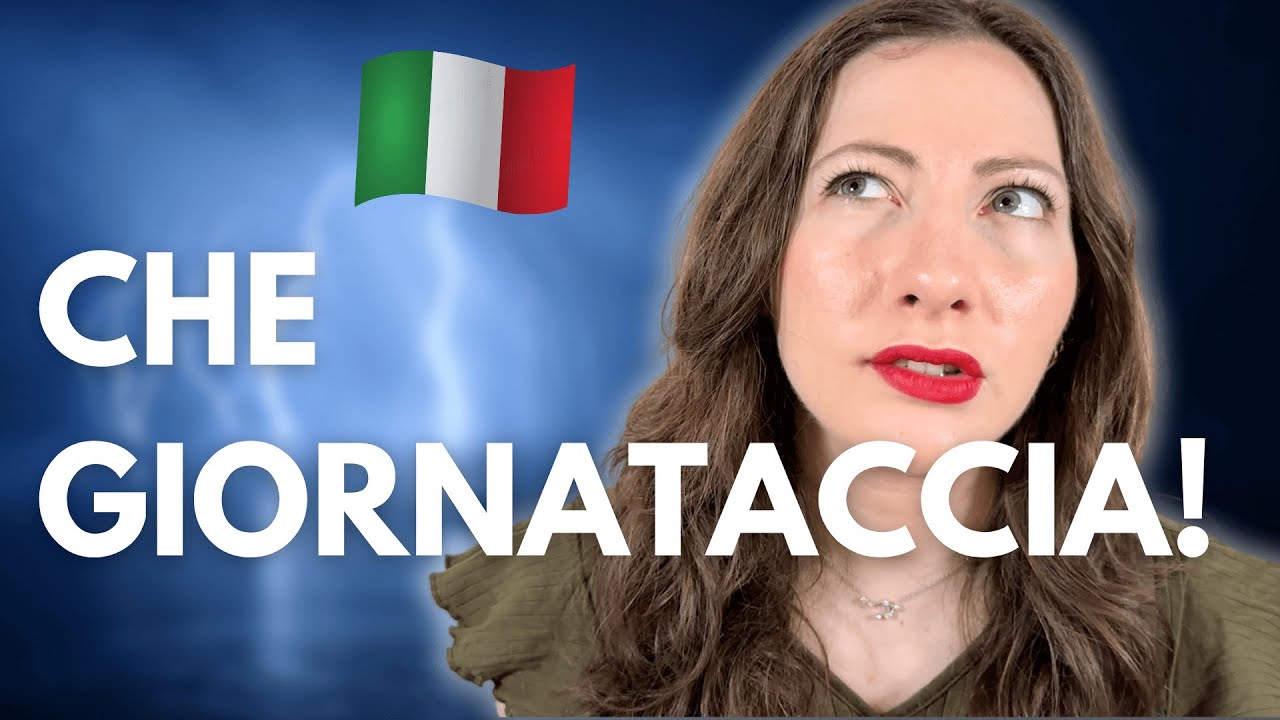
GIORNATACCIA, PICCOLINO, STIVALETTO: the power of altered words in Italian language and culture
The grammar of affection: types of altered words
Italian altered words are mainly divided into four categories, each with specific communicative and emotional functions that reveal the extraordinary expressive richness of our language:
1. Diminutives (-ino, -etto, -ello, -uccio)
Diminutives represent the most used and psychologically significant category. They don’t just reduce dimensions, but add a connotation of affection, tenderness or familiarity. A “gattino” [kitten] is not just a small cat, it’s a cat that evokes tenderness and protection. Similarly, “una casetta” [little house] communicates affection towards the dwelling, while “un librettino” [little book] can indicate both a small book and a book considered with sympathy.
2. Augmentatives (-one, -ona)
Augmentatives increase dimensions but convey complex meanings. A “librone” [big book] can be impressive for its cultural significance or cumbersome for its physical weight, depending on the context. “Una donnona” [big woman] can indicate admiration for physical presence or, in certain contexts, a critical nuance. Emotional polysemy is fundamental: “un omone” [big man] generally conveys sympathy and respect, while “un affarone” [big affair] can indicate either a great advantageous deal or a complicated situation.
3. Endearing terms (-uccio, -otto, -ello)
Endearing terms add a nuance of affection regardless of actual size. “Fratelluccio” [little brother] expresses fraternal affection, not necessarily small physical dimensions. “Calduccio” [nicely warm] doesn’t just indicate a moderately warm temperature, but conveys a sensation of comfort and well-being. These alterations are particularly frequent in family language and create an atmosphere of intimacy and confidence.
4. Pejoratives (-accio, -astro, -onzolo)
Pejoratives add a negative connotation that can vary from irony to real disapproval. A “giornataccia” [terrible day] is a decidedly unpleasant day, while “un poetastro” [would-be poet] indicates contempt for someone who poses as a poet without talent. “Medicastro” [quack doctor] expresses distrust towards a doctor considered incompetent. These suffixes allow expressing criticism and disapproval in a direct but stylistically elaborate way.
The psychology behind alterations: communicative and social functions
What makes this system fascinating is its deep psychological and social function. Italians use alterations not only to describe, but to create relationships, modulate the impact of communications and express their emotional subjectivity.
Softening communication
“Posso farti una domandina?” [Can I ask you a little question?] sounds less invasive and more respectful than “Posso farti una domanda?” [Can I ask you a question?]. The diminutive reduces the psychological impact of the request, making the interlocutor more willing to welcome it. Similarly, “Ho un problemino” [I have a little problem] minimizes the urgency and anxiety that “Ho un problema” [I have a problem] might convey, allowing the issue to be addressed with greater serenity.
Creating intimacy and confidence
Offering “un caffettino” [a little coffee] is more personal and welcoming than simply offering “un caffè” [a coffee]. The diminutive transforms an ordinary action into a gesture of care and attention, suggesting that the guest is considered special. “Facciamo due chiacchiere” [Let’s have a little chat] invites a relaxed and friendly conversation, while “una chiacchierata” [a chat] suggests greater formality.
Expression of complex emotions
A “casetta” [little house] communicates genuine affection towards the dwelling, suggesting that the speaker has a positive emotional relationship with that place. “Un vinello” [nice little wine] doesn’t necessarily indicate a wine of inferior quality, but can express modesty (when offering it) or appreciation for its drinkability and genuineness.
Attenuation of criticism
“È un po’ grassottello” [He’s a bit chubby] is diplomatically less direct than saying “è grasso” [he’s fat], allowing the observation to be communicated without hurting excessively. “Ha fatto una figuraccia” [He made a terrible impression] expresses disapproval while maintaining a tone that can oscillate between serious and ironic, depending on intonation and context.
Modulation of linguistic register
Alterations immediately signal a more colloquial and friendly register, creating an atmosphere of informality that facilitates communication. Their use indicates to the recipient that the conversation can take place in a relaxed and confidential climate.
A cultural phenomenon, not just linguistic
This richness of alterations reveals deep aspects of the Italian mentality and how Italians conceive human relationships and communication:
“The Italian tendency to use diminutives reflects a culture that values emotional fluidity and interpersonal relationships above pure objectivity. We don’t just want to describe the world, we want to color it with our emotions.” – Prof. Tullio De Mauro, linguist
The use of alterations in Italian is so pervasive that many are no longer perceived as modifications of the original term, but as completely independent words:
Historical lexicalizations:
• “Panino” [sandwich] is technically the diminutive of “pane” [bread], but today indicates a specific gastronomic product
• “Telefonino” [cell phone] has completely replaced “telefono cellulare” [cellular telephone] in everyday language
• “Postino” [mailman], “spazzino” [street sweeper] are all ancient diminutives now completely lexicalized
• “Bambino” [child] derives from the diminutive of “bambo” [puppet], but has become the standard term
This process of lexicalization demonstrates how deeply rooted the mechanism of alterations is in Italian culture: they are not perceived as rhetorical devices, but as natural ways of conceiving and naming reality.
An international comparison: Italian uniqueness
While all languages possess mechanisms to express dimensions and qualities, few possess a system as elaborate and emotionally nuanced as Italian:
German: Has its diminutives in -chen and -lein (Häuschen, Mädchen), but with mainly descriptive functions and less emotional charge.
Spanish: Uses suffixes like -ito/-ita, -illo/-illa, but with less variability and emotional nuances.
French: Has forms like -et/-ette, but the system is less developed and more limited.
English: Relies mainly on adjectives (little, small, tiny) rather than morphological modifications.
Watch our vlog in Malaga.
Linguistic studies suggest that languages with complex systems of alterations tend to emerge in cultures that:
• Strongly value family and social bonds
• Express emotions in a more direct and physical way
• Privilege emotional subjectivity over descriptive objectivity
• Consider communication as relationship building rather than mere information transfer
Formation rules and exceptions
The formation of alterations follows precise morphological rules but presents numerous exceptions that reflect the historical evolution of the language.
General formation rules
Masculine words ending in -o:
• Diminutive: gatto → gattino [cat → kitten], libro → libretto [book → booklet]
• Augmentative: gatto → gattone [cat → big cat], libro → librone [book → big book]
Feminine words ending in -a:
• Diminutive: casa → casetta [house → little house], borsa → borsetta [bag → little bag]
• Augmentative: casa → casona [house → big house], borsa → borsona [bag → big bag]
Words ending in -e:
• Diminutive: cane → cagnolino [dog → little dog], fiore → fiorellino [flower → little flower]
• Augmentative: cane → cagnone [dog → big dog], fiore → fiorone [flower → big flower]
Exceptions and particularities
Gender change: Some words change gender in alteration:
• la tavola → il tavolino [the table → the small table]
• la finestra → il finestrino [the window → the small window]
Irregular roots:
• uomo → omino/ometto [man → little man] (not *uomino)
• donna → donnina/donnetta [woman → little woman]
• moglie → mogliettina [wife → little wife]
Double alterations:
• piccolo → piccolino → piccolinino [small → very small → extremely small]
• casa → casetta → casettina [house → little house → very little house]
The pitfalls for Italian learners
For those studying Italian, alterations represent both a complex challenge and an extraordinary opportunity to access the emotional heart of the language. The most common difficulties include:
Common morphological errors
Incorrect application of suffixes:
• Attempting to apply suffixes to words that don’t accept them (*figliettino instead of figlietto)
• Getting the gender of the alteration wrong (*la tavolina instead of il tavolino)
• Using inappropriate suffixes for the register (*professorone in formal context)
Semantic misunderstandings
Not recognizing lexicalized alterations:
• Interpreting “burino” [boorish person] as a diminutive of something
• Confusing the value of words like “postino” [mailman] or “spazzino” [street sweeper]
Affective overload
Excessive use: Using too many diminutives unnaturally, creating an artificial effect (*”Prendo un caffettino con un cornettino e uno zuccherino in questo barino carino” [I’ll have a little coffee with a little croissant and a little sugar in this cute little bar])
Learning strategies
Contextual observation: Study alterations in their natural context of use
Gradual imitation: Start with the most common and lexicalized alterations
Pragmatic sensitivity: Pay attention to interlocutors’ reactions to calibrate usage
Study of exceptions: Memorize the most frequent irregular cases
Mastering alterations allows access to a more authentic and nuanced dimension of Italian communication, transforming linguistic competence into true cultural understanding.
Stop reading Italian.
Start speaking it.
Online lessons in groups of 4, organised by level and goals, with qualified teachers. Pick the day and time that suit you from the available slots.
Max 4 students:
there’s a seat for you
The testimony of everyday life: alterations in Italian social life
Observing a normal Italian day, one can notice how alterations mark the rhythm of social life and create a particular relational atmosphere:
At the morning bar
“Prendiamo un caffettino e un cornettino” [Let’s have a little coffee and a little croissant] – Italian breakfast begins with alterations that transform a functional moment into a ritual of personal care. The barista who asks “Il solito caffettino?” [The usual little coffee?] is creating a relationship of confidence and recognition that goes beyond simple commercial transaction.
At work
“Ho un lavoretto da finire, ci vorrà un attimino” [I have a little job to finish, it’ll take a little moment] – Alterations in the work context serve to reduce pressures and create a more human environment. “Un problemino” [a little problem] sounds less alarming than “un problema” [a problem], allowing difficulties to be faced with greater serenity.
Among friends
“Facciamo una passeggiatina in centro?” [Shall we take a little walk downtown?] – The invitation becomes more informal and welcoming. Alterations among friends strengthen affective bonds and signal belonging to a group of mutual confidence.
In the family
“Che bella questa tavolata, proviamo questo vinello locale” [What a beautiful gathering, let’s try this nice local wine] – Family alterations create domestic warmth and transform a meal into a moment of emotional sharing. Each alteration communicates not only the object but also the affectionate attitude towards that object and towards the diners.
Regional and dialectal variations
The system of alterations presents significant regional variations that reflect different local linguistic traditions:
Northern Italy
Greater influence of Lombard and Venetian dialects:
• Frequent use of -ino/-ina with affective value
• Specific alterations like “baracchino” [kiosk] in Veneto
• French influence in some Piedmontese alterations
Central Italy
Particular richness in Tuscan and Roman alterations:
• Creativity in inventing new alterations
• Frequent ironic use of pejoratives
• Refined alternation between different registers
Southern Italy and Islands
Particularly elaborate and expressive system:
• Greater emotional charge in alterations
• Greek and Arabic influences in some suffixes
• Intensive use of endearing terms in families
Alterations in the digital age
The advent of digital communication has created new uses and contexts for Italian alterations:
Social media and messaging
• Intensification of use to create emotional closeness in remote communication
• New alterations born from the web: “postino” [little post], “selfino” [quick selfie]
• Use of alterations to soften tone in online discussions
Marketing and advertising
• Exploitation of the emotional charge of alterations in commercial communication
• “Offertina” [little offer], “regalino” [little gift], “scontino” [little discount] to make products more appealing
• Creation of brands based on alterations to suggest familiarity
The historical evolution of alterations
The Italian alteration system has deep roots dating back to Latin and has developed through the centuries:
Latin origin
• Suffixes like -ulus/-ula (Latin diminutives) gave rise to modern -olo/-ola
• -inus/-ina in Latin evolved into current -ino/-ina
• Spoken Latin already had a rich tradition of affective alterations
Medieval development
• Italian vernaculars amplified the system compared to Latin
• Germanic and Byzantine influences enriched expressive possibilities
• Medieval literature contributed to the codification of alterations
Renaissance and standardization
• The Renaissance saw the literary systematization of alterations
• Authors like Bembo and Della Casa theorized stylistic use
• Birth of awareness of alteration as a refined expressive tool
Alterations in Italian literature
Italian literature has made alterations a fundamental stylistic tool, using them to create atmospheres, characterize characters and modulate narrative register:
Dante and the Comedy
Dante uses alterations to emotionally graduate the narration, from affection (“dolce padre” [sweet father]) to contempt (“malebolge” [evil ditches]). The variety of Dante’s alterations already reflects the richness of the Italian system.
Manzoni and realism
In “I Promessi Sposi” [The Betrothed], Manzoni uses alterations to socially characterize characters and to create different linguistic registers that reflect social classes.
Contemporary literature
Authors like Calvino, Moravia and Eco have exploited the evocative power of alterations to create sophisticated stylistic effects, playing with reader expectations and cultural connotations.
Psycholinguistic aspects and child acquisition
The acquisition of alterations in Italian children reveals interesting aspects about the psychological nature of this linguistic system:
Chronological development
• 18-24 months: First passive alterations (understanding of “nanna” [sleep], “pappa” [food])
• 2-3 years: Active production of simple diminutives
• 4-5 years: Understanding of emotional nuances
• 6-8 years: Mastery of morphological rules
• 9-12 years: Creative use and stylistic awareness
Communicative functions in development
• Early emotional expression: Children use alterations to communicate affection and needs
• Social negotiation: “Posso avere un biscottino?” [Can I have a little cookie?] is more effective than “Posso avere un biscotto?” [Can I have a cookie?]
• Linguistic creativity: Children invent non-standard alterations that reveal the productivity of the system
Frequently asked questions about Italian alterations
Can all nouns be altered?
Not all nouns accept alterations. Very formal words, technical terms, abstract nouns and some unadapted foreign words resist alterations. Additionally, some nouns have irregular or non-existent alterations for euphonic or historical reasons.
Do alterations change the meaning of words?
Alterations modify both descriptive and connotative meaning. While “tavolo” [table] and “tavolino” [small table] can refer to objects of different sizes, the choice of alteration always also communicates an emotional attitude of the speaker.
Is it always appropriate to use alterations?
Context is fundamental. In very formal situations (official documents, academic conferences, solemn ceremonies) the use of alterations may be inappropriate. However, in most Italian communicative situations, alterations are not only acceptable but often preferable.
How do you choose between different suffixes?
The choice depends on phonetic, semantic and pragmatic factors. Some words “prefer” certain suffixes for euphonic reasons, while the communicative context and desired effect guide the selection among possible alternatives.
Do alterations exist for adjectives and verbs too?
Mainly for adjectives (carino [cute], piccolino [very small], grandino [quite big]), while for verbs the phenomenon is more limited and often regional (dormicchiare [to doze], sorridere [to smile]). Nouns remain the most productive category for alterations.
A way of seeing the world
Italian alterations are therefore not a simple grammatical ornament, but a powerful tool that reveals how Italians conceive the world: not as an objective reality to be described with precision, but as a fabric of emotional relationships to be expressed with infinite nuances and gradations.
When an Italian says “un momentino” [just a little moment], they are not just asking for a brief period of time, but inviting the interlocutor to enter a more personal, more emotional, more… Italian relationship. They are communicating that human relationships are more important than mere communicative efficiency, that human warmth can transform even the smallest daily interaction into a moment of authentic sharing.
The alteration system therefore represents one of the most deeply identifying characteristics of the Italian language, a mechanism that transforms every conversation into an opportunity for relational construction and every word into a potential vehicle of affection, irony, tenderness or complicity.
So, the next time you find yourself ordering “un aperitivino” [a little aperitif] or defining a situation “bellina” [quite nice], remember that you are not just speaking Italian – you are adopting an entire way of seeing and feeling the world, you are participating in a communicative tradition that transforms language into an instrument of emotional creativity and human connection.
And this is not a piccolino [little] detail.
Purchase our new book: “Parole Di Casa Mia: Un Viaggio Nei Colloquialismi Italiani“, and learn all the colloquial expressions to speak like a true native speaker!
If you want to know how Italian you are check out this article.
Want the lesson PDF with exercises and solutions?
Join the LearnAmo AcademyCaricamento quiz in corso…
Podcast: Play in new window | Download (Duration: 13:12 — 18.5MB)
Iscriviti: Apple Podcasts | Spotify | Android | iHeartRadio | Podcast Index | TuneIn | Deezer | RSS | Altri...