


Expressions of negation or minimization in Italian are rich in nuances that reflect Italian culture and communication style.
Let’s explore the differences between these common expressions, analyzing their meaning, context of use, and the emotional nuances they convey.
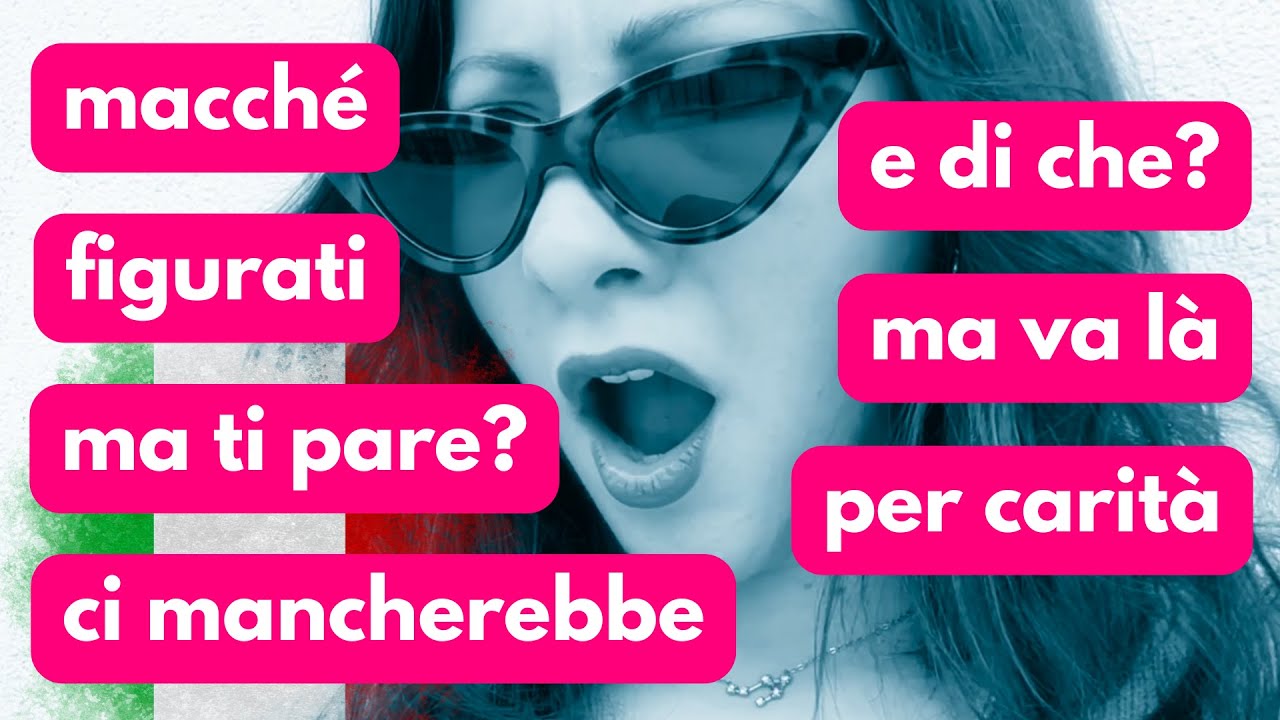
Saying “NO” NATURALLY in Italian
MACCHÉ
“Macché” is a strong and decisive expression of negation, often used to contradict a previous statement or idea.
It is more informal and energetic than a simple “no”.
Meaning: Absolutely not, not at all, not even close.
Context of use: It is used when you want to emphatically deny something that has been said or suggested.
Examples:
Sei arrabbiato con me? – Macché, sono solo stanco. [Are you angry with me? – Not at all, I’m just tired.]
Hai paura di volare? – Macché, mi piace molto! [Are you afraid of flying? – Not at all, I like it a lot!]
Pensi che abbia ragione lui? – Macché, sta dicendo assurdità! [Do you think he’s right? – No way, he’s talking nonsense!]
Emotional tone: Decisive, sometimes with a note of surprise at the idea being denied. It can be accompanied by a hand gesture that “cuts the air” to emphasize the negation.
CI MANCHEREBBE
“Ci mancherebbe” is an expression that indicates that something is obvious or taken for granted, often used to say that you are happy to do something for someone.
Meaning: Of course, it’s obvious, it would be absurd not to do it.
Context of use: It is used to accept doing something, emphasizing that it is natural or expected to do so.
Esempi:
Grazie per avermi aiutato. – Ci mancherebbe, è un piacere. [Thank you for helping me. – Don’t mention it, it’s a pleasure.]
Ti dispiace se prendo in prestito il tuo libro? – Ci mancherebbe, prendilo pure! [Do you mind if I borrow your book? – Not at all, go ahead and take it!]
Posso disturbarti un attimo? – Ci mancherebbe, dimmi pure. [Can I bother you for a second?
– Of course not, go ahead.]
Emotional tone: Cordial, kind, available. Often pronounced with a tone that suggests a slight surprise that the other person thinks they need to ask permission or thank you.
Origin: The complete expression would be “ci mancherebbe altro”, implying “mi mancherebbe solo questo”, meaning it would be absurd if I didn’t do this for you.
FIGURATI
“Figurati” is similar to “ci mancherebbe” but can be used in more different contexts.
Meaning: Don’t mention it, it’s not a problem, it’s nothing.
Context of use: It is mainly used in response to a thank you or a request for permission, to minimize the importance of what has been done.
Examples:
Grazie per il passaggio. – Figurati, era sul mio percorso. [Thanks for the ride. – Don’t mention it, it was on my way.]
Scusa se ti disturbo. – Figurati, dimmi pure. [Sorry to bother you. – Not at all, go ahead.]
Mi dispiace per il ritardo. – Figurati, ho appena finito di prepararmi. [I’m sorry for being late. – Don’t worry, I just finished getting ready.]
Emotional tone: Informal, friendly, often pronounced lightly.
ASSOLUTAMENTE
Used as an exclamation, “assolutamente” can function as an emphatic confirmation or strong negation, depending on the context and intonation.
Meaning: Certainly, without a doubt (in a positive sense) or absolutely not (in a negative sense).
Context of use: It is used to emphasize acceptance or rejection.
Examples:
Vuoi venire con noi al cinema? – Assolutamente (sì)! [Do you want to come to the cinema with us? – Absolutely! (yes)]
Credi che dovremmo rinunciare? – Assolutamente (no)! [Do you think we should give up? – Absolutely not! (no)]
È necessario prenotare in anticipo? – Assolutamente (sì), soprattutto nei weekend. [Is it necessary to book in advance? – Absolutely, especially on weekends.]
Emotional tone: Emphatic, decisive, sometimes formal. It’s an expression that communicates conviction and confidence.
MA TI PARE?
This rhetorical interrogative expression expresses surprise or negation in the face of something considered absurd or unlikely.
Meaning: Does it seem possible to you? Do you really believe that? (implies a negative answer)
Context of use: It is used to reject an idea or proposal considered absurd, or to reassure someone who is apologizing for something minimal.
Examples:
Scusa se ti ho disturbato. – Ma ti pare? Non mi hai disturbato affatto. [Sorry if I bothered you. – Are you kidding? You didn’t bother me at all.]
Pensi che io abbia rovinato la festa? – Ma ti pare? È stata bellissima! [Do you think I ruined the party? – Not at all! It was wonderful!]
Dovrei pagarti per questo piccolo favore? – Ma ti pare? L’ho fatto volentieri. [Should I pay you for this small favor? – Don’t be silly! I did it gladly.]
Emotional tone: Often incredulous, surprised, or reassuring. The intonation rises on the word “pare” to emphasize the absurdity of the idea.
Regional variants: “Ma ti sembra?”, “Ma ti pare il caso?”, “Ma che ti salta in mente?”
E DI CHE?
“E di che?” is a colloquial expression that minimizes the importance of a favor or help given.
Meaning: What are you thanking me for? There’s no reason, it’s nothing.
Context of use: It is used in response to a thank you, to indicate that what has been done was a pleasure or did not require particular effort.
Examples:
Grazie per avermi prestato la macchina. – E di che? L’avevo parcheggiata lì e non la usavo. [Thanks for lending me the car. – For what? I had it parked there and wasn’t using it.]
Ti sono davvero grato per l’aiuto. – E di che? L’ho fatto volentieri. [I’m really grateful for your help. – Don’t mention it! I did it gladly.]
Grazie mille per il consiglio. – E di che? Spero ti sia utile. [Thank you so much for the advice. – It’s nothing! I hope it’s useful for you.]
Emotional tone: Informal, friendly, modest. Often accompanied by a hand gesture that “sweeps away” the thank you.
PER CARITÀ
Meaning: Absolutely not, no way.
Context of use: It is used to energetically deny or express annoyance towards an idea.
Examples:
Vuoi mangiare qui un’altra volta? – Per carità, il cibo era terribile! [Do you want to eat here again? – For heaven’s sake, the food was terrible!]
Dovremmo invitare anche Marco? – Per carità, rovina sempre tutto! [Should we invite Marco too? – God forbid, he always ruins everything!]
Ti piacerebbe fare un altro giro in montagna russa? – Per carità, mi gira ancora la testa! [Would you like to go on another roller coaster ride? – Heaven forbid, my head is still spinning!]
Emotional tone: Dramatic, emphatic, sometimes with a note of exasperation. Often accompanied by a gesture of open palms, as if to push something away.
NON C’È DI CHE
Meaning: There’s nothing to thank for, it was a pleasure.
Context of use: It is used as a formal response to a thank you.
Examples:
Grazie per il suo aiuto. – Non c’è di che, signora. [Thank you for your help. – You’re welcome, ma’am.]
La ringrazio per la cortesia. – Non c’è di che, è il mio lavoro. [Thank you for your kindness. – You’re welcome, it’s my job.]
Grazie per avermi indicato la strada. – Non c’è di che, buona giornata. [Thanks for showing me the way. – You’re welcome, have a nice day.]
Emotional tone: Formal, polite, professional. It’s the more formal equivalent of “figurati” or “prego”.
MA VA LÀ
Meaning: Don’t talk nonsense, it’s not true.
Context of use: It is used to deny with a light or playful tone.
Examples:
Penso di essere il peggiore della squadra. – Ma va là, hai segnato due gol! [I think I’m the worst on the team. – Come on, you scored two goals!]
Sono troppo vecchio per imparare a suonare. – Ma va là, non è mai troppo tardi! [I’m too old to learn to play. – No way, it’s never too late!]
Credo che il professore ce l’abbia con me. – Ma va là, è così con tutti. [I think the professor has it in for me. – Get out of here, he’s like that with everyone.]
Emotional tone: Light, playful, sometimes good-naturedly teasing. The expression has a tone of affectionate contestation.
MA SCHERZI?
Meaning: Are you kidding? That’s not possible!
Context of use: It is used to express incredulity or to deny the importance of something.
Examples:
Ti devo ripagare per il caffè. – Ma scherzi? Era solo un caffè! [I have to pay you back for the coffee. – Are you kidding? It was just a coffee!]
Non sono sicuro di poter accettare questo regalo. – Ma scherzi? È il minimo che potessi fare! [I’m not sure I can accept this gift. – Are you serious? It’s the least I could do!]
Spero di non averti offeso. – Ma scherzi? Non mi hai offeso per niente. [I hope I didn’t offend you. – Are you kidding? You didn’t offend me at all.]
MA QUANDO MAI?
Meaning: Absolutely not, it never happened, it’s impossible.
Context of use: It is used to categorically deny something, often with a tone of indignation.
Examples:
Mi hanno detto che hai parlato male di me. – Ma quando mai? Non lo farei mai! [I’ve been told you spoke badly of me. – When did that ever happen? I would never do that!]
Avevi promesso di aiutarmi. – Ma quando mai? Non ti ho mai fatto questa promessa. [You promised to help me. – Since when? I never made you that promise.]
Dicono che questo ristorante sia pessimo. – Ma quando mai? Ci vengo da anni ed è sempre stato ottimo. [They say this restaurant is terrible. – No way! I’ve been coming here for years and it’s always been excellent.]
Emotional tone: Indignant, surprised, sometimes offended. It communicates a strong disagreement with what was stated.
Did you already know some of these expressions? Let us know!
Access Italian websites and content from anywhere in the world with total security with NordVPN! Use the coupon code LEARNAMO to get a special discount!
And if you want to explore other topics or you want to find out what to do to not lose your Italian, read the dedicated article!
Caricamento quiz in corso…
Podcast: Play in new window | Download ()
Iscriviti: Apple Podcasts | Spotify | Android | iHeartRadio | Podcast Index | TuneIn | Deezer | RSS | Altri...