


When you think of Italy, coffee is one of the first things that comes to mind. But how did it get to Italy? Why do Italians drink it the way they do? And why, if you ask for «un caffè» in an Italian bar, do you always get an espresso and nothing else? In this article you will discover the entire history of coffee in Italy — from its African origins to the moka — and learn the vocabulary and curiosities that will make you shine in conversation with Italians.
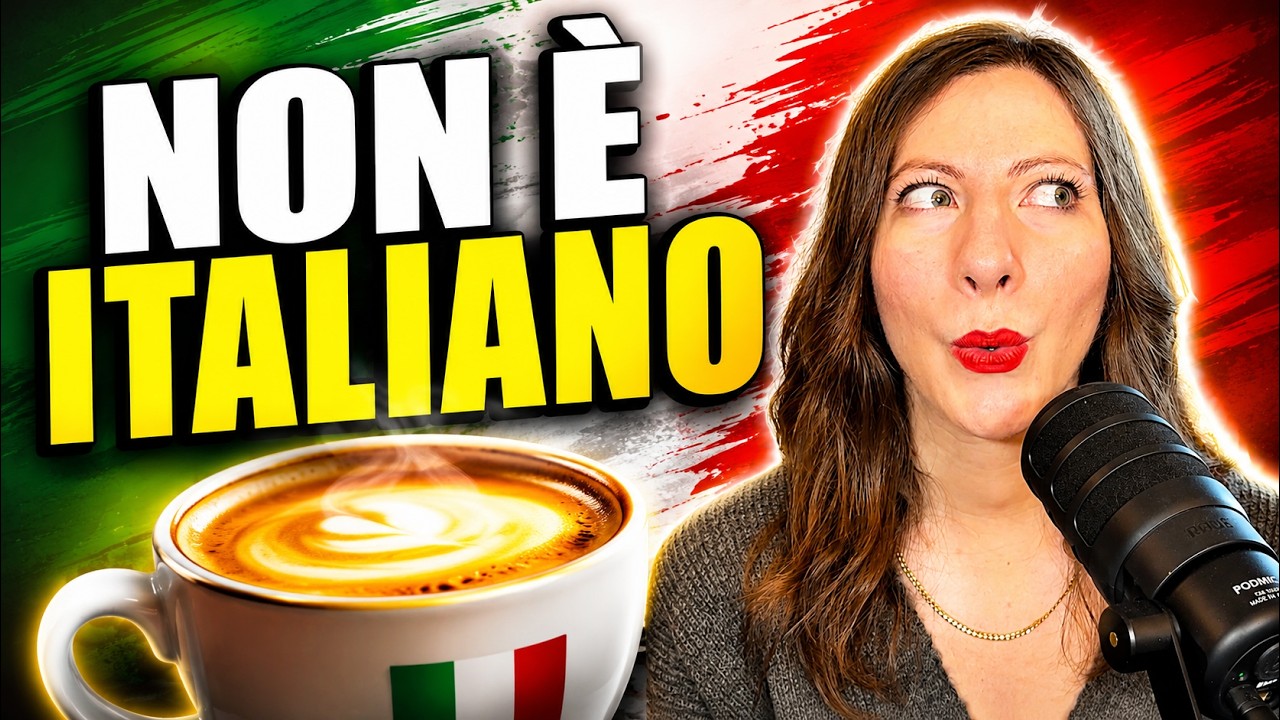
It’s not Italian! The whole truth about COFFEE
1. The Origins of Coffee: a Very Long Journey
Today coffee seems quintessentially Italian — almost as if it had been born among the hills of Tuscany or in the alleyways of Naples. But the truth is different: coffee is not Italian, at least not in its origins.
The origins of coffee are probably found in Ethiopia, in Africa. There is a legend that tells the story of a shepherd named Kaldi, who one day noticed something strange: his goats, after eating some red berries from a particular plant, could no longer sleep at night — they were hyperactive, almost euphoric. Kaldi tried those berries, brought them to some monks, and from there everything began.
From the Arabian peninsula — especially from Yemen — coffee spread rapidly. In the Arab world the first public places where coffee was drunk arose: people discussed politics, did business, told stories. These were the precursors of our bars. Coffee was already a social event even before reaching Europe.
2. Coffee Arrives in Italy
Coffee arrived in Italy around the 16th and 17th centuries, thanks to trade between Venice and the Ottoman Empire. Venice, in that period, was one of the most important commercial centres in Europe — the gateway between East and West. And it was precisely through that gateway that coffee entered.
But at first not everyone was happy with this novelty. Some people considered it a suspicious, foreign, even dangerous drink. There were voices that described it as «la bevanda del diavolo» [the drink of the devil].
According to a very popular story, it was Pope Clement VIII who resolved the matter: he tasted the coffee, liked it very much, and officially “blessed” it. From that moment on, nobody could claim it was a drink of the devil — if the Pope drinks it, it’s fine for everyone.
In the 17th century [Seicento] the first coffee shops [botteghe del caffè] opened, which were much more than simple bars: they were places for meeting, culture and debate. Artists, writers, philosophers, merchants — they all gathered there to talk, read and discuss. Drinking coffee was already, from the very beginning, a collective and social act.
3. Italy Reinvents Coffee: The Espresso Is Born
Up to this point, coffee was simply imported. But Italians are never satisfied: they always have to improve things. Towards the end of the 19th century [Ottocento] and the beginning of the 20th [Novecento], Italy did something revolutionary: it invented a completely new way of preparing coffee.
Thanks to the use of steam pressure, it became possible to extract coffee in a few seconds, quickly, in a concentrated and intense way. Thus espresso was born.
Espresso is not just a type of coffee — it is almost a metaphor for the Italian lifestyle: brief, intense and without frills. You drink it standing at the bar, in thirty seconds, you exchange a few words with the barista, and you get back to your life. If someone invites you for an espresso, don’t expect to sit down and savour it for twenty minutes like an English tea: espresso is drunk immediately, while it is still hot.
4. The Moka: Coffee Enters Italian Homes
If espresso is the king of the bar, the moka is the queen of the home. In 1933, a man named Alfonso Bialetti invented an object destined to become iconic: the moka, that small octagonal aluminium coffee maker you have probably seen a thousand times.
The idea was brilliant in its simplicity: water in the lower section, ground coffee in the filter in the middle, and steam pressure pushing the water through the coffee, making it rise to the upper section. The result? A strong, aromatic coffee made comfortably at home.
With the moka, the coffee ritual entered Italian kitchens. And with it came all the moments that surround it: waiting for the coffee to rise, listening to that characteristic bubbling [gorgoglio], calling out in the kitchen «Il caffè è pronto!» [The coffee is ready!]. If espresso at the bar is the quick break, the moka is the slow moment — Sunday morning coffee, post-lunch coffee with the family, the coffee grandmother makes. There is something deeply affectionate about the moka: it is not just a utensil, it is an object loaded with memories. Its name, incidentally, derives from Mokha, a city in Yemen famous for the coffee trade — yet another sign of the long journey coffee has made before reaching our homes.
Stop reading Italian.
Start speaking it.
Online lessons in groups of 4, organised by level and goals, with qualified teachers. Pick the day and time that suit you from the available slots.
Max 4 students:
there’s a seat for you
5. How Many Types of Coffee Exist in Italy?
In Italy coffee is not just one thing. There are many variants, and knowing them allows you to order at the bar like a true Italian.
- Espresso — the classic coffee: short, intense, concentrated. When you simply ask for «un caffè» [a coffee] in an Italian bar, this is always what you get.
- Caffè lungo [long coffee] — more water than espresso, less concentrated flavour. Suitable for those who prefer a less intense coffee.
- Caffè ristretto [restricted coffee] — less water than a normal espresso, even more concentrated and intense. Not for everyone — but those who love it wouldn’t swap it for anything.
- Caffè macchiato [stained coffee] — an espresso with a small amount of milk, just a «macchia» [stain/spot]. It is not a cappuccino: it is a slightly softened espresso.
- Cappuccino [cappuccino] — espresso with frothed milk. It is the typical Italian breakfast coffee. Note: in Italy cappuccino is drunk in the morning, never after lunch. Ordering it in the afternoon or after dinner is considered a tourist thing to do.
- Marocchino [Moroccan coffee] — espresso with cocoa powder and milk foam. A little treat for those who love the combination of coffee and chocolate.
- Caffè corretto [corrected coffee] — espresso with the addition of a liqueur: grappa, sambuca or brandy, according to taste. The liqueur is said to «correct» [corregge] the coffee — it is often drunk in the morning by those who like to start the day with a little extra kick.
- Caffè americano [American coffee] — espresso lengthened with hot water. More similar to American filter coffee: longer and less intense than the classic espresso.
Practical tip: to have breakfast like an Italian, order a cappuccino and a cornetto [croissant]. Stay at the bar, drink quickly, and get on with your day.
Frequently Asked Questions
Why Does «Un Caffè» Always Mean Espresso in Italy?
Because espresso became the coffee par excellence in Italy since its invention at the end of the 19th century. When you say «un caffè» without specifying anything else, the barista automatically understands that you want an espresso. Any other variant — lungo, macchiato, americano — must be specified explicitly.
Is It True that Cappuccino Is Not Drunk After Lunch in Italy?
Yes, it is one of the most deeply rooted unwritten rules of Italian culture. Italians consider milk heavy on digestion, so cappuccino — and in general any coffee with a large amount of milk — is drunk in the morning, at breakfast. After lunch or dinner, only espresso is ever drunk. Ordering a cappuccino in the afternoon is not a grammatical error, but it is an infallible sign that you are a foreigner.
What Is the Difference Between Caffè Macchiato and Cappuccino?
The main difference lies in the amount of milk. Caffè macchiato is an espresso with a small «macchia» [spot/stain] of milk — very little, just enough to slightly soften the flavour. Cappuccino, on the other hand, has a much larger amount of frothed milk, which balances the espresso much more decisively. In terms of volume, a cappuccino is approximately three times larger than a macchiato.
Why Was Coffee Called «The Drink of the Devil»?
When coffee arrived in Europe in the 16th and 17th centuries, it was a completely unknown drink of Eastern origin. At a time when anything that came from the East or had stimulating effects was viewed with suspicion, some clerics considered it dangerous and associated it with the devil. It was Pope Clement VIII, according to tradition, who eliminated this distrust by personally tasting it and approving it — effectively making it impossible to continue condemning it.
Is the Moka Still Used in Italian Homes?
Yes, very much so. Despite the spread of capsule coffee machines, the moka is still present in the vast majority of Italian kitchens. It has a value that goes beyond the practical: it is an object loaded with affective and cultural meaning, linked to family memories, Sunday mornings, grandmother’s coffee. In 2021, the Bialetti moka was even incorporated into the permanent collection of the MoMA in New York as an example of iconic Italian design.
The history of coffee is long and rich — and so is its variety. Discover it in the article dedicated to all types of coffee.
Want the lesson PDF with exercises and solutions?
Join the LearnAmo AcademyLoading quiz…
Podcast: Play in new window | Download (Duration: 21:54 — 20.0MB)
Iscriviti: Apple Podcasts | Spotify | Android | iHeartRadio | Podcast Index | TuneIn | Deezer | RSS | Altri...