


Spaghetti all’assassina represents one of the most ingenious inventions of contemporary Apulian cuisine, a dish that has revolutionized the way of conceiving pasta in Italy. Born in the heart of Bari in the 1960s, these spaghetti with their characteristic controlled burning have become a symbol of Bari’s gastronomic creativity, conquering palates around the world with their unique cooking technique and unmistakable flavor.
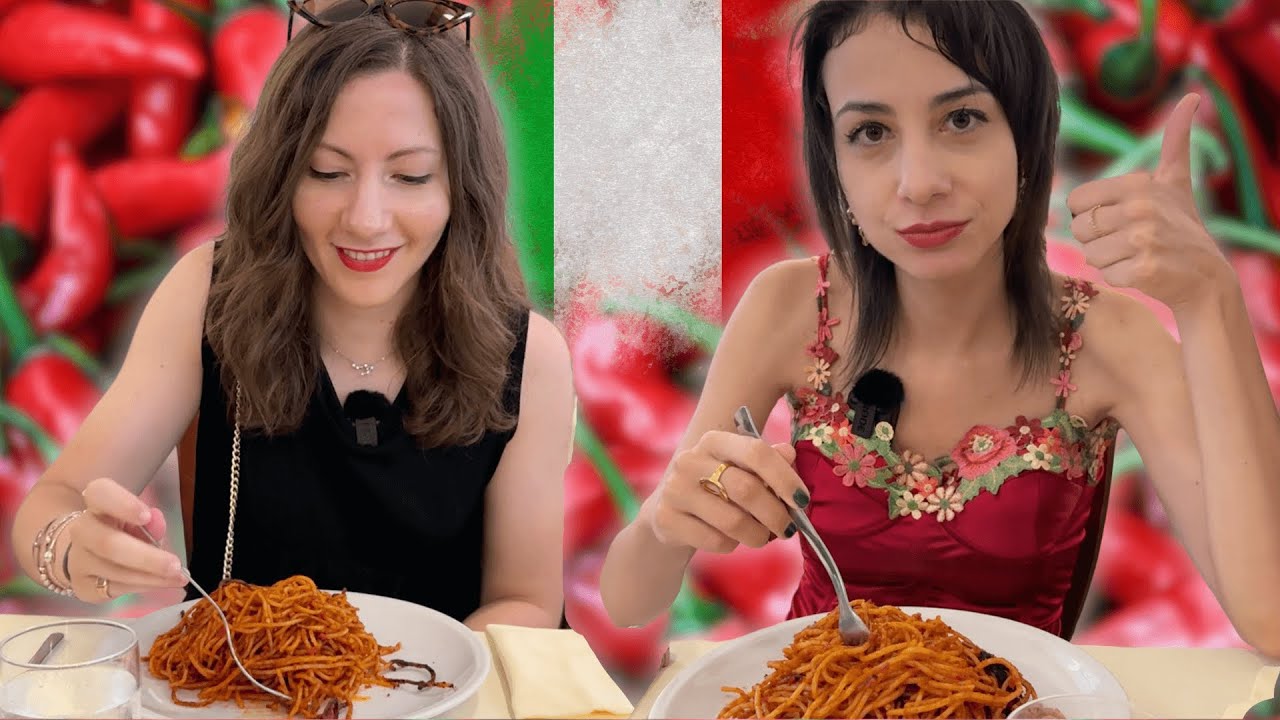
Spaghetti all’Assassina: Bari’s Dish that you MUST Try
The Birth of a Legend: The Restaurant Al Sorso Preferito
The restaurant “Al Sorso Preferito” in Bari is universally recognized as the cradle of spaghetti all’assassina. Located in the heart of Bari’s old city, this historic establishment gave birth to what many consider the most innovative dish of 20th-century Apulian cuisine.
Italian Culinary Expressions
“Dare i natali a qualcosa” [to give birth to something] = to be the place where something is born or originates
Example: “La Liguria ha dato i natali al pesto genovese” [Liguria gave birth to Genovese pesto]
“Nel cuore di” [in the heart of] = in the center of, in the most important part
Example: “Nel cuore della Sicilia si produce il miglior olio d’oliva” [In the heart of Sicily, the best olive oil is produced]
“Universalmente riconosciuto” [universally recognized] = accepted by everyone
Example: “Il Parmigiano-Reggiano è universalmente riconosciuto come il re dei formaggi” [Parmigiano-Reggiano is universally recognized as the king of cheeses]
Founded in the 1950s by Enzo Francavilla, the restaurant initially served traditional Apulian cuisine. However, it was in the 1960s that the turning point occurred: Enzo Francavilla decided to experiment with a new pasta cooking technique that would forever change the history of Bari’s restaurant scene.
The establishment, which still maintains the authentic atmosphere of the 1960s today, quickly became a reference point for lovers of good cuisine. Its strategic location in the ancient borough allowed it to attract both native Bari residents and curious tourists eager to discover the city’s culinary innovations.
The restaurant’s history is marked by a precise philosophy: innovating while respecting tradition. Enzo Francavilla didn’t simply want to create a new dish, but desired to elevate the simple ingredients of Apulian cuisine through a completely revolutionary cooking technique.
The Inventor: Enzo Francavilla and His Culinary Revolution
Enzo Francavilla is the culinary genius behind the invention of spaghetti all’assassina. Born in Bari in 1935, Enzo grew up breathing the atmosphere of traditional Apulian cuisine, but from a young age showed a propensity for innovation that led him to experiment with unconventional cooking techniques.
His culinary training took place mainly in the family restaurant, where he learned the secrets of traditional Bari cuisine. However, Enzo was not satisfied with inherited recipes: he spent hours experimenting with new ingredient combinations and, above all, new cooking techniques.
The inspiration for spaghetti all’assassina came, according to testimonies from the time, from an apparent mistake. During a particularly busy evening in 1967, Enzo noticed that some spaghetti were burning in the pan. Instead of throwing them away, he decided to taste that “ruined” pasta and discovered a completely new flavor: intense, smoky and incredibly appetizing.
Grammatical Constructions in Cooking
Construction: “Invece di + infinito” [Instead of + infinitive]
Example: “Invece di friggere le melanzane, decise di grigliarle” [Instead of frying the eggplants, he decided to grill them]
Use: to express an alternative in preparation
Passive form: “venne + participio passato” [came + past participle]
Example: “Il risotto venne mantecato alla perfezione” [The risotto was perfectly creamed]
Use: to give importance to the culinary technique
Superlative: “completamente + aggettivo” [completely + adjective]
Example: “Un gusto completamente diverso dal solito” [A taste completely different from usual]
Use: to intensify the description of flavors
From that moment, Enzo began to perfect the technique, transforming what seemed like a mistake into a precise culinary methodology. He studied cooking times, the ideal temperature of the pan, the right moment to add ingredients and especially how to control the burning to achieve the desired flavor without carbonizing the pasta.
The Revolutionary Technique: How Spaghetti all’Assassina is Born
The preparation of spaghetti all’assassina requires a completely different technique from the traditional Italian pasta method. Instead of cooking the spaghetti in abundant boiling water, Enzo Francavilla developed a method that involved direct cooking in the pan with the sauce.
The original technique involves using raw spaghetti that are placed directly in a very hot pan together with tomato, garlic, Apulian extra virgin olive oil and chili pepper. The secret lies in controlling the burning: the pasta must stick to the bottom of the pan and burn slightly, creating a crispy crust that gives the dish its characteristic flavor.
The process requires exceptional manual skills and perfect knowledge of cooking times. The cook must know how to recognize the exact moment to turn the pasta, when to add the cooking broth and how to dose the burning to achieve the perfect balance between crispiness and softness.
The ingredients used are deliberately simple, in perfect Apulian style: San Marzano tomatoes, Nubia garlic, extra virgin olive oil from Gargano, spicy chili pepper and naturally durum wheat spaghetti. The quality of raw materials is fundamental, as the cooking technique intensifies all flavors.
The Name and the Legend: Why “all’Assassina”
The origin of the name “spaghetti all’assassina” is wrapped in various legends, all equally fascinating. The most credited version tells that the name derives from the black-reddish color that the pasta takes on during cooking, which resembles blood and therefore evokes “assassin” images.
Analysis of Gastronomic Language
Past participle as culinary adjective:
“La versione più accreditata” [The most credited version] = the recipe that is most believed/accepted
Other examples: “un piatto cotto” [a cooked dish], “una salsa addensata” [a thickened sauce], “un brodo ristretto” [a reduced broth]
Expressions with “essere” in cooking:
“È avvolta in diverse leggende” [It is wrapped in various legends] = it is surrounded by mystery
Other examples: “È immersa nell’olio” [It is immersed in oil], “È avvolta nella pasta sfoglia” [It is wrapped in puff pastry]
Figurative culinary language:
“Evoca sapori” [Evokes flavors] = makes you think of, reminds of certain tastes
Example: “Questo profumo evoca ricordi della cucina della nonna” [This aroma evokes memories of grandmother’s kitchen]
Another theory maintains that the name derives from the fact that this pasta was so spicy and intense as to “assassinate” the palate of those who were not accustomed to the strong flavors of Apulian cuisine. Enzo Francavilla himself recounted that some customers, after tasting the dish, would exclaim: “Questa pasta è un’assassina!” [This pasta is an assassin!]
There is also a more romantic legend that tells of a cook who, madly in love with a woman who did not return his feelings, created this dish to “assassinate” his jealousy through cooking, transforming his passion into a culinary work.
Regardless of the name’s origin, everyone agrees that the nickname “assassina” perfectly reflects the revolutionary nature of this dish, which literally “assassinated” Italian culinary conventions regarding pasta cooking.
Evolution and Spread: From Bari to the World
After its creation in the 1960s, spaghetti all’assassina remained for a long time a well-kept secret of Bari cuisine. Only regular customers of the restaurant “Al Sorso Preferito” knew this extraordinary dish, which was passed down through word of mouth.
The turning point came in the 1980s, when some gastronomic journalists discovered the dish and began writing about it in major national newspapers. From that moment, the fame of spaghetti all’assassina began to spread throughout Italy, attracting curious people from all over the country.
Time Expressions in Cooking
Culinary temporal expressions:
“La svolta avvenne negli anni ’80” [The turning point occurred in the 1980s] = the moment of change was in the 1980s
“Da quel momento” [From that moment] = starting from that moment
“Iniziò a diffondersi” [It began to spread] = it started to expand
Similar culinary examples:
“A partire dal Rinascimento si diffuse l’uso del pomodoro” [Starting from the Renaissance, the use of tomato spread]
“Da allora in poi, la pasta divenne protagonista” [From then on, pasta became the protagonist]
“Col passare del tempo, la ricetta si perfezionò” [Over time, the recipe was perfected]
“Nel corso degli anni, il piatto conquistò tutta Italia” [Over the years, the dish conquered all of Italy]
In the 1990s and 2000s, the dish became a symbol of Bari and Puglia, being included in all the gastronomic guides of the region. Many restaurants began to offer their version of spaghetti all’assassina, although they rarely managed to match the quality of the original.
With the advent of social media and food bloggers, the dish has reached international fame. Preparation videos, reviews and photos of spaghetti all’assassina have gone around the world, bringing tourists from every continent to Bari to taste the original.
The Secret Ingredients: The Quality of Raw Materials
The success of spaghetti all’assassina depends not only on the cooking technique, but also on the exceptional quality of the ingredients used. Enzo Francavilla has always maintained that to achieve the true flavor of the dish, it is necessary to use only first-choice products.
The tomato used must be strictly San Marzano DOP, characterized by an intense flavor and a consistency that resists prolonged cooking in the pan. The pulp must be dense and seedless, to prevent acidity from compromising the dish’s balance.
The extra virgin olive oil must be Apulian, preferably from Gargano or Valle d’Itria, with a fruity but not too aggressive flavor. The oil must resist high temperatures without altering its taste, helping to create that crispy crust that characterizes the dish.
The chili pepper used is strictly the spicy Apulian one, with an intense but not excessively aggressive flavor. The quantity must be dosed with precision so as not to overpower the other flavors but to give that characteristic spiciness that makes the dish unforgettable.
The spaghetti must be made of durum wheat, preferably Apulian, with a consistency that allows the particular cooking required by the dish. The pasta must maintain its structure even during controlled burning, without breaking or becoming too soft.
Cultural Impact: Spaghetti all’Assassina in the Collective Imagination
Spaghetti all’assassina has become much more than a simple dish: it represents a cultural symbol of Bari and Puglia, embodying the innovative spirit and creativity of Southern Italian cuisine. The dish has become an icon that transcends gastronomy to enter the collective imagination.
Numerous documentaries and television programs have dedicated special features to this dish, helping to spread its fame well beyond regional borders. Starred chefs and international food bloggers have defined spaghetti all’assassina as one of the most ingenious culinary inventions of the 20th century.
The dish has become an element of identity for the people of Bari, who consider it a heritage to defend and pass down. Many Apulian families have adopted the recipe, developing home versions that maintain the essence of the original dish.
International fame has led to the creation of gastronomic festivals dedicated to spaghetti all’assassina, events that attract thousands of visitors to Bari every year. These festivals represent an important showcase for Apulian culinary culture.
The Restaurant Today: Tradition and Innovation
The restaurant “Al Sorso Preferito” continues to serve original spaghetti all’assassina today, keeping alive the tradition started by Franco Francavilla. The management has passed into the hands of the third generation of the family, which has been able to preserve the authenticity of the dish while adapting to modern needs.
The establishment has maintained the original atmosphere of the 1960s, with its checkered tablecloths, walls covered with old photos of Bari and furnishings that tell the story of the city. Every table has its story, every corner of the restaurant preserves the memory of the thousands of dishes served in over fifty years of activity.
The kitchen has remained faithful to the original recipe, still using the same pans and the same technique developed by the founder. The staff is trained directly by members of the Francavilla family, ensuring that every dish maintains the quality standards of the original.
Despite the success and international fame, the restaurant has maintained its family dimension, serving no more than 40-50 covers each evening to guarantee the quality and attention that each dish deserves. Reservation is often necessary, especially during weekends and periods of greater tourist influx.
Culinary Language: Questions and Answers
Expressions to respond to culinary questions:
“Teoricamente sì, ma…” [Theoretically yes, but…] = in theory it’s possible, however…
“È estremamente difficile” [It is extremely difficult] = it is very, very difficult
“Raramente riescono” [They rarely succeed] = they almost never succeed
Frequency adverbs in cooking:
“Cucino sempre la pasta al dente” [I always cook pasta al dente]
“Spesso aggiungo il prezzemolo” [I often add parsley]
“Qualche volta uso l’aglio” [Sometimes I use garlic]
“Raramente mangio piccante” [I rarely eat spicy food]
“Non metto mai il sale nella pasta” [I never put salt in pasta]
Expressions to indicate culinary possibilities:
“È possibile sostituire il burro con l’olio” [It’s possible to substitute butter with oil]
“Si può cuocere anche al forno” [It can also be cooked in the oven]
“È fattibile prepararlo in anticipo” [It’s feasible to prepare it in advance]
A Gastronomic Heritage to Preserve
Spaghetti all’assassina represents much more than a simple dish: it is a gastronomic heritage that tells the story of a city, the genius of a cook and the capacity of Italian cuisine to continuously reinvent itself. Their story is proof that culinary innovation can be born from the simplest gestures, from the curiosity of those who are not satisfied with conventions and from the passion of those who dedicate their lives to the search for gastronomic perfection.
Advanced Culinary Expressions
Expressions to conclude a culinary discourse:
“Rappresentano molto più di” [They represent much more than] = they are more important than
“È la prova che” [It is proof that] = it demonstrates that
“Può nascere da” [It can be born from] = it can originate from
Metaphorical language of cooking:
“Patrimonio gastronomico” [Gastronomic heritage] = culinary wealth
“Reinventarsi in cucina” [To reinvent oneself in the kitchen] = to change and always innovate
“Dedicare la vita alla cucina” [To dedicate one’s life to cooking] = to become a professional chef
Advanced culinary examples:
“La carbonara rappresenta molto più di un primo piatto” [Carbonara represents much more than a first course]
“Questo piatto è la prova che la semplicità può essere geniale” [This dish is proof that simplicity can be ingenious]
“L’ispirazione può nascere da un errore di cottura” [Inspiration can be born from a cooking mistake]
The restaurant “Al Sorso Preferito” continues to be the guardian of this tradition, keeping alive the memory of Enzo Francavilla and his extraordinary invention. Every dish served is a tribute to Apulian creativity and the ability to transform simple ingredients into unforgettable experiences through technique, passion and love for cooking.
Visiting Bari and not tasting spaghetti all’assassina means missing the opportunity to experience one of the most authentic and revolutionary gastronomic experiences in Italy. It is a journey through time that leads to the discovery of unique flavors, fascinating stories and that culinary creativity that makes Italian cuisine unique in the world.
If in addition to cooking vocabulary you want to learn the 10 expressions necessary for daily conversations in Italian, read this article!
Buy our new book: “Parole Di Casa Mia: Un Viaggio Nei Colloquialismi Italiani“, and learn all the colloquial expressions to speak like a true native speaker!
Want the lesson PDF with exercises and solutions?
Join the LearnAmo AcademyCaricamento quiz in corso…
Podcast: Play in new window | Download (Duration: 14:09 — 19.8MB)
Iscriviti: Apple Podcasts | Spotify | Android | iHeartRadio | Podcast Index | TuneIn | Deezer | RSS | Altri...