


Welcome to a fascinating journey through the world of hybrid languages – those extraordinary languages that are born when two cultures meet and blend.
Italian has been the protagonist of many of these linguistic encounters around the world, creating unique and surprising linguistic phenomena that tell the story of Italian emigration and cultural adaptation.
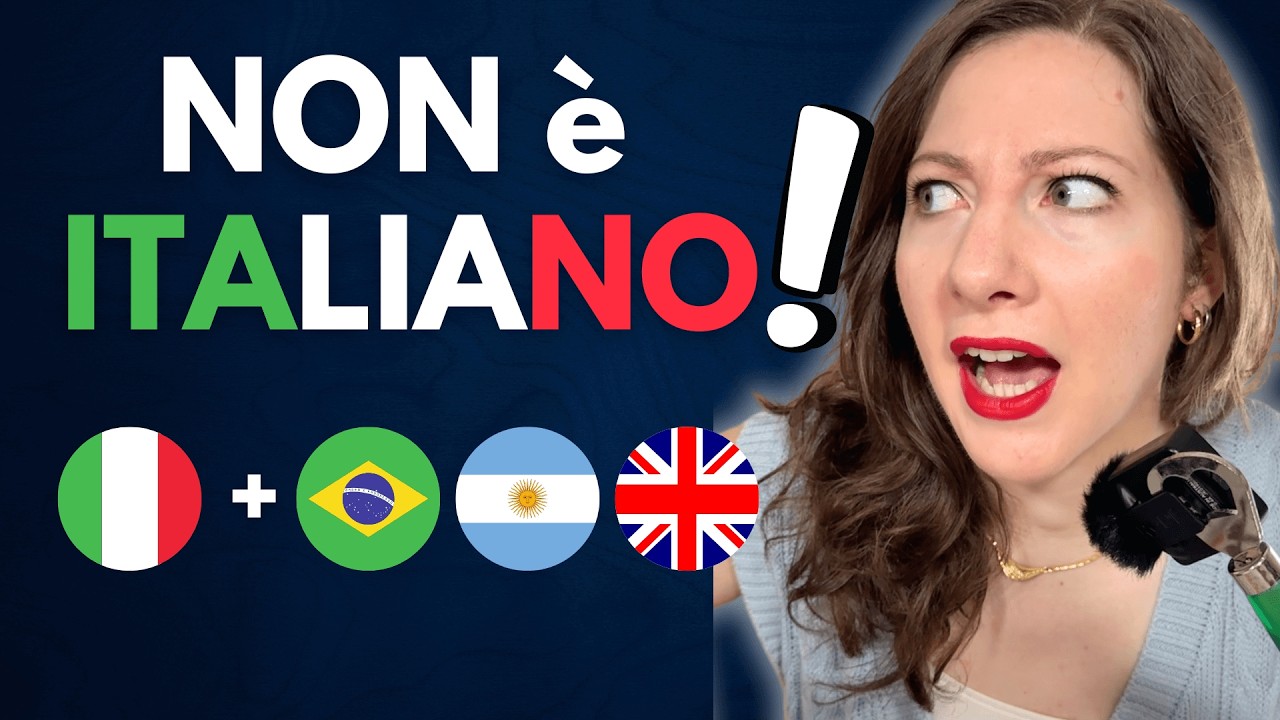
Languages and Dialects with Italian Roots (Cocoliche, Chipilo…)
What Does “Hybrid Language” Mean?
It’s very simple: imagine taking two different ingredients – like Italian tomato sauce and Mexican spice – and creating a completely new sauce. Well, hybrid languages work exactly like this! When immigrant communities settle in new countries, their mother tongue mixes with the local language, giving birth to unique communicative forms that carry within them the history, challenges, and ingenuity of entire generations.
These languages were born mainly thanks to massive Italian emigration between the nineteenth and twentieth centuries, when millions of Italians left their country to seek fortune in the Americas, Australia, and other parts of the world. Bringing with them their language, regional dialects, and culture, Italian emigrants had to adapt to new linguistic realities, creating true “linguistic marriages” that still amaze us today for their creativity and functionality.
Surprising fact: Between 1876 and 1976, about 26 million Italians left Italy. This mass migration created a global network of Italian communities that kept the language alive through creative and innovative adaptations.
Talian: When Veneto Meets Portuguese
Talian represents one of the most fascinating and best-preserved hybrid languages in the world. Born in the hills of southern Brazil, this extraordinary linguistic phenomenon tells the story of thousands of Venetians and Trentinos who were able to reinvent their linguistic identity without losing it.
The Historical Origins of Talian
Talian was born in the second half of the nineteenth century when thousands of Venetians and Trentinos emigrated to southern Brazil, settling mainly in the states of Rio Grande do Sul, Santa Catarina, and Paraná. These brave emigrants faced a dual challenge: they had to communicate not only among themselves (remember that in Italy regional dialects very different from each other were mainly spoken), but also with Portuguese-speaking Brazilians and with immigrants of other nationalities.
The need for communicative survival led to the birth of this hybrid language that combined the Veneto grammatical base with a lexicon increasingly enriched by Portuguese loans. The immigrants maintained the syntactic and phonetic structure of their mother tongue, but integrated Portuguese words for new concepts or to facilitate communication with Brazilian neighbors.
How Talian Works
Talian is essentially a Veneto base with many borrowings from Portuguese, but the fusion mechanism is very sophisticated. The language maintains the Veneto morphology and syntax, but adapts the lexicon to the needs of the new environment. Here are some examples that show this incredible linguistic creativity:
Examples:
• “Mi go comprado na machina nova” [I bought a new car]
• “Vamos ndar a la festa” [Let’s go to the party]
• “El tempo ze bon par trabalhar” [The weather is good for working]
Notice how it blends perfectly? “Go” is Veneto (ho [I have]), “comprado” is Portuguese (comprato [bought]), “na” is Veneto (una [a]), “machina” is an adaptation, “nova” is Portuguese! The beauty of Talian lies precisely in this natural fluidity with which it integrates elements of both languages.
Talian Today: A Living Language
Incredibly, about 500,000 people still speak Talian in Brazil today. The language is so important that in 2014 it was recognized as Brazilian intangible cultural heritage. Not bad for a language “homemade” by immigrants! There are radio programs, local newspapers, and even theatrical performances in Talian, demonstrating how a language born from necessity has become an integral part of Brazilian cultural identity.
The traditional festivals and celebrations in Talian-Brazilian communities are extraordinary events where you can still hear this language in all its vitality, accompanied by traditional Veneto dishes adapted to local ingredients and music that mixes Italian melodies and Brazilian rhythms.
Chipilo Veneto: A Linguistic Time Machine in Mexico
In the town of Chipilo, near Puebla in Mexico, there is something magical: a community that still speaks authentic Veneto after more than 140 years! This phenomenon represents one of the most extraordinary cases of linguistic preservation in the world.
The Foundation of Chipilo
In 1882, a group of Veneto families from the province of Treviso settled in Chipilo to escape the economic difficulties of post-unification Italy. Unlike other immigrant communities that quickly integrated into host societies, this community remained very cohesive and closed, jealously maintaining their linguistic and cultural traditions.
The peculiarity of Chipilo lies in the fact that the community maintained a strong social and linguistic endogamy: for generations, marriages took place mainly within the community, helping to preserve the Veneto language almost intact.
Veneto “Frozen in Time”
The Veneto of Chipilo has remained “frozen in time” in an extraordinary way. It’s like having a linguistic time machine that allows us to hear how Venetians spoke in the late nineteenth century! Many words, expressions, and grammatical constructions that in Veneto have disappeared or evolved, in Chipilo are still used in their original form.
Example: In Chipilo they still say “ciapar el tram” [take the tram], even though trams have never existed in the Mexican town! It’s a crystallized linguistic memory of urban Italy of the late nineteenth century that their ancestors carried in their memory.
Other examples of linguistic conservation include expressions like “andar a spasso” [go for a walk], “far merenda” [have a snack], and “la domenica del Corpus Domini” [Corpus Christi Sunday], used exactly as they were in the Treviso countryside of the nineteenth century.
Chipilo Today: A Unique Community
The community of Chipilo today has about 3,000 inhabitants, and many of them still speak perfectly the Veneto dialect of their ancestors together with Mexican Spanish. It is one of the most incredible cases of linguistic conservation in the world, studied by international linguists as an example of maintenance of cultural identity in migratory contexts.
Preserved traditions: In Chipilo they still organize the “Sagra dell’uva” [Grape Festival] just as it was done in Veneto in the nineteenth century, complete with traditional Veneto songs, typical dishes, and religious processions that recall those of the Treviso countryside.
Cocoliche: “Italian-Style” Spanish of Buenos Aires
Cocoliche represents one of the most entertaining and culturally significant hybrid languages in the history of Italian emigration. This linguistic phenomenon characterized Buenos Aires between the end of the nineteenth century and the beginning of the twentieth century, becoming not only a means of communication but also a symbol of the Italian migratory experience.
Definition and Historical Context
Cocoliche was not a real language, but rather an “attempt” to speak Spanish using Italian grammar, pronunciation, and intonation. It was the natural result of the sudden immersion of Italian immigrants (often illiterate or semi-literate) in Spanish-speaking Argentine society.
Italian immigrants in Buenos Aires found themselves in a complex linguistic situation: they had to learn Spanish to work and integrate, but they maintained their mother tongue (often dialectal) in the family. Cocoliche emerged as a practical solution to this dual necessity.
Characteristic Examples of Cocoliche
Examples of Cocoliche are as entertaining as they are linguistically interesting:
Examples:
• “Io no sabo nada” instead of “Yo no sé nada” [I don’t know anything]
• “Mi quero andar a la casa” instead of “Quiero ir a casa” [I want to go home]
• “Cuando io ero piccolo” instead of “Cuando era pequeño” [When I was little]
The most interesting aspect is that Cocoliche maintained the Italian phonetic structure applied to Spanish words, creating sounds that were familiar to Italians but also understandable to Argentines.
Cultural and Theatrical Legacy
The name “Cocoliche” came from a theatrical character who represented the Italian immigrant who spoke Spanish badly. This character, almost always represented comically in Buenos Aires theaters, became a symbol of the Italian migratory experience in Argentina.
Although Cocoliche as a linguistic phenomenon has almost disappeared, it has left deep traces in Argentine Spanish. Many expressions of Argentine popular language have Italian origin: “laburar” (to work, from Veneto “laorar”), “fiaca” (laziness), “morfar” (to eat), and “manyar” (to understand) have permanently entered the Argentine vocabulary.
Italiese: Italian That Embraces English
Italiese is perhaps the most widespread Italian hybrid language in the world and represents a linguistic phenomenon that has characterized Italian communities in the English-speaking world for over a century.
Geographic Distribution of Italiese
Italiese developed in the main Italian communities of the English-speaking world:
United States: Especially in the “Little Italys” of New York, in the Italian neighborhoods of Chicago, Philadelphia, Boston, and San Francisco, where millions of Italians settled between 1880 and 1920.
Canada: Mainly in Toronto and Montreal, where Italian communities created true cultural neighborhoods that kept linguistic traditions alive.
Australia: In Melbourne and Sydney, where post-World War II Italian emigration created numerous and active communities.
Formation Mechanisms of Italiese
Italiese represents a perfect example of creative linguistic borrowing. Italian immigrants took English words and “Italianized” them by applying Italian morphological and phonological rules. The result was often hilarious but perfectly functional!
Classic adaptation examples:
Examples:
• “Parcare la macchina” [to park the car]
• “Fare il apply per il job” [to apply for the job]
• “Droppare qualcosa” [to drop something]
• “Fixare la broken chair” [to fix the broken chair]
• “Muvare in una casa nuova” [to move to a new house]
• “Shoppare per le groceries” [to shop for groceries]
Italian Grammar with English Vocabulary
The most interesting feature of Italiese is that it maintains Italian grammatical structure while applying it to English vocabulary. Here are some examples that show this incredible creativity:
Examples:
• “Ho parkato la car in front della house” [I parked the car in front of the house]
• “Devo fare lo shopping per il weekend” [I have to do the shopping for the weekend]
• “Mia daughter sta studiando al college” [My daughter is studying at college]
• “Il landlord ha raisato il rent” [The landlord raised the rent]
Notice how the articles, prepositions, and syntactic structure remain Italian, while the lexicon is enriched with English terms adapted to Italian phonetics!
Italiese Through the Generations
Today Italiese is gradually disappearing with the new generations, who speak perfect English and often have lost contact with original Italian. However, it remains a fascinating linguistic phenomenon that has profoundly influenced the English of Italian communities and continues to live in family expressions and oral tradition of Italian-American, Italian-Canadian, and Italian-Australian families.
Maccaronico: From Renaissance Literature to Modernity
Maccaronico represents a particular case among hybrid languages because it is born not from the practical necessity of emigration, but from art, literature, and linguistic play. This tradition demonstrates how Italian linguistic creativity has deep roots in our cultural history.
Renaissance Origins
Maccaronico was born in the Renaissance when learned poets like Teofilo Folengo (1491-1544) mixed learned Latin with Italian dialects to create comic and literary effects. This technique allowed them to democratize literature, making it accessible even to those who did not know Latin perfectly.
Example: “Zambellus quidam de Bergamo fuit unus homo” [Zambello, a certain man from Bergamo, was a man…] where “Zambellus” and “quidam” are learned Latin, “de Bergamo” is dialectal, and the whole creates an irresistible comic effect.
Modern Maccaronico
Today “maccaronico” indicates any linguistic mixture made for fun, necessity, or artistic effect. In modern global society, maccaronico has become an everyday phenomenon:
Italian + Modern English:
Examples:
• “Fare il meeting con il boss” [to have the meeting with the boss]
• “Mandare una email urgente” [to send an urgent email]
• “Il mio smartphone ha crashato” [my smartphone crashed]
• “Facciamo un brainstorming sul progetto” [let’s do a brainstorming on the project]
Italian + French:
Examples:
• “Andare alla soirée très chic” [go to the very chic soirée]
• “Comprare un parfum nouveau” [buy a new parfum]
Curious etymology: The term “maccaronico” derives from “maccheroni” [macaroni] because this language was considered a linguistic “mess” just like the pasta dish that mixes various ingredients!
Lunfardo: Buenos Aires Slang with an Italian Heart
Lunfardo represents perhaps the most famous and culturally influential among South American slangs, and Italian has played a fundamental role in its formation. This language has transcended its humble beginnings to become an integral part of Argentine cultural identity.
Definition and Social Context
Lunfardo is the slang born in the popular neighborhoods of Buenos Aires and Montevideo between the end of the nineteenth century and the beginning of the twentieth century. Initially it was the language of the urban underworld, but gradually it spread to all social classes, becoming an integral part of porteño identity.
It’s not a real language, but a special vocabulary that overlays the Rioplatense Spanish, enriching it with terms from dozens of different languages brought by immigrants.
The Italian Contribution to Lunfardo
Although Lunfardo has multicultural origins (Spanish, Italian, French, English, African languages, and indigenous languages), Italian has made an enormous contribution, probably the most significant after Spanish itself.
Fundamental Italian words in Lunfardo:
• Fiaca (from Italian “fiacca” = laziness, tiredness)
• Laburo (from “lavoro” = work, effort)
• Mina (from “femmina” = girl, woman)
• Guita (from Neapolitan “guita” = money, cash)
• Chamuyo (from “chiamare” = to talk to convince, seduce)
• Morfar (from “morfare” = to eat)
• Laburo (from “lavorare” = hard work)
• Pibe (from “pivello” = young boy)
Lunfardo and Tango
Lunfardo became famous worldwide thanks to tango! Many tango songs use Lunfardo words of Italian origin, creating an incredible cultural bridge between Italy and Argentina.
Significant musical examples: The famous song “Sur” by Aníbal Troilo uses terms like “pibe” (boy, from “pivello”) and “mina” (girl). The tango “Cambalache” by Enrique Santos Discépolo is full of lunfardisms of Italian origin.
Musical curiosity: Carlos Gardel, considered the king of tango, was the son of Italian immigrants (although he claimed to be born in Argentina)! His pronunciation of tango preserved Italian phonological influences that contributed to the characteristic sound of tango.
Other Italian Hybrid Linguistic Phenomena
Italian-French on the French Riviera
Along the French Riviera, especially in Nice, Cannes, and Menton, there is a tradition of Italian-French bilingualism that has created interesting hybrid forms. Expressions like “faire la spesa au marché” or “aller à la spiaggia” are common among Italian families who have lived in France for generations.
Italian-German in Switzerland and Germany
In the Italian communities of Switzerland and Germany, interesting hybrid forms have developed like “andare al Bahnhof” [go to the station], “lavorare nella Fabrik” [work in the factory], or “comprare al Supermarkt” [shop at the supermarket]. These communities have maintained a basic Italian enriched with German borrowings for daily necessities.
Italian of South Africa
Less known but equally interesting is the Italian of South Africa, spoken in the Italian communities of Johannesburg and Cape Town. This variety has integrated Afrikaans and English words while maintaining a southern Italian base (many emigrants were Calabrian and Sicilian).
The Global Linguistic Impact of Italian Emigration
Italian hybrid languages represent much more than simple linguistic curiosities: they are living testimonies of the adaptability, creativity, and resilience of Italian emigrants. These phenomena demonstrate how cultural identity can be maintained and reinvented simultaneously, creating bridges between different worlds.
Each hybrid language tells a unique human story: that of people who had to leave everything to start over from scratch, but who were able to bring with them the richness of their linguistic culture, creatively adapting it to new contexts. The result is a worldwide linguistic heritage that continues to evolve and surprise linguists and scholars from all over the world.
Studying these languages means better understanding not only the history of Italian emigration, but also the universal mechanisms through which languages adapt, change, and survive in multicultural contexts. It’s a lesson in cultural resilience that continues to be relevant in our era of globalization and international movement.
The Future of Italian Hybrid Languages
In the era of digital globalization, we are witnessing the birth of new forms of linguistic hybridization. Italian communities worldwide are developing new ways of mixing Italian with local languages, often through social media, messaging apps, and digital platforms. While some historical hybrid languages are gradually disappearing, others are renewing and adapting to modern technologies.
The challenge for the future will be to preserve this linguistic heritage without mummifying it, allowing Italian communities worldwide to continue evolving while keeping alive the connection with their roots. Italian hybrid languages teach us that cultural identity is not something fixed, but a living organism that can adapt, grow, and enrich itself through encounters with other cultures, without ever losing its essence.
If you’re interested in learning more about other dialects, read this article on Italian dialects!
Buy our new book: “Parole Di Casa Mia: Un Viaggio Nei Colloquialismi Italiani“, and learn all the colloquial expressions to speak like a true native speaker!
Want the lesson PDF with exercises and solutions?
Join the LearnAmo AcademyLoading quiz…
Podcast: Play in new window | Download (Duration: 19:27 — 27.1MB)
Iscriviti: Apple Podcasts | Spotify | Android | iHeartRadio | Podcast Index | TuneIn | Deezer | RSS | Altri...
thanks for info.