


Have you ever wondered why in Italian we say “Che tu sia benedetto!” [May you be blessed!] or “Magari avessi più tempo!” [I wish I had more time!]? In these cases, the subjunctive appears in sentences that stand on their own, without depending on anything. This is the independent subjunctive, very common in Italian to express wishes, orders, doubts, and suppositions. With this complete guide, you’ll learn to use it like a true Italian native speaker.
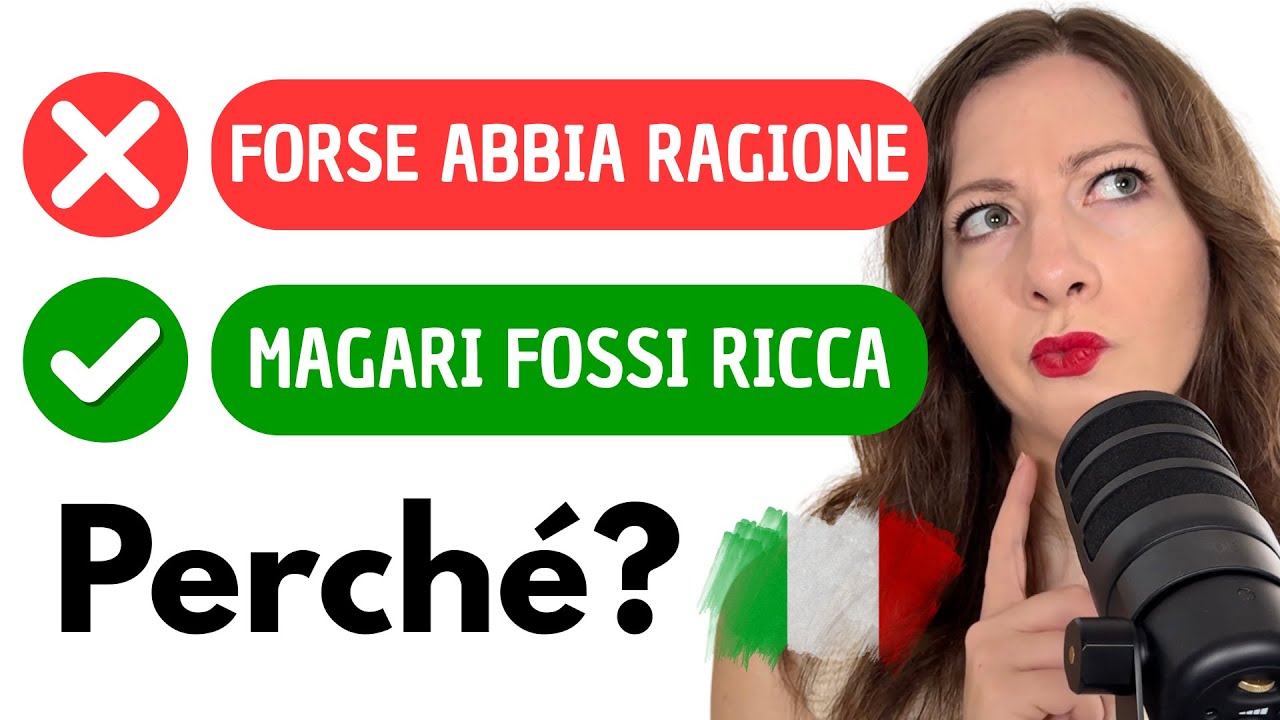
The INDEPENDENT Subjunctive: When to use it on its own
What Is the Independent Subjunctive?
Let’s clarify this concept. Normally, when you study the subjunctive, you always see it in dependent clauses, right? For example: “Penso che tu abbia ragione” [I think you’re right] or “Voglio che tu venga con me” [I want you to come with me]. In these cases, the subjunctive depends on a main verb (penso, voglio) that governs the entire construction.
However, the subjunctive can also be independent, meaning it can appear in sentences that stand on their own, without depending on another clause. That’s why it’s called “independent” – it’s autonomous in its communicative function. These sentences express emotions, wishes, doubts, orders, or suppositions in a direct and immediate way.
The independent subjunctive is extremely common in spoken Italian, especially in emotional and colloquial expressions. Once you master this use, your Italian will sound much more natural and authentic.
The Different Types of Independent Subjunctive
Let’s now look at all the main cases in which the independent subjunctive is used. Pay attention, because there are several and each one has a specific communicative function. We’ll analyze each type in detail with numerous practical examples that you can use immediately in your daily conversations.
1. Hortatory Subjunctive (to Give Orders or Invitations)
The hortatory subjunctive is used to give orders, invitations, or exhortations. It’s used as a substitute for the imperative for missing persons (third person singular/plural, first person plural) or for the formal Lei. It’s very formal and elegant, perfect for professional situations or when you want to maintain a respectful tone.
When Is the Hortatory Subjunctive Used?
This form is used when you want to:
- Give formal orders to the third person singular or plural
- Make polite invitations using the formal “Lei”
- Propose group actions in the first person plural (noi)
- Exhort someone to do something with elegance
Practical Examples with Third Person Singular (Formal Lei)
“Entri pure, signora!” (formal Lei – equivalent to “come in!” but with courtesy) [Please come in, madam!]
“Venga con noi, professore!” (formal invitation to a person of respect) [Come with us, professor!]
“Si accomodi, prego!” (courteous order/invitation very common in formal contexts) [Please have a seat!]
“Stia attento!” (order to third person singular) [Be careful!]
“Prenda questa strada e poi giri a destra!” (formal directions) [Take this street and then turn right!]
“Mi dica pure tutto, dottore!” (invitation to speak freely) [Please tell me everything, doctor!]
Examples with Third Person Plural (Formal Loro)
“Si accomodino, prego!” (courteous order/invitation in plural) [Please have a seat! – plural]
“Entrino pure, signori!” (formal invitation to multiple people) [Please come in, gentlemen!]
“Facciano ciò che vogliono!” (total permission with formal tone) [Let them do as they wish!]
“Abbiano pazienza, per favore!” (courteous request for patience) [Please be patient!]
Attention to First Person Plural (Noi)!
In the first person plural (noi), the hortatory subjunctive is very common in spoken Italian:
“Andiamo al cinema!” (proposal for activity) [Let’s go to the cinema!]
“Facciamo una pausa!” (suggestion to rest) [Let’s take a break!]
“Parliamo di questo problema!” (invitation to discussion) [Let’s talk about this problem!]
“Usciamo a cena stasera!” (proposal for the evening) [Let’s go out for dinner tonight!]
“Vediamo cosa possiamo fare!” (exhortation to find solutions) [Let’s see what we can do!]
Important note: In this case, the subjunctive and indicative have the same form for the first person plural, but the function is hortatory, so you’re actually using the subjunctive. The difference is perceived from the context and intonation: when you’re proposing or inviting, you’re using the hortatory subjunctive.
2. Optative Subjunctive (to Express Wishes)
“Ottativo” derives from Latin “optare” and means “to wish”. This subjunctive is used to express a wish, a hope, or a desire. It’s often introduced by words like “magari” [if only], “se solo” [if only], “oh se” [oh if], “almeno” [at least], or “che” [may]. This is probably the most emotional and personal use of the independent subjunctive.
Function and Use of the Optative Subjunctive
- Expresses an achievable wish in the present or future: “Magari venisse!” (wish that could come true) [If only he/she would come!]
- Expresses regret for the past: “Oh, se avessi studiato di più!” (regret for something that didn’t happen and now it’s too late) [Oh, if only I had studied more!]
- Expresses wishes and blessings: “Che Dio ti benedica!” (formal wish) [May God bless you!]
- Expresses unrealizable fantasies: “Se fossi un uccello!” (impossible wish) [If I were a bird!]
Examples with “Magari” (Very Common!)
Wishes for the present/future (imperfect subjunctive):
“Magari piovesse un po’!” (wish that it would rain) [If only it would rain a bit!]
“Magari vincessi alla lotteria!” (wish to win money) [If only I would win the lottery!]
“Magari ci fosse un corso sui verbi pronominali!” (wish to have something that doesn’t exist) [If only there were a course on pronominal verbs!]
“Magari smettesse di nevicare!” (wish for the present) [If only it would stop snowing!]
“Magari tornasse presto!” (hope that someone returns) [If only he/she would return soon!]
Regrets for the past (past perfect subjunctive):
“Magari avessi studiato di più!” (regret for not having studied enough) [If only I had studied more!]
“Magari avessi ascoltato i tuoi consigli!” (regret for not having followed advice) [If only I had listened to your advice!]
“Magari avessimo preso l’altra strada!” (regret for a past choice) [If only we had taken the other road!]
“Magari non fossi andato a quella festa!” (regret for a past action) [If only I hadn’t gone to that party!]
Examples with “Che” (Formal Wishes)
“Che Dio ti benedica!” (religious wish) [May God bless you!]
“Che tu possa essere felice!” (wish for happiness) [May you be happy!]
“Che il cielo ti aiuti!” (solemn wish) [May heaven help you!]
“Che la fortuna ti assista!” (wish for good fortune) [May luck be with you!]
“Che tu possa realizzare tutti i tuoi sogni!” (wish for the future) [May you realize all your dreams!]
“Che vada tutto bene!” (common wish before an important event) [May everything go well!]
Examples with “Se” or “Se Solo” (Impossible Wishes)
“Se solo avessi più tempo!” (regret for lack of time) [If only I had more time!]
“Oh se potessi tornare indietro!” (impossible wish to change the past) [Oh if I could go back!]
“Se fossi ricco!” (fantasy about wealth) [If I were rich!]
“Se avessi le ali!” (impossible wish to fly) [If I had wings!]
“Oh se potessi leggere nel pensiero!” (fantasy about superpowers) [Oh if I could read minds!]
Examples with “Almeno” (Minimum Wish)
“Almeno smettesse di piovere!” (minimum wish about the weather) [At least it would stop raining!]
“Almeno mi avesse avvertito!” (regret for lack of communication) [At least he/she had warned me!]
“Almeno provasse a capirmi!” (wish for understanding) [At least he/she would try to understand me!]
“Almeno facesse silenzio!” (request for quiet) [At least he/she would be quiet!]
3. Concessive Subjunctive (to Make Concessions)
The concessive subjunctive is used to admit or concede something, often followed by an opposition or objection. It’s accompanied by words like “pure” [even], “anche” [even], or simply without introducers, or introduced by expressions like “ammettiamo che” [let’s admit that], “sia pure che” [even if], or “anche se” [even if].
How Does It Work?
It’s like saying: “Ok, I admit this point, BUT…” – it’s a concession often followed by an opposition. It’s used when you want to acknowledge someone else’s point of view while maintaining your own position. It’s very useful in discussions and debates to appear reasonable while not completely yielding.
Practical Examples
“Sia anche come dici tu, ma io non sono d’accordo!” (okay, I admit it might be like that, but…) [Even if it’s as you say, I don’t agree!]
“Dica quello che vuole, a me non interessa!” (he/she can say whatever he/she wants, but I don’t care) [Let him/her say what he/she wants, I don’t care!]
“Faccia pure come crede!” (total freedom, do as you wish) [Do as you please!]
“Venga pure, tanto non cambierà nulla!” (he/she can come, but it will be useless) [Come if you want, it won’t change anything anyway!]
“Ammettiamo pure che la tua casa sia più piccola della mia: non per questo devi provare odio nei miei confronti!” (concession followed by objection) [Let’s admit your house is smaller than mine: that’s no reason to hate me!]
“Siano pure più bravi di noi, ma noi abbiamo più esperienza!” (admission with reservation) [They may be better than us, but we have more experience!]
“Dica quel che vuole, io non cambio idea!” (concession of freedom of speech but maintaining one’s own position) [Let him/her say what he/she wants, I won’t change my mind!]
4. Dubitative Subjunctive (to Express Doubts and Uncertainties)
The dubitative subjunctive expresses doubt, uncertainty, or perplexity. It’s often introduced by “che”, “non”, or appears in rhetorical questions. This type of subjunctive is extremely common in spoken Italian, especially when thinking aloud or expressing concern.
When Is It Used?
When you use the dubitative subjunctive, you’re essentially thinking aloud, expressing a hypothesis or uncertainty about something. It’s the most natural way for an Italian to express doubts without making categorical statements. Very used in informal contexts among friends and family.
Examples with “Che” (Most Common Form)
“Che sia lui il colpevole?” (I wonder if it’s him…) [Could he be the guilty one?]
“Che abbiano dimenticato l’appuntamento?” (doubt, perplexity about the reason for their absence) [Could they have forgotten the appointment?]
“Che abbia detto la verità?” (uncertainty about the truthfulness) [Could he/she have told the truth?]
“Che stia male?” (concern and doubt about someone’s health) [Could he/she be sick?]
“Che siano già partiti?” (doubt about an action already completed) [Could they have already left?]
“Che abbia perso il treno?” (hypothesis about someone’s delay) [Could he/she have missed the train?]
“Che siano troppe informazioni?” (doubt about the quantity of information provided) [Could it be too much information?]
Examples with “Non” (Doubt with Negation)
“Non sappia lui la risposta?” (doubtful question with tone of surprise) [Wouldn’t he know the answer?]
“Non abbia capito bene?” (doubt about understanding) [Might he/she not have understood well?]
“Non sia il caso di chiamare un medico?” (doubt that suggests an action) [Shouldn’t we call a doctor?]
Context of Use
The dubitative subjunctive is particularly useful when:
- You don’t want to make a direct statement
- You’re trying to be diplomatic
- You’re expressing concern delicately
- You want to involve the interlocutor in your reasoning
5. Suppositive Subjunctive (to Make Suppositions)
The suppositive subjunctive is similar to the dubitative, but it’s used to make suppositions and hypotheses rather than express real doubts. It’s often introduced by “che” or by expressions like “poniamo che” [let’s suppose that], “ammesso che” [assuming that], “supponiamo che” [let’s suppose that], “mettiamo che” [let’s say that], or the interrogative formula “E se?” [What if?]
Difference between Dubitative and Suppositive
While the dubitative expresses real uncertainty or concern, the suppositive constructs hypothetical scenarios to reason about what to do or what might happen. It’s widely used in discussions, problem-solving, and strategic planning.
Examples with Explicit Introducers
“Poniamo che tu abbia ragione, cosa facciamo?” (hypothesis to reason) [Let’s suppose you’re right, what do we do?]
“Supponiamo che loro non vengano, come procediamo?” (supposition to plan) [Let’s suppose they don’t come, how do we proceed?]
“Ammesso che sia vero, come procediamo?” (hypothesis for reasoning) [Assuming it’s true, how do we proceed?]
“Mettiamo che domani piova, dove andiamo?” (hypothetical scenario for organization) [Let’s say it rains tomorrow, where do we go?]
“Diciamo che tutto vada bene, quanto tempo ci vorrà?” (optimistic supposition) [Let’s say everything goes well, how long will it take?]
Examples with “E se?” (Very Common!)
“E se fosse il maggiordomo l’assassino?” (investigative supposition) [What if the butler were the murderer?]
“E se non venissero?” (hypothesis about an absence) [What if they didn’t come?]
“E se provassimo in un altro modo?” (alternative proposal) [What if we tried another way?]
“E se ci fossimo sbagliati?” (doubt about the correctness of one’s actions) [What if we were wrong?]
“E se piovesse durante il matrimonio?” (hypothetical concern) [What if it rained during the wedding?]
Practical Use
This type of subjunctive is perfect for:
- Brainstorming and planning projects
- Strategic discussions in work contexts
- Analysis of alternative scenarios
- Hypothetical reasoning in educational contexts
Stop reading Italian.
Start speaking it.
Online lessons in groups of 4, organised by level and goals, with qualified teachers. Pick the day and time that suit you from the available slots.
Max 4 students:
there’s a seat for you
Which Tenses of the Independent Subjunctive to Use?
The choice of verb tense in the independent subjunctive depends on the type of message you want to communicate and the temporal reference. Let’s see in detail when to use each tense.
Present Subjunctive
It’s used for actions, orders, or doubts that refer to the present or immediate future:
For orders/exhortations:
“Entri pure!” (formal order to the present) [Please come in!]
“Venga domani!” (invitation for the future) [Come tomorrow!]
“Facciamo presto!” (immediate exhortation) [Let’s hurry!]
For doubts about the present:
“Che sia già qui?” (doubt about a present situation) [Could he/she already be here?]
“Che stiano arrivando?” (uncertainty about an ongoing action) [Could they be arriving?]
Past Subjunctive
It’s used to express doubts or suppositions about actions already completed (but of which we’re not certain):
“Che sia già arrivato?” (doubt about a recent past action) [Could he/she have already arrived?]
“Che abbiano già mangiato?” (uncertainty about a completed event) [Could they have already eaten?]
“Che abbia dimenticato l’appuntamento?” (hypothesis about a past event) [Could he/she have forgotten the appointment?]
Imperfect Subjunctive
It’s used mainly for:
Wishes difficult to realize or unreal in the present:
“Magari fossi ricco!” (unreal wish in the present) [If only I were rich!]
“Se solo avessi più tempo!” (impossible wish to realize now) [If only I had more time!]
“Oh se potessi volare!” (unrealizable fantasy) [Oh if I could fly!]
Suppositions in the past or present:
“E se fosse lui il ladro?” (supposition about an identity) [What if he were the thief?]
“Poniamo che venisse domani…” (hypothesis) [Let’s suppose he/she came tomorrow…]
Past Perfect Subjunctive
It’s used for:
Regrets about the past (things that didn’t happen):
“Magari avessi studiato di più!” (regret for not having studied enough in the past) [If only I had studied more!]
“Se solo avessi ascoltato i tuoi consigli!” (regret for not having followed advice) [If only I had listened to your advice!]
“Almeno mi avesse avvertito!” (regret for lack of past communication) [If only he/she had warned me!]
Doubts about prior past events:
“Che fosse già partito quando sono arrivato?” (doubt about a past event prior to another past event) [Could he/she have already left when I arrived?]
“Che avessero già deciso prima della riunione?” (uncertainty about past decisions) [Could they have already decided before the meeting?]
Summary Chart of Tenses
| Verb Tense | When it’s used | Example |
|---|---|---|
| Congiuntivo Presente [Present Subjunctive] | Present/Future – Orders, current doubts | “Entri pure!” [Please come in!] / “Che sia vero?” [Could it be true?] |
| Congiuntivo Passato [Past Subjunctive] | Recent past – Doubts about completed actions | “Che sia già partito?” [Could he/she have already left?] |
| Congiuntivo Imperfetto [Imperfect Subjunctive] | Unreal wishes, suppositions | “Magari fossi ricco!” [If only I were rich!] / “E se fosse lui?” [What if it were him?] |
| Congiuntivo Trapassato [Past Perfect Subjunctive] | Past regrets, doubts about prior events | “Magari avessi studiato!” [If only I had studied!] / “Che fosse già partito?” [Could he/she have already left?] |
Differences Between the Various Types of Independent Subjunctive
To help you better distinguish the different uses, here’s a comparative table that highlights the main characteristics of each type:
| Type | Function | Common introducers | Typical example |
|---|---|---|---|
| Esortativo [Hortatory] | Give orders, invitations, exhortations | None (or “pure” [even]) | “Entri pure!” [Please come in!] / “Andiamo!” [Let’s go!] |
| Ottativo [Optative] | Express wishes, hopes, regrets | Magari [if only], che [may], se solo [if only], almeno [at least] | “Magari fossi ricco!” [If only I were rich!] / “Che Dio ti benedica!” [May God bless you!] |
| Concessivo [Concessive] | Make concessions with opposition | Pure [even], anche [also], sia pure che [even if] | “Dica quel che vuole, io non cambio idea!” [Let him/her say what he/she wants, I won’t change my mind!] |
| Dubitativo [Dubitative] | Express doubts and uncertainties | Che [could/might], non [not] | “Che sia lui il colpevole?” [Could he be the guilty one?] |
| Suppositivo [Suppositive] | Make suppositions and hypotheses | Poniamo che [let’s suppose that], e se [what if], supponiamo che [let’s suppose that] | “E se piovesse?” [What if it rained?] / “Poniamo che tu abbia ragione…” [Let’s suppose you’re right…] |
Common Expressions with the Independent Subjunctive
Here are some of the most common and useful expressions that use the independent subjunctive in everyday Italian. Learning them will help you sound more natural when speaking Italian.
Wishes and Blessings
- “Che Dio ti benedica!” (very common religious wish) [May God bless you!]
- “Che la fortuna ti assista!” (wish before an important event) [May luck assist you!]
- “Che tu possa essere felice!” (wish for happiness) [May you be happy!]
- “Che vada tutto bene!” (very common general wish) [May everything go well!]
- “Che ti vada bene!” (good luck!) [Good luck!]
Wishes with “Magari”
- “Magari!” (alone, as a response: means “I really wish!”) [If only! / I wish!]
- “Magari fosse vero!” (wish for truthfulness) [If only it were true!]
- “Magari piovesse!” (wish for rain) [If only it would rain!]
- “Magari smettesse!” (wish that something would end) [If only it would stop!]
Common Doubt Expressions
- “Che sia così?” (general doubt) [Could it be so?]
- “Che abbia ragione lui?” (doubt about correctness) [Could he be right?]
- “Che stia scherzando?” (doubt about seriousness) [Could he/she be joking?]
- “Che abbia dimenticato?” (doubt about memory) [Could he/she have forgotten?]
First Person Plural Proposals
- “Andiamo!” (proposal to go) [Let’s go!]
- “Vediamo!” (proposal to see/check) [Let’s see!]
- “Facciamolo!” (action proposal) [Let’s do it!]
- “Parliamone!” (discussion proposal) [Let’s talk about it!]
- “Proviamo!” (proposal to try) [Let’s try!]
Common Mistakes to Avoid
Let’s look at the most frequent errors that Italian students make when using the independent subjunctive, so you can avoid them.
Mistake 1: Confusing Tenses with “Magari”
WRONG: “Magari sono ricco!”
CORRECT: “Magari fossi ricco!” (imperfect subjunctive) [If only I were rich!]
WRONG: “Magari ho studiato di più!”
CORRECT: “Magari avessi studiato di più!” (past perfect subjunctive) [If only I had studied more!]
Rule: With “magari” you always use the subjunctive, never the indicative!
Mistake 2: Using the Wrong Auxiliary
WRONG: “Che abbia partito?”
CORRECT: “Che sia partito?” (auxiliary essere with partire) [Could he/she have left?]
WRONG: “Magari sarei arrivato in tempo!”
CORRECT: “Magari fossi arrivato in tempo!” (past perfect subjunctive) [If only I had arrived on time!]
Rule: Verbs of movement require the auxiliary “essere”: andare, venire, partire, arrivare, uscire, etc.
Mistake 3: Confusing the Subjunctive with the Informal Imperative
WRONG: “Entra, professore!”
CORRECT: “Entri, professore!” (hortatory subjunctive Lei) [Come in, professor!]
Rule: With people requiring formality, always use the hortatory subjunctive (Lei/Loro)!
Mistake 4: Wrong Tenses for Regrets
WRONG: “Magari studiavo di più!”
CORRECT: “Magari avessi studiato di più!” (past perfect subjunctive) [If only I had studied more!]
WRONG: “Se solo avevo più tempo!”
CORRECT: “Se solo avessi avuto più tempo!” (past perfect subjunctive) [If only I had had more time!]
Rule: For regrets about the past, always use the past perfect subjunctive!
Frequently Asked Questions
1. What’s the Difference Between Dubitative and Suppositive Subjunctive?
The dubitative subjunctive expresses real uncertainty or concern about something: “Che sia malato?” [Could he be sick?] (I’m really worried). The suppositive subjunctive instead constructs hypothetical scenarios for reasoning: “Poniamo che sia malato, chi lo sostituisce?” [Let’s suppose he’s sick, who replaces him?] (I’m not necessarily worried, I’m just planning).
2. Can I Use “Magari” with the Indicative?
No! When “magari” expresses a wish, it must always be followed by the subjunctive (imperfect for the present, past perfect for the past). The only exception is when “magari” means “maybe” in response to a question: “Vieni domani?” – “Magari!” [Are you coming tomorrow? – Maybe!] (in this case it’s an exclamation, not a complete sentence).
3. When I Use “Andiamo!” Is It Subjunctive or Indicative?
Technically it’s hortatory subjunctive, even though the form is identical to the present indicative. The function is hortatory (making a proposal), so it’s considered subjunctive. The difference is recognized by the context: if you’re proposing an action, it’s hortatory subjunctive; if you’re simply stating a fact (“Andiamo al cinema ogni venerdì” [We go to the cinema every Friday]), it’s indicative.
4. Is the Independent Subjunctive Also Used in Formal Writing?
Yes, absolutely! The hortatory subjunctive is very formal and is used in official contexts. The suppositive subjunctive is also common in argumentative and academic texts. The optative subjunctive is often found in literary and poetic texts. Only the dubitative subjunctive is more typical of informal spoken language.
5. How Do I Distinguish Whether to Use Imperfect or Past Perfect Subjunctive with “Magari”?
Imperfect = unreal wish about the present: “Magari fossi ricco!” [If only I were rich!] (but I’m not now)
Past perfect = regret about the past: “Magari fossi stato ricco!” [If only I had been rich!] (but I wasn’t then)
The rule is simple: if you regret something that didn’t happen in the past, use the past perfect. If you wish something were different in the present, use the imperfect.
6. Why Is It Called “Optative”?
The term derives from Latin “optare” which means “to wish” or “to choose”. In ancient Latin and Greek grammars, the optative mood was specifically dedicated to expressing wishes. In modern Italian there is no separate optative mood, but we use the subjunctive with this function.
Final Summary
Let’s do a quick recap of everything we’ve seen:
- The independent subjunctive is autonomous, doesn’t depend on other clauses
- Hortatory subjunctive: for orders, formal invitations and proposals (Entri! / Andiamo!)
- Optative subjunctive: for wishes, hopes and regrets (Magari fossi ricco! / Che tu sia felice!)
- Concessive subjunctive: to make concessions with oppositions (Dica quel che vuole, ma…)
- Dubitative subjunctive: to express doubts and uncertainties (Che sia vero?)
- Suppositive subjunctive: to make suppositions and hypotheses (E se piovesse?)
- The tenses: present/past for recent actions, imperfect for unreal wishes, past perfect for past regrets
The independent subjunctive is very widespread in spoken and written Italian, so the more you practice it, the more natural it will become. It’s not just a grammatical rule, but an important expressive tool that will allow you to communicate emotions, doubts, wishes and proposals in an elegant and natural way. By mastering this aspect of the Italian language, your Italian will improve significantly.
If this topic interested you, don’t miss our article on tense agreement: it’s the perfect complement to master the use of the subjunctive!
Do pronominal verbs trip you up and fill you with doubts? Turn confusion into confidence with our exclusive course: “Da «Non ce la faccio più» a «Ora me la cavo»: i verbi pronominali in 30 giorni.“ With fun, bite-size lessons and targeted practice, you’ll learn to use them naturally in just one month
Want the lesson PDF with exercises and solutions?
Join the LearnAmo AcademyLoading quiz…
Podcast: Play in new window | Download ()
Iscriviti: Apple Podcasts | Spotify | Android | iHeartRadio | Podcast Index | TuneIn | Deezer | RSS | Altri...