


Today we’re talking about one of the most beloved Italian traditions: the aperitivo!
If you’re learning Italian, you’ve surely heard this word a thousand times. But do you really know what it means and why Italians are so obsessed with this time of day?
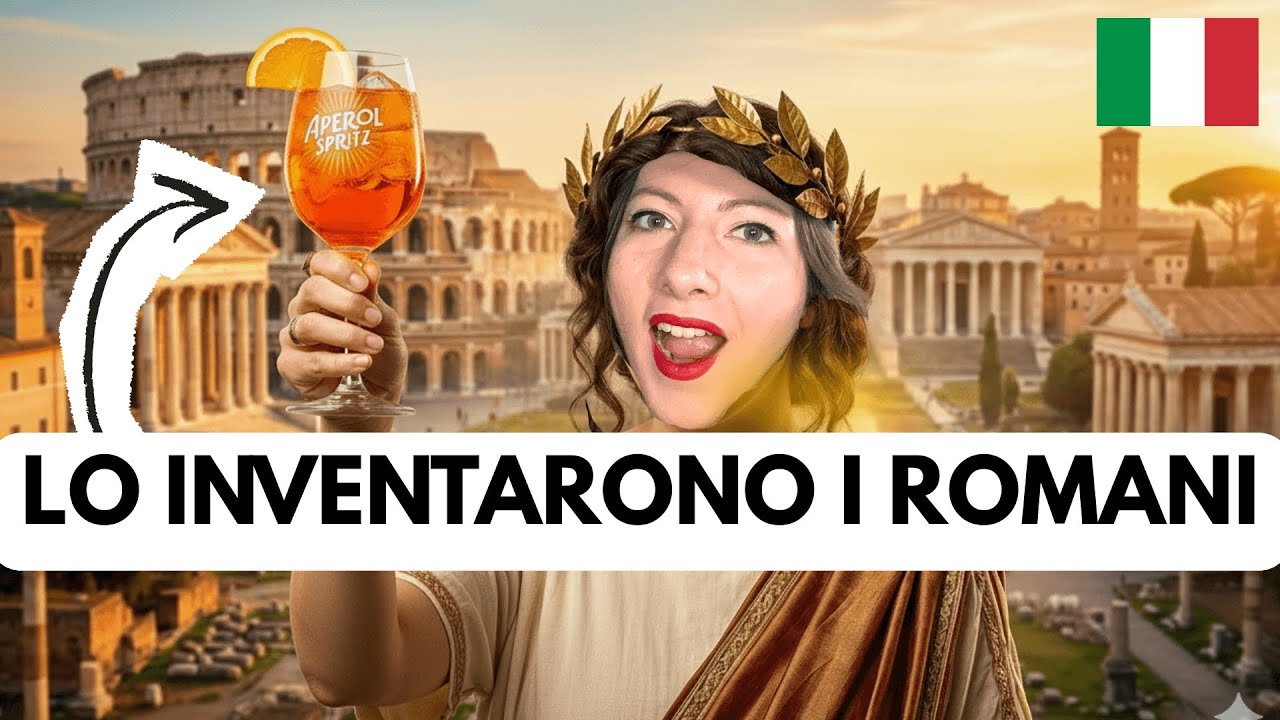
The APERITIVO: where does it come from and why is it done?
What is the Aperitivo?
The aperitivo is much more than just a drink: it’s a social ritual that combines food, drinks, and company. Traditionally consumed between 6:00 PM and 8:00 PM, before dinner, it’s the perfect moment to relax after a day of work and socialize with friends or colleagues.
But be careful! Don’t confuse the aperitivo with the apericena – a modern, more substantial version that can even replace dinner!
| Term | Definition | Time |
|---|---|---|
| Aperitivo | Drink + light snacks | 6:00 PM – 8:00 PM |
| Apericena | Abundant aperitivo that replaces dinner | 7:00 PM – 9:00 PM |
The Origins: A Story from Long Ago
The history of the aperitivo begins in ancient Rome, where people drank “mulsum” – a mixture of wine and honey – to stimulate appetite before banquets. But the true father of the modern aperitivo is Antonio Benedetto Carpano, a Turin distiller who in 1786 invented the first commercial vermouth in his shop in Piazza Castello in Turin.
Fun fact: It’s said that King Vittorio Amedeo III was so in love with Carpano’s vermouth that he sent his lackeys to buy it personally!
Why Is It Called “Aperitivo”?
The word “aperitivo” comes from the Latin “aperire”, which means “to open”. But what exactly does it open? The stomach and the appetite!
The idea is that these drinks, generally bitter or lightly alcoholic, stimulate gastric juices and “open” the appetite for the next meal. The ancient Romans already knew what modern science has confirmed: certain bitter substances actually stimulate digestion!
📚 Linguistic Note
| Latin verb | Meaning | Derived Italian words |
|---|---|---|
| Aperire | to open | aperitivo, apertura, aprire |
The Evolution of the Aperitivo in Italy
The Boom of the Twentieth Century
The real success of the aperitivo came in the 20th century. In the 1920s and 1930s, Italian cafés and bars became the temples of this tradition. It’s during this period that iconic cocktails like the Negroni (1919) and the Americano were born.
Little history lesson: The Negroni was born when Count Camillo Negroni asked the bartender at Caffè Casoni in Florence to “strengthen” his Americano by replacing the seltzer with gin. That’s how a simple request created one of the world’s most famous cocktails!
The Economic Boom Years
In the 1950s and 1960s, with the Italian economic boom, the aperitivo became a symbol of well-being and modernity. Companies began investing heavily in advertising: who doesn’t remember iconic slogans like “Crodino, che cosa c’è di più” [Crodino, what more is there]?
Aperitivo Drinks: A Complete Guide
| Drink | Ingredients | Type |
|---|---|---|
| Spritz | Aperol/Campari + prosecco + seltzer | Alcoholic |
| Negroni | Gin + Campari + red vermouth | Alcoholic |
| Americano | Campari + red vermouth + seltzer | Alcoholic |
| Bellini | Prosecco + peach purée | Alcoholic |
| Crodino | Non-alcoholic bitter drink | Non-alcoholic |
| Sanbitter | Non-alcoholic bitter drink | Non-alcoholic |
| Spremuta | Orange, grapefruit or citrus juice | Non-alcoholic |
The Aperitivo Region by Region
| Region | Typical drink | Typical snacks |
|---|---|---|
| Nord (Veneto/Lombardia) | Spritz | Patatine, pizzette, tramezzini [chips, mini pizzas, sandwiches] |
| Centro (Lazio) | Negroni, Americano | Olive ascolane, supplì [fried olives, rice croquettes] |
| Sud (Sicilia/Campania) | Various | Arancini, panelle, fritture [rice balls, chickpea fritters, fried foods] |
Northern Italy
In the North, especially in Veneto and Lombardy, the Spritz reigns. In Milan, the aperitivo has become almost a religion, with the Navigli canals transforming into a human river every evening!
Central Italy
In Rome and Lazio, the aperitivo is more sober but no less important. Here people prefer classics like Negroni and Americano, accompanied by olive ascolane [fried stuffed olives] and supplì [fried rice croquettes].
Southern Italy
In the South, the aperitivo merges with the tradition of the evening “passeggio“ [stroll]. In Sicily, for example, it’s common to accompany the aperitivo with arancini [rice balls] and panelle [chickpea fritters].
Aperitivo Etiquette
If you want to make a good impression during an aperitivo in Italy, here are some unwritten rules:
| Rule | Detail |
|---|---|
| Timing | Never before 6:00 PM or after 8:00 PM |
| Duration | Maximum two hours |
| Food | Eat standing up and with your hands (snacks, not full meals) |
| Conversation | Light and pleasant, no heavy topics! |
| Payment | Often split “alla romana” (everyone pays the same amount) |
The Aperitivo Today: Tradition and Innovation
Today the Italian aperitivo has conquered the world! In every international city you’ll find “aperitivo bars” trying to recreate the Italian magic. But be careful: the aperitivo isn’t just about drinking and eating, it’s a moment of sharing and socializing that’s typically Italian.
Fun fact: Did you know that the Anglo-Saxon Happy Hour actually derives from the Italian aperitivo tradition? When Americans discovered this custom during their travels to Italy in the 1950s, they exported it overseas!
Useful Expressions for the Aperitivo
Here are some phrases you’ll definitely hear in Italy:
| Italian | English | When to use it |
|---|---|---|
| “Andiamo a fare un aperitivo?” | “Shall we go for an aperitivo?” | To invite someone |
| “Facciamo l’aperitivo insieme?” | “Let’s have an aperitivo together?” | Informal proposal |
| “Ti va un aperitivo?” | “Do you fancy an aperitivo?” | Casual invitation |
| “Ci vediamo per l’aperitivo” | “See you for aperitivo” | To set an appointment |
| “Prendiamo qualcosa?” | “Shall we grab something?” | Informal way to suggest an aperitivo |
Essential Vocabulary
| Italian | English |
|---|---|
| Stuzzichini / stuzzicheria | Snacks / appetizers |
| Brindare | To toast |
| Cin cin! | Cheers! |
| Il bicchiere | The glass |
| Il cocktail | The cocktail |
| Analcolico | Non-alcoholic |
| Dividiamo alla romana | Let’s split the bill equally |
| Offro io | It’s on me / My treat |
Conclusion
The aperitivo isn’t just a drink: it’s a piece of Italian culture, a moment of pause from daily frenzy, a ritual that unites generations and social classes. It’s the Italian art of transforming a simple drink into a moment of sharing and joie de vivre.
The next time you hear someone say “Andiamo a fare un aperitivo?” [Shall we go for an aperitivo?], now you’ll know they’re not just inviting you to have a drink: they’re inviting you to participate in a millennial tradition that embodies the entire Italian spirit!
If you want to know more about the 5 most famous Italian cocktails, we recommend reading the dedicated article!
Buy our new book: “Parole Di Casa Mia: Un Viaggio Nei Colloquialismi Italiani“, and learn all the colloquial expressions to speak like a true native speaker!
Want the lesson PDF with exercises and solutions?
Join the LearnAmo AcademyLoading quiz…
Podcast: Play in new window | Download (Duration: 21:47 — 30.2MB)
Iscriviti: Apple Podcasts | Spotify | Android | iHeartRadio | Podcast Index | TuneIn | Deezer | RSS | Altri...