


Niccolò Machiavelli is one of the most famous and controversial authors in Italian literature. His masterpiece “The Prince” continues to influence modern politics and philosophy after five hundred years. This article will help you better understand the life, works, and legacy of this extraordinary Florentine thinker, with practical examples to improve your Italian.
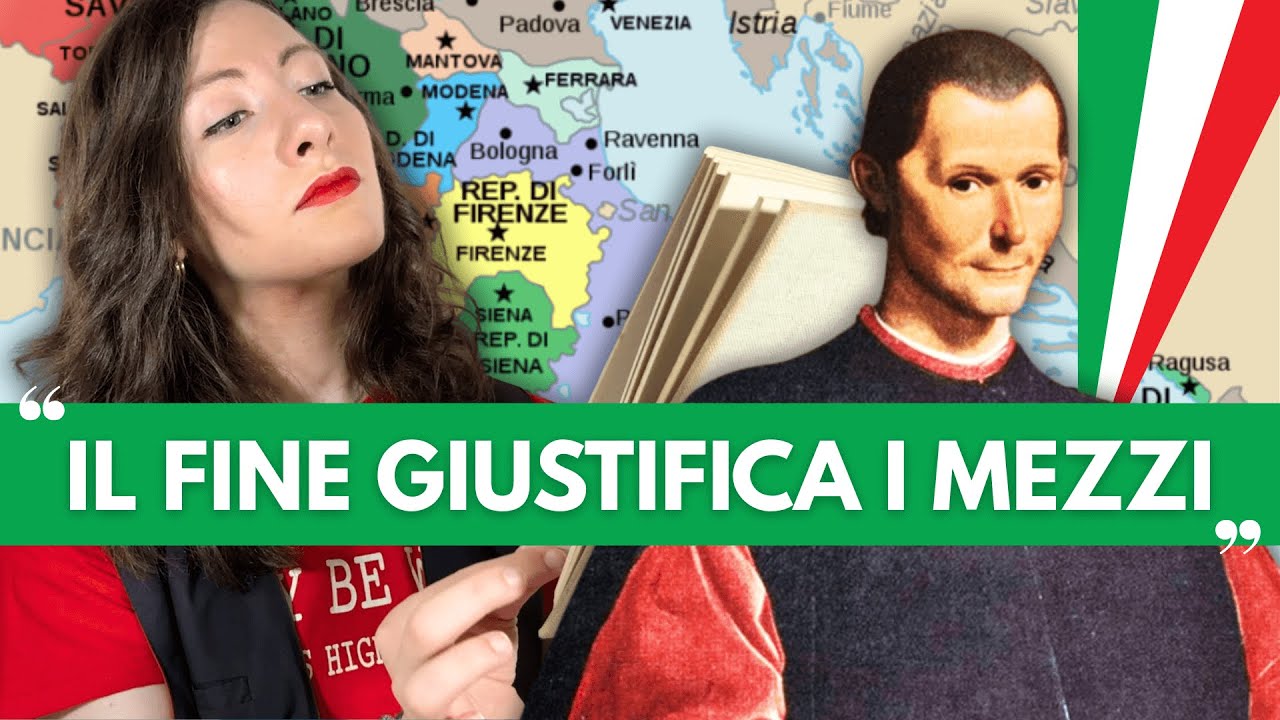
Niccolò Machiavelli and “The Prince”: Simple and Clear Explanation
Who Was Niccolò Machiavelli: Biography and Historical Context
Niccolò Machiavelli was born in Florence in 1469, during a turbulent time for Italy. The country was divided into numerous independent states that constantly fought among themselves, while foreign powers like France and Spain sought to conquer Italian territories.
Machiavelli did not come from a noble or wealthy family. He was what we would today call a “public official” or “diplomat”. He worked for the Republic of Florence dealing with foreign policy and military affairs. This practical experience allowed him to observe up close how political power actually worked.
Useful vocabulary:
- Repubblica [Republic] = form of government without a king
- Diplomatico [Diplomat] = person who represents their country abroad
- Politica estera [Foreign policy] = relations with other countries
- Affari militari [Military affairs] = matters concerning the army
The Political Fall and Exile: The Moment That Changed Everything
In 1512, Machiavelli’s life changed dramatically. The Medici family returned to power in Florence after defeating the Republic. Machiavelli, who had served the Republic, was immediately dismissed from his position.
Worse still, he was accused of conspiracy (plot) against the Medici and was tortured. After being released, he retired to his small country villa in Sant’Andrea in Percussina, near Florence. He was politically dead at only 44 years old.
Italian idiomatic expressions:
- “Essere licenziato“ [To be fired] = to lose one’s job
- “Politicamente morto“ [Politically dead] = to no longer have political power or influence
- “Ritirarsi“ [To retire] = to go away, to withdraw
The Birth of “The Prince”: A Masterpiece Born from Exile
It was precisely during this period of forced exile that Machiavelli wrote his most famous work. In a letter to his friend Francesco Vettori, he poetically describes his daily routine:
“La sera tornavo a casa, entravo nel mio studio e mi spogliavo di quella veste cotidiana, piena di fango e di loto. Mi vestivo di panni reali e curiali, e così vestito decorosamente entravo nelle antiche corti degli antichi uomini…” [In the evening I returned home, entered my study and took off those everyday clothes, full of mud and mire. I dressed in royal and courtly garments, and thus decorously dressed I entered the ancient courts of ancient men…]
This quote is very important for understanding Machiavelli’s approach. During the day he was a farmer who worked the land, but in the evening he transformed into an intellectual who mentally dialogued with the great thinkers of the past.
Text analysis:
- “Veste cotidiana“ [Everyday clothes] = daily attire
- “Fango e loto“ [Mud and mire] = dirt from fieldwork
- “Panni reali e curiali“ [Royal and courtly garments] = elegant clothes, court dress
- “Antiche corti degli antichi uomini“ [Ancient courts of ancient men] = the world of great thinkers of the past
The Fundamental Political Theories of “The Prince”
“The Prince” is not a novel or a poetic work. It is a practical manual of politics, a kind of Renaissance “how to”. Machiavelli establishes precise rules for conquering and maintaining political power.
The Dual Nature of the Prince
According to Machiavelli, a good prince must know how to use two natures: that of man and that of beast. As he writes in chapter XVIII:
“Bisogna essere volpe per riconoscere le trappole e leone per spaventare i lupi.” [One must be a fox to recognize traps and a lion to frighten wolves.]
This means that a leader must be:
- Astuto come una volpe [Cunning as a fox] = intelligent, capable of understanding deceptions
- Forte come un leone [Strong as a lion] = brave, capable of commanding respect
To Be Feared or To Be Loved?
One of the most famous phrases from “The Prince” concerns this fundamental question. Machiavelli writes:
“È molto più sicuro essere temuti che amati, quando si debba mancare dell’uno dei due.” [It is much safer to be feared than loved, when one must lack one of the two.]
His explanation is logical: love depends on others’ will, while fear depends on you. Men can stop loving you whenever they want, but if they fear you, they will hardly betray you.
Modern examples:
- A boss at the office who is loved but not respected often fails to enforce rules
- A teacher who is feared (in the sense of respected) more easily maintains discipline in class
The Famous Concept: “The End Justifies the Means”
Attention! Machiavelli never actually wrote the exact phrase “the end justifies the means”. However, this concept is present in his thinking. According to him, a prince can do things that for a private citizen would be wrong, if these actions serve the good of the state.
In chapter XVIII he writes:
“Un principe prudente non può e non deve osservare la fede quando questa osservanza gli torni contro.” [A prudent prince cannot and must not keep faith when such observance turns against him.]
This means that a political leader must not always keep promises if this harms his people or his state.
Advanced vocabulary:
- “Osservare la fede“ [To keep faith] = to keep promises
- “Tornare contro“ [To turn against] = to harm, to be counterproductive
- “Prudente“ [Prudent] = wise, careful
Stop reading Italian.
Start speaking it.
Online lessons in groups of 4, organised by level and goals, with qualified teachers. Pick the day and time that suit you from the available slots.
Max 4 students:
there’s a seat for you
Fortune and Virtue: How to Control Destiny
Machiavelli dedicates chapter XXV of “The Prince” to the relationship between fortuna [fortune] (chance, destiny) and virtù [virtue] (political skill, competence). He uses a very effective metaphor:
“La fortuna è come un fiume: se non costruisci gli argini quando è calmo, ti travolge quando è in piena.” [Fortune is like a river: if you don’t build the banks when it’s calm, it overwhelms you when it floods.]
According to Machiavelli, fortune controls about half of our actions, but the other half depends on us. A good politician must:
- Prepare when things are going well
- Adapt when things change
- Be bold because “la fortuna è donna e ama i giovani audaci” [fortune is a woman and loves bold young men]
Useful metaphors for understanding:
- “Argini“ [Banks] = protections against floods
- “Piena“ [Flood] = when a river overflows
- “Travolgere“ [To overwhelm] = to destroy with force
The Prince Models: Cesare Borgia and the Ancient Romans
Machiavelli doesn’t limit himself to theory: he provides concrete examples of effective princes. His main hero is Cesare Borgia, illegitimate son of Pope Alexander VI.
Cesare Borgia was ruthless but effective. He managed to conquer much of central Italy using a combination of:
- Military force
- Cunning diplomacy
- Strategic alliances
- Elimination of enemies
Even though Cesare Borgia ultimately failed, Machiavelli considers him a model because he used all available means intelligently.
Other models that Machiavelli admires are the ancient Romans, who according to him had perfectly understood how international politics works.
Why “The Prince” Is Still Relevant Today
After five hundred years, “The Prince” continues to be studied and quoted. Why are his ideas still relevant?
Examples in modern politics:
- Modern politicians still study communication strategies
- Political pragmatism is a reality in all countries
- The management of international relations often follows Machiavellian logic
Examples in business:
- CEOs (chief executive officers) must make difficult decisions
- Corporate leadership requires authority and respect
- Competition in the market can be ruthless
Examples in sports:
- Coaches must be respected by players
- Game strategies require flexibility
- Victory often requires sacrifices
Criticisms and Misunderstandings: When “Machiavellian” Becomes Synonymous with Evil
The term “Machiavellian” today often means cunning, calculating, unscrupulous. But is this interpretation correct?
The Catholic Church put “The Prince” in the Index of Forbidden Books as early as 1559. In England they called it “Old Nick” (the devil). But many of these criticisms arose from misunderstandings:
- Many read only isolated phrases without context
- They confused the description of reality with approval
- They didn’t understand that Machiavelli wanted to help Italy
The truth about Machiavelli:
- He was a patriot who loved Italy
- He wanted a united and strong Italy
- He didn’t invent the rules of power, he described them
- He believed that knowing the truth was better than living in illusions
Machiavelli’s Cultural and Linguistic Legacy
Machiavelli has influenced not only politics but also the Italian language. Many of his expressions have entered common language:
Machiavellian expressions still used:
- “Gli uomini giudicano più con gli occhi che con le mani“ [Men judge more with their eyes than with their hands] = appearances matter more than reality
- “Chi trascura quello che si fa per quello che si dovrebbe fare“ [Who neglects what is done for what should be done] = one must be realistic
- “Dove manca la virtù, regna la fortuna“ [Where virtue is lacking, fortune reigns] = if we are not capable, we will depend on chance
Influence on world literature:
- Shakespeare created Machiavellian characters like Iago in “Othello”
- Modern films like “The Godfather” show Machiavellian logic
- TV series like “House of Cards” are inspired by “The Prince”
How to Read “The Prince” Today: Tips for Students
If you’re studying Italian and want to read “The Prince,” here are some practical tips:
Linguistic difficulties:
- The 16th-century syntax is complex
- Many words have archaic meanings
- The sentences are very long
Reading strategies:
- First read a modern summary
- Use an annotated edition with notes
- Focus on the most famous chapters (XV, XVII, XVIII, XXV)
- Look for translations into modern Italian
Questions for comprehension:
- What are the qualities that a good leader must have according to Machiavelli?
- Why does Machiavelli prefer to be feared rather than loved?
- How can the theory of the “fox and the lion” be applied in modern life?
- What historical examples does Machiavelli use to support his theories?
The Immortal Legacy of Machiavellian Thought
Niccolò Machiavelli remains one of the most influential and controversial figures in the history of Western thought. “The Prince” continues to be read, studied, and debated not because Machiavelli was an amoral cynic, but because he was one of the first to describe politics as it actually works, not as it should work.
His main contribution was separating politics from morality, arguing that those who govern must follow different rules from those of private citizens. This insight, revolutionary for its time, is still at the center of modern political debate.
For Italian students, Machiavelli represents not only a fundamental cultural heritage, but also an example of how the Italian language can express complex concepts with precision and elegance. His works are a window into the expressive richness of Renaissance Italian and our language’s ability to influence world thought.
As Benedetto Croce wrote: “Machiavelli non è mai stato un uomo, ma sempre un avvenimento” [Machiavelli has never been a man, but always an event]. And this event continues to illuminate and provoke the minds of those who seek to understand the mechanisms of power and human nature.
If you want to learn how to write a book review in Italian, you might be interested in this article: my review of Il Gattopardo!
Find out your LEVEL: take this free Italian test!
Want the lesson PDF with exercises and solutions?
Join the LearnAmo AcademyCaricamento quiz in corso…
Podcast: Play in new window | Download (Duration: 13:38 — 31.2MB)
Iscriviti: Apple Podcasts | Spotify | Android | iHeartRadio | Podcast Index | TuneIn | Deezer | RSS | Altri...