


In this article, we tackle a topic that makes even the bravest students tremble: those pairs of Italian words that look like identical twins but actually have very different meanings and uses!
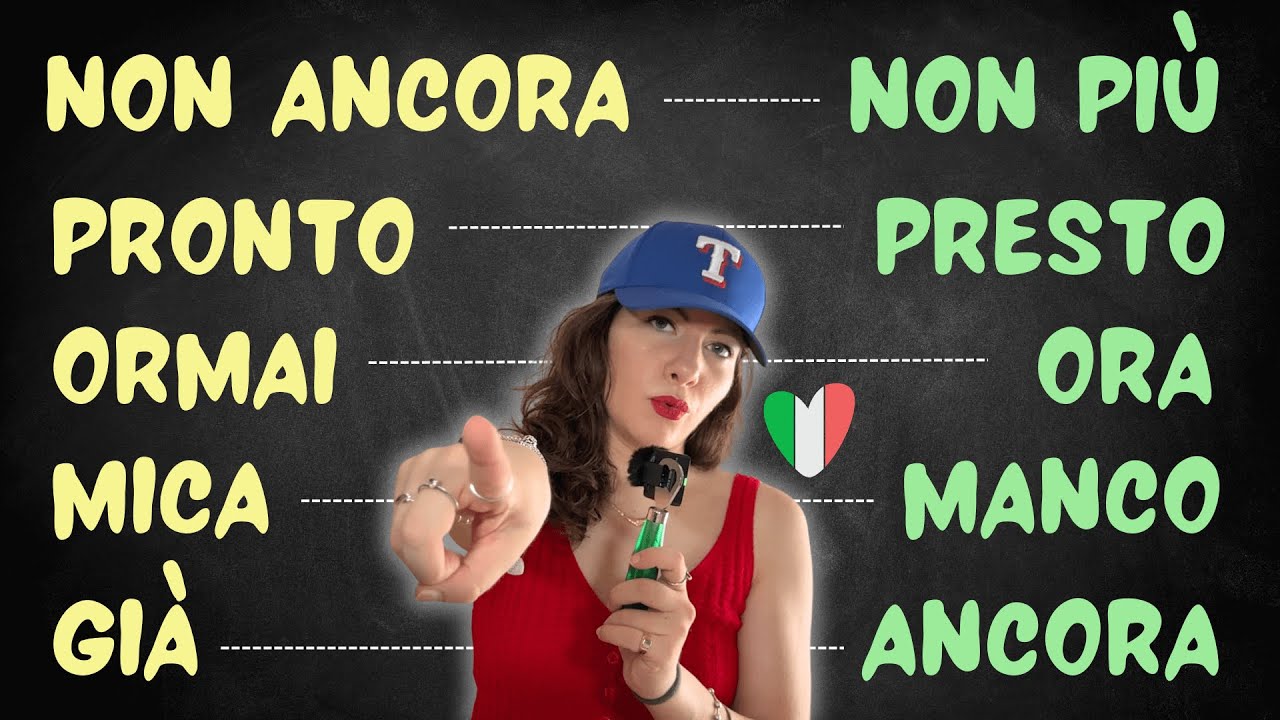
Watch Out for These PROBLEMATIC Words
1. GIÀ vs ANCORA: The Battle of Time
Let’s start with a pair that creates more confusion than a GPS that has lost its signal!
GIÀ = Completed Action in the Past
Meaning: indicates that an action has been completed before the current moment
Practical examples:
- “Ho già mangiato” [I have already eaten] (the action of eating is finished)
- “Sei già qui?” [Are you already here?] (you arrived earlier than I thought)
- “È già finito il film?” [Is the movie already over?] (the movie has ended)
ANCORA = Continuity or Expectation
Meaning: indicates that an action continues or has not yet happened
Practical examples:
- “Sto ancora mangiando” [I’m still eating] (I continue to eat)
- “Non è ancora arrivato” [He hasn’t arrived yet] (I’m waiting for him to arrive)
- “Vuoi ancora del caffè?” [Do you want more coffee?] (another cup of coffee)
Grandma’s trick: GIÀ = the action is finished! ANCORA = the action continues or has yet to happen!
2. ORMAI vs ORA: The Present and Resignation
This pair is as sneaky as a cat pretending to sleep!
ORMAI = Resignation and Inevitability
Meaning: indicates that something is inevitable or can no longer be changed
Emotional tone: often with a nuance of resignation
Examples with context:
- “Ormai è troppo tardi” [It’s too late now] (we can no longer change the situation)
- “Ormai sei grande” [You’re grown up now] (time has passed, you’ve grown)
- “Ormai lo sanno tutti” [Everyone knows now] (the news has spread, it can no longer be hidden)
ORA = Immediate Present Moment
Meaning: indicates the current moment, without other emotional nuances
Tone: neutral, simple temporal indication
Clear examples:
- “Ora devo andare” [Now I have to go] (at this moment I must leave)
- “Che ora è?” [What time is it?] (what time does the clock show?)
- “Ora capisco!” [Now I understand!] (at this moment I have understood)
Secret to remember: ORMAI always has a nuance of “there’s no going back”, while ORA is neutral, indicating only the present.
3. PRESTO vs PRONTO: Speed and Preparation
Warning: this pair can create epic misunderstandings, especially if your first language is Spanish!
PRESTO = Time and Speed
Meaning: indicates speed of action or a near future moment
Used for: time, speed, schedules
Detailed examples:
- “Arrivo presto” [I’ll arrive soon/early] (I’ll arrive in a short time / I’ll arrive early in the morning)
- “Corri più presto!” [Run faster!] (increase your speed)
- “A presto!” [See you soon!] (we’ll see each other in a short time)
- “È ancora presto” [It’s still early] (the time is still morning)
PRONTO = State of Preparation
Meaning: indicates that something or someone is prepared, completed
Used for: preparation, availability
Examples with explanation:
- “Sono pronto per partire” [I’m ready to leave] (I’ve finished preparing myself)
- “La cena è pronta” [Dinner is ready] (dinner has been prepared)
- “Pronto?” [Hello?] (phone greeting – “I’m here listening”)
- “Pronto soccorso” [Emergency room] (service always prepared for emergencies)
Cultural insight: “Pronto” on the phone is an Italian peculiarity! In other countries they answer differently, but we Italians always ask if the other person is “ready” to listen. How polite we are!
4. NON ANCORA vs NON PIÙ: Time Changing Direction
This is the pair that causes an existential crisis even for native speakers!
NON ANCORA = Unrealized Expectation
Meaning: something that should happen but hasn’t happened yet
Temporal direction: from the present towards the future
Examples with expectations:
- “Non ho ancora finito” [I haven’t finished yet] (I still need to complete)
- “Non è ancora ora” [It’s not time yet] (we need to wait)
- “Non ho ancora capito” [I haven’t understood yet] (I hope to understand soon)
- “Non ha ancora chiamato” [He hasn’t called yet] (I expect him to call)
NON PIÙ = Interruption of a Continuity
Complete meaning: NON PIÙ indicates the interruption of a habit, situation, or recurring action, and this interruption can refer to both the present and the future.
Examples directed to the future:
- “Non verrò più qui” [I won’t come here anymore] (from now on, I’ll stop coming)
- “Non ti chiamerò più” [I won’t call you anymore] (from now on, I won’t phone you)
- “Non mangerò più la carne” [I won’t eat meat anymore] (from this moment, I’m becoming vegetarian)
Examples directed to the present:
- “Non abito più qui” [I don’t live here anymore] (I stopped living here)
- “Non lavoro più in banca” [I don’t work at the bank anymore] (I left the job)
- “Non ho più fame” [I’m not hungry anymore] (my hunger has disappeared)
The fundamental difference:
- NON ANCORA = I expect something to happen (future-oriented)
- NON PIÙ = I interrupt something that existed (change-oriented)
Clarifying examples:
- “Non ho ancora chiamato Maria” [I haven’t called Maria yet] (I still need to do it)
- “Non chiamerò più Maria” [I won’t call Maria anymore] (I’ll stop calling her)
Comic situation: Imagine saying at a restaurant “Non ho ancora fame” [I’m not hungry yet] instead of “Non ho più fame” [I’m not hungry anymore]… The waiter will think you’re waiting for your appetite to arrive!
Stop reading Italian.
Start speaking it.
Online lessons in groups of 4, organised by level and goals, with qualified teachers. Pick the day and time that suit you from the available slots.
Max 4 students:
there’s a seat for you
5. MICA vs MANCO: The Rebels of Colloquial Italian
Final round with two words that are like the strange cousins of the Italian family!
MICA = Polite Negative Emphasis
Meaning: reinforces a negation in a colloquial but gentle way
Register: informal but acceptable in many situations
Contextualized examples:
- “Non è mica facile!” [It’s not easy at all!] (emphasizes that it’s difficult)
- “Mica sono stupido!” [I’m not stupid!] (I deny strongly but politely)
- “Non è mica colpa mia” [It’s not my fault at all] (I emphasize that I have no responsibility)
- “Non l’ho mica fatto apposta” [I didn’t do it on purpose] (it wasn’t intentional)
MANCO = Very Strong Negation
Meaning: equivalent to “neanche” (not even), but more informal and dramatic
Register: very colloquial, often regional
Expressive examples:
- “Manco per sogno!” [Not even in dreams!/No way!] (absolutely not!)
- “Non me l’ha manco detto” [He didn’t even tell me] (emphasizes the omission)
- “Manco morto!” [Not even dead!/Never!] (never ever!)
- “Non l’ho manco visto” [I didn’t even see him] (emphasizes total absence)
Geographic attention: MANCO is much more common in Central-Southern Italy. In the North you might receive confused looks!
Formality scale:
- MICA = informal but acceptable in normal conversations
- MANCO = very informal, only with close friends or family
The Final Quiz for True LearnAmici!
Now that you’ve become experts, try to complete these sentences:
Questions:
- “______ devo partire, il treno parte tra 5 minuti!” [______ I have to leave, the train leaves in 5 minutes!] (ORA/ORMAI)
- “Non ho ______ visto quel film” [I haven’t ______ seen that movie] (GIÀ/ANCORA)
- “Sei ______ per l’esame?” [Are you ______ for the exam?] (PRESTO/PRONTO)
- “Non studio ______ il francese, ora studio solo l’italiano!” [I ______ study French, now I only study Italian!] (NON ANCORA/NON PIÙ)
- “Non è ______ vero quello che dici!” [What you’re saying is ______ true!] (MICA/MANCO)
Correct answers: 1. Ora, 2. ancora, 3. pronto, 4. non più, 5. mica
Summary Table for Memorization
| PAIR | FIRST WORD | SECOND WORD | KEY DIFFERENCE |
|---|---|---|---|
| GIÀ/ANCORA | GIÀ = completed | ANCORA = ongoing/expectation | Action timing |
| ORMAI/ORA | ORMAI = resignation | ORA = neutral present | Emotional nuance |
| PRESTO/PRONTO | PRESTO = speed/time | PRONTO = preparation | Basic concept |
| NON ANCORA/NON PIÙ | NON ANCORA = expectation | NON PIÙ = interruption | Change direction |
| MICA/MANCO | MICA = polite emphasis | MANCO = strong emphasis | Intensity and register |
Advanced Memorization Strategies
To never forget these differences again, here are some mnemonic tricks:
Visual-Sound Associations
- GIÀ sounds like “già fatto” [already done] = completed
- ANCORA like an anchor that holds firm = continues
- ORMAI contains “mai” [never] = definitiveness, no going back
- PRONTO like “pronto soccorso” [emergency room] = prepared for action
Example Phrases to Remember
Memorize these model sentences:
- “Ho già mangiato, ma sto ancora digerendo” [I have already eaten, but I’m still digesting]
- “Ora parto, ormai è troppo tardi per cambiare idea” [Now I’m leaving, it’s too late now to change my mind]
- “Sono pronto, arriverò presto” [I’m ready, I’ll arrive soon]
- “Non ho ancora finito, ma non lavorerò più stasera” [I haven’t finished yet, but I won’t work anymore tonight]
Daily Practical Exercise
Homework assignment: This week, every time you use one of these words, pause for a second and ask yourself: “Did I choose the right one?” It will become automatic!
Create personal sentences with situations from your daily life. For example:
- “Ho già fatto colazione, ma ho ancora fame” [I already had breakfast, but I’m still hungry]
- “Ora devo uscire, ormai sono in ritardo” [Now I have to go out, I’m late now]
- “Sono pronto per l’appuntamento, arriverò presto” [I’m ready for the appointment, I’ll arrive soon]
Common Mistakes to Absolutely Avoid
Here are the most frequent mistakes that even Italians make:
Linguistic Register Errors
- Using “MANCO” in formal contexts – In the office or at school, better to say “neanche” [not even]
- Avoiding “MICA” with people you don’t know well – It might sound too familiar
Meaning Errors
- “Sono presto” instead of “È presto” – You say “È presto” [It’s early] for the time
- “Non più ancora” mixing expressions – They are alternatives, they don’t combine
- “Ormai ora” together – They have different functions, choose one
Notes for Foreigners
If you are foreigners studying Italian, remember that:
- These words have no direct equivalents in many languages
- Context is fundamental for choosing the right word
- Active listening to movies and conversations will help you more than any rule
You’re Ready for the Linguistic Challenge!
Dear LearnAmici, ormai (not ora!) you know all the secrets of these treacherous pairs! Remember: Italian is a language that loves to play with nuances, but with a little practice you’ll become more Italian than the Italians themselves!
Next time you hear someone confuse these words, you can smile with superiority (but with kindness, I recommend!) and maybe help them discreetly. That’s the beauty of mastering these secrets of the Italian language.
And remember: it’s not mica [at all] easy to learn Italian, but you’re doing great! See you soon with new linguistic adventures!
P.S.: If you già [already] (not ancora [yet]!) master these differences, you are ormai [now] (not ora [now]!) pronti [ready] (not presto [soon]!) for even more difficult challenges. Non più [No longer] (not non ancora [not yet]!) beginners, but true Italian experts! It’s not mica [at all] (not manco [not even]!) a joke! 🇮🇹
If you’re interested in deepening your knowledge of one of the expressions we saw earlier, read this article on the meaning of the word “mica”!
Do you want to take Italian lessons with our qualified native teachers? Purchase your Italiano Intensivo package!
Want the lesson PDF with exercises and solutions?
Join the LearnAmo AcademyCaricamento quiz in corso…
Podcast: Play in new window | Download ()
Iscriviti: Apple Podcasts | Spotify | Android | iHeartRadio | Podcast Index | TuneIn | Deezer | RSS | Altri...