


Have you ever heard an Italian get angry and thought: “What on earth is he saying?!” In this guide, you’ll discover the most common Italian swear words, understand when they’re used, and learn to replace them with polite alternatives perfect for formal, professional settings, or simply when you want to be more courteous.
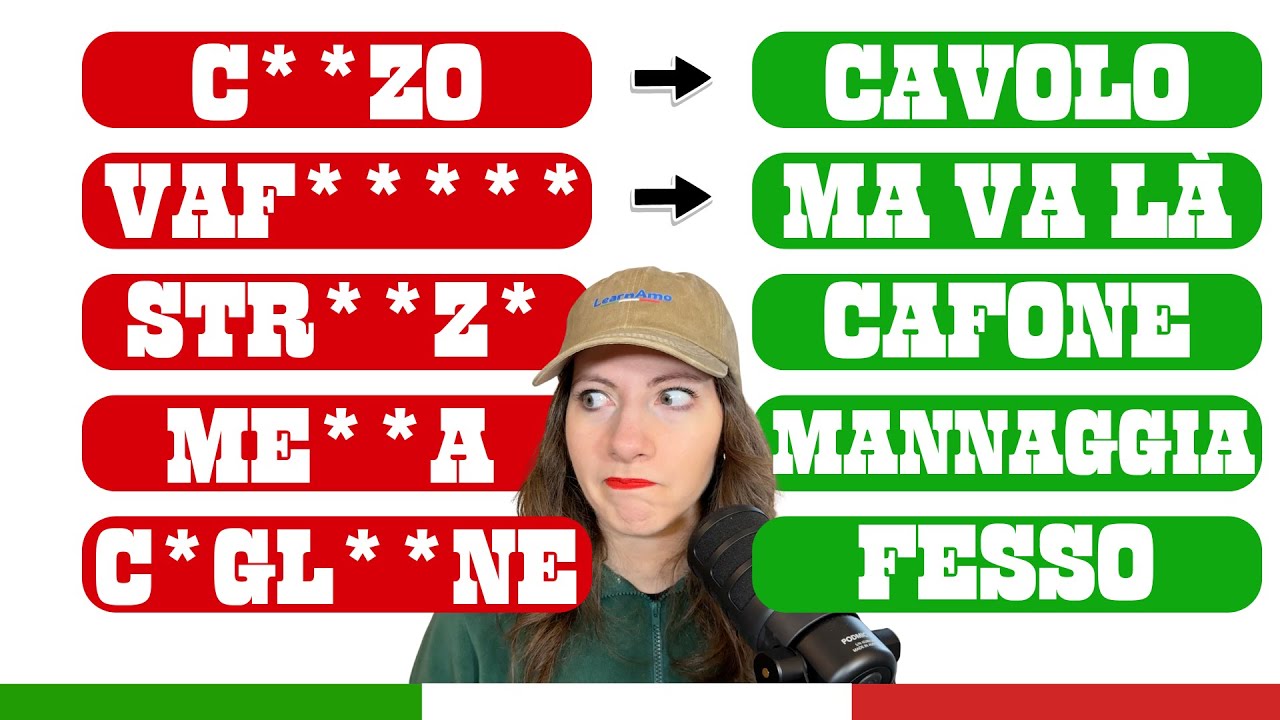
5 Common Italian Vulgar Expressions and Their Euphemisms
1. Cazzo [Damn / What the hell] – The Most Versatile
Let’s start with the most versatile of all: “cazzo”. This word literally refers to the male sexual organ, but in everyday practice it has almost completely lost this meaning and is used as a universal exclamation in many different situations.
When Is It Used?
- Surprise: “Cazzo! Non ci credo!” [Damn! I can’t believe it!] — Expresses astonishment at something unexpected.
- Pain: When you hurt your foot → “Cazzo!” [Damn!] — An instinctive reaction to physical pain.
- Frustration: “Ma che cazzo sta succedendo?” [What the hell is happening?] — Expresses confusion and irritation.
- Admiration: “Cazzo, che bella macchina!” [Damn, what a beautiful car!] — Paradoxically, it can express positive enthusiasm.
- Anger: “Ma che cazzo vuoi?!” [What the hell do you want?!] — Used to push someone away with irritation.
As you can see, it’s a real “Swiss army knife” of swear words: it adapts to practically every emotion!
Polite Alternatives
| Alternative | Formality Level | Notes |
|---|---|---|
| Cavolo! | Universal | The most common and safe in any context |
| Accidenti! | Formal/Informal | Perfect in any situation |
| Accipicchia! | Informal | A bit old-fashioned, but nice |
| Capperi! | Informal | Used especially in Central-Northern Italy |
| Perbacco! | Formal | Very elegant, almost literary |
| Mannaggia! | Informal | Typical of Southern Italy, very expressive |
| Cribbio! | Regional | Used in Emilia-Romagna |
| Cacchio! | Informal | Very close to the original, but less vulgar |
| Diamine! | Formal | Refined and appropriate |
| Urca! | Informal | Informal but harmless |
| Porca miseria! | Universal | Very common and socially accepted |
Tip: “Cavolo” is your safest choice. It always works, everywhere, and with everyone!
2. Vaffanculo [Fuck off / Go to hell] – The Most Famous Italian Expression in the World
The famous expression that the whole world knows thanks to Italian movies: “Vaffanculo” is a contraction of “va’ a fare in culo” [go do it in the ass], a very explicit and vulgar invitation. Despite its vulgarity, it has become almost a symbol of the angry Italian in international popular culture.
When Is It Used?
- To aggressively send someone away: “Vaffanculo, lasciami in pace!” [Fuck off, leave me alone!] — Expresses the desire to push someone away decisively.
- As a response to an insult: Someone insults you → “Ma vaffanculo!” [Oh, fuck off!] — An immediate defensive reaction.
- To express total contempt: “Lui e le sue idee possono andare a fanculo” [He and his ideas can go to hell] — Shows total rejection.
- Among friends, jokingly: “Ahah, ma vaffanculo!” [Haha, oh fuck off!] — Yes, among close friends it can be surprisingly affectionate!
Polite Alternatives
| Alternative | Meaning/Use | Notes |
|---|---|---|
| Vai a quel paese! | Go away! | The classic substitute, understood by everyone |
| Vai a farti benedire! | Go away! | Ironically religious |
| Vai a quel posto! | Go away! | Abbreviated and discreet version |
| Levati dai piedi! | Get out of my way! | Focus on physical distancing |
| Sparisci! | Disappear! | Direct but not vulgar |
| Vai a stendere! | Go do something else! | As if they should go hang laundry |
| Vai a fare un giro! | Go away! | Seemingly innocent |
| Ma vai via! | Leave me alone! | Simple and effective |
| E togliti di mezzo! | Don’t bother me! | When someone is being annoying |
| Vai a dar via i ciclisti! | Go do something else! | Tuscan expression, colorful but not vulgar |
| Vai a farti friggere! | Go away! | Funny and harmless |
Fun fact: In some regions of Italy, “vai a quel paese” [go to that place] is abbreviated to “vattene a…” [go to…] and that’s it. The hand gesture indicating “away” completes the message!
3. Stronzo/Stronza [Asshole / Jerk] – The Personal Insult
“Stronzo” literally means “excrement,” but it’s used almost exclusively to describe a mean, petty person or someone who behaves badly. It’s one of the most common personal insults in Italian.
When Is It Used?
- To describe a mean or petty person: “Il mio ex è uno stronzo” [My ex is an asshole] — Negative judgment about a person.
- For someone who behaves badly: “Non fare lo stronzo!” [Don’t be an asshole!] — A reprimand for improper behavior.
- As a direct insult: “Sei proprio uno stronzo!” [You’re such an asshole!] — A frontal attack on the person.
- To describe a wrong action: “È stata una mossa da stronzo” [That was an asshole move] — Criticism of a specific action.
Polite Alternatives
| Alternative | Nuance | Notes |
|---|---|---|
| Mascalzone | Dishonest person | Classic, almost like from an adventure movie |
| Farabutto | Deceitful person | Elegant in its nastiness |
| Cafone | Rude person | Emphasizes lack of manners |
| Maleducato | Ill-mannered | Neutral and descriptive |
| Villano | Rude person | A bit old-fashioned but effective |
| Screanzato | Without manners | Person without proper upbringing |
| Zotico | Boorish and unpleasant | Strong but appropriate |
| Poco di buono | Untrustworthy person | Generic but clear |
| Fetente | Despicable person | Very used in Southern Italy |
| Carogna | Mean person | Strong, but not a swear word |
| Persona spregevole | Contemptible individual | When you want to be formal but harsh |
Important note: “Stronzo/a” has a feminine version that is regularly used. The alternatives also follow the same pattern: mascalzone → mascalzona, cafone → cafona, etc.
4. Merda [Shit / Crap] – The Frustration Exclamation
“Merda” literally means “excrement” or “feces,” but its use in spoken language goes well beyond the literal meaning. It’s one of the most versatile exclamations for expressing frustration, disappointment, or surprisingly, even good luck.
When Is It Used?
- When something goes wrong: “Che merda!” [What crap!] / “Merda, ho perso il treno!” [Shit, I missed the train!] — Expresses immediate frustration.
- To describe something of terrible quality: “Questo film è una merda” [This movie is crap] — A very negative judgment.
- As an exclamation of frustration: You spill your coffee → “Merda!” [Shit!] — An instinctive reaction to an accident.
- For unfortunate situations: “Sono nella merda” [I’m in deep shit] (= in trouble) — Describes a difficult situation.
- To wish good luck (!): “Merda!” — Especially in the theater world!
Theater Fun Fact
In the Italian entertainment world, saying “merda” before a show brings good luck! This tradition comes from France: the more carriages there were outside the theater (and therefore more horse droppings on the street), the more audience there was inside. So “merda” = lots of audience = success!
Polite Alternatives
| Alternative | Context | Notes |
|---|---|---|
| Accidenti! | Universal | Always appropriate |
| Mannaggia! | Informal | Expresses frustration in a colorful way |
| Porca miseria! | Universal | Very common |
| Che sfortuna! | Formal | Neutral and descriptive |
| Che disastro! | Universal | For catastrophic situations |
| Che rabbia! | Informal | Expresses the feeling directly |
| Ma dai! | Informal | Exclamation of disbelief |
| Non ci posso credere! | Universal | For negative surprise |
| Che disdetta! | Formal | A bit formal but effective |
| Maledizione! | Dramatic | Dramatic but not vulgar |
| Per tutti i diavoli! | Theatrical | Theatrical and amusing |
Alternatives to Describe Something of Terrible Quality
Instead of saying “Questo è una merda” [This is crap], you can use:
- “Questo film è una schifezza“ [This movie is garbage] — Expresses disgust at the quality.
- “Questa pizza è orribile“ [This pizza is horrible] — Direct negative judgment.
- “Che porcheria!“ [What rubbish!] — Expression of strong disapproval.
- “È fatto proprio con i piedi“ [It’s really made with the feet] — Idiomatic expression meaning “done very badly.”
5. Coglione [Idiot / Moron / Fool] – The Insult for Stupidity
“Coglione” literally refers to testicles, but it’s used almost exclusively to describe a stupid person or someone who has done something particularly foolish. It’s one of the most common insults for criticizing someone’s intelligence or judgment.
When Is It Used?
- To define someone as stupid: “Quello è proprio un coglione” [That guy is such an idiot] — Judgment about lack of intelligence.
- To describe a stupid action: “Ho fatto una coglionata” [I did something stupid] — Admission of a foolish mistake.
- Self-deprecating, about oneself: “Sono stato un coglione a fidarmi” [I was an idiot to trust them] — Self-criticism for a wrong decision.
- To tease someone: “Non fare il coglione!” [Don’t be an idiot!] — An invitation to behave seriously.
- To describe someone who gets fooled: “Mi hanno preso per il culo come un coglione” [They made a fool of me like an idiot] — Describes being deceived.
Polite Alternatives
| Alternative | Nuance | Notes |
|---|---|---|
| Sciocco | Not very smart | Classic and harmless |
| Stupido | Not very smart | Direct but not vulgar |
| Tonto | Slow-witted | Nice, almost affectionate |
| Fesso | Naive/stupid | Very used, especially in the South |
| Babbeo | Foolish | Sounds almost comical |
| Citrullo | Silly | Funny and not offensive |
| Grullo | Foolish | Typical Tuscan |
| Ingenuo | Too trusting | When “stupidity” is more innocence |
| Gonzo | Gullible | Person easily fooled |
| Allocco | Not very alert | Like the nocturnal bird |
| Pollo | Naive/gullible | Very common: “Non fare il pollo!” [Don’t be a sucker!] |
Alternatives for “Coglionata” (Stupid Action)
Instead of saying “Ho fatto una coglionata” [I did something stupid], you can use:
- “Ho fatto una sciocchezza“ [I did something silly] — Neutral admission of a mistake.
- “Ho fatto una stupidaggine“ [I did something stupid] — Similar, slightly stronger.
- “Ho fatto una fesseria“ [I did something foolish] — Informal but acceptable version.
- “Ho combinato un pasticcio“ [I made a mess] — Emphasizes the disorder caused by the mistake.
Summary Table: Swear Words and Alternatives
| Swear Word | Main Use | Best Alternative | Formal Alternative |
|---|---|---|---|
| Cazzo! | Universal exclamation | Cavolo! | Accidenti! / Perbacco! |
| Vaffanculo! | Sending someone away | Vai a quel paese! | Vai a farti benedire! |
| Stronzo/a | Mean person | Cafone/a | Persona spregevole |
| Merda! | Frustration | Mannaggia! | Che disdetta! |
| Coglione | Stupid person | Fesso | Sciocco / Ingenuo |
Frequently Asked Questions
Is It Important to Know Italian Swear Words Even If I Don’t Use Them?
Absolutely yes! Knowing swear words is fundamental to understanding real spoken Italian. In movies, TV series, daily conversations, and even contemporary books, these expressions are very common. Understanding them will allow you to correctly interpret the tone and emotions of the speaker, even if you choose not to use them yourself.
Do Italians Really Use So Many Swear Words?
It depends a lot on the context and the person. In informal environments, among friends, or in stressful situations, swear words are indeed very common. However, in formal, professional contexts, or with people they don’t know well, most Italians use the polite alternatives we’ve seen. The ability to adapt one’s language to the context is an important social skill.
Are There Regional Differences in the Use of Swear Words?
Certainly! Some expressions are more common in certain regions: “Mannaggia” [Darn it] is typical of the South, “Cribbio” [Gosh] of Emilia-Romagna, “Grullo” [Fool] of Tuscany. The frequency and intensity of use also vary: in general, people in the South tend to be more verbally expressive, while in the North usage may be more restrained. However, the main swear words are understood and used throughout Italy.
Can I Use the Polite Alternatives in Any Situation?
Almost always yes! The alternatives we’ve presented are socially acceptable in the vast majority of situations. Some, like “Cavolo!” [Darn!] or “Accidenti!” [Darn it!], are so neutral they can be used even with children or in very formal contexts. Others, like “Cacchio!” [Darn!] or “Carogna” [Scoundrel], while not vulgar, are stronger and should be reserved for semi-informal situations.
Why Do Italians in Movies Seem to Say “Vaffanculo” So Often?
Movies and TV series tend to exaggerate the use of swear words for dramatic or comedic effect. In real life, usage is generally more moderate, especially in public. That said, “vaffanculo” [fuck off] remains a very common expression in situations of intense anger or among friends who are joking around. Its international fame is also due to the fact that it’s easily recognizable and pronounceable even for non-Italians.
How Can I Tell When a Swear Word Is Used Affectionately?
The tone of voice, context, and body language are fundamental. Among close friends, a “Ma vaffanculo!” [Oh, fuck off!] said while laughing, with a smile and perhaps a pat on the shoulder, is clearly affectionate. The same “Vaffanculo!” [Fuck off!] yelled angrily is obviously an insult. With experience, you’ll learn to distinguish the nuances. When in doubt, observe the reaction of others present: if they’re laughing, it was probably a joke!
Are Some Swear Words Considered More or Less Serious?
Yes, there’s a hierarchy! In general: “Cazzo” [Damn] and “Merda” [Shit] are considered relatively mild as exclamations (not directed at people). “Stronzo” [Asshole] and “Coglione” [Idiot] are more offensive because they directly insult a person. “Vaffanculo” [Fuck off] is very strong and can be considered a real serious offense if said seriously to someone. There are also even more vulgar and offensive swear words (blasphemies, sexual insults) that we haven’t covered here because they’re considered taboo even in very informal contexts.
Did you find these variants interesting? Discover more on how to improve Italian with movies in the dedicated article.
Buy our new book “Il Principe Marco e le parole del mondo” and learn Italian step by step through an engaging story, practical exercises, and thorough grammar review, from beginner to advanced level.
Want the lesson PDF with exercises and solutions?
Join the LearnAmo AcademyLoading quiz…
Podcast: Play in new window | Download (Duration: 36:09 — 82.8MB)
Iscriviti: Apple Podcasts | Spotify | Android | iHeartRadio | Podcast Index | TuneIn | Deezer | RSS | Altri...