


Italy and South America are separated by thousands of kilometers of ocean, yet they share surprising cultural similarities that go far beyond their common Latin origin. Through a comparative analysis of daily habits, we discover how these two worlds, so geographically distant, are actually incredibly close in their way of living, expressing themselves, and relating to one another.
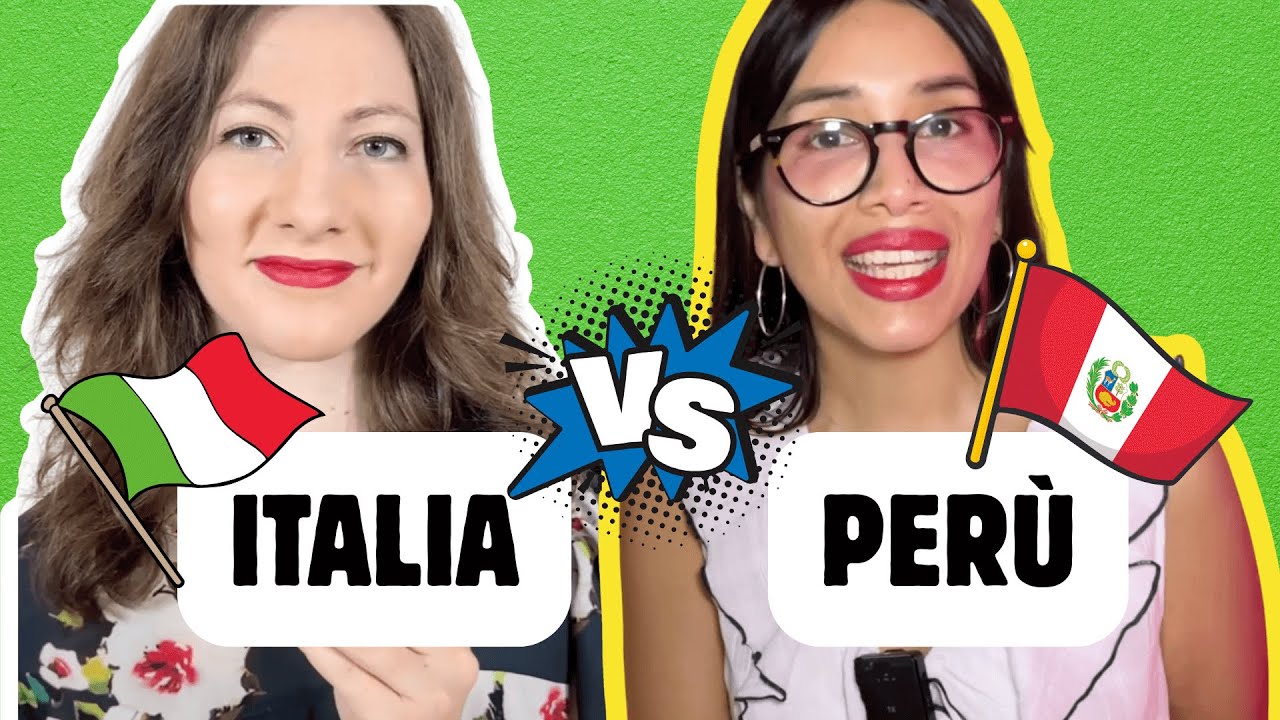
5 Bizarre Habits that Italians and South Americans Share
The Language of Hands: When Gestures Speak
One of the most evident characteristics of Italian communication is the intensive use of gesticulation. Italians accompany every sentence with hand movements that amplify, complete, and sometimes completely replace words. This tendency finds a surprising parallel in many South American countries, where non-verbal communication assumes fundamental importance.
For foreign students, it’s essential to understand that some gestures are universal between Italy and South America, while others can have completely different meanings. The classic gesture of an open hand with fingers together moving up and down means “what do you want?” both in Italy and Peru, while the circle formed by index finger and thumb indicates “perfect” in both cultures.
However, one must pay attention to cultural differences: the gesture of the hand under the chin pushed forward means “I don’t care” in Italy, but “cunning or fraudulent person” in many South American countries. For an Italian learner, observing and practicing gesticulation is as fundamental as learning grammar, since an Italian who speaks without moving their hands appears unnatural and robotic.
The Sacred Coffee Cult: Traditions and Rituals
Coffee represents much more than a simple beverage both in Italy and South America: it’s a social ritual, a mandatory break moment, and a true behavioral code. Italians have developed iron rules regarding coffee consumption that may seem incomprehensible to foreigners but are sacred for those who want to integrate into Italian culture.
The fundamental rule is that cappuccino is drunk exclusively at breakfast, never after 11 AM and absolutely never after meals. Ordering a cappuccino after lunch or dinner immediately identifies a foreigner and can cause puzzled looks in Italian bars. Espresso, instead, is consumed standing at the counter, quickly, often accompanied by a quick conversation with the barista or other customers.
In South America, countries like Peru, Colombia, and Brazil have developed equally sophisticated coffee cultures. Peruvian “café pasado,” filtered drop by drop, requires time and patience, transforming the preparation into a meditative moment. Here too, coffee becomes a pretext to socialize and create bonds.
Both cultures consider “American coffee” (the long and diluted one) a sort of culinary sacrilege. For Italians and South Americans, coffee must be strong, aromatic, and served in small quantities that concentrate all the flavor and caffeine necessary to face the day.
Essential vocabulary for students:
• Espresso: classic Italian coffee, strong and concentrated
• Macchiato: espresso with a drop of milk
• Corretto: espresso with added liqueur (grappa, sambuca)
• Lungo: espresso with more water
• Ristretto: espresso with less water, more concentrated
• Caffè al banco: consuming coffee standing at the bar counter
Learn more about Mili and her Spanish learning website: Burbuja del Español.
The Culinary Dictatorship of Grandmothers: When Refusing is Impossible
The role of the grandmother in Italian and South American culture transcends the simple family figure to become a true social institution. Italian and South American grandmothers share an approach to food that goes far beyond nutrition: it’s a declaration of love, a way to take care of the family, and an infallible method to make anyone feel guilty who dares refuse even a single bite.
The preparation of Sunday lunch often begins the day before, with preparation rituals that involve the whole family. The Italian grandmother will start preparing ragù at 6 in the morning, while the Peruvian one will wake at dawn to prepare the perfect ají de gallina or ceviche. Both share the conviction that their grandchildren are constantly undernourished, regardless of their actual weight.
There are typical phrases that every Italian student should know to understand this cultural phenomenon. Expressions like “Sei troppo magro, mangia!“ [You’re too thin, eat!], “Solo un altro pochino!“ [Just a little bit more!], and “Non ti piace?“ [Don’t you like it?] (pronounced with an offended tone when refusing seconds) are universal in both cultures. The concept of “tasting” assumes epic dimensions: what grandmother defines as a “small taste” generally corresponds to an abundant portion for a normal person.
The most effective defensive strategy is to accept with enthusiasm at least one abundant portion and compliment constantly during the meal. However, not even this guarantees avoiding the leftover containers that will inevitably be packed “for the road” or “for tomorrow,” containing amounts of food sufficient to feed an entire family for several days.
Useful expressions to survive grandmothers’ lunches:
• “È buonissimo!“ [It’s delicious!] – Essential compliment to repeat every two bites
• “Come fai ad essere così brava in cucina?“ [How do you manage to be so good at cooking?] – Flattery that softens grandmothers’ hearts
• “Sono proprio sazio/a“ [I’m really full] – Attempt (often useless) to refuse additional food
• “Me lo incarti per dopo?“ [Can you wrap it for later?] – Strategy to show appreciation while avoiding eating immediately
Time as a Flexible Concept: The Art of Creative Delay
The relationship with punctuality represents perhaps the most evident difference between Italian/South American culture and Northern European or North American culture. In Italy, as well as in many South American countries, time is considered an elastic concept that adapts to circumstances, social relationships, and the mood of the moment.
When an Italian says “Arrivo in cinque minuti“ [I’ll arrive in five minutes], they’re communicating their intention to start moving toward the destination, not necessarily their physical presence at the meeting place within that timeframe. Similarly, the South American expression “estoy llegando” (I’m arriving) often means that the person is still deciding what to wear to leave the house.
This approach to time reflects a life philosophy that privileges human relationships and the quality of interaction over the rigidity of schedules. An Italian might be late to an appointment because they met a friend on the street and couldn’t abruptly interrupt the conversation. In South America, the concept of “hora peruana” or “hora mexicana” is officially recognized as the real arrival time plus an additional hour.
However, there are sacred exceptions to this temporal flexibility. Formal work appointments, medical visits, and, above all, soccer matches require absolute punctuality. Arriving late to a match of one’s beloved team is considered an unforgivable betrayal both in Italy and South America.
For foreign students living in Italy, understanding and adapting to this time culture is fundamental for social integration. Being too punctual at a private party can mean arriving when the host is still getting ready, while being late to a formal dinner can be considered rude.
Practical guide to Italian delays:
• Aperitivo tra amici [Aperitif among friends]: 15-30 minutes delay acceptable
• Festa privata [Private party]: 30-60 minutes delay normal
• Cena al ristorante [Dinner at restaurant]: maximum 15 minutes delay
• Appuntamento di lavoro [Work appointment]: punctuality required
• Partita di calcio [Soccer match]: arrive early to not miss even a minute
Soccer: A Shared Secular Religion
Soccer in Italy and South America is not simply a sport: it’s a visceral passion that crosses generations, social classes, and cultural differences. It represents a universal language that unites millions of people under the same dreams, hopes, and disappointments. On Sunday afternoons, when teams take the field, entire cities stop to follow the matches.
In Italy, every family has its beloved team, often passed down from father to son like a sacred inheritance. Changing teams is considered an unforgivable betrayal, while marrying the fan of a rival team can cause family tensions that last generations. Pre-match rituals include wearing the lucky jersey (which doesn’t get washed during consecutive winning streaks), sitting in the same position on the couch, and following elaborate superstitions ranging from avoiding certain foods to not moving during crucial moments of the game.
In South America, soccer passion reaches even more intense levels, if possible. Countries like Argentina, Brazil, Uruguay, and Peru experience national team matches as events of historical importance. When the Peruvian national team qualified for the 2018 World Cup after 36 years of absence, the entire country stopped to celebrate with tears of joy and festivities that lasted for days.
Soccer culture creates a specialized vocabulary that every Italian student should know to understand daily conversations, newspaper articles, and television programs. Terms like “tifoso,” “derby,” “serie A,” “panchina,” and “fuorigioco” are as fundamental as irregular verbs for navigating Italian society.
Post-match discussions in bars represent a fascinating sociological phenomenon: every customer suddenly becomes a coach, technical commentator, and world-class strategist. These conversations follow precise rituals, with in-depth tactical analyses, criticisms of referee decisions, and predictions for future matches. Participating in these discussions requires not only soccer knowledge but also mastery of a specific language rich in metaphors, idiomatic expressions, and cultural references.
Essential soccer vocabulary:
• Tifoso/Tifosa: passionate supporter of a team
• Derby: match between teams from the same city
• Scudetto: Italian championship title
• Panchina: reserve position, also used metaphorically
• Fuorigioco: offside position, also used outside soccer context
• Rigore: penalty kick from the spot
• Contropiede: fast counter-attack, also used in other contexts
The Social Impact of Soccer
Soccer functions as a social glue that overcomes economic, educational, and generational barriers. A university professor and a worker can discuss for hours about their beloved team’s performance, finding common ground that goes beyond social differences. This phenomenon is particularly evident during major international tournaments, when entire nations unite behind their national team.
For foreign students, understanding Italian soccer culture means having access to spontaneous conversations with colleagues, neighbors, and strangers at the bar. Basic knowledge of the main teams (Juventus, Inter, Milan, Roma, Napoli) and the most famous players opens social doors that would otherwise remain closed.
The Cultural Bridge Between Two Worlds
The analysis of these five shared habits reveals how Italy and South America are much closer than geography would suggest. Both cultures privilege human relationships over the rigidity of rules, value family as the central nucleus of society, and transform daily activities like drinking coffee or watching soccer into meaningful social rituals.
For students learning Italian, understanding these cultural aspects is as fundamental as mastering grammar and vocabulary. The Italian language cannot be separated from the social context in which it’s used, and behaviors like gesticulating while speaking, respecting coffee rituals, or participating in soccer discussions are an integral part of communicative competence in Italian.
These cultural similarities also explain why many South Americans integrate relatively easily into Italian society and vice versa. The shared Latin passion, human warmth in relationships, and flexible approach to life create common ground that facilitates mutual understanding.
Recognizing and appreciating these shared habits not only enriches understanding of Italian culture but also offers a broader perspective on how different societies can develop similar solutions for universal human needs: the need to communicate (through gestures), to create social rituals (with coffee), to maintain strong family bonds (with grandmothers’ food), to manage time in a human way (with schedule flexibility), and to share collective passions (through soccer).
If you want to know more about the bizarre traditions of Italians, here are 10 classic Italian jokes (cheesy ones).
Find out your LEVEL: take this free Italian test!
Want the lesson PDF with exercises and solutions?
Join the LearnAmo AcademyCaricamento quiz in corso…
Podcast: Play in new window | Download ()
Iscriviti: Apple Podcasts | Spotify | Android | iHeartRadio | Podcast Index | TuneIn | Deezer | RSS | Altri...