


Have you ever wondered who invented the words we use almost every day?
I don’t have the answer for all Italian words, but there are a lot of them that were invented by Italian writers, and that we use daily without knowing it!
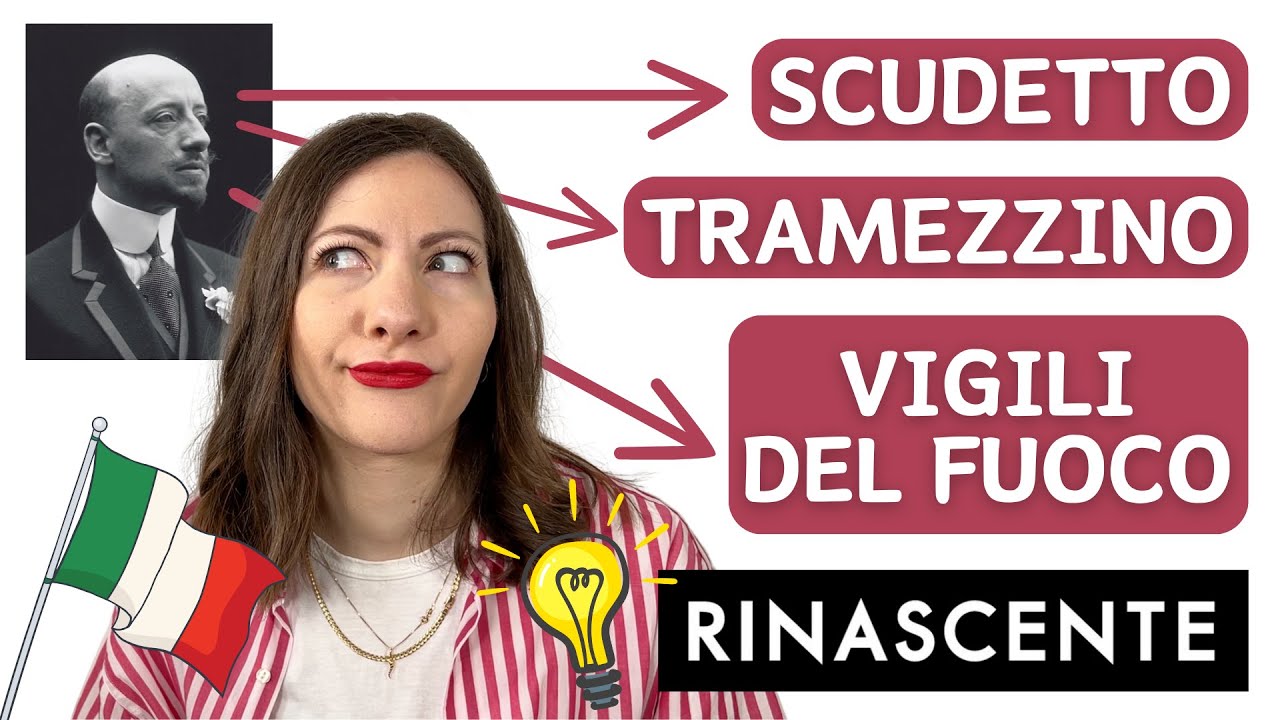
Not only Dante! Who do we owe Italian words to?
1. We all know what a PIADINA is, don’t we?
It’s a thin, unleavened, circular flatbread, resembling a flat focaccia, consumed sliced or folded in half and filled as desired.
But who invented the word?
Well, the term was coined by the Italian writer Giovanni Pascoli, who was born and raised in Emilia-Romagna, the homeland of the piadina.
More precisely, he changed the regional dialect term “piè” into the Italian “piada,” which later became “piadina.”
Pascoli even wrote a poem dedicated to the piadina! In the poem, he praised it, considering it a food almost as ancient as humankind itself, and referred to it as “the national bread of the Romagnoli.”
And you? Have you ever tried it?
2. Now let’s talk about an adjective: MOLESTO
“Molesto” refers to someone or something that, by its action or presence, causes a feeling of irritation or discomfort. Like a fly for example, or a person who complains all the time!
Well, few people know this, but this adjective comes from the Latin word “molestus” and it is closely related to Dante himself.
In fact, it is thought that he did not really invent it from scratch: apparently, the term already existed in his time, but it is certainly thanks to him that it became established and spread widely. In fact, Dante used it extensively in his Divina Commedia:
“Or vedi la pena molesta,
tu che, spirando, vai veggendo i morti:
vedi s’alcuna è grande come questa.”
“La tua loquela ti fa manifesto
di quella nobil patria natio
a la qual forse fui troppo molesto.”
“Now see the molesting sorrow,
You who, expiring, go seeing the dead:
See if any be as great as this.“
“‘Your loquela makes you manifest
Of that noble native country
To which perhaps I was too molesting.”
3. Another saying that we owe to Dante is SENZA INFAMIA E SENZA LODE…
This is actually the Italian version of the original Dante’s expression “sanza ‘nfamia e sanza lodo“.
In the Divina Commedia, it is used by Virgil to describe to Dante the slothful, the damned who, during their earthly existence, have never acted either for good or evil, never following an ideal of their own.
In fact, nowadays the saying indicates something mediocre, which has nothing special at all.
To learn more about how Dante influenced the Italian language, check out our lesson dedicated to the expressions that we still frequently use today, which were actually coined by him!
4. Giacomo Leopardi is also the father of new words in the Italian language
In his case, however, the terms are not very common and perceived more as highly formal.
An example? The verb INCOMBERE.
This verb generally refers to serious facts or threatening situations, and it means “to be imminent.”
For example:
A causa di guerra e siccità, la carestia incombeva sulla città. (Due to war and drought, the city was facing famine.)
5. Have you ever heard the expression ESSERE UN ALTRO PAIO DI MANICHE?
It means “to be something else entirely, to be very different and not comparable with the previous thing,” either in a positive sense (it is far better) or in a negative sense (it is far worse).
What do sleeves have to do with it?
The reference is to the women’s clothes of several centuries ago (fifteenth, sixteenth century), when clothes were very complex and heavy, thus they were difficult to wash, so what was most often done was to change only the sleeves (which were interchangeable), and this made the dress look like a new one.
It was the writer Alessandro Manzoni, however, who first used this expression in the written form in his book I Promessi Sposi:
“Lo stampato lo sapeva leggere, mettendoci il suo tempo, lo scritto è un altro par di maniche” (“The printed could read it, putting his time into it, the written is another set of sleeves”)
6. Manzoni also created another expression in his Promessi Sposi: AVERE GRILLI PER LA TESTA
This means “to have bizarre ideas, extravagant desires, often unrealizable”.
In the book, while arguing with Renzo, Don Abbondio says:
“Vorrei che la fosse toccata a voi, come è toccata a me, che non c’entro per nulla; che certamente non vi sarebber rimasti tanti grilli in capo” (“I wish it had been up to you, as it was up to me, that I had nothing to do with it; that certainly there would not be many crickets left in the head”)
7. The Italian author who more than anyone else has contributed to introducing words still in use today… is none other than GABRIELE D’ANNUNZIO!
For example, he invented the word TRAMEZZINO to refer to the “sandwich”, because he was very much against the use of foreign words in Italian.
So, one day, out of the blue, while he was at the Mulassano Café in Turin, he exclaimed, “Ci vorrebbe proprio uno di quei golosi tramezzini…” (We really need one of those delicious sandwiches…”).
The term immediately had great fortune and it spread everywhere in Italy. “Tramezzino” comes from “tramezzo” (something in between), indicating the break between breakfast and lunch, or between lunch and dinner, which is when the “tramezzino” is often eaten.
8. Another word invented by D’Annunzio? The word SCUDETTO
You shouldn’t be too surprised, considering that D’Annunzio was a great fan of soccer.
This is the SYMBOL OF VICTORY in an Italian sports championship (especially soccer), which is put on the jerseys of the players of the winning team throughout the following season.
The first appearance of the Scudetto was on February 7, 1920, during a friendly soccer match played in Fiume between Italian soldiers and local civilians.
At that time, the current city in Croatia had been occupied by a paramilitary group led by the famous Gabriele D’Annunzio himself.
It was he who invented the shield and had it sewn on the shirts of the Italian military, instead of the Savoy shield, during that game.
Four years later, in 1924, the organizers of the Italian soccer championship decided that the shield would appear on the uniforms of the team winning the national championship.
9. Him again? Yes, him again.
D’Annunzio came up with the idea for the name VIGILI DEL FUOCO, which stands for the National Corps created to carry out firefighting and civil defense service. Originally, this Corps had a French name, but as we said D’Annunzio did not like foreign words…
And so, a few years after its birth, the Corps took on a more Italian name, precisely because of him. For the name, he was inspired by the “vigiles” of ancient Rome, founded by Emperor Augustus to guard both the streets during the night hours and to protect the city from fires.
10. It doesn’t end here… D’Annunzio also suggested NAMES for FAMOUS BRANDS
For example, he suggested the name of one of Italy’s earliest bakery industries, established in Genoa in 1900 and famous for English wafers and cookies. In 1922 it changed its headquarters and name, becoming, based on D’Annunzio’s idea, SAIWA (Società Accomandita Industria Wafer e Affini).
Same thing for Italy’s very famous RINASCENTE shopping malls, present in many Italian cities, named after D’Annunzio had the idea.
And now, before calling it a day, I would like to give you a “less fortunate” word. There are indeed words invented by Italian writers in their works that did not catch on and spread, so they are not used today.
But this one, I would like to share it with you because in my opinion it is really useful: ODIOSAMATO.
The Italian writer Vittorio Alfieri created this adjective to indicate something that is both hated and loved at the same time. Wouldn’t it be useful? Would you like to try using it? What is “odiosamato” for you?
Don’t miss the lesson on ChatGPT to find out how to use it to practice a foreign language!
Furthermore, if you encounter difficulties accessing certain websites from abroad due to georestrictions, you should use NordVPN: with coupon code LearnAmo, you will get the best discount available, a 30-day ‘satisfaction or your money back’ guarantee, and free malware protection!
Want the lesson PDF with exercises and solutions?
Join the LearnAmo AcademyCaricamento quiz in corso…
Podcast: Play in new window | Download (Duration: 18:03 — 25.0MB)
Iscriviti: Apple Podcasts | Spotify | Android | iHeartRadio | Podcast Index | TuneIn | Deezer | RSS | Altri...