


Have you ever visited Rome? If so, you’ve probably seen the Colosseum, Trevi Fountain, Piazza di Spagna… Wonderful places, certainly. But have you ever wondered: how do Romans really live? Where do they live? What do they do in the evening? What problems do they face every day? Let’s discover together the real Rome, the one that tourists usually don’t see.
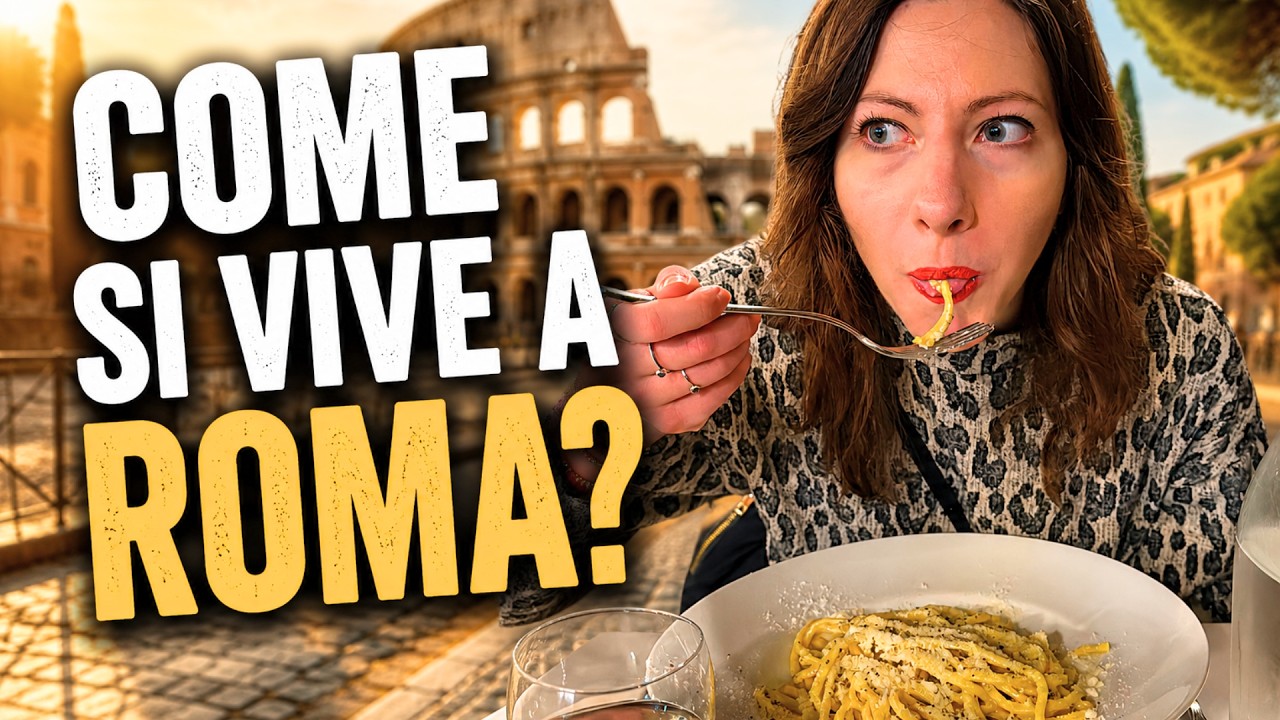
Authentic ROME: Discover Where the Real Romans Live and How They Live
Roma Nord and Roma Sud: Two Different Worlds
Like all big cities, Rome also has different “souls.” The main division that Romans make is between Roma Nord [North Rome] and Roma Sud [South Rome]. But what does this mean exactly?
Roma Nord: the Elegance of Parioli
Roma Nord is considered the most elegant part of the city, where the wealthiest people live, the more “benestanti” [well-off] as we say in Italian. The symbolic neighborhood of this area is called Parioli, and from this name a very commonly used expression in Rome was born: “pariolino.” If someone tells you that you’re a pariolino, it means you dress in a very elegant, refined way, probably with designer clothes. It’s a stereotype, certainly, but Romans use it very often.
Roma Sud: the Working-Class Soul
Roma Sud, on the other hand, is a completely different story. Here the atmosphere is more popolare [working-class], more relaxed, more “street.” People dress more casually and the style is completely different. Those who follow this style are called “boro” or “coatto” [roughly equivalent to “chav” or “bro”]. This is also a label, of course, and it’s not always used in a positive sense.
However, it’s important not to generalize. As we say in Italian, “non bisogna fare di tutta l’erba un fascio” [you shouldn’t make a bundle of all the grass]. This expression means that you can’t put everyone in the same group. Not everyone who lives in Roma Nord is an elegant pariolino, and not everyone who lives in Roma Sud is a coatto. Reality is always more complex than stereotypes.
Where Do Romans Really Live?
Here’s something that surprises many tourists: Romans don’t live in Trastevere. And not near the Colosseum or Piazza Navona either.
You should know that Rome is a huge city. It has 35 neighborhoods and about 150 different zones. The population? Almost 3 million people. And most of these people live in the peripheral areas, meaning far from the historic center.
The reason is simple: the center is beautiful, sure, but it’s also very expensive. Renting an apartment near the Pantheon costs a fortune. And besides, the center is always full of tourists, which can be tiring for those who live there.
So Romans prefer to live in neighborhoods like Centocelle, Tuscolano, Monteverde, Ostia, Primavalle or Tor Bella Monaca. You’ve probably never heard these names. Well, this is the real Rome, where people live, work, do their shopping, take their children to school.
Everyday Problems
Rome is beautiful, this is undeniable. But living in Rome isn’t always easy. There are some problems that Romans face every day.
Traffic
The first major problem is traffic. Rome is known for heavy traffic. Getting around by car can be a real nightmare, especially during rush hours, meaning in the morning when everyone goes to work and in the evening when everyone comes home. Many Romans spend more than an hour a day stuck in traffic. An hour to get to work, an hour to get back home. Every day.
Potholes
And then there are the buche [potholes]. If you rent a car when you visit the city, be very careful: Roman streets are full of potholes. And some are so big that Romans call them “voragini” [chasms], meaning huge holes where you could almost fall in with your entire car.
The interesting thing is that Romans now face the problem with irony. On the Internet you can find countless memes on this topic. Someone even created images with artificial intelligence where potholes become swimming pools. Irony is the Romans’ favorite weapon.
Public Transportation
Another problem is public transportation. Rome’s metro has only 3 lines: A, B, and C. That’s few for such a large city. For comparison, Milan has 5, London has 11, Paris has 16. Buses exist, of course, but they’re often late or too crowded. However, in recent years, especially with the 2025 Jubilee, the situation is improving.
The Waste Problem
Finally, there’s the problem of rifiuti [waste/garbage]. Sometimes the cassonetti [dumpsters] are so full that garbage stays on the street for days. In summer, with the heat, the situation becomes even worse. It’s a serious problem that city administrations are trying to solve, but it’s not easy to manage the waste of 3 million people.
Stop reading Italian.
Start speaking it.
Online lessons in groups of 4, organised by level and goals, with qualified teachers. Pick the day and time that suit you from the available slots.
Max 4 students:
there’s a seat for you
Why Are There No Skyscrapers in Rome?
One thing many tourists notice is that there are no skyscrapers in Rome. At least not in the historic center. Why is that?
The reason is very simple: building very tall buildings would ruin the historic skyline of the city. Rome has monuments that are 2,000 years old. If they built a modern skyscraper near the Colosseum, it would be inappropriate.
The highest point in the historic center is the dome of St. Peter’s Basilica, which reaches 136 meters. And urban planning regulations say that no building can be taller than that in the center.
If you want to see Rome from above, you can go to two beautiful spots: the Gianicolo and the Giardino degli Aranci [Orange Garden]. They are two wonderful and very romantic panoramic viewpoints. From there you can see the entire city.
Skyscrapers in Rome do exist, but only in the EUR area. It’s a very modern neighborhood, quite far from the center, full of offices and tall buildings. The tallest skyscraper is called Eurosky and reaches 155 meters. But most tourists never go to see it.
How Much Does It Cost to Live in Rome?
If you’re thinking about moving to Rome, this part will interest you a lot.
Rent
The cost changes a lot depending on the area. If you want to live in the historic center, be prepared to spend a lot: a small apartment can cost even 1,500 or 2,000 euros per month. For this reason, most people live in the peripheral areas, where you can find something decent starting from 700-900 euros. Many students and young workers choose to share an apartment with other people to split the expenses.
Eating Out
Here too it depends a lot on where you go. A coffee at the counter costs about 1 euro or 1.20 euros. But be careful: if you sit at a table in a tourist area, the same coffee can cost 3 or 4 euros. A margherita pizza costs about 7-10 euros. A full dinner at a traditional trattoria costs between 20 and 35 euros per person.
| Item | Approximate Price |
|---|---|
| Caffè al bancone [Coffee at the counter] | €1.00 – €1.20 |
| Caffè al tavolo [Coffee at the table] (tourist area) | €3.00 – €4.00 |
| Pizza margherita | €7.00 – €10.00 |
| Cena completa in trattoria [Full dinner at a trattoria] | €20.00 – €35.00 |
| Affitto centro storico [Rent in historic center] | €1,500 – €2,000/month |
| Affitto periferia [Rent in suburbs] | €700 – €900/month |
An insider tip: move away from tourist areas. As soon as you leave the center, prices drop significantly and the food becomes even better and more authentic. And if you see a bar or restaurant full of Romans, go in senza pensarci due volte [without thinking twice]. Romans know where to eat well and spend little.
The Habits of Romans
Romans have some habits that might surprise you.
The Lunch Break
One thing that really surprises foreigners is the pausa pranzo [lunch break]. If you come to Rome and at 2:00 PM you find a shop closed, don’t worry: it’s normal. Many shops and businesses close from 1:00 PM to 3:30 PM or even 4:00 PM. Romans take their lunch calmly, and many go back home to eat with their family.
The Coffee Ritual
Coffee deserves a separate discussion. Forget the idea of sitting with your computer and sipping a cappuccino for an hour like at Starbucks. In Rome, coffee is drunk at the counter, standing up, in maximum two minutes. You enter the bar, order, drink, pay, leave. It’s a very quick but sacred ritual. Of course, you can also sit at a table, nobody will say anything. But you’ll pay more and Romans will look at you a bit puzzled.
The Aperitivo
Another very Italian, and very Roman, habit is the aperitivo [pre-dinner drink]. Around 6:00 PM or 7:00 PM, Romans go out to have a drink with friends. Usually a spritz, a Negroni or a Campari, accompanied by stuzzichini [appetizers/finger food], meaning small things to eat like olives, chips, small sandwiches. It’s an important social moment, a way to relax after work and chat with friends.
Late Dinner and the Passeggiata
Forget about having dinner at 6:00 PM like in other countries. Romans eat dinner late, very late. 8:30 PM is considered early. Many people have dinner at 9:00 PM or even later. Restaurants often open for dinner only from 7:30 PM, and before that time you’ll find them closed.
After dinner, especially in summer, there’s another very Italian tradition: the passeggiata [evening stroll]. Romans love walking through the streets after eating, maybe eating a gelato [ice cream]. It’s a way to digest, socialize, enjoy the city when it’s cooler. If you visit Rome in summer, you’ll see the streets full of people strolling even at 11:00 PM.
Where Do Romans Go Out at Night?
Tourists all go to Trastevere for the nightlife. But Romans? They prefer other places.
San Lorenzo
San Lorenzo is the university neighborhood. It’s full of students, so you find cheap venues, beer halls, affordable pizzerias. The atmosphere is young, alternative, and very lively. If you’re a student, this is the ideal place for you.
Pigneto
Pigneto is a neighborhood that has become very trendy in recent years. It’s the favorite place for the more “hipster” Romans, meaning those who like alternative and vintage things. Here you find colorful murals on the walls, venues with retro décor, and very refined cocktail bars.
Testaccio
Testaccio is a historic and working-class neighborhood, much loved by Romans. It’s famous for nightclubs and discos, but also for food. Here you’ll find the famous Mercato di Testaccio [Testaccio Market], where you can eat delicious Roman street food: supplì [fried rice balls], trapizzini [triangular pizza pockets], porchetta [roast pork]…
Ponte Milvio
Ponte Milvio is an area frequented mainly by younger people and the “pariolini.” Here you find elegant bars and restaurants, and the atmosphere is very different from San Lorenzo or Pigneto.
And Trastevere? Romans go there sometimes too, but less often. The problem is that Trastevere is always extremely crowded with tourists, so Romans prefer to go elsewhere to be more relaxed.
| Neighborhood | Atmosphere | Ideal for |
|---|---|---|
| San Lorenzo | University, alternative | Students, young people |
| Pigneto | Hipster, vintage | Retro lovers |
| Testaccio | Working-class, historic | Food lovers and clubbers |
| Ponte Milvio | Elegant, youthful | Pariolini, young people |
| Trastevere | Touristy, lively | Tourists |
The Sea Is Very Close
One thing many people don’t know is that Rome is very close to the sea. In about 30 or 40 minutes you can reach the coast. For this reason, in summer Romans leave the city as soon as they can.
Ostia
The closest beach is Ostia. It’s not the most beautiful in Lazio, we have to say, but it’s very convenient: you can even reach it by metro. There’s a special line called Roma-Lido. So if you’re in Rome in summer and want to take a quick swim, Ostia is the ideal solution.
Fregene
If you’re looking for something more refined and elegant, you can go to Fregene. It’s the favorite destination of wealthy Romans, with fashionable beach clubs and seaside restaurants.
Santa Marinella and Sperlonga
Santa Marinella is a bit further away, about an hour by car, but the sea is cleaner and the beaches are less crowded. It’s worth going if you have time.
And if you want the most beautiful sea in Lazio, you have to go to Sperlonga. It’s even further south, but the beaches are truly beautiful, with crystal-clear water and a very picturesque ancient village.
The Famous “Nasoni”
A distinctive feature of Rome are the nasoni.
What are they? They are public iron drinking fountains found throughout the streets of the city. There are about 2,500 scattered around Rome.
Why are they called “nasoni”? Look at the shape of the spout: it looks like a big nose. That’s where the name comes from.
The interesting thing is that the water from the nasoni is drinkable, very fresh, and completely free. In summer, when it’s very hot, you’ll see Romans stopping to drink from these fountains. It’s a very typical image of Rome.
A trick that Romans use: if you block the main hole with a finger, the water comes out from a smaller hole higher up, like a small fountain. This way you can drink comfortably without getting your whole face wet. Try it when you visit Rome.
The nasoni have existed since 1874, so they have more than 150 years of history. They’re part of Rome’s identity, and Romans appreciate them a lot.
The Cats of Rome
Another characteristic of Rome are the cats. The city is full of cat colonies that live freely among the ancient ruins. These cats are protected by Italian law. Nobody can harm them or move them.
The most famous colony is found at Largo di Torre Argentina, right in the city center. It’s a special place: on one side there are very ancient Roman ruins, from the 1st century BC, and on the other side there are about 130 cats living there. There are volunteers who take care of them every day, feed them, and treat them if they’re sick.
You can visit the shelter and see the cats up close. And if you fall in love with one of them, you can also adopt it and take it home with you.
Romans greatly appreciate these cats and consider them part of the city. When you walk through the alleys of Rome, you’ll often see bowls of food and water left for stray cats. It’s a very common gesture of kindness.
The “Real” Rome
So then, where is authentic Rome? Where can you see how Romans really live?
Paradoxically, the truest Rome is found right in the peripheral areas. Far from tourist spots, you’ll discover a completely different world.
Historic Bars
There are the bar storici [historic bars], those with original décor from the ’60s. Here you’ll see elderly people discussing soccer and politics while reading the newspaper. They get angry, raise their voices, gesticulate… and it’s an authentic spectacle.
Neighborhood Markets
There are the mercati rionali [neighborhood markets], where people buy fruit, vegetables, and fresh products. The vendors shout out prices, the ladies bargain, everyone knows each other and greets each other. It’s the most authentic Italy.
Traditional Trattorias
And there are the trattorie, the real ones, where you eat traditional Roman cuisine. Cacio e pepe, carbonara, amatriciana, carciofi alla giudia [Jewish-style artichokes], supplì, trippa alla romana [Roman-style tripe]… If you’ve never tried these dishes, you absolutely must.
This is authentic romanità [Roman-ness]. This is the Rome that Romans love.
Why Do Romans Love Rome?
At this point you might ask: but with all these problems, why don’t Romans leave? Why do they continue to live there?
The answer is simple: because Rome is magical.
History
First of all, there’s history. In Rome you can walk calmly, turn a corner, and find yourself in front of ruins from 2,000 years ago. It happens constantly. Living in 2025 and being surrounded by ancient history every day is a unique experience. When you live there, after a while you don’t even notice it anymore. But if you stop to think about it, it’s truly extraordinary.
Climate
Then there’s the climate. Rome has an excellent Mediterranean climate. Winters are mild, it rarely snows, and summers are hot but allow for many outdoor activities. You can eat outside on a terrace from April to October.
Food
Food is another important reason. Roman cuisine is excellent. Pasta, pizza, fried foods, desserts… In Rome, eating well is very easy. And Romans take food very seriously.
Opportunities
There are also many work and study opportunities. Rome is the capital of Italy, so there are many embassies, international organizations like the FAO, ministries, and opportunities in the diplomatic sector. And the universities are excellent: La Sapienza is the largest university in Europe.
Culture and Events
Culture and events are remarkable. Concerts, festivals, exhibitions, outdoor cinema among ancient monuments… In Rome there’s always something to do.
The Romans
Finally, there are the Romans themselves. People in Rome are generally very friendly, helpful, and nice. Sure, they can seem a bit “intense”: they speak loudly, gesticulate a lot, sometimes they seem angry even when they’re not. But they have a big heart and are always ready to help.
As Romans say: “Roma non si discute, si ama.” [Rome is not discussed, it is loved.]
The Roman Dialect
Here are some expressions in dialetto romanesco [Roman dialect] that you’ll definitely hear if you go to Rome.
| Expression | Meaning | Example |
|---|---|---|
| Daje! | Come on! / Let’s go! | “Daje, usciamo a prendere una pizza!” [Come on, let’s go out for pizza!] |
| Ammazza! | Exclamation of surprise (Wow!) | “Ammazza quanto traffico c’è oggi!” [Wow, how much traffic there is today!] |
| Anvedi! | Look! / Would you look at that! | “Anvedi che bella macchina!” [Look at that beautiful car!] |
| Áo! | Hey! (to get attention) | “Áo, ma che stai a fa’?” [Hey, what are you doing?] |
| Nun me rompe! | Don’t bother me! (informal) | Use with caution |
| Bella! / Bella zì! | Hi! (informal among friends) | “Bella zì, come stai?” [Hey man, how are you?] |
| A raga’! | Hey guys! | “A raga’, che fate stasera?” [Hey guys, what are you doing tonight?] |
The word “zì” is the abbreviation of “zio” [uncle], but it doesn’t really mean uncle: Romans use it to call their friends. The word “raga’” is the abbreviation of “ragazzi” [guys].
These expressions will make you seem like a real Roman. But remember: use them only in informal contexts, with friends or people your age. In formal situations, it’s better to speak standard Italian.
Frequently Asked Questions
What Is the Best Neighborhood to Live in Rome?
It depends on your needs. If you’re looking for elegance and tranquility, Parioli or Prati are excellent choices. If you prefer a younger and livelier atmosphere, San Lorenzo, Pigneto, or Testaccio are recommended. For families, neighborhoods like Monteverde or EUR offer more green spaces and services.
Is It Possible to Live in Rome Without a Car?
Yes, it’s possible, especially if you live near a metro stop or in areas well served by buses. Many Romans use a combination of public transport, bicycles, and electric scooters. However, having a car can be useful for trips out of the city, especially to reach the most beautiful beaches.
How Much Does a Spritz Cost in Rome?
The price varies a lot depending on the area. In tourist areas like Campo de’ Fiori or Trastevere, a spritz can cost 8-12 euros. In more peripheral neighborhoods or in venues frequented by Romans, the price drops to 5-7 euros, often accompanied by included appetizers.
What Is the Best Beach Near Rome?
For convenience, Ostia is unbeatable (reachable by metro). For elegance, Fregene is the right choice. For the cleanest sea, Santa Marinella offers a good compromise between distance and quality. For the most beautiful beaches overall, it’s worth taking an hour and a half trip to Sperlonga.
Why Do Romans Have Dinner So Late?
It’s a Mediterranean tradition linked to the climate and lifestyle. In summer, cooler temperatures only arrive after 8:00 PM, so eating dinner late is more pleasant. Additionally, Romans’ days often include the aperitivo between 6:00 PM and 8:00 PM, which serves as a “bridge” between lunch and dinner.
Is It Difficult to Find a Home in Rome?
Finding a home in Rome can be competitive, especially in the most sought-after areas. It’s advisable to start your search at least 1-2 months in advance. Many rentals require a security deposit of 2-3 months and proof of stable income. For students, shared rooms are the most common and accessible option.
Is the Water from the Nasoni Really Safe to Drink?
Yes. The water from the nasoni comes from the same aqueduct that serves Roman homes and is subject to rigorous testing. It’s excellent quality drinking water, fresh and free. Romans drink it daily without any problems.
Italy is discovered one city at a time — continue the journey with the article dedicated to Bari and the tradition of orecchiette.
Want the lesson PDF with exercises and solutions?
Join the LearnAmo AcademyLoading quiz…
Podcast: Play in new window | Download (Duration: 28:45 — 26.3MB)
Iscriviti: Apple Podcasts | Spotify | Android | iHeartRadio | Podcast Index | TuneIn | Deezer | RSS | Altri...