Skip to content

LearnAmo

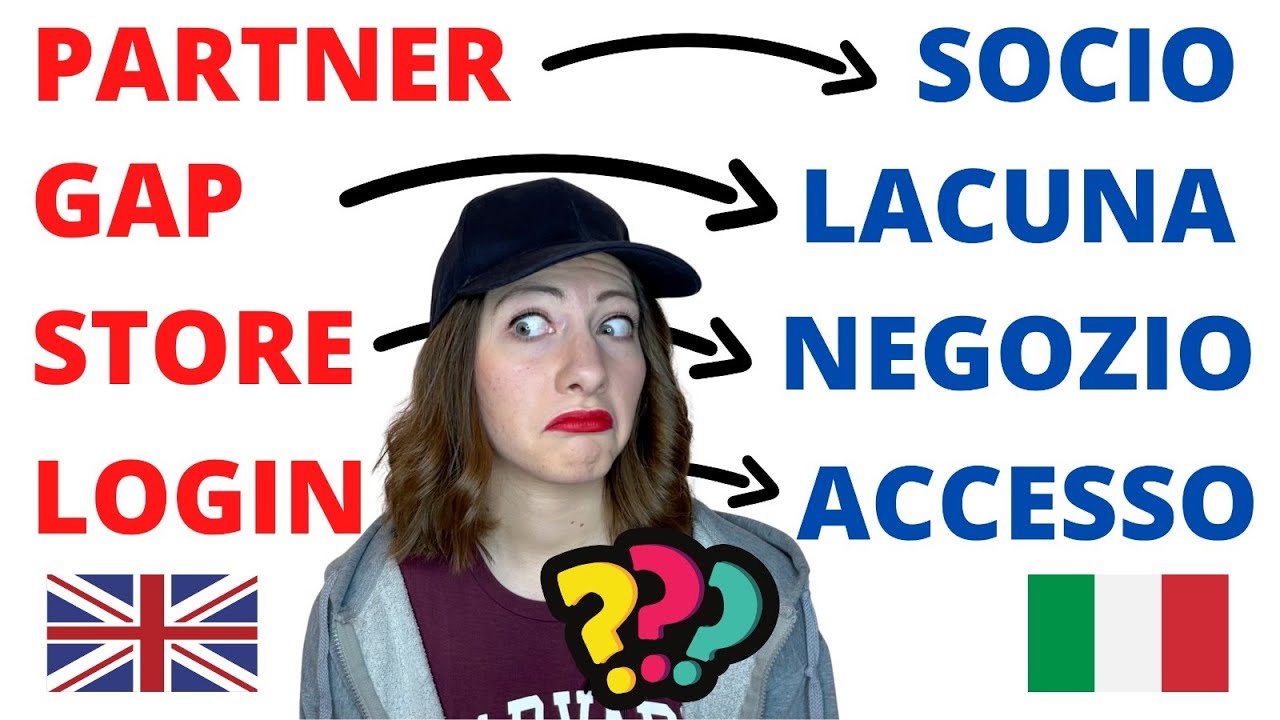
ALTERNATIVES for NOT using ANGLICISMS in the Italian language

    Do Italians speak Italian… or English? As you may have noticed, ANGLICISMS are present (more and more often) in the Italian language. By now, they’ve penetrated so deeply that even my grandmother uses some! Rightly, foreigners, are very angry and don’t want to use them. “We choose to learn to speak Italian, not English. So we only want to speak Italian!”. That’s actually right… also because there are often corresponding versions in Italian! So, in this article, we’ll try to solve this problem!
    YouTube thumbnail

    Easter: Italian EXPRESSIONS & PROVERBS

      Spring has just begun, and it has already changed so much: flowers have been blossoming, days have been getting longer, the weather is much better – but this also means that Easter is coming! For this reason, I have decided to tell you a little bit about this holiday. In fact, in this article (and in the video) we will see why Easter is called “Pasqua” in Italian, the symbols and traditions connected to it, and I will also tell you some expressions that, despite being Easter-related, are actually used throughout the year.

      YouTube thumbnail

      VOCABULARY at the DENTIST: Taking Care of Your Teeth in ITALIAN

        Some experiences are universal, they go way beyond language and culture… and toothache is an example of this, no doubt! It doesn’t matter if you’re going to the dentist for a simple routine appointment or to undergo a little dental surgery – either way, you will use or hear (and understand) countless expressions and a wide repertoire of very specific words: how do you talk about that toothache? How would you cure it? And what are the names of the main oral hygiene tools? You’ll find out in this article!

        YouTube thumbnail

        12 Italian EXPRESSIONS With The PREPOSITION “DI”!

        As you might have already figured out from the title of this article, today we will be talking about the most common Italian expressions with the preposition “DI”. Here, you can find expressions that are extremely useful in everyday language, as well as their meaning (or meanings) and some examples – learning them will make your Italian sound even more natural, and you will get closer and closer to talking like a native speaker!

        YouTube thumbnail

        Giovanni Boccaccio’s DECAMERON: plot and story analysis

          In this article we will talk about the most famous book in italian literature (second only to the Divine Comedy): Il Decameron, by Giovanni Boccaccio! The magnum opus of this author is feared among italians and foreigners, not only because of its significant length, but also for its outdated language… for this reason, we will briefly explain the work, focusing on the most important stories. Read the article to descover, or redescover, one of the most important pieces of literature in italian literature!

          YouTube thumbnail

          11 Italian MONEY-related EXPRESSIONS!

            Learning a new language goes far beyond grammar rules, because languages actually create contacts between us and different cultures, including customs and traditions. This is why you shouldn’t stop at learning the “theoretical” aspects of languages, but rather try getting closer and closer to the actual spoken language – don’t worry, we will help you get there. In this article, for instance, you can find 11 expressions that us native speakers use on a daily basis, and that are related to money. Of course, each and every one of them has its own explanation and a few examples (both in Italian and English)… you just have to learn them!

            YouTube thumbnail