


Do Italians speak Italian… or English? As you may have noticed, ANGLICISMS are present (more and more often) in the Italian language. By now, they’ve penetrated so deeply that even my grandmother uses some! Rightly, foreigners, are very angry and don’t want to use them. “We choose to learn to speak Italian, not English. So we only want to speak Italian!”. That’s actually right… also because there are often corresponding versions in Italian! So, in this article, we’ll try to solve this problem!
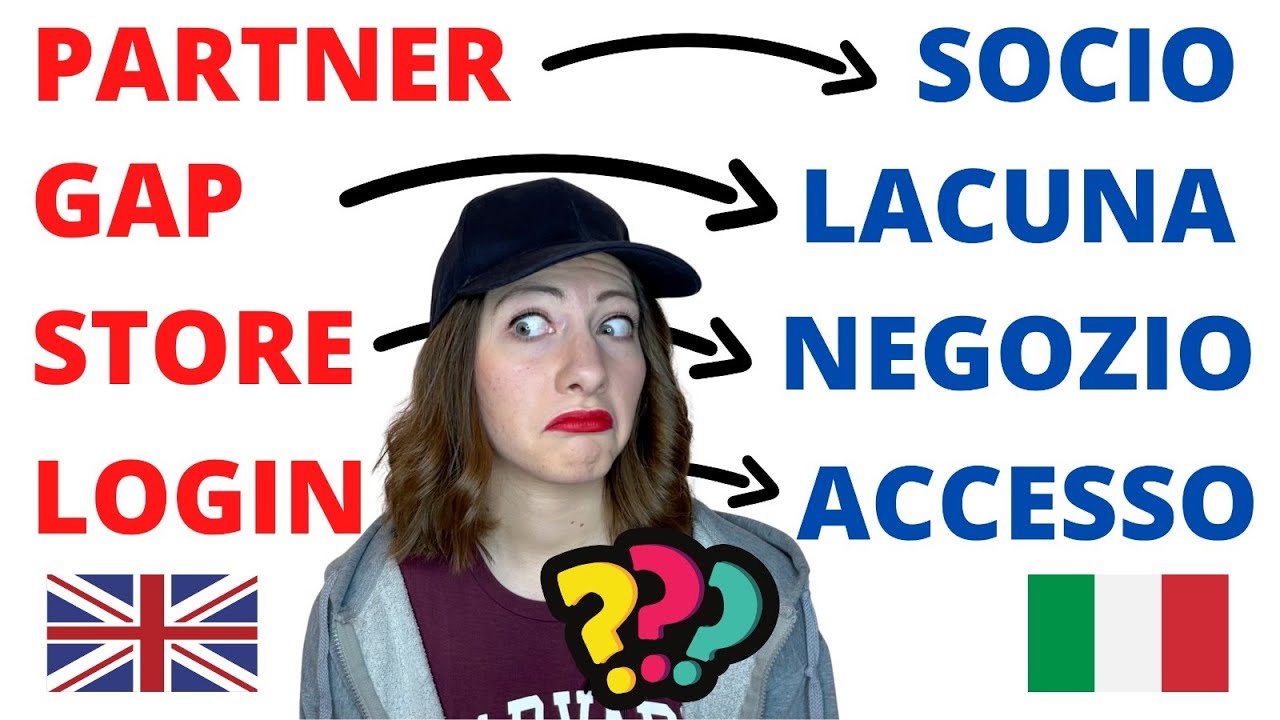
ANGLICISMS in Italian
We will tell you the English words most used by Italians every day and the corresponding Italian alternatives, when they exist.
We give you alternatives, feel free to use them when speaking or writing, but don’t forget that the phenomenon is very deep-rooted among Italians! So don’t be surprised if your interlocutors use anglicisms.
We have categorised the words for you by topics with their respective insights, in order to make the list clearer.
Informatics and communication
| ANGLICISMS | ITALIAN VERSION |
| Social network | – (1) |
| Account | Il profilo |
| Privacy | La riservatezza (2) |
| Log in | L’accesso |
| Password | La parola chiave / d’accesso / d’ordine (3) |
| Community | La comunità |
| Feedback | Il riscontro |
| Trend | La tendenza |
| Nickname | Il soprannome |
| La posta elettronica (4) | |
| Default | L’impostazione predefinita |
| Smartphone | Il cellulare |
| Update | L’aggiornamento |
| Wireless | Senza fili |
1)
Rete sociale = any group of individuals connected to each other by various social ties.
2)
A: Riservatezza? Ma chi la usa questa parola in italiano? «Ho bisogno di tutelare la mia riservatezza»… Mai sentito! (Riservatezza? Who uses this word in Italian? “I need to protect my confidentiality“… Never heard of it!)
G: Eh lo so… Ma esistono per esempio gli «accordi di riservatezza», tra aziende o privati. (I know… But there are, for example, ‘confidentiality agreements‘ between companies or individuals).
3)
Parola chiave / d’accesso = viable alternatives to the digital «password».
Parola d’ordine = secret word that is asked at the entrance door of certain events or exclusive venues.
4)
A: Dammi il tuo indirizzo di posta elettronica. Ci sentiamo per posta elettronica. Ti mando una posta elettronica? Poco pratico… (Give me your e-mail address. We’ll be in touch by e-mail. Send you an e-mail? Impractical to say…)
G: Ma molto italiano! (But very Italian!)
5)
On the other hand, more specific words from the world of technology, in particular, don’t have an Italian version. For example: software, hardware.
Work
| ANGLICISMS | ITALIAN VERSION |
| Meeting | La riunione, l’incontro |
| Boss | Il capo (6) |
| Abstract | Il riassunto, il sommario |
| CEO | L’amministratore delegato |
| Bodyguard | La guardia del corpo |
| Workshop | Il laboratorio |
| Freelancer | Il libero professionista |
| Partner | Il socio (7) |
| Partnership | La collaborazione, l’alleanza |
| Manager | Il dirigente, il direttore, l’amministratore |
| Part-time | A tempo parziale |
| Full-time | A tempo pieno |
| Copywriter | Il redattore pubblicitario |
| Staff | Il personale |
| Badge | Il tesserino |
| Stress | La tensione |
| Startup | La nuova impresa |
| Smartworking | Il lavoro agile / da remoto / da casa (8) |
| Preview | L’anteprima |
6)
The feminine of «capo» is «capa»; however, since this form is often used jokingly, many prefer to call a woman «capo» as well, in the masculine form.
7)
«Socio» is the Italian version for «partner» in the business context.
In the sentimental context, «partner» is used when speaking in an impersonal and general manner (Bisogna rispettare il proprio partner!) (One must respect one’s partner!).
Otherwise, to talk about a particular person, the Italian alternatives are «marito/moglie», «fidanzato/a» or «compagno/a».
8)
«Smartworking» isn’t an Anglicism, but a «pseudo-Anglicism», because in the Anglo-Saxon world this word doesn’t exist.
Stop reading Italian.
Start speaking it.
Online lessons in groups of 4, organised by level and goals, with qualified teachers. Pick the day and time that suit you from the available slots.
Max 4 students:
there’s a seat for you
Politics and Economics
| ANGLICISMS | ITALIAN VERSION |
| Leader | Il capo, la guida (9) |
| News | Le notizie |
| Premier | Il primo ministro (10) |
| Low cost | A basso costo |
| All inclusive | Tutto incluso |
| Store | Il negozio |
| Broker | L’agente, l’intermediario |
| Budget | Il bilancio (11) |
| Business | Il commercio, gli affari |
| Report | Il resoconto |
| Gap | La lacuna |
| Buyer | Il compratore, l’acquirente |
| Upgrade | La promozione (12) |
9)
«Capo» or «guida», are words used to indicate the main person of a political party or an organisation, movement or group.
10)
In Italy, il primo ministro (the prime minister), corresponds to the «presidente del consiglio» (president of the council).
To learn more about Italian politics, take a look at the video dedicated to this topic!
11)
A: Cioè tu mi stai dicendo che quando vai a comprare una casa, dici all’agente immobiliare che «Il tuo bilancio è di 100mila euro»? (So you’re telling me that when you go to buy a house, you tell the real estate agent that «Your budget is 100,000 euros»?)
G: Beh, probabilmente in quel contesto no, non lo userei. Diciamo che ormai in italiano si usa la parola… (Well, probably not in that context, I wouldn’t use it. Let’s say that nowadays in Italian we use the word…)
Bilancio = financial situation determined by the ratio of income to expenditure.
12)
Promozione = moving to a higher level.
Innalzamento di categoria = upgrades for hotels, planes and the equivalent.
Sport
| ANGLICISMS | ITALIAN VERSION |
| Coach | L’allenatore |
| Sold out | Tutto esaurito (13) |
| Team | La squadra |
| Match | La partita |
| Workout | L’allenamento |
| Record | Il primato |
| Contest | La gara, il concorso |
| Check-up | La visita di controllo |
| Sponsor | Il finanziatore, il sostenitore (14) |
13)
A product is «esaurito», an event (for example a concert) is «tutto esaurito».
14)
The problem with the word «sostenitore», however, is that it does not make enough sense to «give money» and not just «moral support».
Art and entertainment
| ANGLICISMS | ITALIAN VERSION |
| Backstage | Dietro le quinte |
| Audience | Il pubblico (15) |
| Sequel | Il seguito, la continuazione |
| Performance | L’esibizione, la prestazione (16) |
| Scoop | La notizia importante ed esclusiva |
| Showroom | Il salone di esposizione |
| Band | Il gruppo musicale |
| Cameraman | Il cineoperatore, l’operatore della cinepresa (17) |
| Live | Dal vivo, in diretta |
| DJ | — |
| Trash | Di cattivo gusto, volgare |
| Copyright | Il diritto d’autore |
| Show | Lo spettacolo (dal vivo), il programma (in tv) |
| Nomination | La candidatura |
15)
Audience (in Italian) = total number of television viewers following a network, station or programme in a given period of time.
16)
Esibizione = in entertainment contexts (the performance of a singer, dancer or actor).
Prestazione = in all other contexts (the performance of a car, a team, a mobile phone…).
17)
A: Sinceramente non le ho mai sentite… (I’ve honestly never heard of them…)
Free time
| ANGLICISMS | ITALIAN VERSION |
| Shopping | Le compere |
| Mood | L’umore |
| Location | Il posto, il luogo |
| Weekend | Il fine settimana |
| Hotel | L’albergo |
| Hall | L’ingresso |
| Waterproof | Impermeabile / Resistente all’acqua |
| Brand | Il marchio, la marca |
| Fitness | La forma fisica |
| Sexy | Sensuale, attraente |
| Outfit | Insieme coordinato e abbinato di abiti e accessori (18) |
| All you can eat | Mangia quanto puoi (19) |
| Fashion | La moda |
| Make-up | Il trucco |
| Random | Casuale |
| Casual | Informale |
| Relax | Il riposo |
| Comfort | La comodità |
| Packaging | L’imballaggio, la confezione |
| Chewing gum | La gomma da masticare |
| Gossip | Il pettegolezzo |
18)
A: Ti piace il mio insieme coordinato di abiti e accessori di oggi? Dai! Se volessi scrivere un tweet, non mi basterebbero i caratteri. (Do you like my coordinated set of clothes and accessories today? Come on! If I wanted to write a tweet, I wouldn’t have enough characters.)
19)
All you can eat = common format in sushi restaurants. A fixed price is charged for entering the restaurant, after which customers can order as much food as they like. If they don’t consume it all, however, they have to pay for the leftovers.
Well, dear readers, we’ve come to the end of this lesson. If you have any further questions or suggestions, please leave us a comment! Thank you very much for your attention!
Don’t forget to take a look at the article on Italian FALSE FRIENDS to further enrich your knowledge!
In addition, if you have problems accessing certain websites from abroad due to geo-restrictions, you should definitely try NordVPN: if you use the LearnAmo coupon code, you’ll get an exclusive discount and free malware protection!
Want the lesson PDF with exercises and solutions?
Join the LearnAmo AcademyCaricamento quiz in corso…
Podcast: Play in new window | Download (Duration: 22:33 — 20.6MB)
Iscriviti: Apple Podcasts | Spotify | Android | iHeartRadio | Podcast Index | TuneIn | Deezer | RSS | Altri...