Skip to content

Blog

How to Improve Your Italian Accent

    Italian pronunciation represents one of the most fascinating and at the same time challenging aspects for those studying Dante’s language. Students often wonder: “Do I have to completely eliminate my accent?” The answer is simple: accents are beautiful and natural.

    In this comprehensive guide, however, you will discover practical and immediate techniques to perfect your Italian pronunciation, from managing double consonants to the peculiarities of foreign words adapted to our language.
    YouTube thumbnail

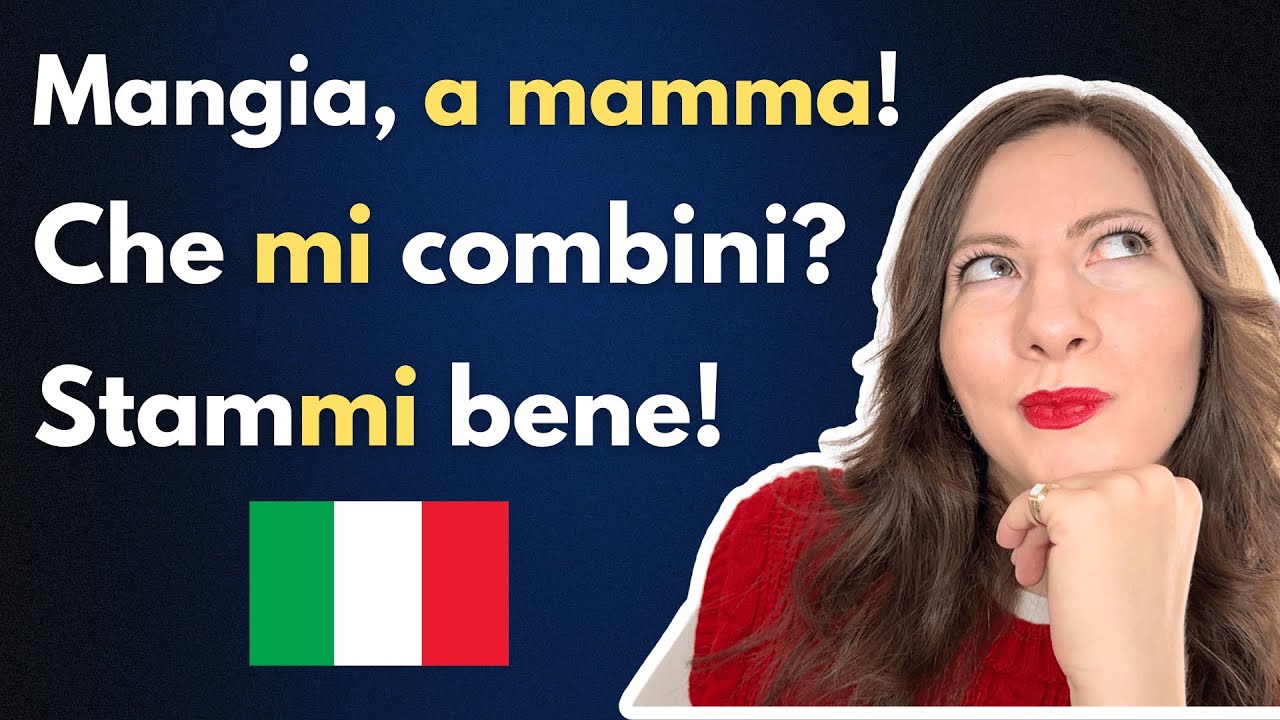
    DATIVO ETICO: Expressing Emotions When You Speak

      Have you ever wondered why Italians say:

      “Ma che mi combini?” [But what are you up to?] instead of “Ma che combini?” [What are you doing?];
      “Mangia tutta la pasta, a mamma” [Eat all the pasta, for mom] instead of “Mangia tutta la pasta” [Eat all the pasta]

      With this guide, you will finally learn to understand and use the DATIVO ETICO [ethical dative], a colloquial grammatical structure typically Italian that will make your Italian much more natural and authentic.

      YouTube thumbnail

      From Zero to Fluent: FREE Resources to Learn Italian Online

        Do you want to improve your Italian without spending a fortune? In this guide, you’ll discover the best free online resources (or almost free!) to learn Italian comfortably from home, from your phone, or wherever you are. Whether you’re a beginner or an advanced student, here you’ll find websites, apps, YouTube channels, and podcasts for every need!

        YouTube thumbnail

        EGLI vs LUI: Differences and Uses

          Have you ever wondered why in Italian there are two different words to say “he”? Why sometimes we read “egli” in classic books and other times we hear “lui” in everyday conversations? This article will explore in depth the difference between these two forms, their historical evolution and, above all, when to use one or the other in modern communication.

          YouTube thumbnail

          Master the INDEPENDENT Subjunctive: Wishes, Doubts and Commands in Italian

            Have you ever wondered why in Italian we say “Che tu sia benedetto!” [May you be blessed!] or “Magari avessi più tempo!” [I wish I had more time!]? In these cases, the subjunctive appears in sentences that stand on their own, without depending on anything. This is the independent subjunctive, very common in Italian to express wishes, orders, doubts, and suppositions. With this complete guide, you’ll learn to use it like a true Italian native speaker.

            YouTube thumbnail