


How many times a day do you say “buona giornata” [have a good day]? At the café, at the office, at the supermarket, on the phone… Always the same phrase! With this article, you’ll learn 10 different ways to wish someone a good day in Italian, so you can finally stop repeating the same expression and make a great impression on native speakers.
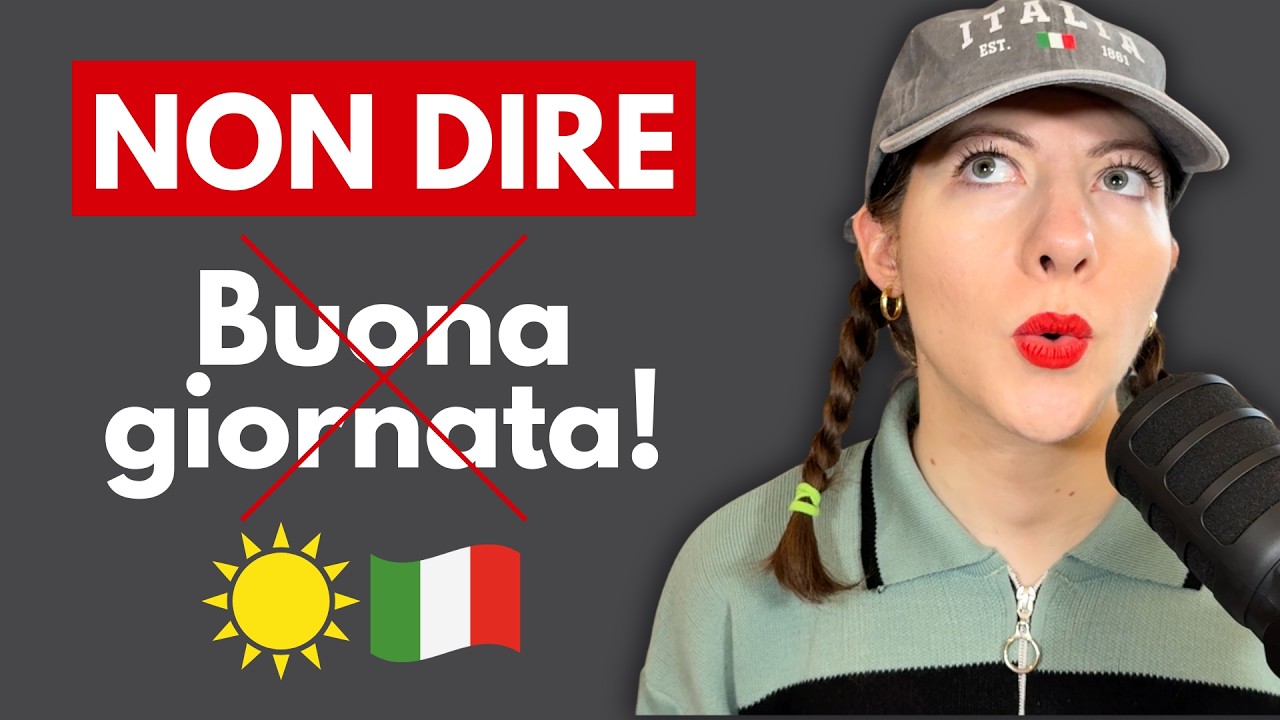
Stop Always Saying “Buona Giornata”!
Simple and Informal Expressions
Let’s start with the simplest and most immediate alternatives, the ones you can start using right away in everyday life without fear of making mistakes. These are common, natural expressions, perfect for everyday situations.
1. “Bella Giornata!” [Beautiful Day!]
The first alternative is super easy. Instead of saying “buona giornata,” simply say “bella giornata!” [beautiful day!] or “ti auguro una bella giornata!” [I wish you a beautiful day!]
It seems like a small change, right? But the effect is actually different: “bella” [beautiful] gives a warmer, brighter tone, almost as if you were giving a smile with your words. Lately in Italy, it’s used a lot — it’s become almost a trend!
Example: “Ieri sono andata dal fruttivendolo sotto casa e, quando sono uscita, il signore mi ha detto con un gran sorriso: ‘Bella giornata, signora!’ Mi ha messo di buon umore per tutta la mattina!” [Yesterday I went to the fruit shop near my house, and when I left, the man said to me with a big smile: “Beautiful day, ma’am!” It put me in a good mood for the whole morning!]
Linguistic Fun Fact
In Italian, you can say both “bella giornata” [beautiful day] on its own, and “ti auguro una bella giornata” [I wish you a beautiful day] or “passa una bella giornata” [have a beautiful day]. The short version is more informal and spontaneous, perfect for quick exchanges at the café or shop. The long version, on the other hand, sounds slightly more polished and thoughtful.
2. “Goditela!” [Enjoy It!] / “Goditi la Giornata!” [Enjoy Your Day!]
This is an expression widely used among friends, colleagues, or people you have an informal relationship with. Basically, you’re telling the other person: make the most of this day, have fun, live every moment! It’s a wish that conveys energy and positivity.
Example: “Il mio amico Marco, prima di partire per il weekend, mi ha detto: ‘Io vado al mare. Tu che fai? Qualunque cosa sia, goditi la giornata!'” [My friend Marco, before leaving for the weekend, said to me: “I’m going to the beach. What are you doing? Whatever it is, enjoy your day!”]
Grammar Deep Dive
“Goditela” is an imperative with a double pronoun: goditi (reflexive imperative of “godersi” [to enjoy]) + la (la giornata [the day]). It’s a very colloquial form, perfect for informal situations. If you want to be more formal, you can say: “Si goda la giornata” (using the polite “Lei” form), but honestly, it’s rarely used in real life.
This structure with the double pronoun is typical of spoken Italian and is found in many other expressions: “sbrigatela” [hurry up with it] (sbrigati + la), “cavarsela” [to manage/get by] (cavarsi + la), “prendersela” [to take it personally] (prendersi + la). Mastering these forms will make you sound much more natural when speaking Italian!
Refined and Affectionate Expressions
Now let’s level up! These expressions are more refined and warm, perfect for when you want to convey a more heartfelt and personal wish. They’re ideal for close friends, family members, or colleagues you have a good relationship with.
3. “Ti Auguro una Giornata Serena” [I Wish You a Peaceful Day]
Here we go up a level. “Serena” [peaceful/serene] conveys the idea of calm, tranquility, and the absence of stress. It’s a very sweet wish, perfect for someone who is going through a difficult time or who needs a moment of peace.
Example: “La mia vicina di casa aveva appena perso il suo gatto. Quando l’ho incontrata sulle scale, le ho detto: ‘Mi dispiace tanto. Ti auguro una giornata serena.’ Lei mi ha sorriso e mi ha detto che le aveva fatto piacere.” [My neighbor had just lost her cat. When I met her on the stairs, I said to her: “I’m so sorry. I wish you a peaceful day.” She smiled at me and told me it had made her feel better.]
Cultural Note
Italians place a lot of importance on “serenità” [serenity]. It’s not just happiness — it’s something deeper: it’s being at peace with yourself, having inner peace. In Italian culture, serenity is considered a state of mind that’s superior to simple cheerfulness because it implies a lasting inner balance. So wishing someone a “serena” day is truly a beautiful wish, especially appreciated by older generations.
4. “Che la Giornata Ti Porti Tante Soddisfazioni” [May Your Day Bring You Many Satisfactions]
This expression is perfect for someone who has an important day ahead: an exam, a job interview, a presentation, a project deadline. It’s a wish that combines encouragement and affection.
Example: “La mattina dell’esame di italiano B2, la mia insegnante ci ha detto: ‘Ragazzi, che la giornata vi porti tante soddisfazioni. Ce la farete!’ E sai cosa? Abbiamo passato tutti l’esame!” [The morning of the Italian B2 exam, our teacher told us: “Guys, may your day bring you many satisfactions. You’ll make it!” And you know what? We all passed the exam!]
Grammar Point: The Subjunctive in Wishes
Notice the structure “che + subjunctive”: “che la giornata ti porti” [may the day bring you]. This is a structure widely used in Italian to express wishes and desires. The subjunctive here expresses a wish, a hope, something we hope will come true. Other examples with the same structure: “Che tu sia felice!” [May you be happy!], “Che vada tutto bene!” [May everything go well!], “Che sia un anno meraviglioso!” [May it be a wonderful year!]
This structure is particularly important to know because it’s very common in toasts, greeting cards, and in all those situations where you want to express a wish for someone else. Mastering it will allow you to create your own personalized wishes for any occasion!
5. “Passa una Giornata Speciale, Come Te!” [Have a Special Day, Just Like You!]
Now, this one is a bit clever! Because it’s not just a wish — it’s also a compliment. You’re saying: you are a special person, so you deserve an equally special day. It’s an elegant way to make someone feel important and appreciated.
Example: “Il mio ragazzo mi ha lasciato un bigliettino attaccato allo specchio del bagno con scritto: ‘Passa una giornata speciale, come te. Ti amo.’ Io ovviamente mi sono sciolta come un gelato ad agosto!” [My boyfriend left me a little note stuck to the bathroom mirror that said: “Have a special day, just like you. I love you.” Obviously, I melted like an ice cream in August!]
It works wonderfully with your partner, but also with a close friend, with your mom, with your kids… It’s a versatile expression that fits any affectionate relationship. The key lies in the comparison “come te” [like you], which transforms a simple wish into a gesture of affection.
Expressions for Special Occasions
These expressions are designed for special moments: when you want to make a wish that leaves an impression, that moves someone, that makes the other person feel truly special. They’re perfect for important occasions or when you want to add a touch of originality and warmth.
6. “Ti Auguro una Giornata Ricca di Sorprese” [I Wish You a Day Full of Surprises]
Who doesn’t love surprises? With this phrase, you’re wishing someone a day full of unexpected and positive moments. It’s a wish that conveys optimism and anticipation, like saying: “life still has many beautiful things in store for you today!”
Example: “Il primo giorno del mio nuovo lavoro, la mia amica Lucia mi ha mandato un messaggio: ‘In bocca al lupo! Ti auguro una giornata ricca di belle sorprese.’ E in effetti i colleghi avevano organizzato un piccolo benvenuto con caffè e cornetti. Sorpresa riuscita!” [On the first day of my new job, my friend Lucia sent me a message: “In bocca al lupo! I wish you a day full of lovely surprises.” And sure enough, my colleagues had organized a small welcome with coffee and croissants. Surprise achieved!]
Useful Expression: “In Bocca al Lupo”
Did you notice the expression “In bocca al lupo” [literally “into the wolf’s mouth”] in the example? It’s the Italian way of saying “good luck”, and it’s used all the time in everyday life. The traditional response is: “Crepi il lupo!” [literally “may the wolf die”]. For those who prefer a more animal-friendly version, there’s also “Viva il lupo!” [long live the wolf!], which has become increasingly popular in recent years. Warning: simply answering “grazie” [thank you] is considered to bring bad luck!
7. “Che Sia una Giornata Indimenticabile” [May It Be an Unforgettable Day]
This one is perfect for truly important occasions: a wedding, a graduation, a special birthday, the first day of school, the birth of a child… It’s a solemn wish full of emotion, which elevates the moment and makes it even more meaningful.
Example: “Al matrimonio della mia migliore amica, durante il brindisi, ho alzato il bicchiere e ho detto: ‘Che sia una giornata indimenticabile, come l’amore che vi unisce.’ Metà degli invitati si è commossa. Anche il cameriere, credo.” [At my best friend’s wedding, during the toast, I raised my glass and said: “May it be an unforgettable day, like the love that unites you.” Half the guests were moved to tears. Even the waiter, I think.]
This expression once again uses the “che + subjunctive” structure we saw in point 4. You can personalize it by adding a comparison or a reference to the person: “Che sia una giornata indimenticabile, come meriti” [May it be an unforgettable day, as you deserve], or “Che sia una giornata indimenticabile, piena d’amore” [May it be an unforgettable day, full of love].
8. “Il Meglio Deve Ancora Venire! ” [The Best Is Yet to Come!]
This one is motivational! It’s a way of saying: it doesn’t matter how things have gone so far — the best part of the day is still ahead of you. It’s perfect for cheering up someone who is having a tough day or who had a bad start to their morning.
Example: “Ieri mattina avevo rovesciato il caffè sulla camicia, perso l’autobus e dimenticato l’ombrello. Ho scritto alla mia amica e lei mi ha risposto: ‘Tranquilla, il meglio deve ancora venire!’ E aveva ragione: la sera ho trovato 20 euro nella tasca della giacca! Non sarà molto, ma dopo quella mattina, mi sembrava di aver vinto la lotteria.” [Yesterday morning I had spilled coffee on my shirt, missed the bus, and forgotten my umbrella. I texted my friend and she replied: “Don’t worry, the best is yet to come!” And she was right: in the evening I found 20 euros in my jacket pocket! It might not be much, but after that morning, it felt like I’d won the lottery.]
This phrase is particularly appreciated because it contains a positive philosophy of life: the idea that every day, even one that started in the worst possible way, can still have something beautiful in store. It’s a wish that conveys hope and optimism, two values very dear to Italian culture.
Stop reading Italian.
Start speaking it.
Online lessons in groups of 4, organised by level and goals, with qualified teachers. Pick the day and time that suit you from the available slots.
Max 4 students:
there’s a seat for you
Poetic and Romantic Expressions
And finally, we come to the most poetic and romantic expressions, the ones that make your heart beat faster and are perfect for special situations or for the people you love most. Italian is a language that lends itself wonderfully to everyday poetry, and these expressions are proof of that!
9. “Ti Auguro una Giornata Dolce Come il Miele” [I Wish You a Day as Sweet as Honey]
This one is definitely poetic and tender. It’s mainly used with people we care about deeply: your partner, parents, children, closest friends. The comparison with honey evokes sweetness, warmth, and pleasure.
Example: “Ogni mattina, prima di andare al lavoro, mia nonna diceva a mio nonno: ‘Ti auguro una giornata dolce come il miele, amore mio.’ E lo faceva da cinquant’anni. Questo è amore vero!” [Every morning, before going to work, my grandmother would say to my grandfather: “I wish you a day as sweet as honey, my love.” And she had been doing it for fifty years. That’s true love!]
Food in Italian Terms of Endearment
Italians often use food in their terms of endearment, and this is no coincidence: in a country where cooking is culture, tradition, and love, food naturally becomes a vehicle for expressing feelings. Here are some common expressions: “dolce come il miele” [sweet as honey] (very sweet and tender), “sei un tesoro” [you’re a treasure] (you’re precious), “sei un pezzo di pane” [you’re a piece of bread] (you’re a very kind and generous person), “sei una ciliegia” [you’re a cherry] (you’re adorable). Italy is the country where even love has flavor!
10. “Che la Tua Giornata Sia Luminosa Come il Tuo Sorriso” [May Your Day Be as Bright as Your Smile]
We close with the most beautiful one! It’s romantic, elegant, and, like number 5, it also contains a hidden compliment: you’re telling the person that they have a beautiful, radiant smile, and you’re wishing them an equally splendid day.
Example: “Mio marito ogni tanto mi lascia dei messaggi vocali la mattina presto, e una volta mi ha detto: ‘Buongiorno, amore. Che la tua giornata sia luminosa come il tuo sorriso.’ E io ho riascoltato quel messaggio almeno dieci volte durante la giornata.” [My husband sometimes leaves me voice messages early in the morning, and once he said: “Good morning, my love. May your day be as bright as your smile.” And I listened to that message at least ten times during the day.]
You can use it with your partner, but also with a child, with your mom, with anyone who has a beautiful smile! It’s an expression that combines a wish with a compliment, creating a particularly powerful and memorable effect. You can also vary the comparison: “luminosa come i tuoi occhi” [as bright as your eyes], “luminosa come il sole di maggio” [as bright as the May sun], “luminosa come la tua anima” [as bright as your soul].
Summary Table: Which Expression to Use and When
| Expression | Register | Ideal Situation | Who to Say It To |
|---|---|---|---|
| Bella giornata! [Beautiful day!] | Informal | Everyday life, quick greetings | Anyone: barista, shopkeeper, colleagues |
| Goditela! / Goditi la giornata! [Enjoy it! / Enjoy your day!] | Informal / Colloquial | Weekends, holidays, days off | Friends, colleagues, family |
| Ti auguro una giornata serena [I wish you a peaceful day] | Medium-formal | Difficult moments, need for calm | Friends, acquaintances, colleagues |
| Che la giornata ti porti tante soddisfazioni [May your day bring you many satisfactions] | Formal / Affectionate | Exams, interviews, important days | Students, colleagues, friends |
| Passa una giornata speciale, come te! [Have a special day, just like you!] | Affectionate | Birthdays, special occasions | Partner, close friends, family |
| Ti auguro una giornata ricca di sorprese [I wish you a day full of surprises] | Medium | New beginnings, adventurous days | Friends, colleagues, acquaintances |
| Che sia una giornata indimenticabile [May it be an unforgettable day] | Solemn / Elegant | Weddings, graduations, important events | Newlyweds, graduates, guests of honor |
| Il meglio deve ancora venire! [The best is yet to come!] | Informal / Motivational | Tough days, moments of discouragement | Friends, colleagues, anyone who needs it |
| Ti auguro una giornata dolce come il miele [I wish you a day as sweet as honey] | Poetic / Romantic | Intimate moments, special mornings | Partner, grandparents, parents, children |
| Che la tua giornata sia luminosa come il tuo sorriso [May your day be as bright as your smile] | Romantic / Elegant | Morning messages, little notes | Partner, loved ones |
Frequently Asked Questions
Can I Use These Expressions in Formal Contexts Too, for Example with My Boss or a Client?
It depends on the expression. “Ti auguro una giornata serena” [I wish you a peaceful day] and “Che la giornata ti porti tante soddisfazioni” [May your day bring you many satisfactions] are perfectly suited for formal and professional contexts. Expressions like “Goditela!” [Enjoy it!] or “dolce come il miele” [sweet as honey], on the other hand, are too informal or intimate for a professional relationship. In general, expressions that use the polite “Lei” form are more appropriate for formal contexts.
What Is the Difference Between “Buona Giornata” and “Buona Giornata a Te”?
Adding “a te” [to you] (or “a Lei” in formal contexts) makes the wish more personal and direct. “Buona giornata” [have a good day] on its own is more generic and automatic, while “buona giornata a te” [have a good day, to you] shows that you’re specifically addressing that person, with greater attention and warmth.
Can These Expressions Also Be Used in Writing, for Example in a Text Message or Email?
Absolutely! In fact, some of these expressions work even better in writing, where the person can reread and appreciate them at their leisure. The more poetic expressions like “Che la tua giornata sia luminosa come il tuo sorriso” [May your day be as bright as your smile] are particularly suited for messages, little notes, and letters. For professional emails, stick to the more formal versions like “Ti auguro una giornata serena” [I wish you a peaceful day] or “Che la giornata ti porti soddisfazioni” [May your day bring you satisfactions].
Are There Variants of These Expressions for Wishing a Good Evening or Good Night?
Of course! All these expressions can be easily adapted by replacing “giornata” [day] with “serata” [evening] or “notte” [night]. Examples: “Ti auguro una serata serena” [I wish you a peaceful evening], “Che sia una notte indimenticabile” [May it be an unforgettable night], “Ti auguro una serata dolce come il miele” [I wish you an evening as sweet as honey]. The mechanism is the same — only the time of day you’re referring to changes.
From What Level of Italian Can I Start Using These Expressions?
The simplest expressions like “Bella giornata!” [Beautiful day!] and “Goditela!” [Enjoy it!] are accessible from an A2 level. The expressions with the subjunctive, such as “Che la giornata ti porti…” [May your day bring you…] and “Che sia una giornata indimenticabile” [May it be an unforgettable day], require at least a B1-B2 level to be used confidently. In any case, memorizing these phrases as fixed formulas is a great way to start using them even before you’ve fully mastered the grammar behind them!
A richer, more natural Italian is built one expression at a time: continue with the article dedicated to the alternatives to “Sono in ritardo“.
Buy our new book “Il Principe Marco e le parole del mondo” and learn Italian step by step through an engaging story, practical exercises, and thorough grammar review, from beginner to advanced level.
Want the lesson PDF with exercises and solutions?
Join the LearnAmo AcademyLoading quiz…
Podcast: Play in new window | Download (Duration: 31:49 — 29.1MB)
Iscriviti: Apple Podcasts | Spotify | Android | iHeartRadio | Podcast Index | TuneIn | Deezer | RSS | Altri...