


In this article, we will dive into a topic that might seem simple but it often hides pitfalls, even for the most experienced: comparatives and superlatives in Italian. We have already covered this topic in a previous lesson, but today we will go deeper, clarifying doubts and answering the questions that many of you have raised.
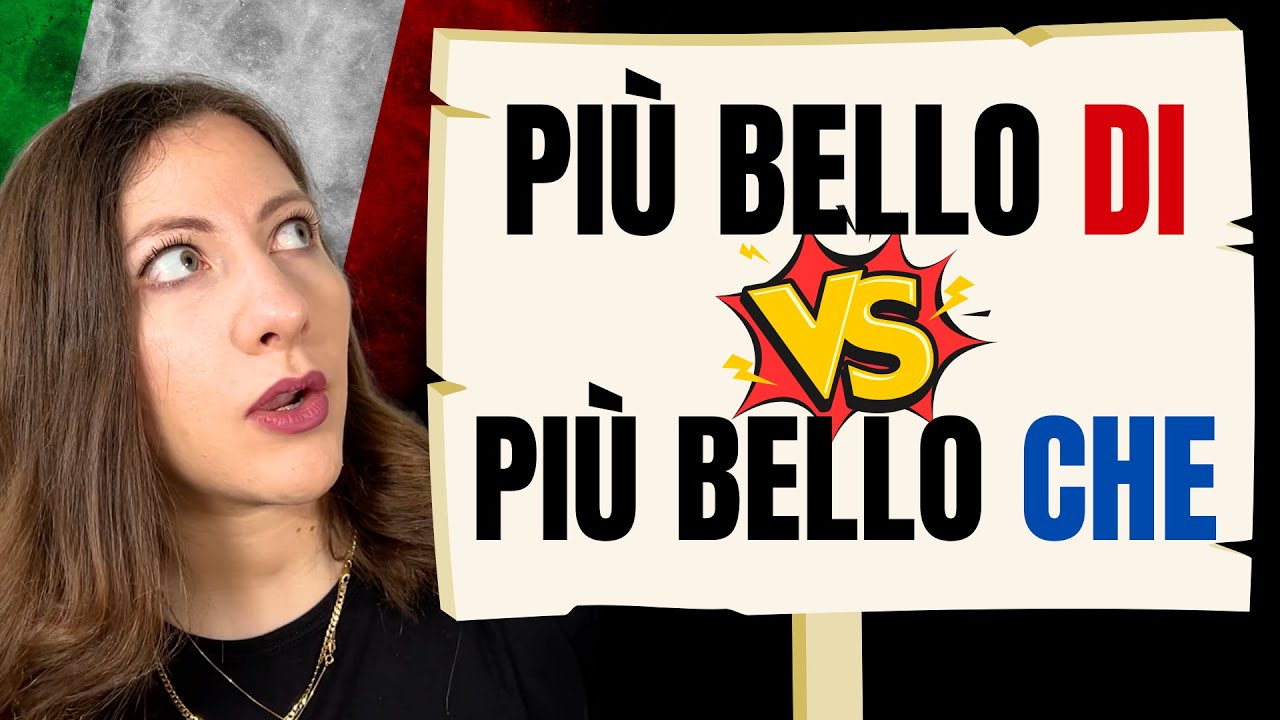
Comparatives and Superlatives: An Overview
The comparative and superlative are used in Italian to make comparisons between two or more elements and to emphasize the degree or intensity of a quality.
Comparatives of Superiority and Inferiority
The comparative of superiority and inferiority express a comparison between two or more elements regarding a certain quality.
1) Comparative of Superiority
The comparative of superiority indicates that the quality has a higher intensity in the first term of comparison. Its formation is:
più/meno + adjective + DI + noun/pronoun (2nd term of comparison)
Examples:
- Martina è più alta di Sofia. (Martina is taller than Sofia.)
- Luca è più simpatico di te. (Luca is nicer than you.)
- L’italiano è più interessante della matematica. (Italian is more interesting than Math.)
2) Comparative of Inferiority
The comparative of inferiority indicates that the quality has a lower intensity in the first term of comparison. Its formation is:
meno + adjective + DI + noun/pronoun (2nd term of comparison)
Examples:
- Sofia è meno alta di Martina. (Sofia is less tall than Martina.)
- Tu sei meno simpatico di Luca. (You are less nice than Luca.)
- La matematica è meno interessante dell’italiano. (Math is less interesting than Italian.)
CHE or DI?
When do you use “che” instead of “di” in comparatives? The choice depends on the type of comparison:
1. When comparing two adjectives, verbs, adverbs, or complements introduced by a preposition (and NOT two elements in relation to a quality):
PIÙ/MENO… CHE… [more/less… than…]
Esempi (Examples):
- Luca è più simpatico che alto [aggettivi]. (Luca is more nice than tall [adjectives].)
- Preferisco più ballare che cantare [verbi]. (I prefer dancing to singing [verbs].)
- In Sicilia è meno freddo che in Trentino-Alto Adige [complementi introdotti da preposizione]. (In Sicily, it is less cold than in Trentino-Alto Adige [complements introduced by a preposition].)
- Giorgio guida più velocemente che prudentemente [avverbi]. (Giorgio drives more quickly than prudently [adverbs].)
- Abbiamo litigato meno con Tiziana che con Giovanni [complementi introdotti da preposizione]. (We argued less with Tiziana than with Giovanni [complements introduced by a preposition].)
Comparative of Quantity
The comparative of quantity expresses a comparison between two things (or groups of things) based on their quantity.) Its formation is:
PIÙ/MENO… CHE… [more/less… than…]
Examples:
- Leggo più riviste che libri. (I read more magazines than books)
- Beviamo più caffè che acqua. (We drink more coffee than water)
- Sofia ha più borse che vestiti. (Sofia has more bags than clothes)
Comparative of Equality
The comparative of equality expresses a comparison between two elements concerning a certain quality, present with the same intensity in both. Its formation is:
(TANTO…) QUANTO… || (COSÌ…) COME… [as… as…]
Examples:
- Martina è tanto alta quanto Sofia. (Martina is as tall as Sofia.)
- Sofia è alta come Martina. (Sofia is as tall as Martina)
- Luca è tanto simpatico quanto te. (Luca is as nice as you)
- Tu sei simpatico come Luca.(You are as nice as Luca)
- Marta è timida quanto Luisa. (Marta is as shy as Luisa)
- Luisa è così timida come Marta. (Luisa is as shy as Marta)
Stop reading Italian.
Start speaking it.
Online lessons in groups of 4, organised by level and goals, with qualified teachers. Pick the day and time that suit you from the available slots.
Max 4 students:
there’s a seat for you
The relative superlative
The relative superlative indicates the quality of someone or something at maximum or minimum level, in relation to a group of elements. It is formed as follows:
article + PIÙ/MENO + adjective + DI/TRA/FRA
Examples:
- Roma è la più grande città fra quelle italiane. (Rome is the largest city in Italy)
- Giorgio è lo studente meno serio di tutti. (Giorgio is the least serious student of all)
- Giove è il pianeta del Sistema Solare più grande. (Jupiter is the largest planet in the Solar system)
- La matematica è la materia meno interessante di tutte. (Maths is the least interesting subject of all)
ATTENTION! The Relative Superlative can be used to express opinions. If it is followed by a verb, this is conjugated with the subjunctive tense and must be introduced by “CHE“.
Examples:
- Questa è la pizza più buona che io abbia mai mangiato! (This is the best pizza I’ve ever had!)
- Luca è il ragazzo più simpatico che io conosca. (Luca is the nicest guy I know)
- L’italiano è la lingua più bella che sia mai esistita. (Italian is the most beautiful language that has ever existed)
The Absolute Superlative
The absolute superlative indicates the highest degree of quality of something or someone, regardless of any comparison. It is generally formed as follows:
adjective (without the last vowel) + -ISSIMO/A/I/E
Examples:
- Giove è grandissimo. (Jupiter is very big.)
- Roma è bellissima. (Rome is very beautiful.)
- La grammatica italiana è difficilissima! (Italian grammar is extremely difficult!)
- I LearnAmici sono bravissimi. (LearnAmicis are exceptionally good.)
The absolute superlative can also be formed in other ways:
- MOLTO + adjective (e.g., molto stanca – very tired).
- adjective accompanied by another adjective or phrase (e.g., stanco morto – dead tired, ricco sfondato – filthy rich).
- prefixes like ARCI-, SUPER-, STRA- (e.g., superalto – very tall, strafamoso – extremely famous).
Examples:
- Oggi ho lavorato per 10 ore di fila: sono stanca morta! (Today I worked for 10 hours straight: I am dead tired!)
- Luca è superalto! (Luca is very tall!)
- Brad Pitt è strafamoso. (Brad Pitt is extremely famous.)
Irregular Comparatives and Superlatives
However, not all adjectives follow the “traditional” rule; some have their own conjugation in all degrees of the adjective. But not. Here you are some of them:
| Positive | Comparative | Relative Superlative | Absolute Superlative |
|---|---|---|---|
| buono | più buono migliore | il più buono il migliore | buonissimo ottimo |
| cattivo | più cattivo peggiore | il più cattivo il peggiore | cattivissimo pessimo |
| grande | più grande maggiore | il più grande il maggiore | grandissimo massimo |
| piccolo | più piccolo minore | il più piccolo il minore | piccolissimo minimo |
| alto | più alto superiore | il più alto il superiore | altissimo supremo |
| basso | più basso inferiore | il più basso l’inferiore | bassissimo infimo |
| acre | acerrimo | ||
| celebre | più celebre | celeberrimo | |
| integro | più integro | integerrimo | |
| benefico | beneficentissimo | ||
| benevolo | più benevolo | benevolentissimo | |
| malevolo | malevolentissimo | ||
| bene | meglio | benissimo | |
| male | peggio | malissimo |
Examples:
- La pizza di Napoli è ottima. (Neapolitan pizza is excellent)
- La pizza di Napoli è la migliore d’Italia. (Neapolitan pizza is the best in Italy)
- Paolo è il fratello maggiore, Luca quello minore. (Paolo is the older brother, Luca the younger)
- Barbara abita al piano superiore al nostro. (Barbara lives upstairs from us)
- Dante è il celeberrimo autore della Divina Commedia. (Dante is the famous author of the Divine Comedy)
- Stefania cucina meglio di me. (Stefania cooks better than me)
- Stefania cucina benissimo. (Stefania cooks very well)
Do you want to take Italian lessons with our qualified native teachers? Purchase your Italiano Intensivo package!
This guide has hopefully cleared up all your doubts about the comparatives and superlatives in Italian! If you have any questions, don’t hesitate to leave them in the comments. Another insight that we recommend is the article on the difference between Meglio and Migliore.
Want the lesson PDF with exercises and solutions?
Join the LearnAmo AcademyCaricamento quiz in corso…
Podcast: Play in new window | Download (Duration: 19:05 — 26.5MB)
Iscriviti: Apple Podcasts | Spotify | Android | iHeartRadio | Podcast Index | TuneIn | Deezer | RSS | Altri...
Vorrei sapere se queste tre frasi sono giuste :
1. È il ragazzo più simpatico che io abbia mai conosciuto.
2. È il ragazzo più simpatico che io conosca.
3. È il ragazzo più simpatico che io conosco.
Grazie!