


Italy is famous worldwide for its expressive gestures and the use of hands during conversation.
For those studying Italian, understanding gestures is as fundamental as learning grammar: Italians literally communicate with their entire body, and many concepts are expressed through hand movements, facial expressions, and specific postures.
In this article, we delve into the history and meanings of the most common and used Italian gestures.
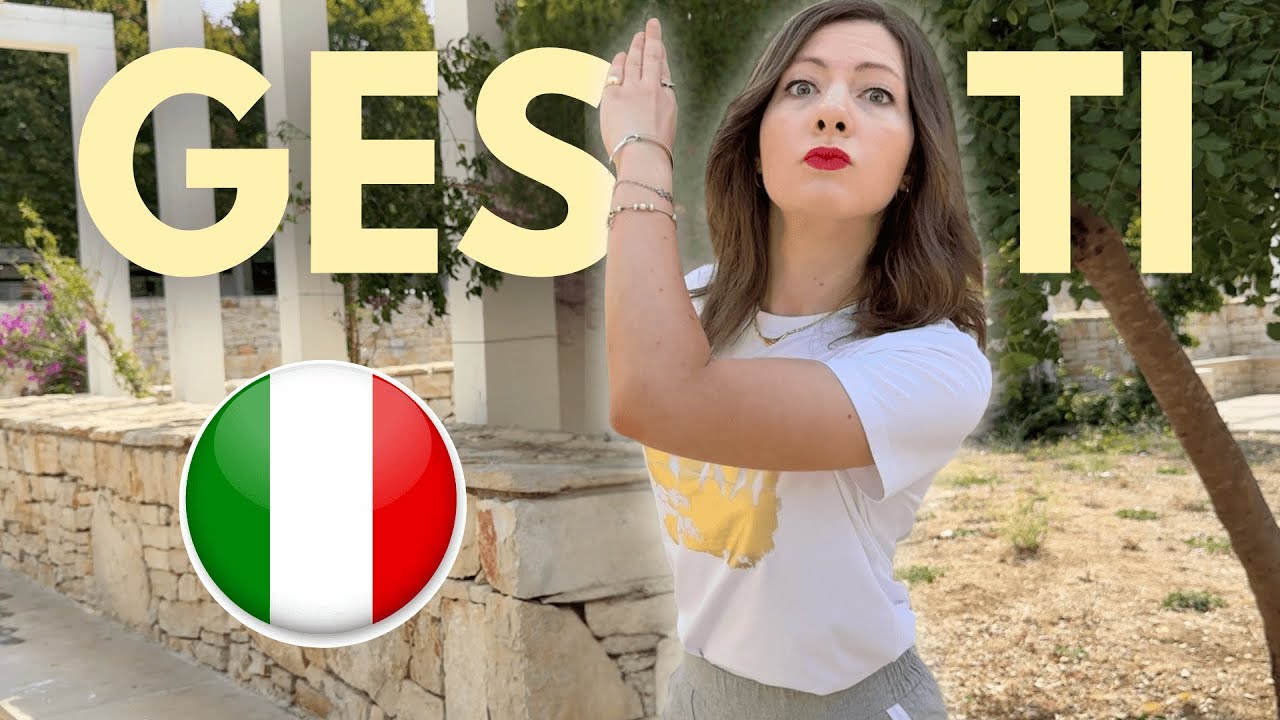
Speaking Without Words: A Complete Guide to Italian Nonverbal Communication
The Historical Roots of Italian Gesture
The Italian gestural tradition has very ancient origins dating back to the Roman Empire era. Latin orators already used elaborate gestural techniques to emphasize their speeches, as documented in the rhetoric treatises of Cicero and Quintilian. The latter minutely described the use of hands, arms, and facial expressions as fundamental tools of the ars oratoria.
During the Middle Ages and Renaissance, the political fragmentation of the Italian peninsula led to the development of numerous regional dialects and languages. In this context, gestures became a universal language that allowed communication between people from different regions. Venetian merchants, Florentine bankers, and Genoese traders developed a standardized gestural repertoire to facilitate commercial exchanges.
The Commedia dell’Arte, born in the 16th century, codified many of the gestures we still use today. Actors from traveling theater companies had to communicate with audiences of different languages, perfecting an extremely sophisticated non-verbal communication system. Characters like Harlequin, Pulcinella, and Pantalone contributed to spreading specific gestural movements that have entered the national cultural heritage.
The unification of Italy in 1861 did not immediately eliminate regional linguistic differences. Gestures continued to play a crucial role in daily communication, becoming a distinctive element of Italian identity. Even today, despite language standardization, gestures remain deeply rooted in national culture.
Fundamental Gestures: Meaning and Usage
Gestures of Quantity and Intensity
The gesture of così così [so-so] is performed by oscillating the open hand from side to side, with the palm facing down. It expresses mediocrity, uncertainty, or barely sufficient quality. Example of use: “Come va il lavoro?” [How’s work going?] – response accompanied by the gesture means “né bene né male, si tira avanti” [neither good nor bad, we’re getting by].
The un pochino [a little bit] is indicated by joining thumb and index finger leaving a minimal space between the two fingers. It’s used to indicate small quantities or to minimize something. Often accompanies phrases like “È un pochino difficile” [It’s a little bit difficult] or “Ho un pochino di fame” [I’m a little bit hungry].
To indicate tanto [so much] or molto [a lot], arms are spread horizontally or hands are raised to head height with open palms. This gesture amplifies the meaning of phrases like “Ho mangiato tanto!” [I ate so much!] or “C’era tanta gente!” [There were so many people!].
Gestures of Negation and Refusal
The no categorico [categorical no] is expressed by shaking the index finger from left to right, often accompanied by a serious facial expression. It’s more emphatic than a simple verbal no and indicates a firm refusal.
The gesture of non me ne frega niente [I don’t give a damn] is performed by bringing the back of the hand under the chin and pushing it forward with a sharp movement. It expresses total indifference or not caring about something or someone.
To say non lo so [I don’t know] emphatically, shoulders are raised, palms are turned upward, and an interrogative expression is assumed. This gesture can completely replace words.
Gestures of Approval and Satisfaction
The famous bacio del cuoco [chef’s kiss] gesture is performed by kissing the tips of united fingers and then elegantly opening the hand. It indicates that something is perfect, delicious, or excellent, especially referring to food but also to situations, people, or objects of particular quality.
The pollice in su [thumb up] is universally recognized but in Italy has particular nuances: it can mean va bene [it’s okay], d’accordo [agreed], or ottimo lavoro [excellent work]. It’s often used to confirm an agreement without speaking.
The Most Iconic and Controversial Gestures
La Mano a Borsa
This is probably the most famous Italian gesture worldwide. It’s performed by joining all fingers of the hand (thumb included) bringing them upward, with movements going from bottom to top. The main meaning is che cosa? [what?] or che cosa stai dicendo? [what are you saying?], but it can also express disbelief, annoyance, or a request for clarification.
Examples of usage: when someone says something incomprehensible, when disagreeing, when wanting to emphasize a question. It’s important to note that this gesture can be aggressive if used with too much emphasis, so foreign students should use it moderately until they master its nuances.
Le Corna
The corna [horns] gesture is performed by extending the index finger and pinky while the other fingers remain bent. It has multiple meanings depending on context: it can be used to ward off bad luck (superstitious gesture), to indicate that someone has been betrayed by their partner, or as a mocking gesture.
Warning: this gesture can be very offensive if directed at a person, so foreign students are advised not to use it unless they perfectly understand the context and cultural implications.
Il Gesto dell’Ombrello
It’s performed by bending the left arm and placing the right hand on the left bicep, then moving the left forearm upward. It’s a very vulgar gesture that expresses contempt or categorical refusal. Foreign students should know it to recognize it but absolutely avoid using it.
Regional Gestures and Local Variations
Italian gestures present interesting regional variations that reflect the country’s cultural richness. In Southern Italy, gestures tend to be broader, more theatrical, and frequent compared to the North, where gestural communication is generally more contained and formal.
Southern Italian Gestures
In Sicily and Campania, the gesture of ti faccio un baffo [I’ll make you a mustache] (passing the index finger under the nose) means non me ne importa niente [I don’t care at all] and is more common than in the rest of Italy. The pernacchia gesture (thumb between index and middle finger) is used to express contempt playfully.
In Puglia, the rampino [hook] gesture (curved index finger moving downward) is common to indicate something negative or to say vattene [go away]. In Calabria, the rotational movement of the index finger near the temple means sei pazzo [you’re crazy] but is often used affectionately.
Northern Italian Gestures
In Northern Italy, especially in Lombardy and Veneto, gestures are generally more sober. The movement of an open hand going from right to left to say così così [so-so] is common, but with less ample movements compared to the South.
In Piedmont, the gesture of rubbing thumb and index finger to indicate money or costs is frequent, while in Liguria the movement of a hand that “weighs” something in the air indicates uncertainty or evaluation.
Gestures in Daily Conversation
Italians use gestures in every communicative context: from informal conversations among friends to business meetings, from family discussions to public presentations. However, the intensity and frequency of gestures vary depending on the social situation.
Informal Contexts
In conversations among friends or family, gestures are the maximum expression of naturalness. It’s common to see Italians gesticulating broadly while telling a story, using hands to describe shapes and dimensions, and accompanying every emotion with appropriate movements.
During animated discussions, gestures become faster and more intense. It’s not unusual to see people talking simultaneously using gestures to overpower others or to draw attention to what they’re saying.
Formal Contexts
In work environments or during formal meetings, gestures are reduced but don’t disappear completely. Gestures become more controlled and measured, used mainly to emphasize important points or to facilitate understanding of complex concepts.
During public presentations or conferences, many Italian speakers strategically use gestures to maintain the audience’s attention and to make their speech more engaging.
Stop reading Italian.
Start speaking it.
Online lessons in groups of 4, organised by level and goals, with qualified teachers. Pick the day and time that suit you from the available slots.
Max 4 students:
there’s a seat for you
Specific Gestures for Common Situations
At Restaurants and Bars
The gesture for conto, per favore [check, please] is performed by mimicking the movement of writing in the air with the right hand, as if signing a check. It’s universally understood by Italian waiters.
To order a caffè [coffee], many Italians raise their index finger upward accompanied by the words un caffè [one coffee], while to indicate two coffees they raise two fingers (index and middle).
The rotational movement of the hand means mescola [mix] or gira [turn], useful when you want something to be mixed or when describing a circular movement.
In Traffic and on the Street
Italian drivers have developed a specific gestural language to communicate in traffic. The movement of an open hand going up and down means calma [calm] or vai piano [go slow], while the gesture of hitting the forehead with the hand indicates that someone has done something stupid.
To ask for street directions, it’s common to point with an extended arm in the direction while asking the question, facilitating understanding even when speaking with people who speak different dialects.
In Shops and at the Market
In traditional markets, vendors use specific gestures to draw attention to products: the movement of hands indicating avvicinati [come closer] (palms facing upward moving toward oneself), or the gesture indicating product freshness (kissing fingertips).
To bargain, the movement of hands moving toward each other to indicate troviamo un accordo [let’s find an agreement] is common, or the gesture of shaking the hand to say no, troppo caro [no, too expensive].
The Importance of Facial Expressions
Italian gestures are not limited to hand movements: facial expressions play a fundamental role in completing the communicative message. Italians are masters at using eyebrows, eyes, mouth, and even nose to transmit nuances of meaning.
Expressions of Skepticism and Doubt
The raised eyebrow accompanied by a slight ironic smile expresses doubt or skepticism toward what someone is saying. It’s often used to question the reliability of information without being explicitly rude.
The wink can have different meanings: complicity, seduction, or indicating that what was just said shouldn’t be taken completely seriously. It’s a gesture widely used among people who know each other well.
Expressions of Surprise and Wonder
Wide eyes accompanied by an open mouth indicate genuine surprise or shock. This type of expression is often accompanied by the gesture of hands brought to the face or chest.
The tight smile with pressed lips indicates embarrassment or discomfort about what was heard, and is often used to avoid directly answering uncomfortable questions.
How to Learn and Practice Italian Gestures
Observation and Imitation
The most effective method to learn Italian gestures is direct observation. Watching Italian movies, television programs, and online videos allows you to see gestures in their natural context. It’s important to pay attention not only to the movement itself, but also to the precise moment when it’s used in conversation.
During conversations with native Italian speakers, it’s useful to carefully observe how gestures accompany words and how they change based on the conversation’s tone. Don’t be afraid to ask questions about the meaning of gestures you don’t understand: Italians are generally very happy to explain this aspect of their culture.
Gradual Practice
For foreign students, it’s advisable to start with the simplest and most neutral gestures: così così [so-so], un pochino [a little bit], indicating quantities with hands. Initially avoid gestures that might be offensive or have multiple ambiguous meanings.
Practice in front of a mirror to perfect movements and ensure the gesture looks natural. Remember that Italian gestures must flow harmoniously with words, not be robotic or exaggerated.
Common Mistakes to Avoid
One of the most frequent errors is excessive use of gestures: using them too often or too emphatically can seem comical or unnatural. It’s better to use few but appropriate gestures rather than gesticulate continuously.
Avoid using gestures you’re not completely sure of their meaning, especially those that might be offensive. When in doubt, it’s always better to limit yourself to the most basic and universal gestures.
Don’t forget that gestures must be coordinated with speech rhythm: a gesture performed at the wrong moment can confuse the message instead of clarifying it.
Gestures in the Digital Age
It’s interesting to note how Italian gestures are adapting to new communication media. In video calls, many Italians continue to gesticulate even when seated in front of a computer, often moving their hands outside the camera frame.
Social media have given rise to new forms of gestures: emojis and animated GIFs that reproduce the most famous Italian gestures have gone viral, contributing to spreading this cultural characteristic internationally.
Many Italian learning apps have started including sections dedicated to gestures, recognizing their importance in acquiring complete communicative competence.
Reference Table: Essential Gestures for Students
| Gesture | Movement Description | Meaning | Formality Level | Usage Example |
|---|---|---|---|---|
| Mano a borsa | Fingers united pointing upward, movement from bottom to top | “What?” / “What are you saying?” | Informal | When you don’t understand something |
| Così così | Open hand oscillating horizontally | Mediocrity, “neither good nor bad” | Neutral | “How’s work going?” [gesture] |
| Un pochino | Thumb and index finger almost united | Small quantity | Neutral | “I’m a little bit tired” |
| Bacio del cuoco | Kiss on fingertips, hand opening | “Perfect!” / “Delicious!” | Informal | Commenting on delicious food |
| Non lo so | Raised shoulders, open palms upward | Ignorance / Uncertainty | Neutral | When you don’t know the answer |
| Pollice in su | Thumb raised upward | “Okay” / “Agreed” | Formal/Informal | To confirm an agreement |
| Mano sul mento | Back of hand pushed under chin | “I don’t care at all” | Informal/Aggressive | To express total indifference |
| Indice alla tempia | Index finger rotating near temple | “You’re crazy” / “He’s mad” | Informal | Commenting on strange behaviors |
| Conto | Writing movement in the air | “The check, please” | Neutral | At restaurant to ask for the bill |
| Denaro | Rubbing thumb and index finger | Reference to money/cost | Neutral | Talking about prices or expenses |
Frequently Asked Questions about Italian Gestures
Is it appropriate to use gestures in formal situations?
In formal situations like business meetings or official presentations, it’s appropriate to use moderate and controlled gestures. Gestures that emphasize important points or help explain concepts are welcome, while those that are too expressive or emotional should be avoided. The key is measure and appropriateness to the context.
What happens if I use a gesture incorrectly?
Italians are generally very understanding with foreigners learning their culture. If you use a gesture inappropriately, in most cases they’ll simply smile and gently correct you. However, it’s important to avoid potentially offensive gestures when you don’t perfectly know their meaning.
Are gestures the same throughout Italy?
There are significant regional variations in Italian gestures. Some gestures are universally understood, while others have specific meanings in certain regions. It’s useful to inform yourself about local particularities when traveling to different parts of Italy, especially regarding more expressive or colorful gestures.
Is it true that Italians can’t speak without gesticulating?
This is more of a funny stereotype than an absolute reality. Although it’s true that many Italians naturally use gestures during conversation, they’re perfectly capable of communicating without gesticulating when necessary. Gestures are rather an expressive richness that adds nuances and color to communication.
How long does it take to learn to gesticulate naturally?
The time needed varies greatly from person to person. Some students begin using basic gestures after a few months of exposure to Italian culture, while developing truly natural and appropriate gestures may take years of practice and cultural immersion. The important thing is to start gradually and not be afraid to experiment.
The Cultural Impact of Gestures in Modern Italian Society
In contemporary Italian society, gestures continue to play a fundamental role in national cultural identity. Despite globalization and the influence of other cultures, gestures remain a distinctive characteristic that Italians maintain with pride.
Italian gestures have become an internationally recognized symbol of Italianness, used in marketing, cinema, and communication to immediately evoke the idea of Italy. This phenomenon has contributed to keeping this tradition alive even among new generations.
Recent studies show that Italian gestures are not just a form of cultural expression, but also have cognitive benefits: they help with memorization, facilitate expression of complex concepts, and improve interpersonal communication effectiveness.
Gestures in Education and Teaching
Many Italian teachers naturally use gestures to facilitate student learning. Gestures can help in understanding abstract concepts, memorizing information, and maintaining attention during lessons.
In Italian schools for foreigners, teaching gestures has become an integral part of the curriculum, recognized as an essential element for complete communicative competence.
Comparison with Other Gestural Systems Worldwide
Italian gestures are distinguished from those of other cultures by their expressive richness and natural integration with verbal language. While in many cultures gestures are primarily functional or ritual, in Italy they represent a true parallel language.
Compared to French gestures, Italian ones tend to be broader and more theatrical. French gestures are often more controlled and stylized, while Italian ones are more spontaneous and emotionally charged.
The Spanish gestural tradition shares some similarities with the Italian one, especially in the southern regions of Spain, but presents significant differences in specific meanings and expressive intensity.
In the Northern European context, Italian gestures may initially appear excessive or inappropriate, but more and more people from these cultures are appreciating the communicative effectiveness of the Italian gestural system.
Final Recommendations for Students
For foreign students who wish to master the art of Italian gestures, the most important advice is to gradually approach this aspect of Italian culture. Start by observing, then experiment with the simplest and most neutral gestures, and finally gradually develop a broader repertoire as you acquire familiarity with cultural nuances.
Remember that Italian gestures are not just hand movements, but expressions of a way of being and communicating that reflects the emotional and cultural richness of the Italian people. Learning to gesticulate like an Italian means learning to express oneself with greater intensity and authenticity.
Italian gestures represent an extraordinary cultural bridge: when a foreigner learns to appropriately use Italian gestures, they’re not simply acquiring a linguistic competence, but are coming into contact with the expressive soul of a millenary culture that has always made communication an art.
If you are interested in learning other peculiarities of Italian culture, read this article on the most famous superstitions in Italy!
Do you want to take Italian lessons with our qualified native teachers? Purchase your Italiano Intensivo package!
Want the lesson PDF with exercises and solutions?
Join the LearnAmo AcademyCaricamento quiz in corso…