


Have you ever tried to report someone else’s words and didn’t know which verb tense to use? Were you unsure whether you needed the subjunctive or the indicative? Indirect speech is one of the trickiest topics in Italian grammar, and even advanced students make mistakes. In this article, you’ll discover how to correctly report what someone said, asked, or ordered.
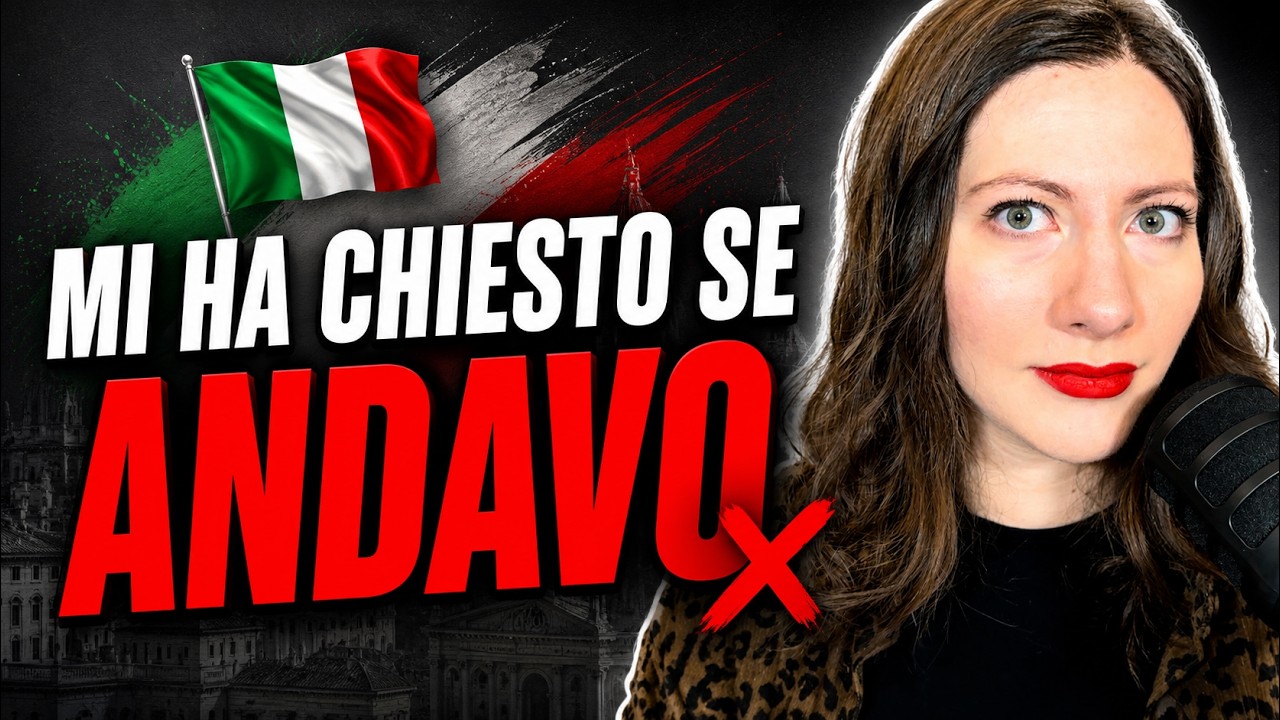
5 Mistakes to Avoid with Indirect Speech
Mistake 1: Using the Wrong Tense to Report News (in the Past)
Let’s start with the basics. What is indirect speech? Basically, it’s when you report someone else’s words without quoting them directly, that is, without using quotation marks. For example:
Direct speech: «Marco dice: “Ho fame.”» [Marco says: “I’m hungry.”]
Indirect speech: «Marco dice che ha fame.» [Marco says that he’s hungry.]
As you can see, we removed the quotation marks and added che [that]. So far, simple. The problem arises when the introductory verb – that is, the verb that introduces the other person’s words – is in the past tense. Many students do this:
- «Marco ha detto che ha fame.» [Marco said that he is hungry.]
- «Marco ha detto che aveva fame.» [Marco said that he was hungry.]
Why is the first one wrong? Because when the introductory verb is in the past tense (ha detto, disse, diceva… [he said, he told, he used to say…]), you need to apply the so-called “tense shift”. It’s as if everything “slides back in time”: the present becomes the imperfect, the passato prossimo becomes the past perfect, and so on.
Table: Verb Tense Shifts
| Direct Speech | Indirect Speech (verb in the present) | Indirect Speech (verb in the past) |
|---|---|---|
| Present Example: «Studio italiano.» [I study Italian.] | «Dice che studia italiano.» [He says that he studies Italian.] | → Imperfect Example: «Ha detto che studiava italiano.» [He said that he studied/was studying Italian.] |
| Present perfect Example: «Ho studiato.» [I studied.] | «Dice che ha studiato.» [He says that he studied.] | → Past perfect Example: «Ha detto che aveva studiato.» [He said that he had studied.] |
| Simple future Example: «Studierò domani.» [I will study tomorrow.] | «Dice che studierà domani.» [He says that he will study tomorrow.] | → Past conditional Example: «Ha detto che avrebbe studiato il giorno dopo.» [He said that he would have studied the next day.] |
| Future perfect Example: «Avrò finito per le 3.» [I will have finished by 3.] | «Dice che avrà finito per le 3.» [He says he will have finished by 3.] | → Past conditional Example: «Ha detto che avrebbe finito per le 3.» [He said that he would have finished by 3.] |
| Imperfect Example: «Studiavo ogni sera.» [I used to study every evening.] | «Dice che studiava ogni sera.» [He says that he used to study every evening.] | → Imperfect (doesn’t change!) Example: «Ha detto che studiava ogni sera.» [He said that he used to study every evening.] |
| Present conditional Example: «Studierei di più.» [I would study more.] | «Dice che studierebbe di più.» [He says that he would study more.] | → Past conditional Example: «Ha detto che avrebbe studiato di più.» [He said that he would have studied more.] |
| Present subjunctive Example: «Credo che studi.» [I believe that he studies.] | «Dice che crede che studi.» [He says that he believes he studies.] | → Imperfect subjunctive Example: «Ha detto che credeva che studiasse.» [He said that he believed he studied.] |
| Past subjunctive Example: «Credo che abbia studiato.» [I believe that he has studied.] | «Dice che crede che abbia studiato.» [He says that he believes he has studied.] | → Pluperfect subjunctive Example: «Ha detto che credeva che avesse studiato.» [He said that he believed he had studied.] |
Notice something very important: the imperfect is the only tense that doesn’t change. It stays the same whether the introductory verb is in the present or in the past. It’s one of the few exceptions that make things simpler.
And also notice another fundamental thing: when the introductory verb is in the present (dice che, racconta che… [he says that, he tells that…]), you don’t need to make any tense shift. The shift only applies when the verb is in the past.
Fun Fact about Spoken Italian
In spoken Italian, especially in informal language, many Italians don’t always follow these rules. It’s very common to hear «Ha detto che viene domani» [He said that he comes tomorrow] instead of «Ha detto che sarebbe venuto il giorno dopo.» [He said that he would have come the next day.] However, if you want to speak correct Italian, it’s advisable to follow the table.
Mistake 2: Not Using DI + Infinitive
Another frequent mistake concerns the sentence structure. Look at these two versions of «Marco dice: “Vado al cinema.”» [Marco says: “I’m going to the cinema.”]:
- «Marco dice che lui va al cinema.» [Marco says that he goes to the cinema.] — grammatically correct, but heavy
- «Marco dice di andare al cinema.» [Marco says he’s going to the cinema.] — much more natural!
When the subject of the main clause is the same as the subordinate clause, in Italian the structure DI + infinitive is preferred. The reason is that it sounds much more natural and less repetitive. Instead of saying «Marco dice che lui va al cinema» [Marco says that he goes to the cinema] repeating the subject, it’s more elegant and smooth to say «Marco dice di andare al cinema» [Marco says he’s going to the cinema].
Table: CHE + Indicative vs DI + Infinitive
| Different subject → CHE + conjugated verb | Same subject → DI + infinitive |
|---|---|
| «Marco dice che Maria va al cinema.» [Marco says that Maria is going to the cinema.] | «Marco dice di andare al cinema.» [Marco says he’s going to the cinema.] |
| «Luca ha detto che Giulia era stanca.» [Luca said that Giulia was tired.] | «Luca ha detto di essere stanco.» [Luca said he was tired.] |
| «Anna dice che Paolo ha ragione.» [Anna says that Paolo is right.] | «Anna dice di avere ragione.» [Anna says she is right.] |
| «Il prof ha detto che gli studenti devono studiare.» [The teacher said that the students must study.] | «Il prof ha detto di dover studiare.» [The teacher said he had to study.] (ambiguous!) |
Look at the last example: «Il prof ha detto di dover studiare» [The teacher said he had to study] is a bit ambiguous, because it could seem like it’s the teacher who has to study. In cases like this, where the meaning might not be clear, it’s better to use the full form with CHE: «Il prof ha detto che gli studenti devono studiare.» [The teacher said that the students must study.]
Watch Out: Present and Past Infinitive
When you use DI + infinitive with the introductory verb in the past, the infinitive can be present or past. If the reported action happened before the moment it was said, use the past infinitive:
Example: «Marco ha detto di aver studiato tutta la notte.» [Marco said he had studied all night.]
Fun Fact about the Use of DI + Infinitive
In reality, the use of DI + infinitive is not mandatory, but it is strongly preferred by native speakers. If you say «Marco dice che lui va al cinema» [Marco says that he goes to the cinema], Italians will understand you, but the sentence will sound unnatural.
Stop reading Italian.
Start speaking it.
Online lessons in groups of 4, organised by level and goals, with qualified teachers. Pick the day and time that suit you from the available slots.
Max 4 students:
there’s a seat for you
Mistake 3: Forgetting the Subjunctive When Reporting Questions
This is a very common mistake, even among native speakers. When you report a question indirectly, you need to use the subjunctive. Let’s see why:
Direct question: «Vieni alla festa?» [Are you coming to the party?]
- «Mi ha chiesto se vengo alla festa.» [He asked me if I come to the party.]
- «Mi ha chiesto se venissi alla festa.» [He asked me if I would come to the party.]
After expressions like chiede se / ha chiesto se / voleva sapere se [asks if / asked if / wanted to know if], the verb that follows must be in the subjunctive (when the introductory verb is in the past). This applies both to yes/no questions and to open questions with interrogative words like dove, quando, come, perché [where, when, how, why], etc.
Another important thing to remember: when shifting from direct to indirect speech, the question mark disappears, because you are no longer asking a question, but reporting that someone asked a question.
Table: How to Report Questions
| Direct question | Verb in the present | Verb in the past |
|---|---|---|
| «Parli italiano?» [Do you speak Italian?] | «Chiede se parlo italiano.» [He asks if I speak Italian.] | «Ha chiesto se parlassi italiano.» [He asked if I spoke Italian.] |
| «Sei andato al cinema?» [Did you go to the cinema?] | «Chiede se sono andato al cinema.» [He asks if I went to the cinema.] | «Ha chiesto se fossi andato al cinema.» [He asked if I had gone to the cinema.] |
| «Dove abiti?» [Where do you live?] | «Chiede dove abito.» [He asks where I live.] | «Ha chiesto dove abitassi.» [He asked where I lived.] |
| «Quando arriverai?» [When will you arrive?] | «Chiede quando arriverò.» [He asks when I will arrive.] | «Ha chiesto quando sarei arrivato/a.» [He asked when I would have arrived.] |
| «Che cosa hai fatto?» [What did you do?] | «Chiede che cosa ho fatto.» [He asks what I did.] | «Ha chiesto che cosa avessi fatto.» [He asked what I had done.] |
As you can see, the interrogative words (dove, quando, che cosa… [where, when, what…]) are kept in indirect speech as well. The only difference is that yes/no questions are introduced by the word SE [if]: «Vieni alla festa?» [Are you coming to the party?] → «Ha chiesto se venissi alla festa.» [He asked if I would come to the party.]
Also note that, as with Mistake 1, when the introductory verb is in the present (chiede se… [he asks if…]), there is no need for the subjunctive: you use the indicative normally. The subjunctive comes into play when the verb is in the past (ha chiesto se… [he asked if…]).
Did you notice the fourth row of the table? «Quando arriverai» [When will you arrive] doesn’t become subjunctive, but past conditional (sarei arrivato [I would have arrived]). This is because the future always follows the same rule we saw in Mistake 1: future → past conditional, both in statements and in questions.
Fun Fact about Informal Italian
In informal spoken language, many Italians use the indicative even after «ha chiesto se» [he asked if]. It’s very common to hear «Mi ha chiesto se venivo» [He asked me if I was coming]. It’s not absolutely incorrect, but the subjunctive remains the most correct and appropriate form for a polished register.
Mistake 4: Not Using the Subjunctive to Report Commands
How do you report commands or requests indirectly? In this case too, the subjunctive comes into play.
Direct command: «Studia di più!» [Study more!]
- «Il professore ha detto che studio di più.» [The teacher said that I study more.]
- «Il professore ha detto che io studi di più.» [The teacher said that I should study more.]; «Il professore mi ha detto di studiare di più.» [The teacher told me to study more.]
As you can see, to report commands, requests, or advice, you have two options: you can use CHE + subjunctive or DI + infinitive. Both forms are correct, but they have slightly different uses.
Table: How to Report Commands and Requests
| Direct command | CHE + subjunctive | DI + infinitive |
|---|---|---|
| «Studia di più!» [Study more!] | «Ha detto che io studiassi di più.» [He said that I should study more.] | «Mi ha detto di studiare di più.» [He told me to study more.] |
| «Non fumare!» [Don’t smoke!] | «Ha detto che io non fumassi.» [He said that I shouldn’t smoke.] | «Mi ha detto di non fumare.» [He told me not to smoke.] |
| «Venite subito!» [Come right away!] | «Ha detto che noi andassimo subito.» [He said that we should go right away.] | «Ci ha detto di andare subito.» [He told us to go right away.] |
| «Sii gentile!» [Be kind!] | «Ha detto che io fossi gentile.» [He said that I should be kind.] | «Mi ha detto di essere gentile.» [He told me to be kind.] |
Notice that in the third row «venite» [come] became «andassimo» / «andare» [go]. In indirect speech, verbs of movement also change perspective: venire [to come] (toward the speaker) becomes andare [to go] (away from the speaker), just like «qui» [here] becomes «lì» [there]. It’s a change of point of view.
DI + Infinitive vs CHE + Subjunctive in Everyday Life
In everyday life, the form with DI + infinitive is by far the most used because it’s simpler and more direct. The form with CHE + subjunctive is more formal and you’ll find it especially in written language or in official contexts. However, it’s still important to know both to choose the right one depending on the situation.
Watch Out for Negation
With negation, pay close attention to the word order. The «non» [not] goes after «di» and before the infinitive:
Example: «Mi ha detto di non fumare.» [He told me not to smoke.]
The typical mistake is saying «Mi ha detto non di fumare», which sounds completely wrong in Italian.
Mistake 5: Not Making the Other Transformations
At this point you’ve learned how to change verb tenses, to use DI + infinitive, the subjunctive for questions and commands… but there’s still an important piece missing.
In indirect speech, it’s not just verbs that change: pronouns, possessive adjectives, demonstratives, and time and place expressions also change. Many students focus only on verbs and forget everything else, but if you don’t make these transformations too, the sentence will be confusing or even nonsensical.
Table: Pronoun and Possessive Transformations
| Direct Speech | Indirect Speech |
|---|---|
| io [I] | lui / lei [he / she] |
| tu [you] | io [I] (if speaking to me) / lui / lei [he / she] |
| noi [we] | loro [they] |
| mio / mia / miei / mie [my] | suo / sua / suoi / sue [his / her] |
| nostro / nostra [our] | loro [their] |
The logic is simple: if Marco says «Io ho fame» [I’m hungry] and you report it, you can’t say «Marco ha detto che io ho fame» [Marco said that I’m hungry], because «io» [I] would be you. You have to say «Marco ha detto che lui aveva fame.» [Marco said that he was hungry.]
Table: Demonstrative and Adverb Transformations
| Direct Speech | Indirect Speech |
|---|---|
| questo / questa [this] | quello / quella [that] |
| questi / queste [these] | quelli / quelle [those] |
| qui / qua [here] | lì / là [there] |
Here too the logic is clear: «questo» [this] indicates something close to the speaker. But when you report the words, you’re not in the same place, so «questo» [this] becomes «quello» [that], and «qui» [here] becomes «lì» [there].
Table: Time Expression Transformations
| Direct Speech | Indirect Speech |
|---|---|
| oggi [today] | quel giorno [that day] |
| ieri [yesterday] | il giorno prima / il giorno precedente [the day before] |
| domani [tomorrow] | il giorno dopo / il giorno seguente / il giorno successivo [the next day / the following day] |
| adesso / ora [now] | in quel momento / allora [at that moment / then] |
| la settimana scorsa [last week] | la settimana prima / la settimana precedente [the week before] |
| la settimana prossima [next week] | la settimana dopo / la settimana seguente [the following week] |
| fra / tra due giorni [in two days] | due giorni dopo [two days later] |
| due giorni fa [two days ago] | due giorni prima [two days before] |
The same applies to time: if someone tells you on Monday «Oggi vado al mare» [Today I’m going to the beach] and you report it on Wednesday, you can’t say «oggi» [today], because it’s now Wednesday. You have to say «quel giorno» [that day].
Complete Example with All Transformations
Now let’s see a complete example with all transformations applied together, so you can see how it works in practice:
- Direct: «Marco dice: “Oggi io e la mia ragazza andiamo a questo ristorante qui vicino.”» [Marco says: “Today my girlfriend and I are going to this restaurant nearby.”]
- Indirect: «Marco ha detto che quel giorno lui e la sua ragazza andavano a quel ristorante lì vicino.» [Marco said that that day he and his girlfriend were going to that restaurant over there nearby.]
As you can see, many things changed:
Oggi [today] → quel giorno [that day]; io [I] → lui [he]; mia [my] → sua [his]; questo [this] → quel [that]; qui [here] → lì [there]; andiamo [we go] → andavano [they were going].
It may seem like a lot, but with practice it will become natural.
When NOT to Make the Transformations
These transformations are only made when the context has changed. If someone tells you something and you report it on the same day and in the same place, you can keep «oggi» [today] and «qui» [here]. The transformations become necessary when the moment or place in which you report the words is different from the original one.
All these transformations occur when the introductory verb is in the past. If the verb is in the present («dice che…» [he says that…]), generally no changes are needed.
Frequently Asked Questions
When the Introductory Verb Is in the Present, Do I Need to Make the Tense Shift?
No. When the introductory verb is in the present (dice che, chiede se, racconta che… [says that, asks if, tells that…]), there is no need to make any tense shift. The verb tenses remain unchanged. The shift only applies when the introductory verb is in the past (ha detto che, chiese se, raccontava che… [said that, asked if, used to tell that…]).
Why Doesn’t the Imperfect Change in Indirect Speech?
The imperfect is the only tense that remains unchanged in the shift to indirect speech, both with the introductory verb in the present and in the past. This happens because the imperfect already indicates a continuous or habitual action in the past, and it doesn’t need a further “shift backward” in time. It’s one of the few simplifications in Italian grammar.
Can I Use the Indicative Instead of the Subjunctive After “Ha Chiesto Se”?
In informal spoken Italian, yes, it is very common to hear the indicative after «ha chiesto se» [he asked if] (e.g. «Mi ha chiesto se venivo» [He asked me if I was coming]). However, the grammatically correct form requires the subjunctive (e.g. «Mi ha chiesto se venissi» [He asked me if I would come]). If you want to speak formal and precise Italian, the subjunctive is the best choice.
What’s the Difference Between CHE + Subjunctive and DI + Infinitive for Reporting Commands?
Both forms are correct, but they have different registers. The structure DI + infinitive is more used in everyday language and is simpler and more direct (e.g. «Mi ha detto di studiare» [He told me to study]). The structure CHE + subjunctive is more formal and is found especially in written language or in official contexts (e.g. «Ha detto che io studi di più» [He said that I should study more]). In most situations, DI + infinitive is the most natural choice.
Does “Venire” Always Become “Andare” in Indirect Speech?
Yes, in indirect speech verbs of movement change perspective. «Venire» [to come] (toward the speaker) becomes «andare» [to go] (away from the speaker), just as «qui» [here] becomes «lì» [there] and «questo» [this] becomes «quello» [that]. This happens because the person reporting the words is in a different point of view from the person who originally said them.
Are the Time and Place Transformations Always Mandatory?
No. The transformations of expressions like «oggi» [today], «domani» [tomorrow], «qui» [here] are necessary only when the context has changed. If you report someone’s words on the same day and in the same place where they were spoken, you can keep the original expressions. The transformations become mandatory when the moment or place in which you report is different from the original one.
Did indirect speech put you to the test? The next challenge is in the article dedicated to the hypothetical period!
Do you want to take Italian lessons with our qualified native teachers? Purchase your Italiano Intensivo package!
Want the lesson PDF with exercises and solutions?
Join the LearnAmo AcademyLoading quiz…
Podcast: Play in new window | Download (Duration: 30:49 — 16.5MB)
Iscriviti: Apple Podcasts | Spotify | Android | iHeartRadio | Podcast Index | TuneIn | Deezer | RSS | Altri...