


Have you ever tried to translate an Italian word into your language and discovered that there’s no equivalent? The Italian language is rich in terms so specific that they simply have no direct translation in other languages. Learning these words will help you enrich your vocabulary and better understand Italian culture.
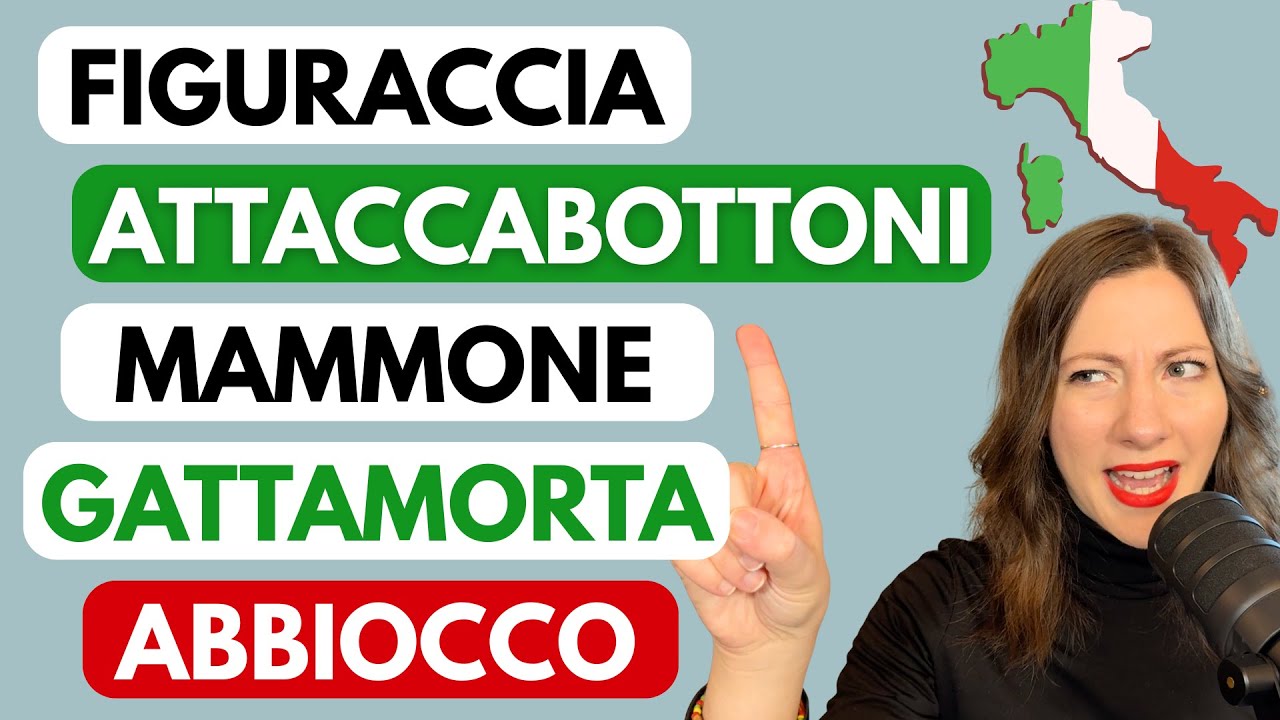
13 Italian Words That Are Untranslatable in Other Languages
What Does “Untranslatable Word” Mean?
A word is considered untranslatable when it expresses a concept, emotion, or situation so specific that other languages would need many words to explain it. Italian has numerous such words, and this testifies to the extraordinary richness of Italian culture. These words tell stories, traditions, and daily habits deeply rooted in Italian social fabric.
1. Mamma Mia
Pronunciation: /ˈmam-ma ˈmi-a/
Meaning: A universal exclamation that can express surprise, fright, admiration, exasperation, joy, or despair. It’s the instinctive invocation of the maternal figure in moments of intense emotion.
Examples:
“Mamma mia, che spavento mi hai fatto! Non ti avevo sentito entrare.” [Mamma mia, you scared me! I didn’t hear you come in.]
“Mamma mia, che bello questo quadro!” [Mamma mia, this painting is so beautiful!]
“Non è possibile che tu abbia sbagliato a mandare una mail! Sei proprio distratto, mamma mia.” [I can’t believe you sent the wrong email! You’re so distracted, mamma mia.]
Fun Facts About Mamma Mia
Outside of Italy, this expression has become almost a parody of Italian-ness, used in films, songs, and advertisements. However, it remains genuinely used by Italians in every daily context. Its versatility makes it unique: it can adapt to any intense emotion, from the greatest joy to the deepest frustration.
2. Mammone
Pronunciation: /mam-ˈmo-ne/
Meaning: An adult man still very attached to his mother, who often still lives with her, lets her take care of him, and asks for her advice on every important decision.
Example: “Non voglio uscire con lui: è un mammone. A 38 anni vive ancora con la madre e lei gli prepara ancora la valigia quando va in vacanza.” [I don’t want to go out with him: he’s a mammone. At 38 he still lives with his mother and she still packs his suitcase when he goes on vacation.]
Fun Facts About Mammone
The English “mama’s boy” is a weaker expression, used mainly for children. The Italian mammone instead describes an adult social phenomenon. Italy has one of the highest percentages in Europe of adult men living with their parents. This term reflects the importance of family in Italian culture and the strong intergenerational bond, while often having a negative connotation in the context of romantic relationships.
3. Culaccino
Pronunciation: /ku-lat-ˈtʃi-no/
Meaning: The circular mark that a wet or cold glass leaves on a table surface. There’s a specific Italian word for this everyday phenomenon.
Example: “Metti un sottobicchiere! Non voglio culaccini sul mio tavolo nuovo.” [Put a coaster down! I don’t want culaccini on my new table.]
Fun Facts About Culaccino
This word often surprises Italian learners, as it demonstrates the Italian language’s attention to everyday details. The term derives from “culo” (meaning the bottom part of something). It’s an example of how Italian can be precise and descriptive even for the most common phenomena.
4. Spaghettata
Pronunciation: /spa-get-ˈta-ta/
Meaning: A convivial and informal spaghetti feast, often improvised late at night after going out. It’s done at home, with friends, with whatever’s in the pantry: garlic, oil and chili pepper, tomato, amatriciana.
Example: “Dopo il cinema siamo andati tutti a casa di Marco per una spaghettata di mezzanotte.” [After the movies we all went to Marco’s house for a midnight spaghettata.]
Fun Facts About Spaghettata
The spaghettata represents a friendship ritual typically Italian. It’s not a formal meal, but a spontaneous moment of sharing, often linked to late-night hunger after an evening out. It embodies the Italian spirit of conviviality and the importance of food as a moment of social union, even in the most informal situations.
5. Attaccabottoni
Pronunciation: /at-tak-ka-bot-ˈto-ni/
Meaning: A boring person who corners you to tell you things you don’t care about at all, who doesn’t understand when you want to leave, who starts endless conversations without noticing your discomfort.
Example: “Evita la signora del terzo piano, è un’attaccabottoni tremenda: l’ultima volta mi ha tenuto mezz’ora sulle scale a parlarmi dei suoi acciacchi.” [Avoid the lady from the third floor, she’s a terrible attaccabottoni: last time she kept me half an hour on the stairs talking about her ailments.]
Fun Facts About Attaccabottoni
The term derives from the image of someone who metaphorically “attaches” themselves to your jacket buttons, preventing you from leaving. There’s no precise equivalent in other languages that captures this nuance of an intrusive but not necessarily rude person, simply unaware of the annoyance they cause.
6. Passeggiata
Pronunciation: /pas-sed-ˈdʒa-ta/
Meaning: A slow and pleasant walk, without a precise destination or hurry. It’s not physical exercise nor utilitarian movement: it’s a social ritual, a way of being together, of seeing and being seen, of enjoying the air and the scenery.
Example: “Dopo cena facciamo due passi? Una passeggiata sul lungomare ci farà bene.” [Shall we take a stroll after dinner? A passeggiata along the seafront will do us good.]
Fun Facts About Passeggiata
The evening passeggiata is an institution in Italian towns. It’s not simply “taking a walk,” but a real social ritual. It’s the moment when families go out, young people meet, elderly chat on benches. It represents a typically Mediterranean way of experiencing public space.
7. Abbiocco
Pronunciation: /ab-ˈbjɔk-ko/
Meaning: The feeling of drowsiness that comes after eating a large meal, especially at lunch. It’s that irresistible urge to rest that follows a particularly rich meal.
Example: “Dopo quel pranzo di Natale mi è venuto un abbiocco pazzesco, ho dormito tre ore sul divano.” [After that Christmas lunch I got a crazy abbiocco, I slept three hours on the couch.]
Fun Facts About Abbiocco
In English, there’s the colloquial expression “food coma,” but it’s not an official dictionary term. The Italian abbiocco, however, is a recognized word that describes a common experience in Italian culture, where meals represent important moments of family and social sharing. It’s particularly common after the traditional Sunday lunch.
8. Pennichella
Pronunciation: /pen-ni-ˈkɛl-la/
Meaning: A short afternoon nap, shorter and more informal than the Spanish siesta. It’s done on the couch, in an armchair, sometimes even at the desk. It’s a sweet surrender to early afternoon tiredness.
Example: “Dopo pranzo mi concedo sempre una pennichella di venti minuti, poi sono come nuovo.” [After lunch I always allow myself a twenty-minute pennichella, then I’m like new.]
Fun Facts About Pennichella
Unlike the Spanish siesta, which is a more structured rest, the Italian pennichella is brief and informal. The term has an affectionate and diminutive sound that emphasizes its light nature. It’s often the natural follow-up to the abbiocco, a small rejuvenating break that’s part of the Italian daily rhythm.
9. Figuraccia
Pronunciation: /fi-gu-ˈrat-tʃa/
Meaning: A brutta figura taken to the extreme, a moment of intense public embarrassment. It’s social shame, the mistake everyone sees, the slip-up that will haunt you in your memories.
Example: “Ho chiamato la mia professoressa ‘mamma’ davanti a tutta la classe: che figuraccia!” [I called my teacher ‘mom’ in front of the whole class: what a figuraccia!]
Fun Facts About Figuraccia
Figuraccia is closely linked to the concept of “bella figura”, fundamental in Italian culture. While “fare bella figura” means presenting yourself at your best, figuraccia represents the extreme opposite: a moment of public embarrassment that can haunt a person for years. The suffix “-accia” (pejorative) intensifies the concept of brutta figura.
Stop reading Italian.
Start speaking it.
Online lessons in groups of 4, organised by level and goals, with qualified teachers. Pick the day and time that suit you from the available slots.
Max 4 students:
there’s a seat for you
10. Arrangiarsi
Pronunciation: /ar-ran-ˈdʒar-si/
Meaning: The quintessential Italian art: making do with available resources, improvising creative solutions when resources are scarce. It’s not just survival, but a form of practical intelligence that transforms limitations into opportunities.
Example: “Non avevo gli ingredienti giusti per la carbonara, ma mi sono arrangiato con quello che c’era in frigo ed è venuta buona lo stesso.” [I didn’t have the right ingredients for carbonara, but I arranged myself with what was in the fridge and it turned out good anyway.]
Fun Facts About Arrangiarsi
Arrangiarsi is linked to a pragmatic and nonconformist philosophy of life typically Italian. It’s not simply “making do with what you have,” but a true capacity for creative adaptation. This concept reflects Italian history, where people have often had to find ingenious solutions in difficult situations.
11. Dietrologia
Pronunciation: /dje-tro-lo-ˈdʒi-a/
Meaning: The tendency to look for hidden meanings, conspiracies, or ulterior motives behind every event. It’s the habit of not believing the official version of facts and assuming there’s always “something behind it.”
Example: “Secondo lui non esistono coincidenze, è un dietrologo convinto: pensa che anche il maltempo sia un complotto.” [According to him there are no coincidences, he’s a convinced conspiracy theorist: he thinks even bad weather is a conspiracy.]
Fun Facts About Dietrologia
This word comes from the fusion of “dietro” (behind) and the suffix “-logia” (as in “psychology” or “biology”), literally meaning “the science of what’s behind”. It was born in Italy in the 1970s during the Years of Lead, a period of political instability that generated distrust toward official versions of events. Today it’s also used ironically. There’s no precise equivalent in other languages: “conspiracy theory” indicates the theory itself, not the mental habit of looking for it.
12. Gattamorta
Pronunciation: /gat-ta-ˈmɔr-ta/
Meaning: A person, traditionally a woman, who feigns innocence, shyness, or naivety to get what they want. They appear docile and harmless, but in reality they’re calculating and cunning.
Example: “Non fidarti di lei, fa la gattamorta ma sa esattamente quello che fa.” [Don’t trust her, she plays the gattamorta but she knows exactly what she’s doing.]
Fun Facts About Gattamorta
The image is that of a cat that seems to be sleeping but is ready to pounce on its prey. The term captures a very specific behavioral nuance: it’s not simple falseness, but a calculated strategy hidden behind an appearance of innocence. There’s no precise equivalent in other languages that contains the same richness of meaning.
13. Menefreghismo
Pronunciation: /me-ne-fre-ˈgiz-mo/
Meaning: An attitude of total and ostentatious indifference toward everything: other people’s problems, social issues, responsibilities. It’s not passive apathy, but almost a philosophy of life, an active refusal to get involved.
Example: “Il suo menefreghismo mi irrita: il mondo gli crolla intorno e lui fa spallucce.” [His menefreghismo irritates me: the world is crumbling around him and he just shrugs.]
Fun Facts About Menefreghismo
The term derives from the vulgar expression “me ne frego” (I don’t care). It can be seen as a social flaw or as a form of self-defense. It’s interesting to note that this word describes an attitude that goes beyond simple indifference: it implies a conscious choice not to care, almost a philosophical stance.
Summary Table of Untranslatable Words
| Word | Brief Meaning | Why It’s Untranslatable |
|---|---|---|
| Mamma Mia | Universal exclamation for any intense emotion | No foreign expression has the same emotional versatility |
| Mammone | Adult man too attached to his mom | Italian social phenomenon with unique nuances |
| Culaccino | Circular mark left by a wet glass | No language has a specific word for this phenomenon |
| Spaghettata | Convivial spaghetti feast, often late-night | Italian social ritual without equivalents |
| Attaccabottoni | Boring person who corners you with endless conversations | Captures a nuance of unaware intrusiveness |
| Passeggiata | Slow, social walk without destination | It’s a social ritual, not just a walk |
| Abbiocco | Post-meal drowsiness | “Food coma” is only recent and informal slang |
| Pennichella | Short, informal afternoon nap | Shorter and more informal than the Spanish siesta |
| Figuraccia | Extreme brutta figura, intense public embarrassment | Linked to the cultural concept of “bella figura” |
| Arrangiarsi | Making do creatively with limited resources | Typically Italian pragmatic philosophy of life |
| Dietrologia | Tendency to look for conspiracies everywhere | Describes a mental habit, not a theory |
| Gattamorta | Person who feigns innocence to get what they want | Unique and specific behavioral nuance |
| Menefreghismo | Total and ostentatious indifference toward everything | It’s a conscious choice, not simple apathy |
Why Are These Words Important for Italian Learners?
Knowing untranslatable Italian words is not just a linguistic exercise: it represents a window into the Italian mentality and culture. Each word reflects values, priorities, and ways of thinking specific to Italian society.
The Importance of Food in Italian Culture
Words like abbiocco, pennichella, and spaghettata demonstrate how central food is in Italian daily life. It’s not just nourishment, but a moment of social sharing and conviviality. The existence of these words testifies to how Italians have developed a rich vocabulary to describe every nuance of the gastronomic experience.
The Role of Family
The words mammone and mamma mia reflect the centrality of the maternal figure in Italian culture. It’s no coincidence that the most used exclamation invokes precisely the mother, and that there’s a specific term to describe the excessive bond with her.
Social Life and Relationships
Terms like passeggiata, attaccabottoni, and figuraccia show how much Italians value social relationships and public perception. The passeggiata is a collective ritual, the attaccabottoni represents a violation of social norms, and the figuraccia is feared because it damages one’s public image.
The Pragmatic Approach to Life
Words like arrangiarsi and menefreghismo reveal two sides of the same coin: on one hand the ability to adapt and find creative solutions, on the other the choice to detach from problems. Both are survival strategies rooted in Italian history.
Frequently Asked Questions
Why Does Italian Have So Many Untranslatable Words?
Italian developed in a rich and specific cultural context. The long history of the Italian peninsula, with its regional traditions, the centrality of family, the importance of food and socializing, has led to the creation of terms that capture unique nuances of the Italian experience. Additionally, Italian possesses a millennia-old literary tradition that has continuously enriched the vocabulary.
How Can I Use These Words Correctly?
The best way is to observe how native speakers use them in real contexts. Movies, TV series, podcasts, and conversations with Italians will help you understand the nuances and appropriate contexts. It’s important to note that some words (like mammone or menefreghismo) have negative connotations, while others (like passeggiata) are always positive.
Are There Untranslatable Words in Other Languages That Don’t Exist in Italian?
Certainly. Every language has unique words. German has “Schadenfreude” (pleasure in others’ misfortune), Japanese has “Komorebi” (sunlight filtering through leaves), Danish has “Hygge” (a feeling of comfort and intimacy). These words reflect specific cultural aspects of each people.
What Is the Most Well-Known Untranslatable Italian Word Abroad?
Certainly “mamma mia”, which has become an icon of Italian-ness in the world thanks to films, songs, and references in popular culture. However, words like “passeggiata” and “arrangiarsi” are gaining fame among those who study Italian culture in depth.
Will Learning These Words Help Me Speak Italian Like a Native?
Using these words correctly will allow you to express yourself in a more natural and authentic way. These are terms that native speakers use daily, and mastering them demonstrates a deep understanding not only of the language but also of Italian culture. When you say “Mi è venuto l’abbiocco” [I got the abbiocco] instead of explaining that you feel sleepy after eating, Italians will notice your linguistic competence.
If this topic and these unique words have sparked your curiosity, discover more about the Italian aperitivo in the dedicated article.
Buy our new book “Il Principe Marco e le parole del mondo” and learn Italian step by step through an engaging story, practical exercises, and thorough grammar review, from beginner to advanced level.
Want the lesson PDF with exercises and solutions?
Join the LearnAmo AcademyLoading quiz…
Podcast: Play in new window | Download (Duration: 26:32 — 60.7MB)
Iscriviti: Apple Podcasts | Spotify | Android | iHeartRadio | Podcast Index | TuneIn | Deezer | RSS | Altri...
Buongiorno,
Nel mio glossario di prossima pubblicazione per traduttori dall’italiano all’inglese, includo questo breve metacommento.
Literally the study of what lies behind, ‘dietrologia’ defines a culturally shared habitual suspicion of hidden motives and backstage manoeuvres in public life, and an expectation that official narratives are incomplete, unlike ‘complottismo’, a belief system which insists on secret plots orchestrated by secret cabals.
Ci tenevo a precisare questa distinzione, che ritengo fondamentale nell’ambito del mio lavoro
Un cordiale saluto dalla lontana Australia.
Stez Stezic
Buongiorno Stez! 😊
La tua distinzione è preziosa, e la morfologia delle due parole la conferma: “dietrologia” ha il suffisso -logia (come “psicologia”), quindi indica un metodo, una postura interpretativa; “complottismo” ha -ismo, che in italiano segnala sistemi di pensiero. Il complottista deve avere una tesi da difendere, il dietrologo può fermarsi al sospetto.
Grazie per questo contributo arrivato dall’altra parte del mondo! 🌏