


In Italian, there are many ways to express the action of eating. Let’s explore some synonyms and their nuances!
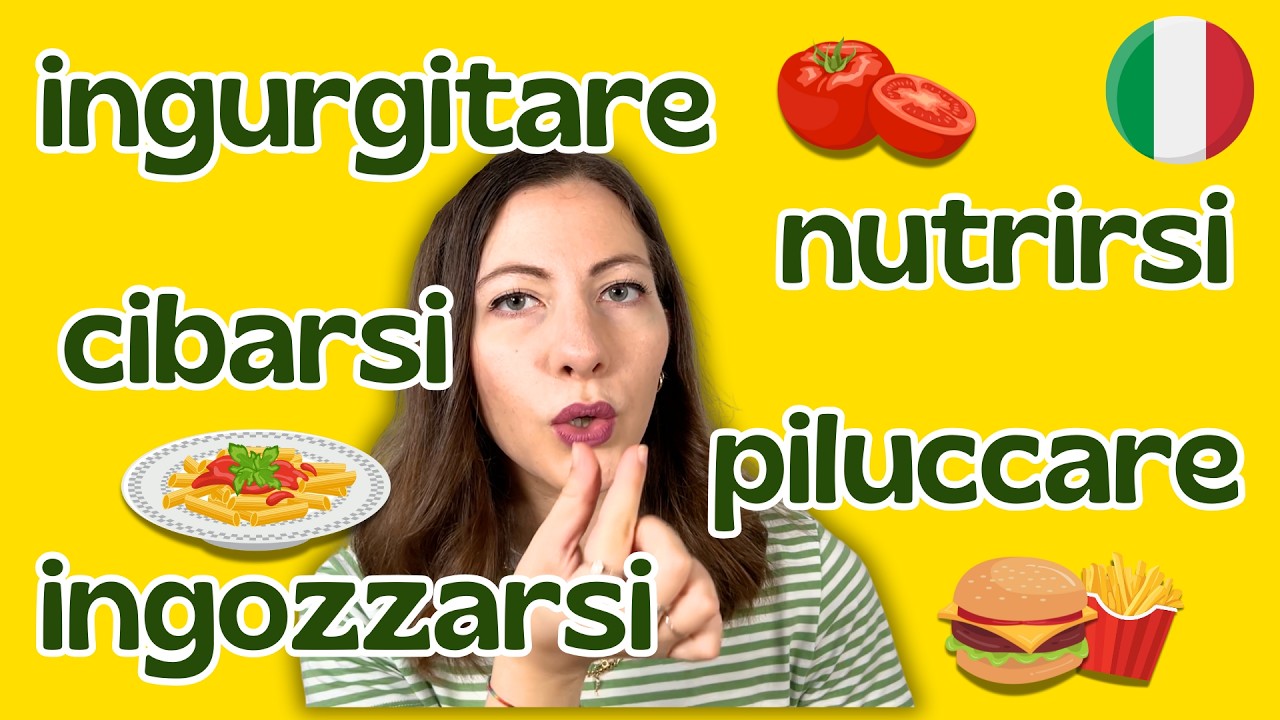
Stop saying MANGIARE: Use these Alternatives instead
1. Nutrirsi (To Nourish Oneself)
It means providing the body with the necessary nutrients to maintain a state of well-being. Unlike “mangiare” (to eat), which simply indicates the act of consuming food, “nutrirsi” implies balance and quality in diet.
Example:
- Se ci si nutre adeguatamente, si può aspirare a vivere una vita lunga.
- If one nourishes oneself properly, one can aspire to live a long life.”
2. Cibarsi (To Feed Oneself)
It has the same meaning as “to eat” but is often used in more formal or literary contexts.
Example:
- Non puoi cibarti solo di patatine! Hai bisogno anche di altre sostanze!
- “You can’t feed yourself only on chips! You also need other nutrients!”
3. Sfamarsi (To Satisfy One’s Hunger)
It means eating enough food to no longer feel hungry.
It is also used in a non-reflexive form (sfamare) to refer to providing for one’s sustenance.
Example:
- Era così disperato che ha dovuto elemosinare alcuni spiccioli per sfamarsi.
- “He was so desperate that he had to beg for some coins to satisfy his hunger.”
- Sarebbe disposto a fare qualsiasi lavoro pur di sfamare la sua famiglia.
- “He would be willing to do any job just to feed his family.”
4. Rifocillarsi (To Refresh Oneself with Food and Drink)
It means restoring oneself with food and drinks, often after physical effort.
Example:
- Dopo la lunga giornata passata a camminare, si sono rifocillati con una buona cena in trattoria.
- “After a long day of walking, they refreshed themselves with a good dinner at a trattoria.”
5. Assaporare / Gustare (To Savor / To Taste)
It means eating or drinking slowly to appreciate the flavor and derive pleasure from it.
Example:
- Il gelato al pistacchio mi piace tanto: ogni volta che lo mangio, lo assaporo lentamente.
- “I love pistachio ice cream: every time I eat it, I savor it slowly.”
6. Mangiucchiare (To Nibble)
It means eating small amounts, often without appetite or just to pass the time.
It also refers to eating something between meals, like a snack. Synonym (with this meaning): spizzicare.
Example:
- Alla festa ero arrabbiata e ho mangiucchiato solo qualcosa qua e là.
- “At the party, I was upset and just nibbled on something here and there.”
Stop reading Italian.
Start speaking it.
Online lessons in groups of 4, organised by level and goals, with qualified teachers. Pick the day and time that suit you from the available slots.
Max 4 students:
there’s a seat for you
7. Piluccare (To Pick at Food)
Similar to “to nibble,” but originally referred to eating grapes one by one.
Example:
- Enrico ha contratto un brutto virus intestinale. Oggi ha solo piluccato un po’ di frutta.
- “Enrico caught a bad stomach virus. Today, he only picked at some fruit.”
8. Sgranocchiare (To Crunch on Something)
It means eating crunchy foods that make noise while being chewed.
Example:
- Perché non sgranocchiamo qualcosa prima di andare al cinema?
- “Why don’t we crunch on something before going to the cinema?”
9. Divorare (To Devour)
To eat greedily and quickly, often due to excessive hunger. The expression comes from the animal world: specifically, it is used in reference to those that feed on other animals.
Example:
- Aveva così fame che ha divorato un piatto di lasagne.
- “He was so hungry that he devoured a plate of lasagna.”
10. Ingozzarsi (To Stuff Oneself)
It means filling oneself with food in an exaggerated and clumsy manner. It has a negative connotation.
Example:
- Si è ingozzato di prosciutto finora: è per questo che non ha più fame!
- “He has stuffed himself with ham so far: that’s why he’s not hungry anymore!”
11. Rimpinzarsi / Strafogarsi / Abbuffarsi (To Overeat / To Gorge Oneself / To Binge Eat)
All three verbs indicate eating excessively, typical of special occasions like banquets and weddings.
Example:
- I biscotti erano così deliziosi che tutti ci si sono strafogati.
- “The cookies were so delicious that everyone gorged themselves on them.”
- Assaggia pure questa torta, ma non abbuffarti!
- “Go ahead and taste this cake, but don’t binge on it!”
- “Al matrimonio di Stefano e Lucia, Piero non ha mangiato quasi niente durante la giornata, ma si è solo rimpinzato di dolci alla fine.“
- “At Stefano and Lucia’s wedding, Piero ate almost nothing throughout the day, but he just stuffed himself with desserts at the end.”
12. Ingurgitare (To Gulp Down)
It refers to swallowing food or drink quickly, often without tasting it.
Example:
- Quella bibita è ghiacciata: non dovresti ingurgitarla così tutto d’un fiato!
- “That drink is ice-cold: you shouldn’t gulp it down like that all at once!”
13. Pappare (To Gobble Up)
To eat with pleasure and in abundance (informal).
It can also be used figuratively: to take possession of something improperly.
Example:
- Oggi non c’è più la torta… Te la sei già pappata tutta ieri!
- “There’s no more cake today… You already gobbled it all up yesterday!”
- L’eredità del ricco nonno se l’è pappata tutta la governante… Adesso i nipoti dovranno farle causa!
- “The rich grandfather’s inheritance was gobbled up entirely by the housekeeper… Now the grandchildren will have to sue her!
Buy our new book: “Parole Di Casa Mia: Un Viaggio Nei Colloquialismi Italiani“, and learn all the colloquial expressions to speak like a true native speaker!
As you can see, the Italian language offers a variety of ways to express the act of eating. Now it’s your turn: which of these synonyms do you use most often?
If you still want to learn more about the Italian language, do not miss our article on the Trapassato, so you can express yourself better and better! Good study.
Want the lesson PDF with exercises and solutions?
Join the LearnAmo AcademyCaricamento quiz in corso…
Podcast: Play in new window | Download (Duration: 12:08 — 16.9MB)
Iscriviti: Apple Podcasts | Spotify | Android | iHeartRadio | Podcast Index | TuneIn | Deezer | RSS | Altri...