


The ability to communicate with hands is the most recognizable characteristic of Italians in the world. Italian gesture language is a true parallel communicative code with ancient origins in Greco-Roman culture, evolved through centuries of linguistic fragmentation of the peninsula.
Linguists have identified over 250 codified gestures, many of which have become iconic symbols of Italian identity. In this guide we will explore the most famous gestures, discovering the origins, meanings, and usage contexts of this fascinating silent language.
Hands That Speak: Italian Gesture Language
1. “Zitto! Fai Silenzio!” [Quiet! Be Silent!]

This is one of the most universally understandable Italian gestures, but the Italian execution has a specificity that makes it unmistakable. You bring your index finger vertically in front of your mouth, with your lips slightly pursed, while your gaze becomes intense and penetrating.
The origin of this gesture dates back to ancient Rome, where the goddess Harpocrates (Hellenized version of the Egyptian god Horus as a child) was depicted with a finger on her lips as a symbol of sacred silence and secrecy. Over time, the gesture became secularized, becoming an imperative call for silence in everyday situations.
Usage contexts: It is used when you want to request immediate silence (example durante uno spettacolo, in biblioteca, o quando qualcuno sta parlando troppo forte al telefono in pubblico [during a show, in a library, or when someone is talking too loudly on the phone in public]), but also to ask for discretion about a delicate topic or to signal that you are about to reveal a secret. In the family context, it is the classic gesture with which parents silence children who are too noisy.
2. “Wow! Accidenti! Che Meraviglia!” [Wow! Goodness! How Wonderful!]

A gesture that expresses intense surprise and incredulous wonder. You perform it by placing your hands on your hips with your arms slightly bent, while your face leans forward toward the interlocutor or toward what is causing amazement. Your eyes widen to the maximum, your eyebrows rise until they almost disappear under your hair, and your mouth may open slightly in an expression of disbelief mixed with admiration. The whole body communicates “really? I can’t believe it!”.
This gesture combines elements of amazement and interrogative challenge: hands on hips are traditionally a signal of assertiveness and presence, but in this context they become a way to physically anchor oneself while processing something surprising. The forward leaning of the face is an instinctive movement of someone who wants to scrutinize better, to understand if what they have heard or seen is real. It has origins in Italian female gesturing, particularly expressive and theatrical.
Usage contexts: It is used to react to surprising news that requires confirmation (example un gossip inaspettato, una rivelazione scioccante, un’informazione che cambia tutto ciò che si pensava [unexpected gossip, a shocking revelation, information that changes everything you thought]), to express incredulous admiration toward someone who has done something extraordinary, to emphasize that what you have just learned exceeds all expectations. It is particularly common among women in confidential conversations where interesting news is shared, but is used by everyone when the surprise is genuine and profound. It perfectly represents the Italian approach to emotional communication: total, engaging and impossible to hold back.
3. “Vieni Qua!” [Come Here!]

This gesture is executed with the palm facing upward and fingers that open and close repeatedly toward the palm, as if grabbing something invisible in the air and pulling it toward oneself. The arm can be extended or semi-bent depending on the distance of the person being called.
This movement has pragmatic origins: it mimics the physical action of pulling something or someone toward oneself. In Italian culture, it is considered more polite than simply pointing with a finger, as it implies invitation rather than command. The gesture has particular effectiveness in noisy environments where the voice might not be heard.
Usage contexts: It is used to call someone to come closer, especially in noisy contexts (examples mercati, piazze affollate, locali rumorosi [markets, crowded squares, noisy venues]). Parents use it to call children playing at a distance, vendors in markets use it to attract customers’ attention, friends use it to signal to come closer to hear a secret or see something interesting. The intensity of the movement indicates urgency: slow and relaxed movements mean “come when you can,” rapid and energetic movements mean “come immediately.”
4. “Via, Via Per Favore” [Go Away, Please]
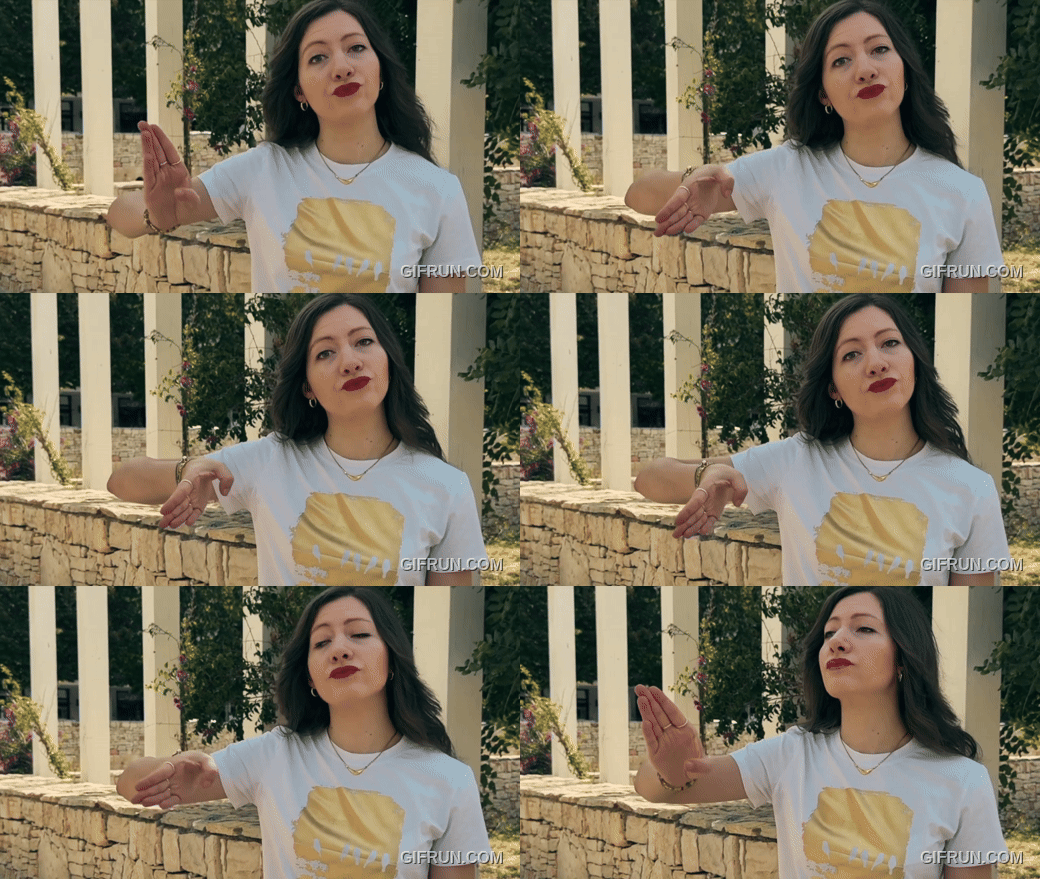
A gesture that expresses the need to move away or repel something or someone, but with a nuance that can vary from kindness to irritation. You perform it with your arm extended forward and your hand open with the palm facing outward, making a repeated movement from inside to outside, as if sweeping away something in front of you. The wrist rotates slightly with each movement.
The origins of this gesture date back to medieval Italian markets, where vendors used it to move away beggars or overly insistent people. The gesture has evolved maintaining this “repelling” function, but acquiring over time more articulated nuances depending on context and intensity of execution.
Usage contexts: It is used to politely ask someone to move aside (examples in coda, su un mezzo pubblico affollato [in a queue, on a crowded public transport]), to move away insistent street vendors, to chase away stray animals, or to express refusal toward unwanted offers. In more informal contexts, it can be used to playfully send away friends or to say “lascia stare, non ci pensare più” [“forget it, don’t think about it anymore”] when someone is worried about something of little importance.
5. “Vai al Sodo. Riassumi” [Get to the Point. Summarize]

A gesture that expresses impatience and desire for synthesis when someone is going on too long. You perform it with open hands in front of the body that repeatedly close into fists, closing and opening in rapid succession, as if you wanted to literally “compress” the interlocutor’s speech, squeeze away superfluous details and condense everything to the essential. The movement is rhythmic and insistent, at chest height or slightly higher, and the speed increases proportionally to growing impatience. The facial expression communicates urgency: slightly furrowed eyebrows, pursed lips, sometimes accompanied by small nods of the head that urge the person to hurry up.
This gesture has origins in the physical metaphor of compression: the hands closing mimic literally the act of compressing something bulky to reduce it to more manageable dimensions, just as one would like to do with a speech that is too long and articulated. In the cultures of Italian commerce and business, where time is precious and the ability to synthesize is valued, this gesture has become a fundamental communicative tool to keep conversations efficient.
Usage contexts: It is used when someone is telling a story with too many irrelevant details and you want to gently (or less gently) push them to conclude, during work meetings when a colleague gets lost in overly elaborate explanations and time is running out, in telephone conversations when you’re in a hurry but the interlocutor doesn’t seem to realize it, when listening to an overly complex technical explanation and you prefer a simplified version.
6. “Tieni gli Occhi Aperti” [Keep Your Eyes Open]

A warning gesture that expresses the need to be careful and vigilant. You perform it by bringing your index finger to the outer corner of the eye and pulling the skin slightly downward or outward, symbolically widening the eye. The movement can be accompanied by an intense gaze and a nod of the head that underlines the seriousness of the warning.
This gesture has ancient origins linked to Mediterranean vigilance culture, where keeping “gli occhi aperti” [“your eyes open”] was literally a matter of survival in contexts of commerce and negotiation. The symbolism is direct: widening the eye means seeing better, not missing anything, remaining alert to details and possible deceptions.
Usage contexts: It is used to warn someone to be careful with an unreliable or disloyal person (example “occhio a quello, non ti fidare” [“watch out for that one, don’t trust him”]), to signal that a situation requires particular attention and care, to advise caution in a deal or negotiation, or simply to remind someone to remain vigilant and focused. It is common among friends when talking about someone they don’t trust, or in work contexts when warning a colleague to pay attention to possible problems.
7. “Ti Vanno Due Spaghetti?” [Would You Like Some Spaghetti?]

A gesture that perfectly represents Italian culinary hospitality and the informal invitation to eat together. You perform it with your hand open, palm facing up or down, sometimes brought to mouth level, while mimicking with your fingers the movement of twirling spaghetti on an imaginary fork. The hand can then approach the mouth, mimicking the act of eating, often accompanied by an interrogative expression and an inviting smile.
This gesture is relatively modern and developed in the 20th century, when pasta became the symbol par excellence of Italian cuisine and the invitation “ti vanno due spaghetti?” [“would you like some spaghetti?”] entered colloquial language as an informal and affectionate way to propose eating together. The gesture literally mimics the action of eating pasta, making it immediately recognizable.
Usage contexts: It is used to informally invite someone to lunch or dinner, especially when the invitation is improvised and homemade (not at a restaurant), to ask someone if they’re hungry and would like something simple to eat, or to propose cooking together. It is typical of family situations or among close friends, where formality gives way to spontaneity. It expresses not only the offer of food, but also the desire to share time and conviviality in an authentic and unpretentious way.
8. “Ti Tengo Sotto Controllo…” [I’m Keeping an Eye on You…]

A surveillance and monitoring gesture that communicates “ti sto osservando“ [“I’m watching you”]. You perform it by bringing your index and middle fingers to your own forehead or eyes, then pointing them decisively toward the person you want to “monitor,” creating a direct visual line between your own eyes and the target of the gesture. The gaze is fixed and penetrating, and the movement must be decisive to communicate authority.
This gesture has origins in urban vigilance culture and probably derives from gestures used by guards and law enforcement to signal that they are keeping an eye on someone. The symbolism is clear: the movement from the eye to the person indicates the flow of visual attention and control. Over time, the gesture has spread in everyday language also acquiring lighter and more playful nuances.
Usage contexts: It is used to warn someone that you are watching them and that they cannot afford mistakes (examples un genitore verso un figlio adolescente che esce la sera, un insegnante verso uno studente che tende a copiare [a parent toward a teenage child going out at night, a teacher toward a student who tends to cheat]), to signal to someone that their suspicious behaviors have been noticed, or playfully among friends when joking about monitoring each other. It is also used in competitive contexts to signal that you are keeping a rival monitored.
9. “Svegliati! Ti Stanno Prendendo in Giro!” [Wake Up! They’re Making Fun of You]
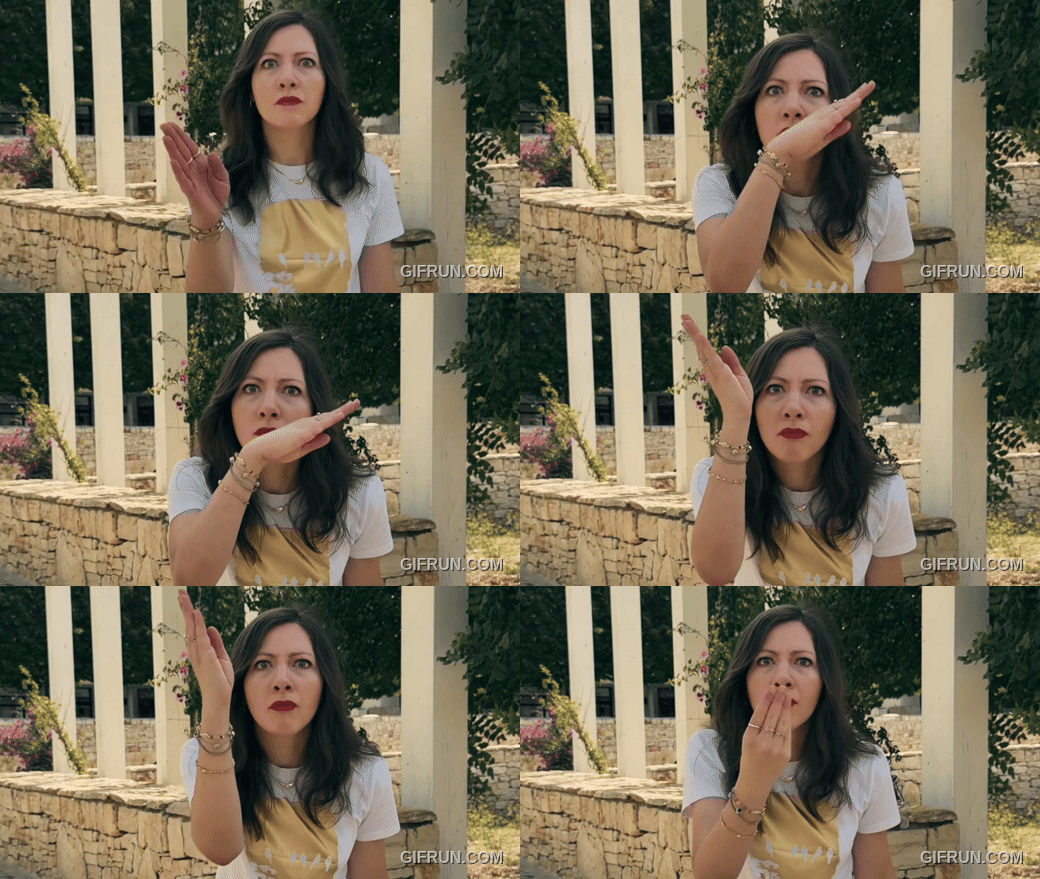
An alert gesture that serves to shake someone from their naivety. You perform it by bringing the back of your open hand to your forehead, mimicking the gesture of waking up or shaking yourself from confusion, often accompanied by a backward movement of the head as if to “come to your senses.” It can also be performed by giving small taps with the palm of your hand on your own forehead, as if to say “sveglia il cervello!” [“wake up the brain!”].
This gesture has origins in the gesturing of awakening and awareness: bringing the hand to the forehead is historically associated with the gesture of someone who awakens from sleep or from a state of mental confusion. In Italian culture, where wit and the ability not to be deceived are important social values, this gesture has become a way to signal to someone that they are lacking in perspicacity.
Usage contexts: It is used to warn someone that they are being deceived or manipulated (examples in una trattativa commerciale, in una relazione sentimentale, in un affare sospetto [in a commercial negotiation, in a romantic relationship, in a suspicious deal]), to shake a friend who is making wrong decisions due to excessive trust or naivety, or to point out to someone that they are ignoring obvious signs of deception. It is a gesture of friendship and protection, expressing concern for someone who risks being harmed by their own lack of vigilance.
10. “Sola! Sono Rimasta Sola” [Alone! I’m All Alone]

A gesture that expresses solitude and abandonment, but also self-irony about one’s own condition. You perform it by joining all the fingers of the hand (thumb, index, middle, ring and pinky) with the tips touching, forming a sort of “drill” or “cone,” with the palm facing upward. The hand thus configured moves slightly rotating on itself, like a small drill that turns, at chest or face height. The movement can be accompanied by a slight oscillation of the wrist. The facial expression varies from actually sad (when the solitude is real) to dramatically exaggerated (when joking about one’s own situation), with eyes looking into space or upward in a sign of resignation.
This gesture has origins in the gesturing of uniqueness and isolation: the fingers united to form a single point visually represent the person left alone, reduced to a single entity without company. The “drill” or “cone” shape symbolizes the concentration of everything on oneself, the absence of expansion toward others. In Italian tradition, where the extended family and social networks have historically been pillars of daily life, finding oneself alone has always been perceived as a temporary and somewhat anomalous state to comment on and share.
Usage contexts: It is used to jokingly comment on one’s own solitude when all friends are busy and you remain alone during the weekend (example “sabato sera e sono rimasta sola!” [“Saturday night and I’m all alone!”]), to dramatize work situations where you are the only one present (examples unica persona in ufficio durante le feste, unica rimasta a finire un progetto mentre tutti sono andati via [only person in the office during holidays, only one left to finish a project while everyone has left]), to affectionately complain about being “abandoned” by friends or family who went out without us. It is particularly common among female friends who tell each other about their respective social and romantic lives, always with a strong component of self-irony that transforms the complaint into entertainment.
11. “Smettila, Finiscila” [Stop It, Cut It Out]

A gesture of definitive interruption and sharp cut that communicates the end of patience. You perform it with index and middle fingers mimicking the movement of scissors, opening and closing repeatedly in a decisive cutting gesture. The two fingers form the blades of an imaginary scissors that literally “cuts” the situation, speech, or behavior that must cease immediately. The movement can be performed horizontally (as if cutting something in front of you) or vertically (from top to bottom, like a definitive scissor cut). The facial expression is serious and resolute: furrowed eyebrows, lips pressed in a hard line, fixed and penetrating gaze that leaves no room for negotiation. There is no trace of smile or indulgence.
This gesture has origins in the universal metaphor of “cutting” as an act of definitive and irreversible separation. Scissors are a tool that divides, severs, clearly separates what was previously united. In Italian gesturing, this symbolism is used to communicate that something must end immediately, without appeal. It is a gesture that crosses generations and social contexts: from the mother who uses it to stop endless tantrums, to the teacher who employs it to interrupt classroom chatter, to the superior who uses it to close unproductive discussions. Its strength lies in the unequivocal clarity of the message: when you “cut” something, there’s no easy way to reattach it.
Usage contexts: It is used when you must immediately put an end to an annoying or inappropriate behavior: a parent who has repeated a thousand times to a child to stop doing something and finally loses patience, a teacher who must definitively stop chatter or disruptions in class after numerous ignored warnings, a superior who must cut short unproductive discussions or continuous complaints that lead to no solutions. It is particularly effective in situations where patience has been progressively eroded: the gesture communicates “ho tollerato fino a questo punto, ora è davvero finita” [“I’ve tolerated up to this point, now it’s really over”].
12. “Sì! Evvai!” [Yes! Let’s Go!]
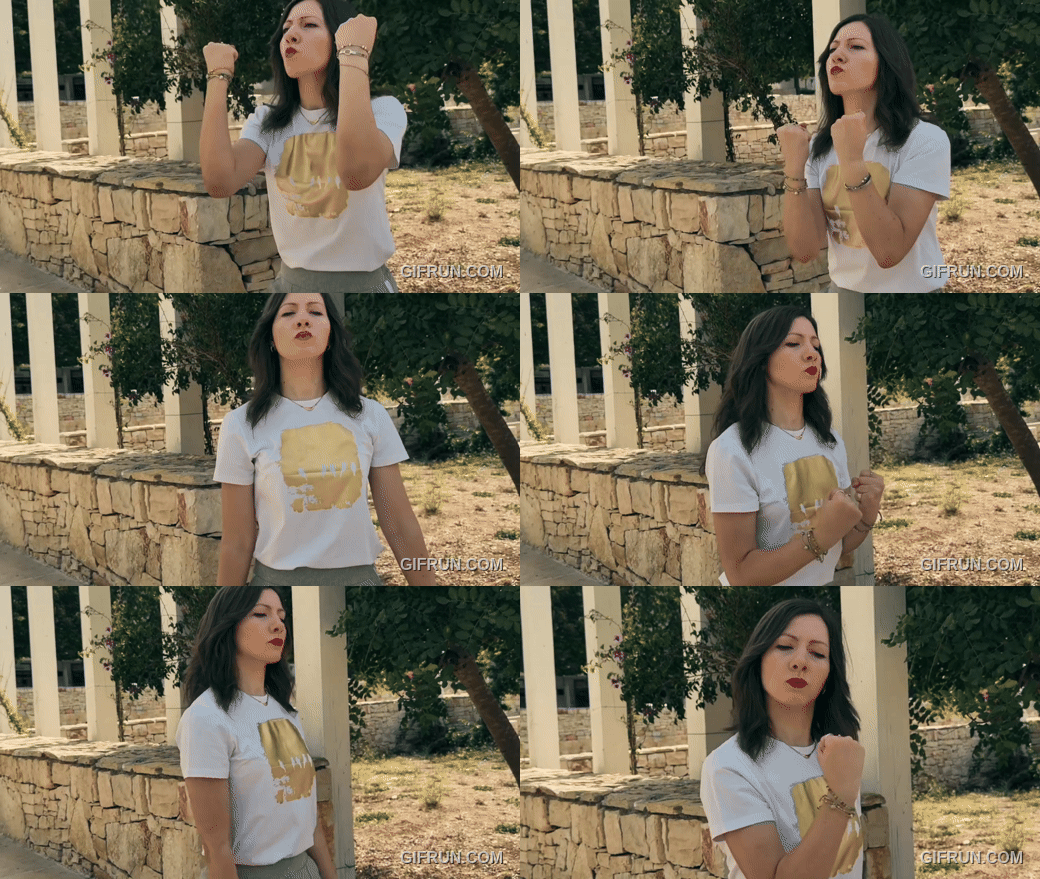
A gesture of victory and exultation that expresses joy and satisfaction for a success achieved. You perform it by closing your hand into a fist and energetically pulling your arm downward with a decisive movement, as if pulling a rope or celebrating a goal. The movement often starts from above (arm above the head) and descends forcefully to chest or waist height. The facial expression is one of joy and triumph, with a wide smile.
This gesture has relatively modern origins and spread in the sports context, particularly in soccer, where fans use it to celebrate their teams’ goals. The downward fist movement resembles that of someone pulling a bell rope to announce a victory, or the athletic gesture of someone celebrating after crossing the finish line. Over time, it has extended to every type of personal or collective success.
Usage contexts: It is used to celebrate a victory (sports, work, personal), to express satisfaction when something finally goes as hoped (examples un esame superato, una promozione ottenuta, un affare concluso positivamente [an exam passed, a promotion obtained, a deal concluded positively]), or to encourage and support someone who has just achieved a success. It is common in stadiums during matches, but also in offices when positive news arrives, or in families when celebrating a milestone reached by one of the members.
13. “Sei Proprio Testardo, Duro” [You’re Really Stubborn, Hard-Headed]
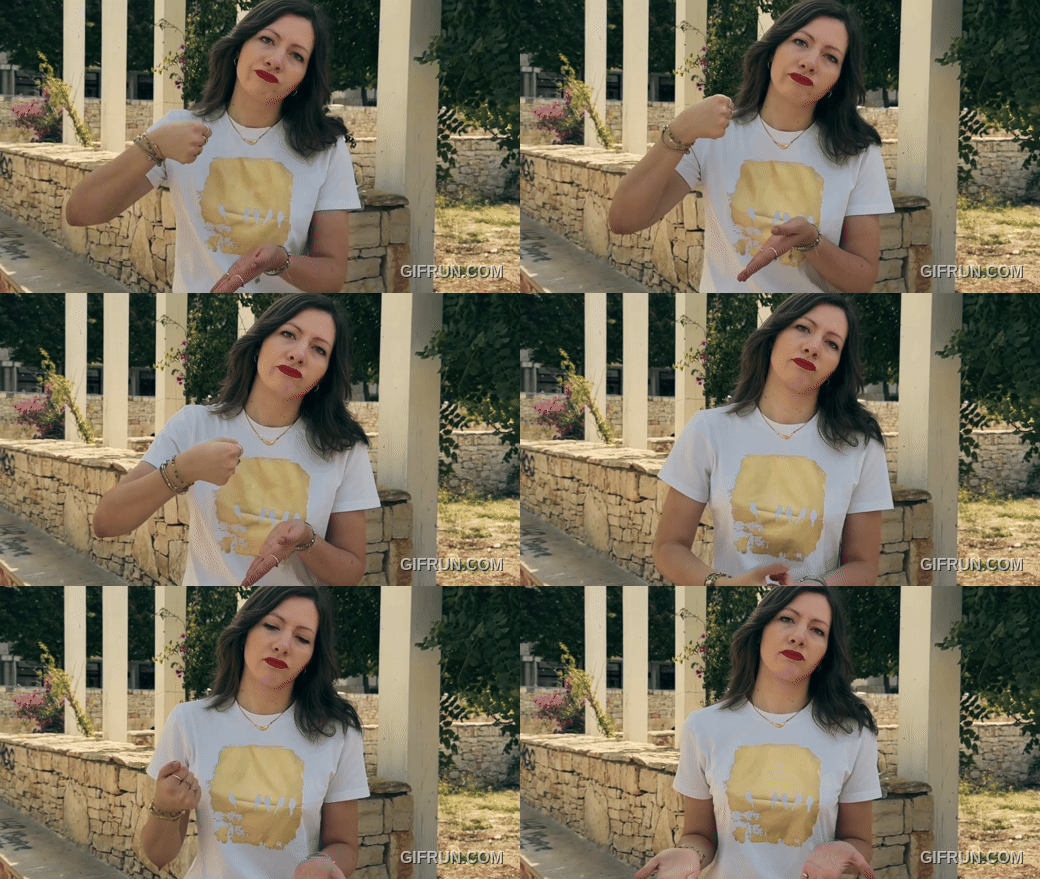
A gesture that communicates someone’s obstinacy and stubbornness. You perform it by bringing your closed fist against your palm or to your forehead, pressing lightly as if to emphasize the hardness, the stubbornness of the person you are referring to. The gesture can be accompanied by a rotational movement of the fist or small taps. The facial expression is typically one of good-natured frustration or amused resignation.
This gesture has origins in the metaphor of the “hard head” as mental resistance and impossibility of making someone change their mind. The forehead, symbolic seat of reason and thought, when hit or indicated with the fist, represents an intelligence that has “hardened” and no longer accepts external input. It is a gesture widespread in many Mediterranean cultures but particularly expressive in Italian culture.
Usage contexts: It is used to comment on someone’s obstinacy who refuses to listen to reason (examples un familiare che continua a comportarsi in un certo modo nonostante i consigli contrari, un amico che persiste in una decisione che gli altri ritengono sbagliata [a family member who continues to behave in a certain way despite contrary advice, a friend who persists in a decision that others consider wrong]), to express resignation in the face of others’ stubbornness, or even with self-ironic tone to acknowledge one’s own stubbornness. It is common in family discussions when trying to make someone change their mind without success, or among friends when joking about each other’s obstinate characters.
14. “Sei Pazzo” [You’re Crazy]

An iconic gesture that expresses madness or irrational behavior. You perform it by bringing your index finger to your temple and making a rotational movement, as if screwing in a screw. The movement can be fast (to emphasize madness) or slower (to underline perplexity). The accompanying facial expression varies from amused to genuinely concerned, depending on context.
This is one of the oldest and most widespread gestures in Italian communication, with roots that delve into the ancient conception of madness as a “spinning head,” confused brain or out of control. The rotational movement symbolizes thought that rotates on itself without finding logic or reason. Interestingly, this gesture exists in many cultures but Italian culture has made it particularly expressive and rich in nuances.
Usage contexts: It is used to comment on bizarre or illogical behaviors (example “hai speso tutti i tuoi risparmi per quella macchina? Sei pazzo!” [“you spent all your savings on that car? You’re crazy!”]), to react to absurd or risky proposals (example “vuoi attraversare l’Italia in bicicletta a gennaio? Ma sei matto?” [“you want to cross Italy by bicycle in January? Are you crazy?”]), to affectionately joke with friends who do extravagant things, or to express perplexity in the face of choices that are not understood. It is one of the most used gestures in everyday Italian communication, so much so that it has become a true stereotype of Italian identity abroad.
15. “Sei Furbo, Eh!” [You’re Cunning, Eh!]

A gesture that recognizes someone’s cunning and shrewdness, with a nuance that oscillates between admiration and good-natured reproach. You perform it by bringing your thumb under your eye and pulling slightly downward, almost simulating pulling the lower eyelid. The gesture is accompanied by a knowing or winking look and often by a mischievous smile.
This gesture has origins in Mediterranean “cunning” culture, seen as an ambivalent quality: it can be admired as practical intelligence and ability to get by, but also criticized as tendency toward deception and disloyalty. Pulling the eyelid symbolizes the “opening of the eyes” of cunning, seeing beyond appearances, catching opportunities that others don’t notice. It is a gesture deeply rooted in Italian popular culture.
Usage contexts: It is used to recognize that someone has been cunning in a situation (examples ha ottenuto uno sconto, ha trovato una scappatoia, ha risolto un problema in modo ingegnoso [got a discount, found a loophole, solved a problem ingeniously]), to good-naturedly reproach someone who played the “trickster” (examples non ha pagato il biglietto, ha jumped the line with an excuse [didn’t pay the ticket, jumped the line with an excuse]), to playfully warn someone that you understood their little game, or to define yourself when you’re proud of having found an intelligent solution. It is a very common gesture in commercial exchanges, negotiations and in all those situations where cunning plays a role.
16. “Se Sapessi!” [If You Only Knew!]

A gesture of suspense and mischievous anticipation that heralds important revelations. You perform it by waving your open hand with quick and light movements from the wrist, with the palm facing yourself, at face or chest height. The movement is oscillatory and lively, as if fanning something precious. The eyes are wide open in an expression of contained excitement, while the lips form a sly and knowing smile that communicates “ho informazioni bomba” [“I have bombshell information”]. The entire expression conveys: “non ci crederesti mai a quello che sto per dirti” [“you would never believe what I’m about to tell you”].
This gesture is deeply rooted in Italian culture of gossip and news sharing, which represents an important social connective tissue. It has origins in the tradition of neighborhood conversations, markets, squares where information circulated through informal social networks. The waving hand gesture symbolizes the contained excitement of someone who possesses valuable information and is about to share it, creating expectation and curiosity in the interlocutor. It’s as if the hand were metaphorically “fanning” the news, teasing others’ curiosity without yet fully revealing it.
Usage contexts: It is used as a prelude to important revelations or interesting gossip (examples due conoscenti che hanno iniziato una relazione, sviluppi inaspettati, eventi sorprendenti [two acquaintances who started a relationship, unexpected developments, surprising events]), to introduce unexpected positive news, to announce plot twists in situations followed with interest. It is particularly common in conversations among female friends where updates on sentimental, professional or social life are shared. It represents the Italian love for dramatic narration and for social sharing of information, where the way you tell is as important as what you tell.
17. “Scusa, Posso Chiederti Qualcosa?” [Excuse Me, Can I Ask You Something?]

A gesture of polite request for attention. You perform it by raising your index finger upward, at face level or slightly higher, while the other fingers remain closed or semi-closed. The movement is delicate and non-invasive, often accompanied by a slight tilt of the head and a polite and interrogative expression. The eyebrows rise slightly, the gaze is kind but attentive, and often a courteous smile appears that communicates “vorrei disturbarti il meno possibile” [“I would like to disturb you as little as possible”]. The gesture can be preceded by a small movement of the hand that rises gradually, not abruptly.
This gesture has origins in the universal gesturing of “calling attention”, where the raised finger is a visual signal that says “I have something to say” or “I need a moment of your time.” In Italian culture, where mutual respect and courtesy in social interactions are important, this gesture represents the polite way to interrupt someone or ask for a favor without being invasive. Unlike the imperatively pointed finger, the vertically raised index finger is a request signal, not a command, maintaining a balance between assertiveness and courtesy.
Usage contexts: It is used to politely request someone’s attention who is busy or conversing with others (examples chiedere informazioni per strada, attirare l’attenzione di un cameriere, interrompere educatamente una conversazione [asking for street directions, attracting a waiter’s attention, politely interrupting a conversation]), to signal that you have a question or doubt in formal contexts (examples riunioni, lezioni, conferenze [meetings, lessons, conferences]), to ask for a favor without being invasive, to gently stop someone who is passing by. It is particularly used in situations where courtesy and respect for others’ space are important, such as with strangers, authority figures, or in professional contexts. It represents the Italian balance between the need to make oneself heard and respect for others’ time and attention.
18. “Qui Ci Vogliono i Fatti” [We Need Action Here]

A pragmatic gesture that calls for concreteness and action. You perform it by repeatedly striking the open palm of one hand against the open palm of the other hand, creating a sharp and rhythmic sound. The movement is decisive and firm, and the facial expression is serious and determined, communicating that the time for words is over and action is needed.
This gesture has origins in manual labor gesturing, where clapping hands together was a way to prepare for action, to “get to work.” The sound produced by contact between palms emphasizes the concreteness of the message: no more talking is needed, tangible results and concrete actions are needed. It is a gesture deeply rooted in pragmatic Italian culture, which while loving rhetoric, knows how to recognize when it’s time to move from theory to practice. In some contexts it can also be used to express frustration toward those who talk a lot but act little.
Usage contexts: It is used in work contexts when you want to solicit concrete action (examples riunioni che si prolungano troppo in discussioni senza arrivare a decisioni, progetti che restano sulla carta [meetings that drag on too long in discussions without reaching decisions, projects that remain on paper]), to good-naturedly reproach someone who promises a lot but delivers little, to self-motivate or motivate a group to move to action, or to express constructive impatience when you hear too much theory and little practice. It is common among colleagues, in sports contexts before a competition, or in families when something concrete needs to be organized.
19. “Questo Piatto È Buonissimo” [This Dish Is Delicious]

A gesture of intense culinary appreciation that expresses how delicious a food is. You perform it by bringing your index finger against your cheek and making it rotate or press lightly against it with a movement that “digs” or gently “pierces” the skin, as if the finger wanted to enter the cheek because of the goodness of the food. The movement can be rotational (as if screwing in a screw) or repeated back and forth. The facial expression is one of gustatory ecstasy: eyes that may close with pleasure, relaxed eyebrows, mouth that smiles or opens slightly in an expression of enjoyment. Sometimes the tongue may pass over the lips as if to savor again.
This gesture has origins in the Italian tradition of physically expressing food pleasure, where gustatory sensations are “incorporated” into the body through gestures involving the face. The finger pressing against the cheek symbolically represents the desire to “retain” that flavor, to make it penetrate more deeply into the sensory experience. It is a gesture deeply rooted in Italian gastronomic culture, where food is not just nourishment but a total sensory experience that deserves to be celebrated with the whole body. The cheek, being close to the mouth and taste buds, becomes the point where pleasure is physically “marked.”
Usage contexts: It is used to express supreme appreciation for an exceptional dish (examples una pasta perfetta, un dolce straordinario, un piatto della tradizione fatto alla perfezione [perfect pasta, an extraordinary dessert, a traditional dish made to perfection]), to compliment whoever cooked by communicating that the result is excellent, to comment during the meal how much you are enjoying every bite, to enthusiastically recommend a dish to fellow diners (example “devi assaggiare questo, guarda!” [“you must taste this, look!”] + gesture). It is one of the most used gestures at the table and represents the highest form of sincere culinary appreciation. It can also be used remembering a particularly good meal (example “ti ricordi quella carbonara?” [“do you remember that carbonara?”] + gesture) or anticipating a dish known to be excellent. It perfectly represents Italians’ passionate relationship with food, where eating well is an experience that involves all senses and deserves physical celebration.
20. “Quei Due Stanno Insieme, Se la Intendono” [Those Two Are Together, They Have an Understanding]

A gesture of complicity and connection between two people. You perform it by bringing the index fingers of both hands close and making them touch repeatedly tip to tip, or intertwining them slightly in an undulating movement. The gesture can be accompanied by a knowing look and a mischievous smile that suggests intimacy or secret agreement between the people being discussed.
This gesture has origins in the symbolism of union and connection: touching fingers represent contact, relationship, understanding between two people. It can indicate a romantic relationship, a close friendship, or even collusion in business or particular situations. It is a gesture that exists in various forms in many Mediterranean cultures, but Italian culture has given it particularly rich nuances.
Usage contexts: It is used to comment on a relationship (romantic or otherwise) between two people, to make affectionate gossip about emerging couples, to suggest that two people have a particular agreement or understanding (examples in affari, in politica, in situazioni di gruppo [in business, in politics, in group situations]), or to express that two people are particularly in tune. It is common in conversations among friends when talking about others’ relationships, in work contexts when particular alliances are noticed, or simply to observe the special understanding between two people.
21. “Quanto È Magro Quel Ragazzo” [How Skinny That Guy Is]
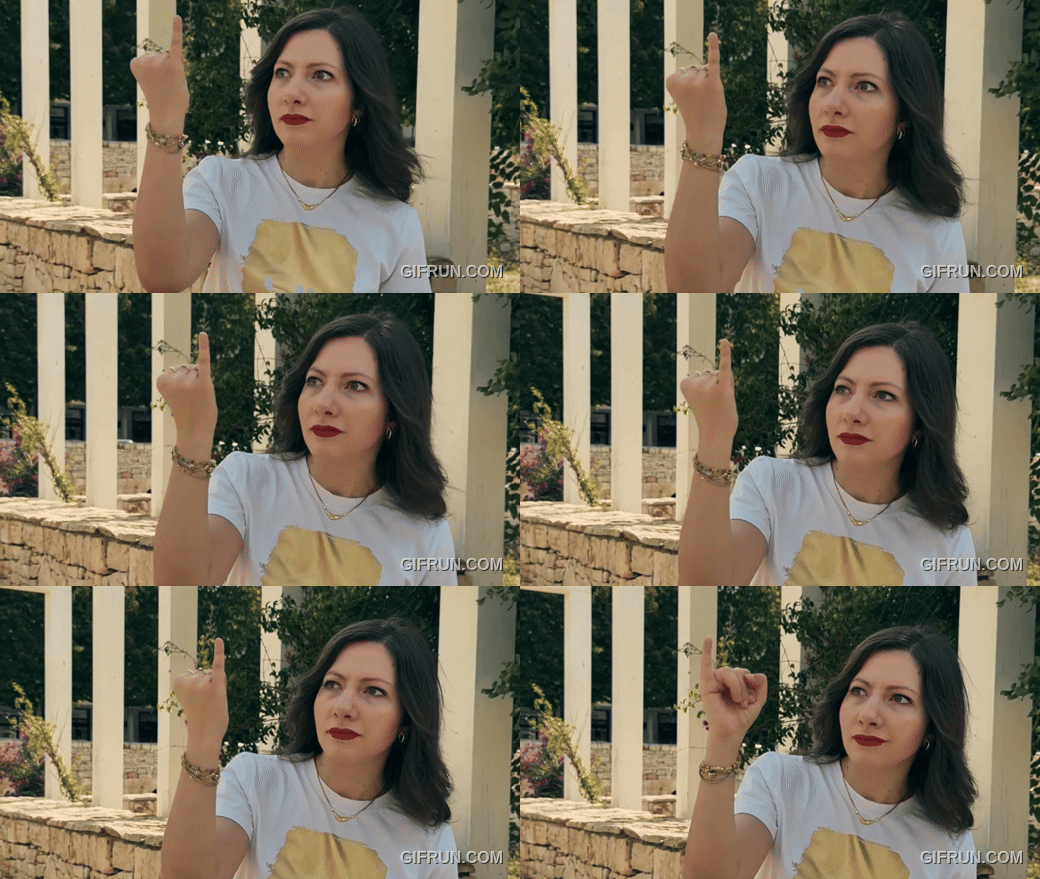
A descriptive gesture that emphasizes someone’s extreme thinness. You perform it by raising your pinky finger upward, keeping it straight and isolated while the other fingers remain closed in a fist. The pinky, being the thinnest finger of the hand, visually and symbolically represents the slenderness of the described person’s body. The gesture is often accompanied by a movement that emphasizes verticality (the pinky moves slightly up and down) to indicate that the thinness concerns the entire figure. The facial expression shows concern or amazement, with slightly widened eyes, raised eyebrows and a mouth that may form an “o” of surprise.
This gesture belongs to the category of metaphorical physical descriptive gestures typical of Italian communication, where the body becomes a tool to represent others’ characteristics through visual similes. It has origins in the need to communicate detailed descriptions using one’s own body as reference: the pinky, being naturally the finest and most delicate finger, is perfect for symbolizing an extremely thin person. It is deeply rooted in Italian physical observation culture, where commenting on others’ appearance (positively or with concern) is part of normal social communication, especially in family contexts.
Usage contexts: It is used to comment on someone’s evident thinness with concern for their health or nutrition, to describe someone you haven’t seen in a long time who has lost considerable weight (example “l’hai visto? È diventato così!” [“did you see him? He’s become like this!”] + pinky gesture), to express amazement at extremely slender people, or also jokingly to good-naturedly tease particularly thin friends. It is common among family members who worry about each other’s nutrition (particularly Italian grandmothers and mothers who view thinness as a potential problem), in descriptive conversations when talking about someone’s physical appearance, or to express that someone needs to be better nourished. Traditional Italian culture views excessive thinness with concern, associating it with possible illness or lack of adequate care, so the gesture often carries with it this nuance of affectionate apprehension.
22. “Ora Te lo Do uno Schiaffo!” [I’ll Give You a Slap Now!]

A gesture of threat, sometimes good-natured, but mostly warning. You perform it by raising your open hand with the palm facing or not toward the interlocutor, making it oscillate slightly as if you were about to give a slap, but stopping before contact. The basic facial expression is serious, but may show a hint of a smile if you’re just joking.
This gesture has origins in traditional family discipline, where the slap was an accepted form of correction. With the evolution of social customs, the gesture has mainly transformed into a symbolic expression of reproach, used almost exclusively in affectionate and family contexts. The raised hand maintains the reference to the original threat, but the fact of stopping before contact transforms the threat into a playful warning.
Usage contexts: It is used to reproach, even affectionately, inappropriate behaviors (examples un bambino che fa i capricci, un adolescente che risponde male, un amico che fa una battuta fuori luogo [a child throwing tantrums, a teenager who talks back, a friend who makes an out-of-place joke]), to joke about situations where someone “would deserve” a symbolic punishment, or to express exasperation toward repeated behaviors that irritate. It is important to note that in modern Italian communication this gesture is practically always playful and never truly threatening, rather representing a theatrical way of expressing disapproval without real aggression.
23. “Ok. D’Accordo” [Ok. Agreed]

A gesture of approval and consent universally recognized but with specific Italian nuances. You perform it by forming a circle with your thumb and index finger, while the other three fingers remain extended upward. The gesture is shown to the interlocutor, often accompanied by a nod of the head and an expression that confirms agreement. It can be performed with one or both hands simultaneously for greater emphasis.
This gesture, despite being of Anglo-Saxon origin (the famous “OK”), has been completely assimilated by Italian communication and has acquired local nuances. In Italy it is used more frequently and with greater emphasis compared to other cultures, becoming an integral part of the daily gestural repertoire. The circle formed by the fingers symbolizes perfection and completeness, therefore total agreement.
Usage contexts: It is used to confirm an agreement (examples in trattative commerciali, nell’organizzazione di appuntamenti, nella conferma di piani [in commercial negotiations, in organizing appointments, in confirming plans]), to approve a proposal or idea, to signal that you have understood a message and agree, to communicate that everything is proceeding well and according to plan. It is one of the most used gestures in work contexts, in quick exchanges where a fast confirmation is needed, or simply to communicate “that’s fine” without having to articulate words. Its universality makes it particularly useful also in international contexts.
24. “Non ne Voglio Sapere Più” [I Don’t Want to Hear About It Anymore]
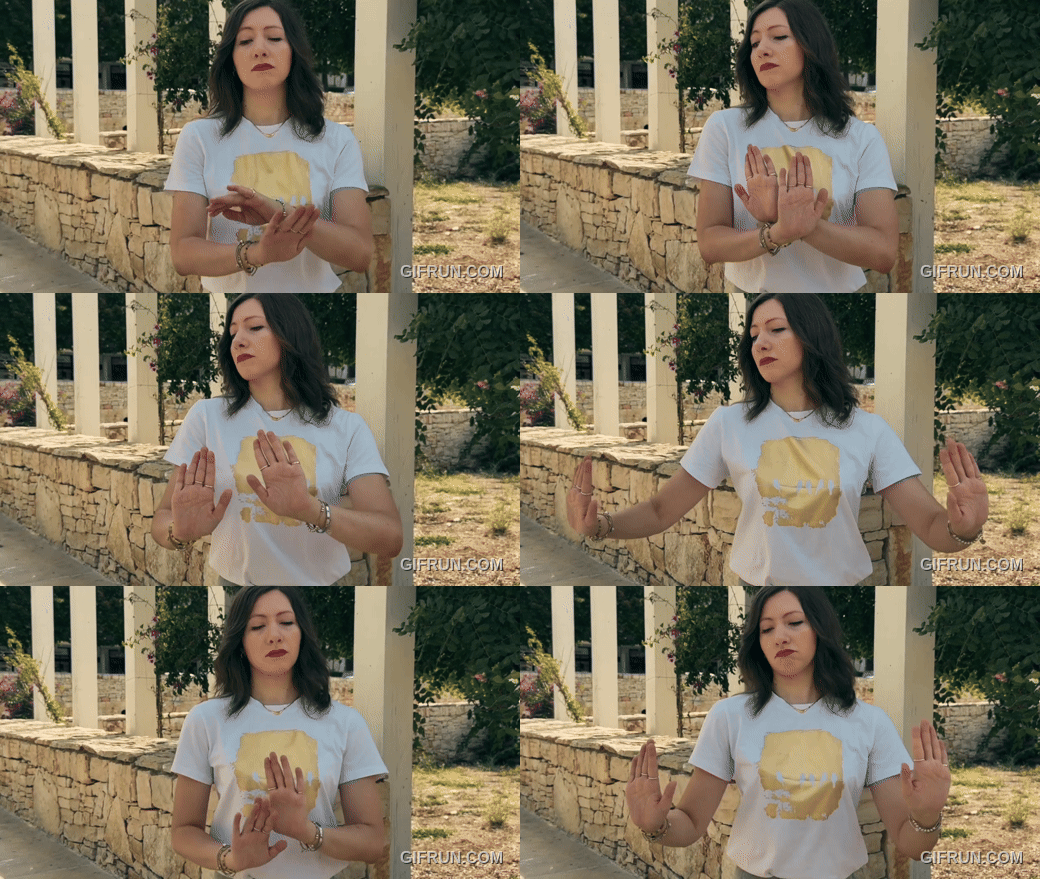
A gesture of categorical refusal and closure toward a topic or situation. You perform it by bringing both open hands in front of your chest or face, with palms facing outward, and making a decisive pushing-away movement, as if physically pushing away something unpleasant. The movement can be accompanied by a step backward and an expression of determination or annoyance, with the head shaking in a sign of negation.
This gesture has origins in the physical metaphor of rejection: the hands that push away symbolically create distance between oneself and what is unwanted. It is a gesture of clear emotional boundary-setting, typical of a culture that doesn’t fear expressing feelings directly and visibly. The outward movement of the hands represents building a barrier, a physical “no” that leaves no room for insistence.
Usage contexts: It is used to express that you no longer want to be involved in a certain topic or situation (examples una discussione che si ripete troppo spesso, un argomento doloroso che si preferisce non affrontare, proposte insistenti che si vogliono rifiutare definitivamente [a discussion that repeats too often, a painful topic you prefer not to address, insistent proposals you want to refuse definitively]), to communicate that your patience toward a person or situation has run out, to set clear boundaries when someone insists on something you’ve already refused. It is particularly common in family or relationship contexts where emotional dynamics can become intense, representing a way to say “enough is enough” clearly and definitively.
25. “Non lo So” [I Don’t Know]
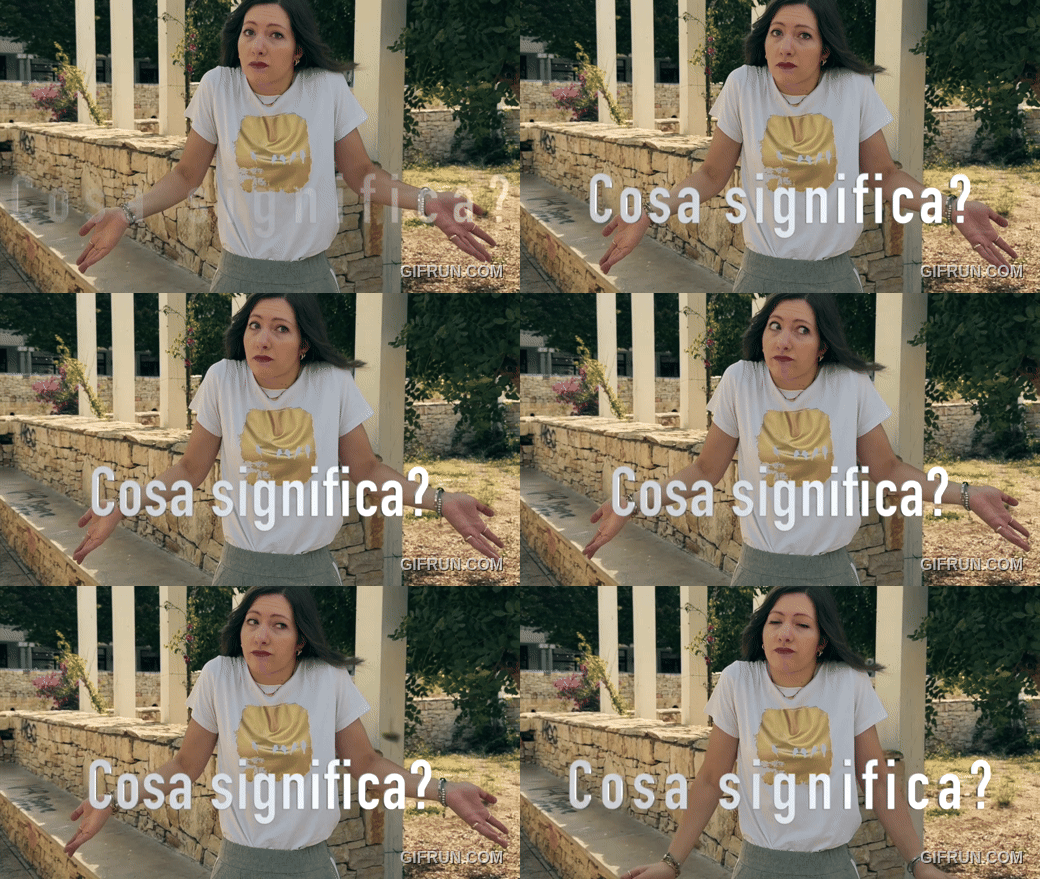
A gesture that communicates lack of knowledge, uncertainty or indifference. You perform it by raising both shoulders toward your ears, lifting your arms with palms facing upward and elbows slightly bent, while protruding your lower lip in a small pout and raising your eyebrows. Sometimes the head tilts slightly to the side. The movement should be fluid and simultaneous in all parts of the body.
This gesture is one of the most universal in human communication, but the Italian version has distinctive characteristics: the combination of shoulder shrug, open hands and facial expression creates a particularly eloquent choreography. It physically represents the concept of “emptiness of knowledge”: open hands show there is nothing to give, raised shoulders signal helplessness, the facial expression communicates sincere ignorance.
Usage contexts: It is used to communicate lack of knowledge or information (example “Non so dove sia andato” [“I don’t know where he went”]), but also indifference or lack of interest (example “Boh, fai come vuoi” [“Dunno, do as you wish”]), or giving up trying to understand something too complicated (example “Non ci capisco niente” [“I don’t understand anything”]). The gesture can also express uncertainty in choosing between options or resignation in the face of an incomprehensible situation. It is often accompanied by the interjection “boh!”, a typical Italian sound expressing uncertainty.
26. “Non lo Digerisco, Mi Sta Antipatico” [I Can’t Stand Him, I Dislike Him]

A gesture that expresses strong antipathy or difficulty tolerating someone. You perform it by placing your hand on your stomach with a grimacing expression, as if you had indigestion or nausea. The hand can make circular movements on the stomach area or simply rest there while the face contorts. The facial expression is crucial: nose wrinkled, mouth twisted in a grimace of disgust, eyes that can close or look away.
This gesture uses the physical metaphor of digestion to express difficulty accepting someone emotionally. In Italian, the expression “non digerire qualcuno” [“not to digest someone”] literally means to have difficulty tolerating them, as if their presence were indigestible food that the stomach cannot process. It is a visceral metaphor that connects emotional rejection to physical reaction, typical of Italian expressiveness that links emotions to bodily sensations.
Usage contexts: It is used to express strong dislike toward someone (examples un collega particolarmente antipatico, una persona con cui non si va d’accordo, qualcuno che provoca irritazione [a particularly unpleasant colleague, a person you don’t get along with, someone who causes irritation]), to explain why you avoid certain people, to comment with friends or family about someone you find difficult to tolerate. It is a direct and visceral way of expressing antipathy that doesn’t leave room for misunderstandings. The gesture is particularly effective because it transforms an abstract feeling (antipathy) into a concrete physical sensation (indigestion), making the concept immediately understandable.
27. “No. Non mi Interessa Proprio” [No. I’m Not Interested At All]

A gesture of categorical and definitive refusal. You perform it by shaking your head vigorously from side to side, often accompanied by raised hand with palm forward in a stop signal, and an expression of determination. The hand can also wave horizontally as if to “sweep away” the proposal. The facial expression is serious and resolute: pressed lips, direct gaze, furrowed eyebrows.
This gesture combines two universal refusal signals: head shaking (present in almost all cultures as a sign of negation) and the raised hand (stop gesture). In Italian communication, the intensity and energy with which these movements are performed amplify the message, making it crystal clear and leaving no room for insistence. It is a gesture that establishes clear boundaries without needing many words.
Usage contexts: It is used to refuse offers, proposals or invitations definitively (examples venditori insistenti, proposte commerciali non gradite, inviti che non si vuole accettare [insistent sellers, unwanted commercial proposals, invitations you don’t want to accept]), to make clear that you have no interest in a certain topic or activity, to set firm boundaries when someone insists despite previous refusals. It is particularly useful in situations where politeness alone isn’t enough to stop insistence, representing an escalation from a simple “no” to a “definitely not, and please don’t insist.” The gesture is direct but not necessarily rude: it is a frank way of communicating one’s position without ambiguity.
28. “Molto! Moltissimo!” [A Lot! Very Much!]

A gesture of quantitative and qualitative emphasis that expresses great abundance or intensity. You perform it with your hand open, starting from a low position and moving it upward with decisive movement, or spreading your arms as wide as possible as if to embrace an enormous space. It can also be performed by repeatedly clenching and opening your hand into a fist, as if “squeezing” the concept of “much” into the air. The facial expression emphasizes excess: eyes wide open, eyebrows raised.
This gesture belongs to the category of quantification and intensification gestures, fundamental in a language like Italian that loves hyperbole and emphasis. The origins lie in the need to visually communicate dimensions, quantities and intensity in a culture where bodily expressiveness is essential. Broad movements literally symbolize the magnitude of what you want to communicate.
Usage contexts: It is used to emphasize quantity or intensity in response to questions (example “quanto ti è piaciuto?” [“how much did you like it?”] – gesture + “moltissimo” [“very much”]!), to express extreme enthusiasm toward something, to describe situations of great abundance or excess (example “c’era molto cibo?” [“was there a lot of food?”] – “molto! Moltissimo!” [“a lot! Very much!”]), to communicate the intensity of emotions (example “ti sei divertito?” [“did you have fun?”] – gesture + “tantissimo!” [“so much!”]). It is one of the most used gestures in everyday Italian conversation to add color and emphasis to responses, transforming a simple “a lot” into a memorable communicative experience.
29. “Modestamente, Sono il Migliore” [Modestly, I’m the Best]
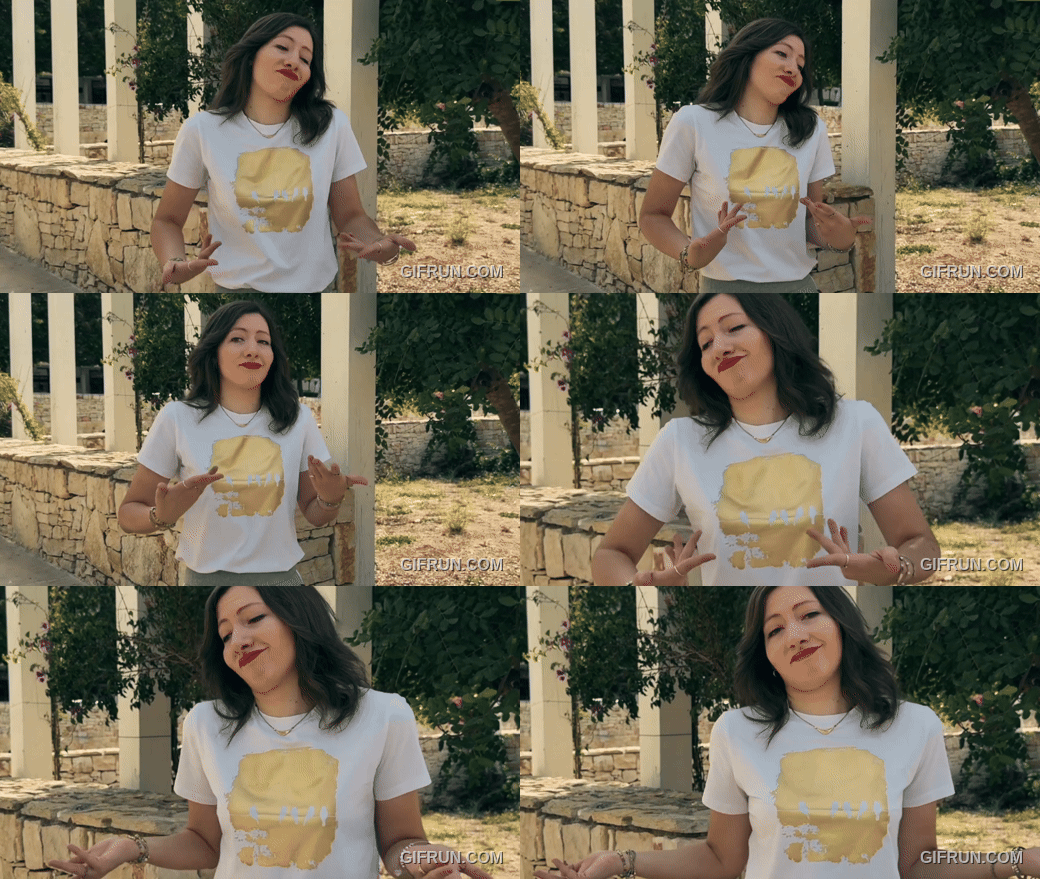
A gesture of playful pride and self-irony that simulates false modesty. You perform it by bringing your hand fingers to your chest making an outward movement. Alternatively, you can bring your hand to your chin and, moving it downward, simulate stroking your beard. The facial expression is one of fake modesty: gaze looking sideways, mischievous smile, satisfied air.
This gesture has origins in typical Italian false modesty rhetoric, where direct self-praise is culturally frowned upon, but ironic and playful self-praise is perfectly acceptable and even appreciated. The movement of “stroking one’s beard” derives from ancient gestures of patriarchal self-satisfaction, secularized into an expression of satisfaction for one’s own merits. It is a deeply playful gesture that allows you to boast without appearing arrogant.
Usage contexts: It is used to boast playfully about a personal success without seeming unpleasant (examples dopo aver vinto una competizione, aver fatto un buon lavoro, aver azzeccato una previsione [after winning a competition, having done good work, having nailed a prediction]), to respond to compliments with fake modesty that actually fully accepts the praise, to self-ironize about one’s own recognized skill. It is particularly used among friends where you can afford to joke about your own merits, or in friendly competitive contexts where a bit of “healthy” bragging is part of the social game.
30. “Me ne Sono Scordato!” [I Forgot About It!]
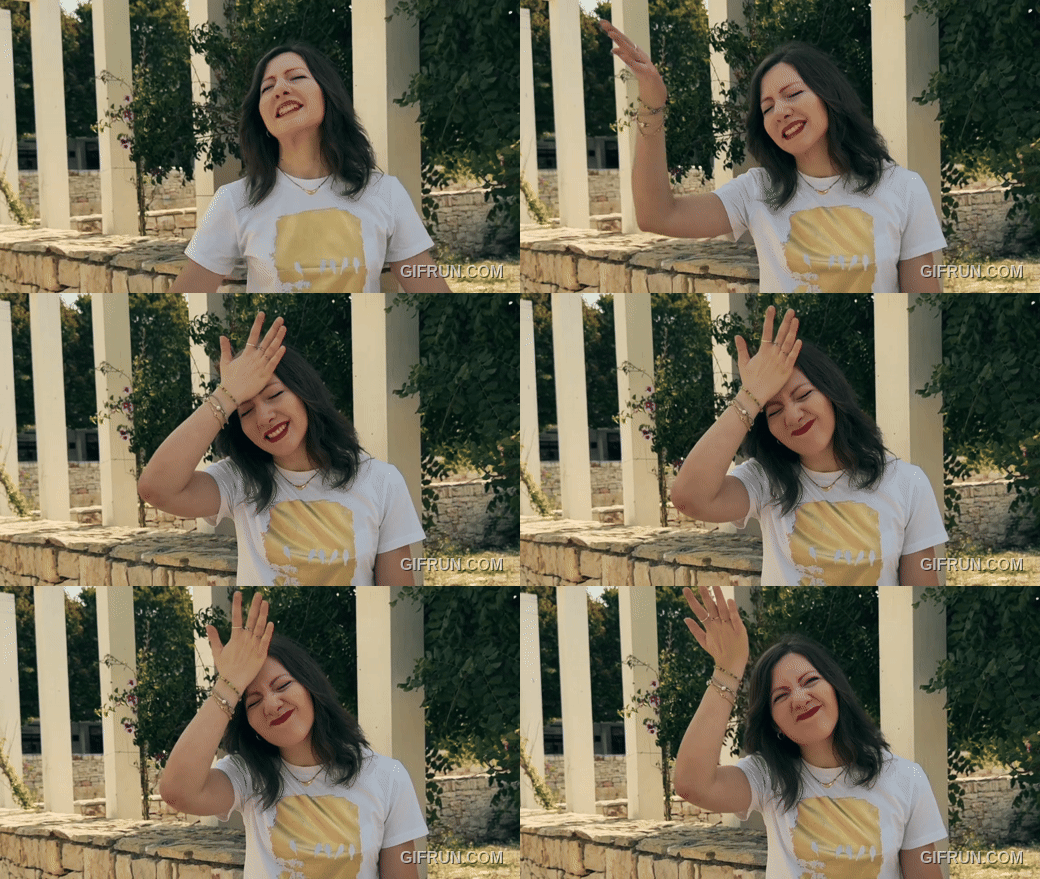
A gesture that expresses sudden realization of having forgotten something. You perform it by bringing one or both hands to your forehead with a decisive movement, as if giving yourself a slap on the head for the forgetfulness. The contact is symbolic, not violent. Alternatively, you can bring the palm of your hand to your forehead and hold it there while shaking your head. The facial expression is one of dismay: eyes closed or wide open, mouth open in an “oh!” of surprise.
This gesture mimics metaphorically “hitting oneself” for one’s own distraction, as if the brain needed a shock to get back into function. It has origins in spontaneous gesturing of frustration toward oneself, common in many cultures but particularly expressive in Italian culture. The movement toward the forehead symbolizes the attempt to “awaken” memory or to punish oneself good-naturedly for the oversight.
Usage contexts: It is used when you suddenly remember something forgotten (examples un appuntamento, una commissione da fare, un messaggio da inviare [an appointment, an errand to do, a message to send]), to apologize good-naturedly to someone for having forgotten a commitment, to express frustration toward one’s own memory, or simply to playfully dramatize small daily forgetfulnesses. It is a very common gesture in daily life, used in every context from private to work sphere, and represents a socially acceptable way of admitting one’s own distraction without losing face.
Stop reading Italian.
Start speaking it.
Online lessons in groups of 4, organised by level and goals, with qualified teachers. Pick the day and time that suit you from the available slots.
Max 4 students:
there’s a seat for you
31. “Mannaggia a Te! Se ti Prendo!” [Darn You! If I Catch You!]
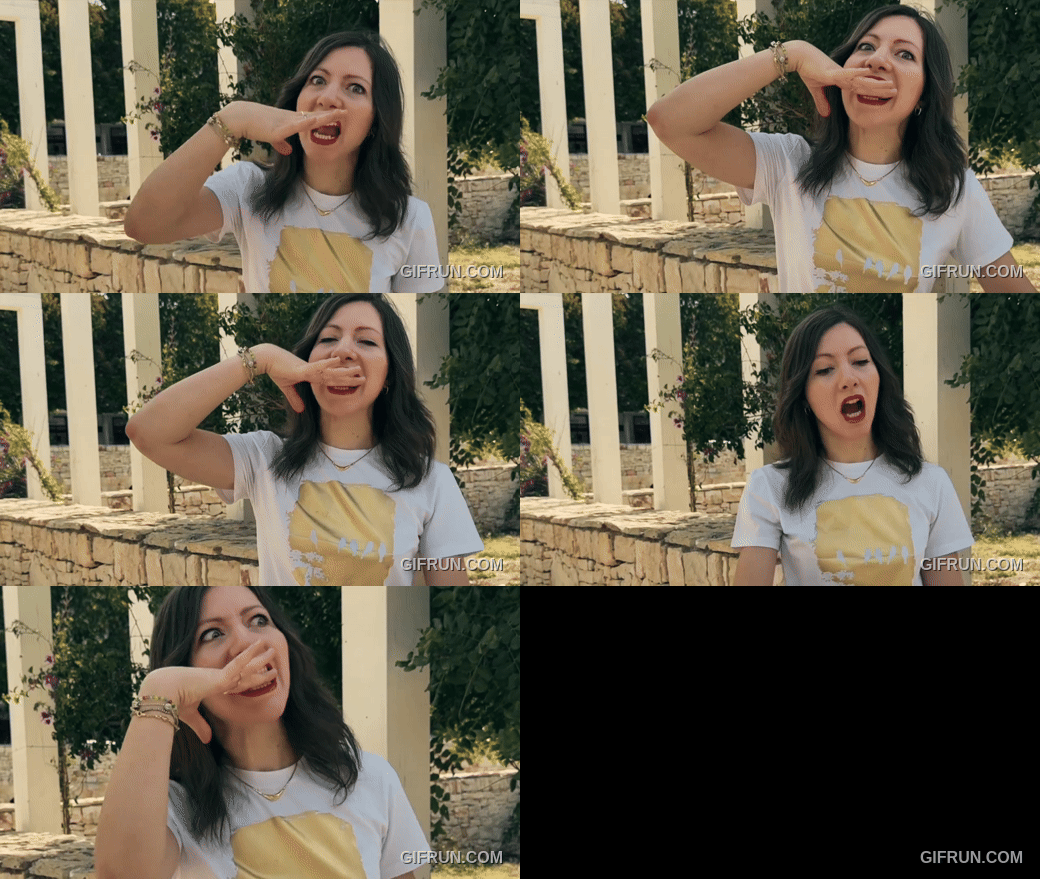
A gesture of controlled frustration and playful threat. You perform it by bringing your hand to your mouth and biting one side, usually the fleshy part between thumb and index finger or the back of the hand itself. The bite is symbolic and light, never violent, and represents the attempt to physically “hold back” anger or frustration by biting yourself instead of reacting impulsively. Your eyes stare fixedly at the person or situation causing frustration, eyebrows are furrowed, and the expression communicates a mix of exasperation and forced self-control. The gesture can be accompanied by a slight grunt or guttural sound.
This gesture has origins in the need to physically channel frustration without exploding verbally or physically. Biting your own hand is a way to “discharge” nervous energy harmlessly, transforming the aggressive impulse into an action directed toward yourself rather than toward the other. It is deeply rooted in Italian culture of controlled emotional expressiveness: you must show that you are frustrated or angry, but you must also demonstrate self-control. The gesture therefore represents the point of maximum tension before explosion, a visual ultimatum that says “sto trattenendo la mia reazione, ma attenzione” [“I’m holding back my reaction, but be careful”].
Usage contexts: It is used to express intense but controlled frustration toward repetitive and irritating behaviors (examples bambini che non smettono di fare capricci, persone che continuano a provocare dopo numerosi avvertimenti [children who won’t stop throwing tantrums, people who continue to provoke after numerous warnings]), to communicate that you are close to the limit of patience but are still maintaining control, to react to exasperating situations where you cannot openly explode (examples contesti lavorativi, situazioni pubbliche [work contexts, public situations]), or to playfully threaten friends or family members who are deliberately provoking you. It is particularly common among exasperated parents, in heavy traffic situations where you want to scream but hold back, or when suffering small daily injustices that build frustration. It perfectly represents the Italian ability to express intense emotions while maintaining a certain degree of theatrical self-control.
32. “Mangiamo Qualcosa” [Let’s Eat Something]

A simple but fundamental gesture in Italian culture that expresses invitation to eat together. You perform it by bringing your closed hand’s joined fingers to your mouth repeatedly, mimicking the act of bringing food to your mouth with an imaginary fork or spoon. The movement is rhythmic and repeated, accompanied by an interrogative expression and often by an inviting smile. It can also be performed with both hands simultaneously for greater emphasis.
This gesture is deeply rooted in Italian convivial culture, where food is not just nourishment but an occasion for sociability and sharing. It directly mimics the action of eating, making it immediately understandable even beyond linguistic barriers. It is one of the oldest and most universal gestures, but the Italian version has enriched it with nuances of hospitality and warmth that go beyond the simple nutritional function.
Usage contexts: It is used to propose eating together (examples tra colleghi a pausa pranzo, tra amici per organizzare una cena, in famiglia per chiamare a tavola [among colleagues at lunch break, among friends to organize a dinner, in the family to call to the table]), to ask if someone is hungry and would like a snack, to express one’s own hunger and desire to stop to eat, or simply to suggest a culinary break during prolonged activities. It is one of the most used gestures daily and represents the central importance of food as a moment of sharing in Italian culture.
33. “Ma Io che Posso Farci” [But What Can I Do About It]
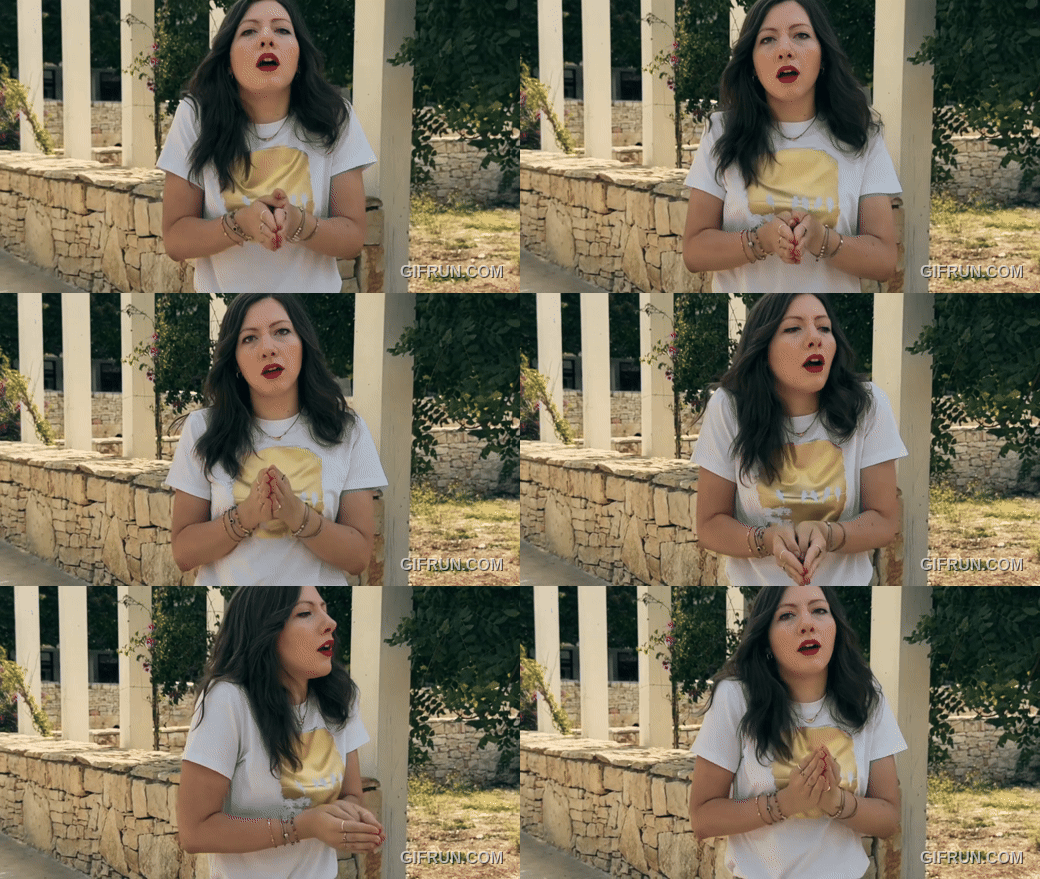
A gesture of helplessness and affectionate disavowal of responsibility. You perform it by joining your palms in front of your chest, as in prayer position, and making them move up and down with a continuous undulating movement, almost “bouncing” gently in the air. The joined hands oscillate vertically keeping the palms pressed together, communicating “ma che ne so io” [“but what do I know”], “non dipende da me” [“it doesn’t depend on me”]. The facial expression shows good-natured resignation: slightly raised shoulders, raised eyebrows, mouth forming a small “o” or a regretful smile, gaze alternating between the interlocutor and emptiness. The movement conveys a sense of lightness and inevitability.
This gesture combines elements of secularized prayer gesturing with communication of helplessness. Hands joined in prayer position, historically a symbol of divine supplication, here become a way to communicate that the situation is “in the hands of fate” or in any case beyond one’s personal control. It is deeply rooted in Italian culture of benevolent fatalism, where it is recognized with a certain lightness that many things in life do not depend on us and it makes no sense to torment ourselves. The up and down movement adds a dimension of emotional “floating,” as if navigating on the waves of the inevitable without being able to change course.
Usage contexts: It is used to communicate that you have no control over a negative or problematic situation (examples ritardi dei mezzi pubblici, decisioni prese da altri, eventi meteorologici [public transport delays, decisions made by others, weather events]), to justify yourself affectionately for something that is not your fault, to respond to reproaches or complaints about things beyond your responsibility, to express philosophical resignation in the face of life’s adversities. It is particularly common when blamed for things you truly cannot control, representing a gentle way to say “I understand your frustration, but I really cannot do anything about it.” It perfectly represents the Italian ability to accept with a certain philosophical serenity the things that cannot be changed, while maintaining the warmth and empathy toward those who suffer the consequences.
34. “Ma Guarda Quello!” [Look at That!]
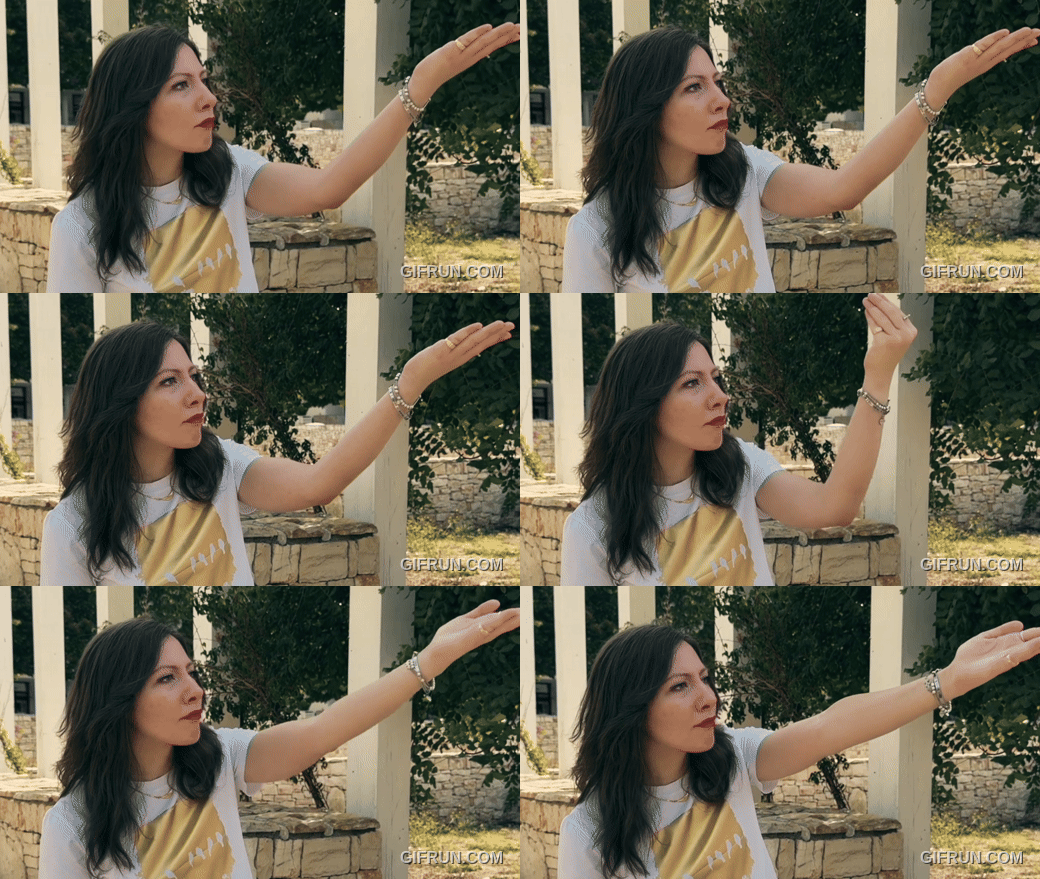
A gesture of incredulous amazement and invitation to observe. You perform it by extending your arm with the index finger pointed toward what you want to indicate, often accompanied by an expression of surprise or disbelief. The hand can make a small movement forward to emphasize the invitation to look. The facial expression shows amazement: wide eyes, raised eyebrows, mouth that can open slightly.
This gesture is one of the most basic and universal in human communication: pointing to draw attention to something of interest. However, the Italian version is characterized by the emotional intensity with which it is performed: it’s not just indicating a direction, but inviting to share an experience of amazement or disbelief. The gesture creates an instant connection between who points and who observes, a moment of shared attention toward something remarkable.
Usage contexts: It is used to draw attention to something surprising or unusual (examples un comportamento strano, una persona vestita in modo eccentrico, un evento inaspettato [strange behavior, a person dressed eccentrically, an unexpected event]), to share amazement toward something that deserves to be observed, to point out absurdities or contradictions in behavior or situations (example “ma guarda quello, dice così e fa cosà” [“look at that one, says this and does that”]), to invite someone to witness something before it disappears. It can be used both for positive situations (something beautiful or interesting) and negative ones (something absurd or outrageous), always with the purpose of creating a moment of shared observation and judgment.
35. “Ho un Po’ di Fame” [I’m a Bit Hungry]
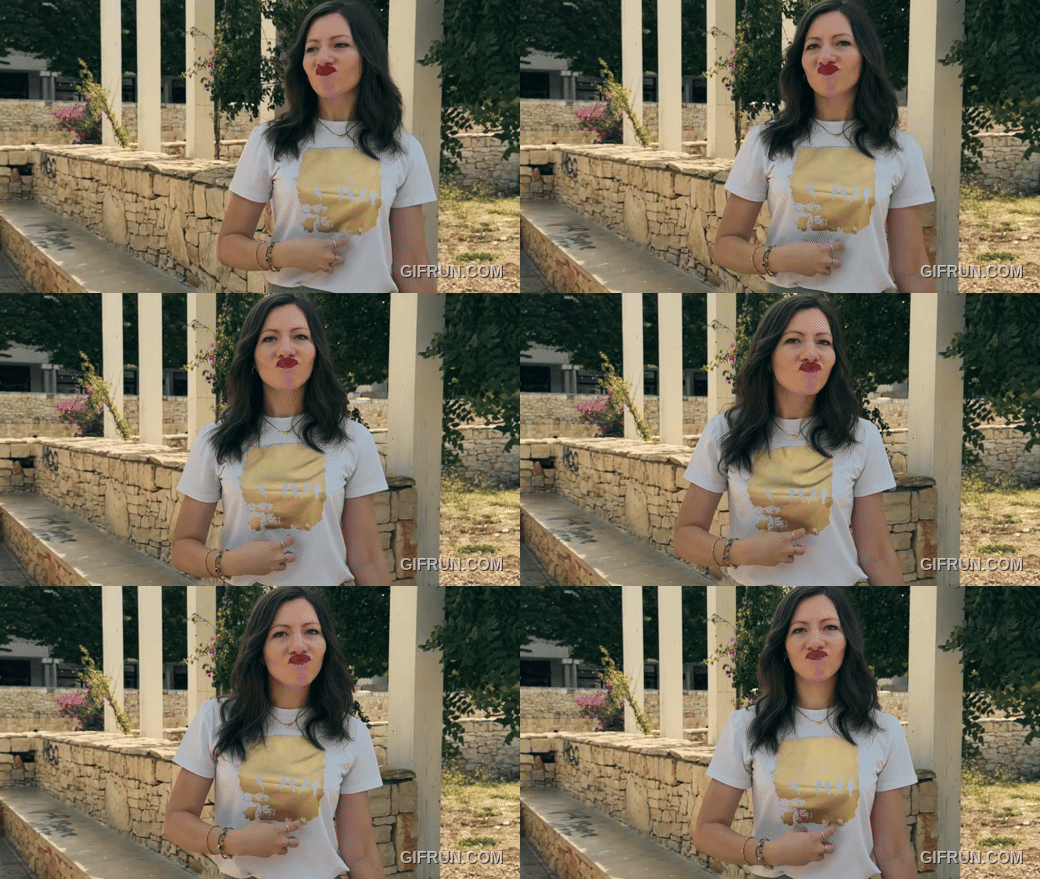
A gesture that expresses moderate hunger in a light and non-dramatic way. You perform it by placing your hand on your stomach, sometimes making circular movements or simply resting it there, accompanied by an expression that can vary from slightly suffering to playful. The facial expression communicates a need that is real but not desperate: a slight grimace, a small pout, or a smile that says “sarebbe ora di mangiare qualcosa” [“it would be time to eat something”].
This gesture uses the direct physical connection between stomach and hunger sensation. Bringing the hand to the stomach is an instinctive gesture that literally “indicates” where the need is located. In Italian culture, where the relationship with food is central and hunger is never trivialized, this gesture represents a moderate way to communicate nutritional need without dramatizing excessively, but also without underestimating the importance of satisfying appetite.
Usage contexts: It is used to signal that it’s time to eat without being too insistent (examples durante una giornata di lavoro lunga, in attività che si protraggono oltre l’orario dei pasti, quando si vuole suggerire una pausa [during a long work day, in activities that extend beyond meal times, when you want to suggest a break]), to ask if others also feel hungry and would like to stop for a snack, to justify the need for a food break, or simply to share one’s physical state with companions. It is a gentle and non-invasive way to communicate a basic need, leaving room for others to also express their desires or needs.
36. “Hai Paura” [You’re Scared]

A gesture that accuses someone of being afraid or cowardly, often with teasing intent. You perform it by rapidly shaking your hands with fingers extended and loose, as if they were trembling with fear, at chest or face height. The movement mimics physical trembling caused by fear. It can be accompanied by facial expressions that exaggerate fear (wide eyes, open mouth) or by a mocking smile that reveals the teasing nature of the accusation.
This gesture has origins in mimicking physical reactions to fear: trembling is one of the most visible manifestations of being scared, and reproducing it with hands becomes a way to “show” fear in a theatrical and often playful manner. In Italian culture, where courage and bravado are traditionally valued (especially among males), accusing someone of being scared is a typical way to challenge or tease, but almost always in friendly competitive contexts.
Usage contexts: It is used to playfully tease someone who is hesitant to do something (examples tuffarsi in acqua fredda, fare qualcosa di avventuroso, accettare una sfida [diving into cold water, doing something adventurous, accepting a challenge]), to challenge friends to overcome their fears, to comment mockingly on someone who shows apprehension toward relatively safe situations. It is particularly common among children and teenagers, but is also used among adults in friendly competitive contexts. The gesture can be good-natured or more biting depending on tone and relationship, but is almost always used to stimulate action by challenging pride rather than truly humiliating.
37. “Fiuuu Meno Male!” [Phew, Thank Goodness!]

A gesture of relief and release of tension. You perform it by passing your hand across your forehead, as if wiping away sweat, accompanied by an audible exhalation (“fiuuu”) and an expression of relief. The hand movement starts from one side of the forehead and crosses to the other, symbolically removing the weight of worry. The facial expression transitions from tension to relaxation: previously furrowed eyebrows relax, lips form a relieved smile, eyes may close briefly.
This gesture mimics the physical action of wiping sweat, which in turn is associated with stress, effort, and anxiety. “Wiping” the forehead therefore becomes a symbolic gesture of removing worry and tension. It has origins in manual labor gesturing, where wiping forehead sweat was a concrete gesture after physical effort, secularized into an expression of psychological rather than physical relief.
Usage contexts: It is used when a dangerous or worrying situation resolves positively (examples evitare un incidente per poco, ricevere buone notizie dopo molta preoccupazione, scoprire che un problema era meno grave del temuto [narrowly avoiding an accident, receiving good news after much worry, discovering that a problem was less serious than feared]), to express relief after passing a difficult test or challenge, to comment on the conclusion of stressful situations. It is accompanied by the interjection “meno male!” [“thank goodness!”] or “fiuuu” which phonetically imitates the sound of releasing held breath. It perfectly represents the Italian tendency to physically express emotions, transforming psychological relief into a visible and shared gesture.
38. “Facciamo le Corna, Non Si Sa Mai!” [Let’s Make Horns, You Never Know!]
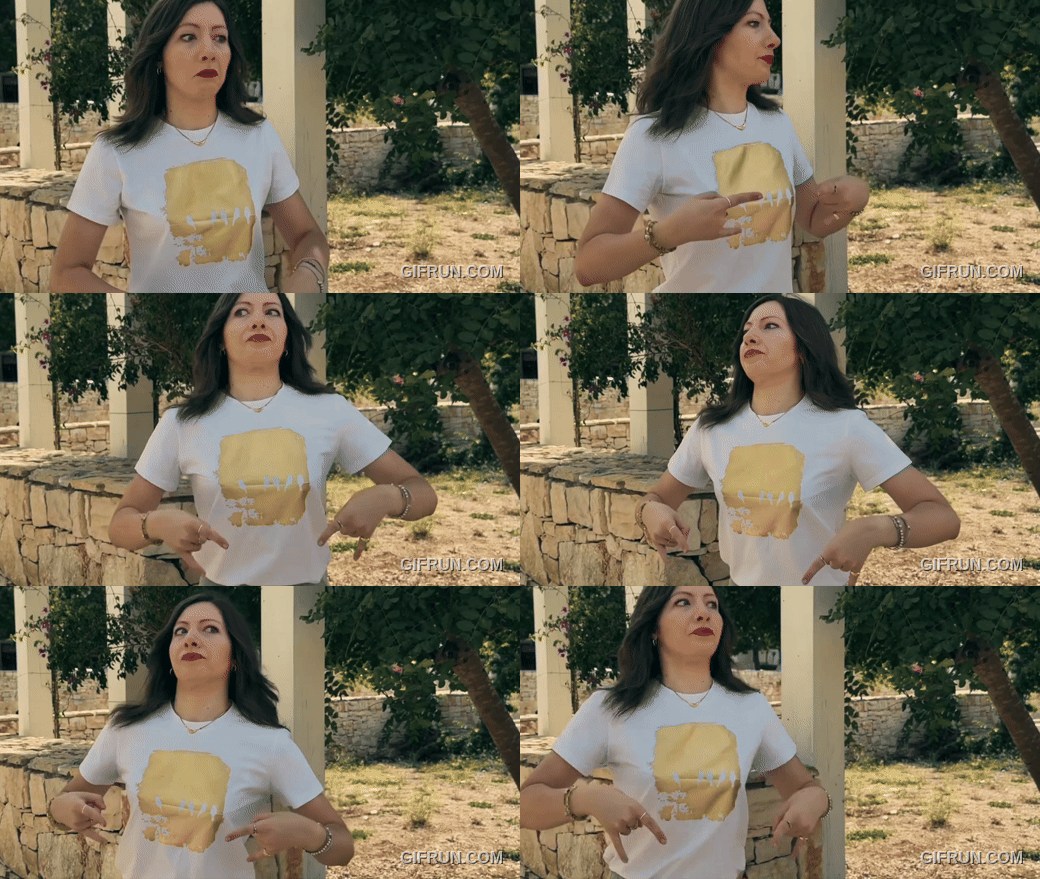
One of the most iconic superstitious gestures of Italian culture. You perform it by extending index and pinky fingers while keeping the other fingers closed with the thumb, forming “horns.” The gesture is directed downward (toward the ground to “send away” bad luck) or sometimes hidden (in the pocket, behind the back) to avoid being seen performing a superstitious gesture. It is often accompanied by the expression “facciamo le corna” [“let’s make horns”] or “tocchiamo ferro” [“let’s touch iron”] (another apotropaic gesture).
This is perhaps the oldest and most widespread superstitious gesture of Italian and Mediterranean culture. Its origins are lost in the mists of time and interweave pagan beliefs, apotropaic phallic symbolisms (that ward off evil), and peasant traditions. The “horns” represented protection against the evil eye and bad luck, a symbol so powerful that it has reached our days practically unchanged. It is deeply rooted in the Italian collective unconscious.
Usage contexts: It is used when you pronounce or hear words of potential misfortune (examples parlare di malattie, incidenti, morte [talking about illnesses, accidents, death]), when you make positive predictions that you fear might “attract bad luck” (example “di sicuro andrà tutto bene” [“surely everything will be fine”] – horns!), when passing in front of cemeteries or places considered inauspicious, when someone makes an overly optimistic speech, or simply for generic protection. It is so rooted in culture that it is done automatically, almost unconsciously, demonstrating how deep the influence of superstition is even in modern Italian society.
39. “È Troppo! Basta” [It’s Too Much! Enough!]
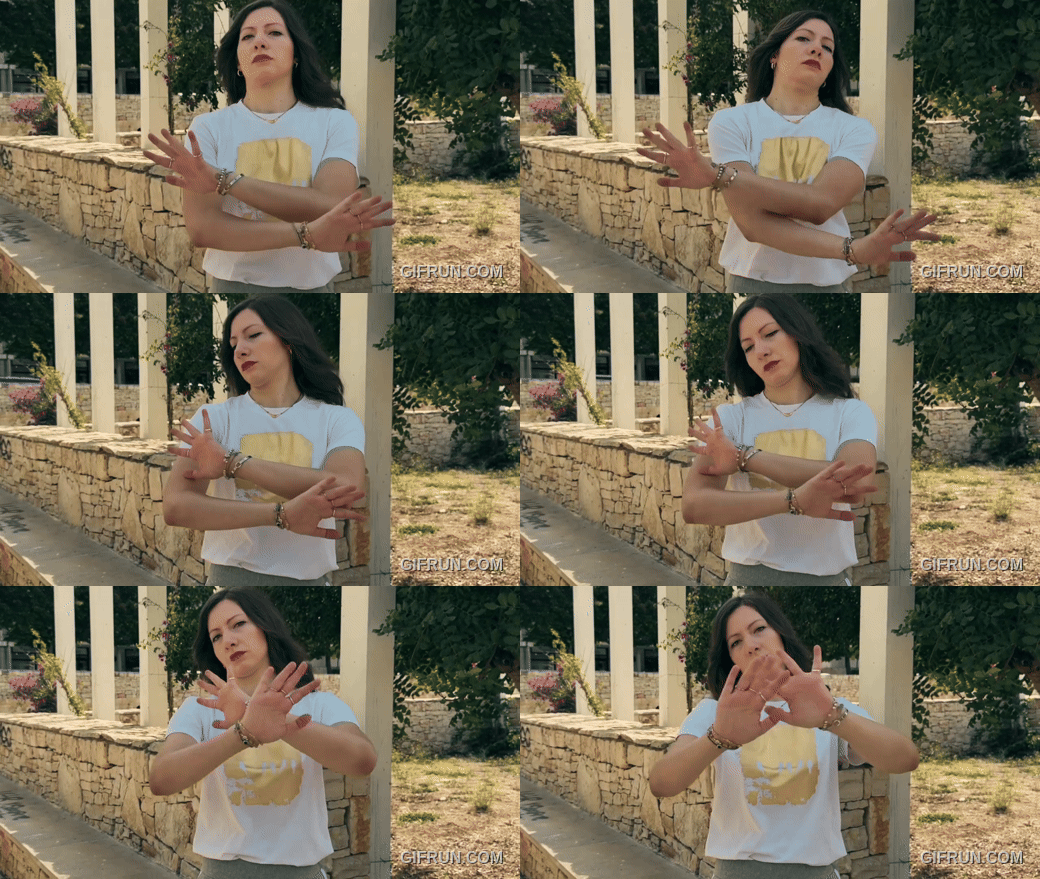
A gesture of emotional saturation and total refusal. You perform it by frantically waving both hands in front of you, with palms facing outward or downward, in a rapid and nervous movement that seems to want to physically “sweep away” the topic or situation. The hands move simultaneously from right to left, or up and down, with growing energy and accelerated rhythm. The facial expression shows definitive exasperation: eyes closing or looking away, head shaking, lips pressed or mouth pronouncing a silent but firm “no.” The body may also retreat slightly, as if to physically distance itself from the conversation. The message is clear: “dai, basta, non ne voglio più sapere” [“come on, enough, I don’t want to hear about it anymore”].
This gesture has origins in the need to create a physical barrier between oneself and a topic or situation that has exceeded the limit of tolerability. The frantically waving hands represent the attempt to literally “erase” what is happening, to push it away from one’s emotional and mental space. It is deeply rooted in Italian culture of direct emotional expressiveness: when you reach the limit, you don’t hide it politely but communicate it unequivocally through the whole body. The gesture represents the moment of emotional overload where you can no longer rationally manage the situation and the body reacts instinctively to protect one’s mental sanity.
Usage contexts: It is used when you have been exposed too long to a stressful topic and reach the breaking point (examples discussioni familiari che girano in tondo, litigi di coppia che ritornano sempre sugli stessi punti, argomenti di lavoro che causano ansia [family discussions going in circles, couple fights that always return to the same points, work topics causing anxiety]), to communicate that you are no longer emotionally available to discuss something (example “questo argomento è chiuso per me” [“this topic is closed for me”]), to interrupt conversations becoming too intense or painful, or to establish boundaries when someone insists on themes you don’t want to address. It is particularly common in prolonged conflict situations where all words seem useless and only the physical gesture can communicate the urgency of the need to stop. It represents the moment when the Italian, normally available for dialogue and heated discussion, establishes an insurmountable limit to protect their emotional balance.
40. “È Tardi!” [It’s Late!]
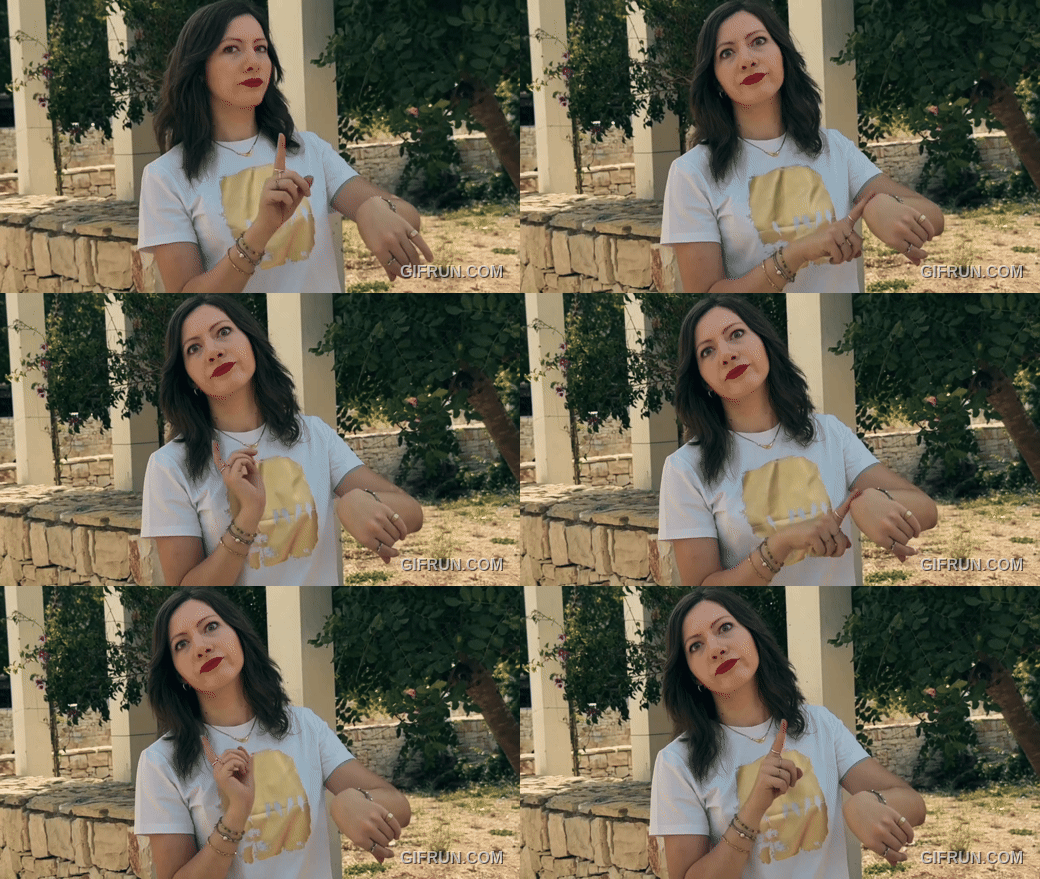
A gesture that communicates temporal urgency and urges speed. You perform it by repeatedly tapping on your wrist where the watch is located (even if you’re not wearing one), or by raising your arm and energetically indicating an imaginary watch on your wrist. The movement is rapid and insistent, accompanied by a worried or exasperated facial expression that communicates the urgency of time passing.
This gesture is relatively modern and developed with the spread of wristwatches in the twentieth century. Before then, to indicate time other gestures were used (such as looking at the sun or indicating the sun’s position in the sky). The gesture of indicating the watch has become so codified that it is done even when not wearing a watch, demonstrating how it has become an abstract symbol of time rather than a reference to a real object.
Usage contexts: It is used to urge someone to hurry because you are late (examples per un appuntamento, un treno, un film [for an appointment, a train, a movie]), to discreetly point out to someone that it’s time to go (examples durante una visita che si prolunga troppo, in una riunione che supera i tempi [during a visit that goes on too long, in a meeting that exceeds times]), to communicate temporal urgency in situations where you cannot speak loudly, or simply to answer the question “che ora è?” [“what time is it?”] by indicating the watch. It is one of the most used gestures in modern hectic life where time is always tyrannical.
41. “È Pieno di Persone Qui!” [It’s Full of People Here!]
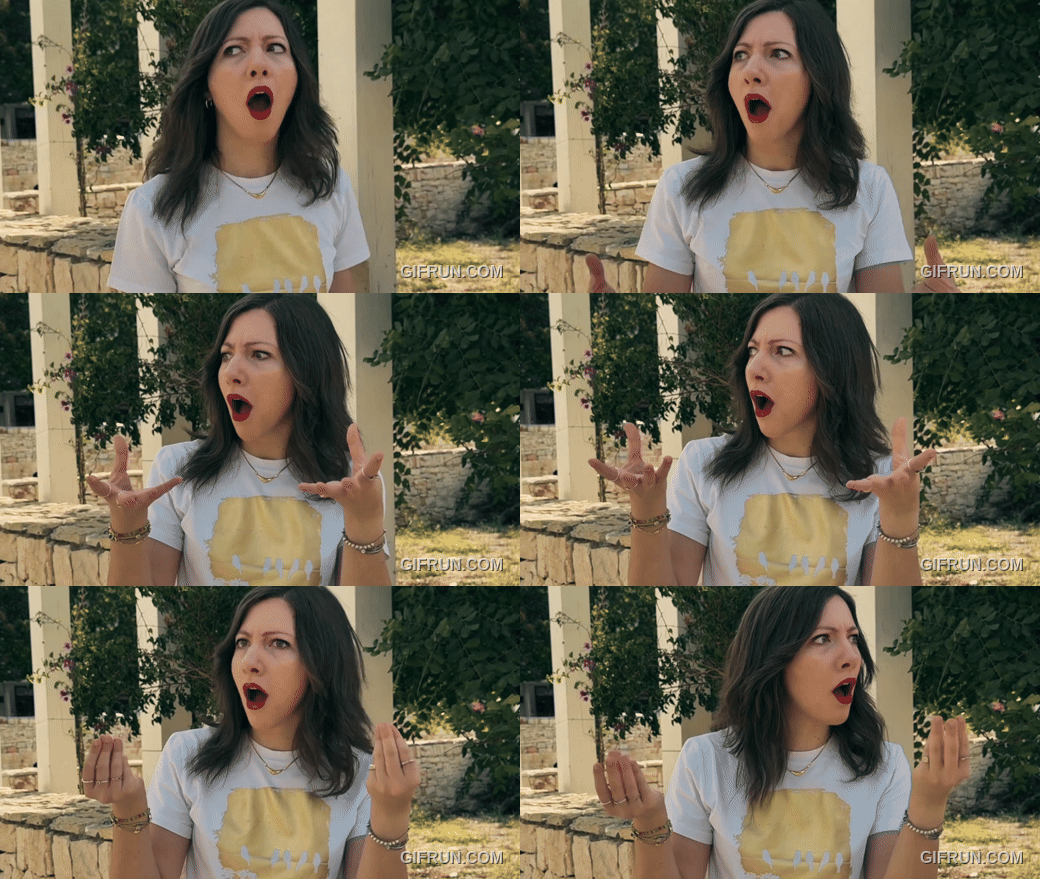
A descriptive gesture that communicates overcrowding and density of people. You perform it with both hands open in front of your body, moving your fingers inward and outward repeatedly as if compressing an imaginary space full of people, or waving your hands in front of you with fingers moving as if to indicate a swaying mass of people. The facial expression shows discomfort or amazement at the quantity of people.
This gesture belongs to the category of quantitative descriptive gestures, where you use your body to visually represent an environmental condition. The moving hands literally mimic the mass of people and the feeling of oppression experienced in crowded places. It is a particularly expressive gesture immediately understandable even without words.
Usage contexts: It is used to describe or complain about overcrowding of a place (examples un locale, un mezzo pubblico, una strada durante eventi [a venue, public transport, a street during events]), to warn someone that a place is very crowded and advise against visiting it, to justify delays due to crowds, to comment on particularly well-attended events, or simply to share the discomfort felt in situations of excessive density of people. It is particularly used during tourist periods, during sales, or in reference to public transport during rush hours.
42. “È Finito Tutto” [Everything’s Finished]
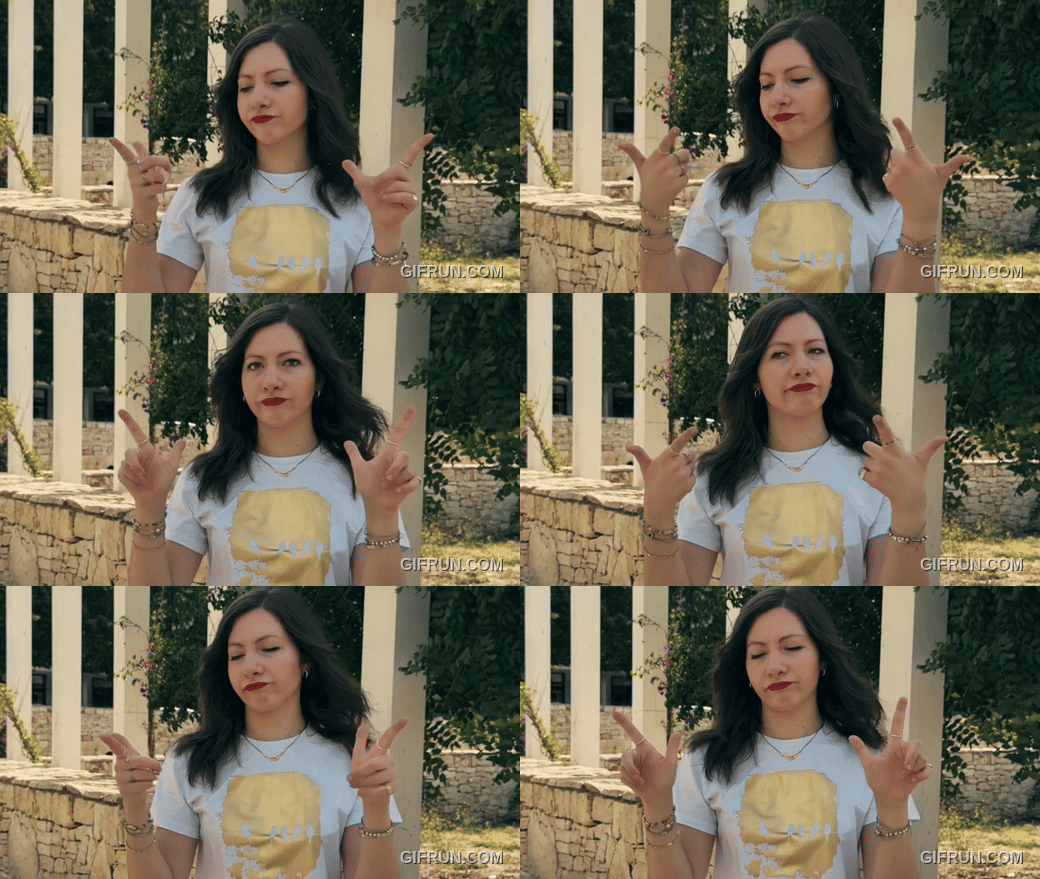
A gesture that communicates complete and definitive exhaustion. You perform it by forming a gun with your hand: thumb raised and index finger extended while the other fingers remain closed in a fist, and making this imaginary gun “shoot” with a sharp movement of the wrist or thumb that lowers as if pressing a trigger. The gesture can be repeated several times, “shooting” downward or sideways. The facial expression is one of neutral or regretful observation: slightly raised shoulders, mouth forming a thin line, eyebrows lifting in a sign of resignation. The gesture communicates “finito, zero, niente da fare, non c’è più” [“finished, zero, nothing to be done, there’s no more”].
This gesture has origins in the metaphor of the “final shot” that definitively closes something, or in the concept of “coup de grâce” that sanctions irreversible end. The imaginary gun represents the act of symbolically “killing” availability, resources, possibilities. It is a visual and immediate way of communicating that something has ended sharply and definitively, without possibility of recovery or extension. In Italian culture, where gesturing tends to be dramatic and visual, transforming the simple statement “it’s finished” into a symbolic action like “shooting” makes the message more memorable and definitive.
Usage contexts: It is used to communicate that something is completely exhausted in a definitive and non-recoverable way: food or drinks finished during a meal (example “il vino? Finito!” [“the wine? Finished!”] + gun gesture), money ended (example “soldi? Zero!” [“money? Zero!”] + gesture), time expired without possibility of extension (example “il tempo per iscriversi è finito” [“the time to register is finished”] + gesture), stocks exhausted in store (example “questo modello? Finito, non ne abbiamo più” [“this model? Finished, we have no more”]), opportunities definitively lost (example “quella possibilità è morta” [“that possibility is dead”] + gesture). It is particularly effective in commercial contexts to communicate total unavailability, in domestic situations when noting resource exhaustion, or in work contexts to signal definitive deadlines already passed. The gesture adds a component of definitiveness and drama that a simple verbal “non c’è più” [“there’s no more”] would not have, perfectly representing the Italian tendency to transform even simple practical observations into small memorable theatrical moments.
43. “È Fantastico, È Perfetto” [It’s Fantastic, It’s Perfect]
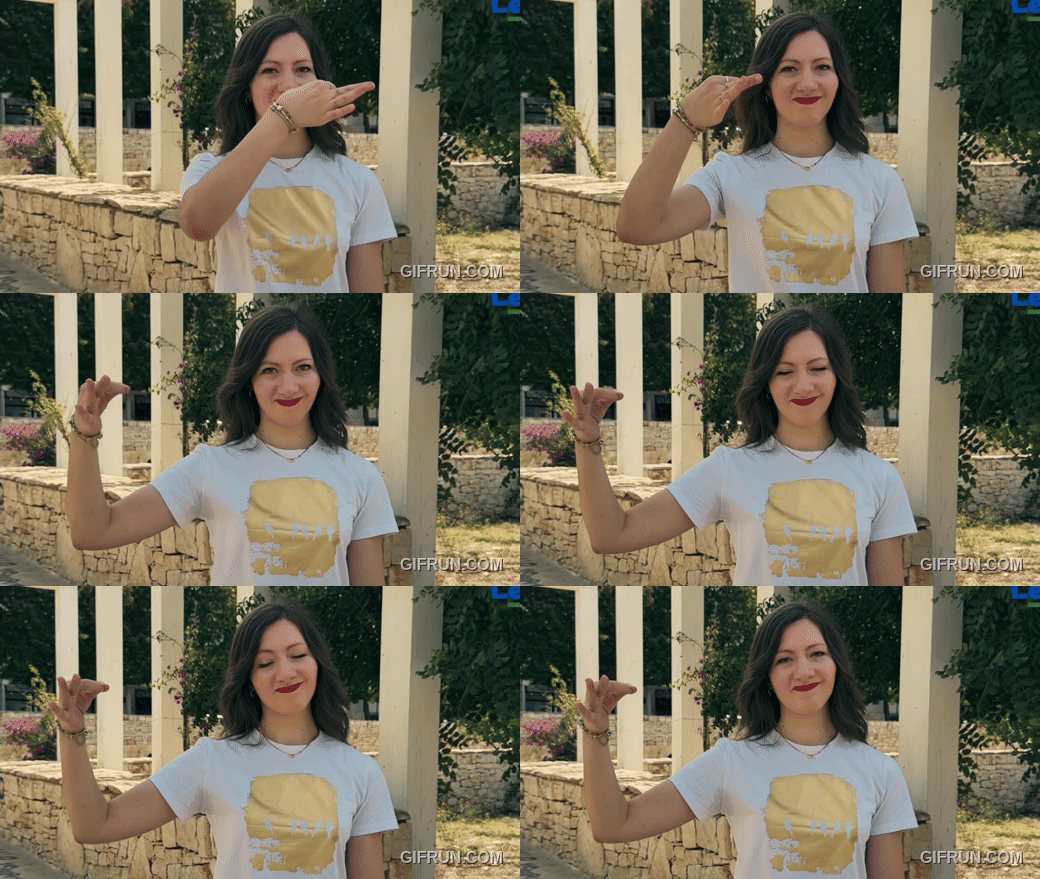
A gesture of supreme approval and absolute perfection. You perform it by joining thumb and index finger to form a perfect circle (the classic “OK” sign), and tracing with this shape an imaginary line in front of you, horizontally or vertically, as if drawing in the air or measuring something with millimetric precision. The movement is fluid and deliberate, emphasizing that everything is aligned, precise, impeccable. The facial expression shows full satisfaction: pleased smile, eyes shining with approval, nod of the head confirming excellence. The gesture communicates “perfetto” [“perfect”], “impeccabile” [“impeccable”], “fatto a regola d’arte” [“made to perfection”], “precisione assoluta” [“absolute precision”].
This gesture combines the universal symbolism of the circle formed by thumb and index finger (representing perfection and completeness) with the action of tracing a line, which adds the concept of precision, accuracy and adherence to a high standard. It has origins in the Italian artisanal world, where measuring and verifying precision with fingers was (and is) common practice: carpenters, tailors, artists who check alignments and proportions with hand gestures. It is deeply rooted in Italian culture of artisanal excellence and of “well-made,” where detail and perfection are fundamental values that deserve to be visually celebrated.
Usage contexts: It is used to express maximum approval for something executed flawlessly (examples un lavoro artigianale impeccabile, un piatto cucinato alla perfezione, un progetto realizzato magnificamente [impeccable artisanal work, a dish cooked to perfection, a project executed magnificently]), to compliment someone who has done something with extreme precision and attention to detail, to express satisfaction for results that exceed expectations, to emphasize quality and perfection of execution. It is particularly common in artisanal and creative contexts where excellence is the primary value, in professional contexts to recognize superior work, or simply to express aesthetic and functional appreciation toward anything executed impeccably. It represents Italian love for quality and detail, and the ability to recognize and celebrate craftsmanship and attention that transform a simple object or action into a work of art.
44. “È Caro, Costoso” [It’s Expensive, Costly]
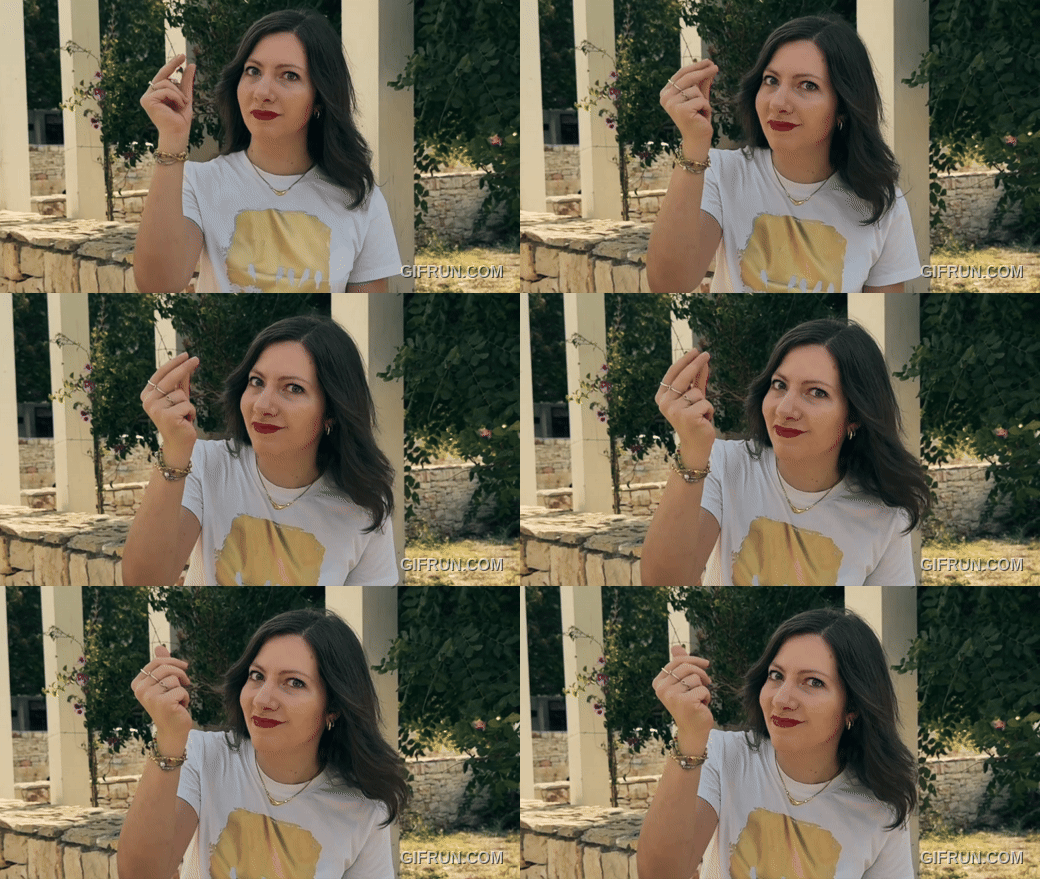
A gesture that communicates high cost and significant economic value. You perform it by raising your hand with the palm open and moving it up and down repeatedly with small oscillations, as if weighing something heavy in your hand or indicating something that “weighs” heavily on the wallet. Alternatively, you can rub thumb against index and middle fingers, the universal gesture of money. The facial expression shows concern or amazement at the price: raised eyebrows, wide eyes, mouth that can form an “o” of surprise.
This gesture combines two symbolic representations of economic value: weight (heavy things are expensive) and the gesture of money (rubbing fingers). Both have ancient origins in commercial culture where the relationship between price and value was physically tangible. The gesture of weighing has particular roots in Mediterranean markets where merchandise was literally weighed to determine price.
Usage contexts: It is used to comment on the high price of something (examples un prodotto, un servizio, un ristorante, una vacanza [a product, a service, a restaurant, a vacation]), to warn someone that something costs a lot before they decide to purchase, to justify why you didn’t buy something, to share amazement at particularly high prices, or to complain good-naturedly about the cost of living. It is common in shopping contexts, when discussing personal finances, or when talking about economic choices. It can be used both seriously (genuine concern about price) and jokingly (exaggerating the cost of something for comic effect).
45. “È Andata Bene!” [It Went Well!]
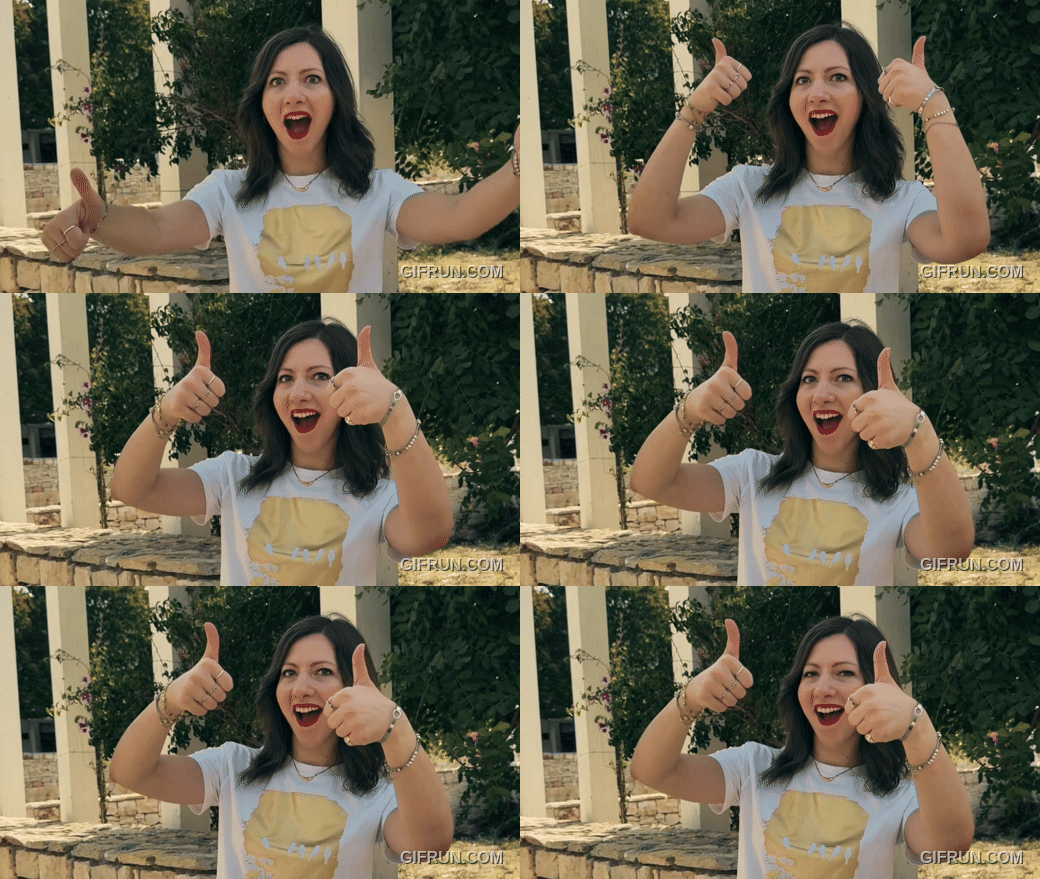
A gesture of satisfaction and positive outcome. You perform it by raising your thumb upward in the classic sign of approval, accompanied by a satisfied smile and often a nod of the head. The gesture can be performed with one or both hands for greater emphasis. The facial expression is one of relief and joy: relaxed smile, bright eyes, relaxed posture.
The raised thumb is one of the most universal gestures of approval and positive outcome, with origins dating back to ancient Rome where it was used in the arena (though with opposite meaning than modern). In contemporary Italian culture, it has become a quick and efficient way to communicate success without needing elaborate explanations. It perfectly represents the need to share joy and relief for positive outcomes.
Usage contexts: It is used to communicate that something went well (examples un esame, un colloquio, un appuntamento medico, un progetto [an exam, a job interview, a medical appointment, a project]), to respond to questions about how things went, to share positive outcomes with friends and family, to reassure someone worried about a result. It is one of the most used gestures daily, particularly useful for quick communication across distances (example dalla finestra, attraverso vetri [from the window, through glass]) or in situations where you cannot speak loudly.
46. “Dopo. Lo Facciamo Dopo” [Later. We’ll Do It Later]
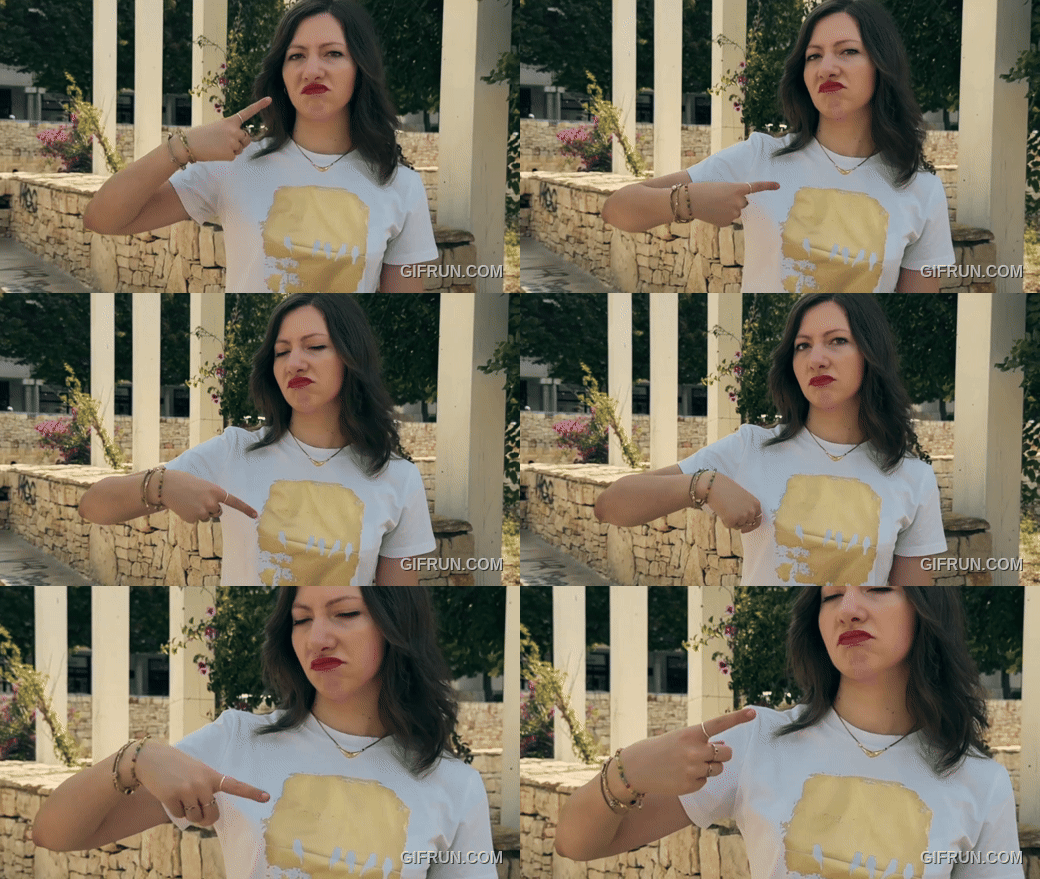
A gesture of postponement and promise of future action. You perform it by extending your hand forward with the palm facing down or to the side, and making a gentle pushing movement away from yourself, as if sliding something along a timeline toward the future. The movement is calm and reassuring, not abrupt. The facial expression is relaxed and promising, communicating that the thing will be done, just not now.
This gesture has origins in the spatial representation of time, where the future is visualized as “ahead” or “further away” from the present. Pushing something forward symbolizes moving it along the temporal timeline. In Italian culture, where the relationship with time can be more flexible than in other cultures, this gesture represents a typical way to manage multiple demands: acknowledging the request but giving oneself more time.
Usage contexts: It is used to postpone non-urgent tasks or requests (examples lavori domestici, commissioni, telefonate da fare [household chores, errands, phone calls to make]), to respond to requests when currently busy with something else, to manage priorities without completely refusing, to reassure someone that their request hasn’t been forgotten but will be addressed when there’s time. It is common in family and work contexts where multiple demands compete for attention, representing a diplomatic way to say “not now” without saying “no.”
47. “Così Così” [So-So]

A gesture that expresses mediocrity, uncertainty or ambivalence. You perform it by tilting your hand from side to side with the palm facing down, making an oscillating movement like a seesaw. The movement is repeated several times and communicates “not great, not terrible” or “more or less” or “could be better.” The facial expression is neutral or slightly uncertain: slightly protruding lower lip, slightly raised eyebrows, tilted head.
This gesture has universal origins in the physical representation of balance and instability: the hand that oscillates like a scale represents the balance between positive and negative, good and bad. It is one of the most immediately understandable gestures even across different cultures, but the Italian version is characterized by particular expressiveness and frequency of use.
Usage contexts: It is used to respond honestly but not enthusiastically to questions about how things are going (example “come va?” – “così così” [“how’s it going?” – “so-so”]), to express uncertainty about future outcomes, to communicate that something is neither satisfying nor completely negative, to express moderate or mixed feelings about experiences, people or situations. It is one of the most used gestures in everyday conversation, representing Italian honesty in not exaggerating either positively or negatively when the situation is genuinely mediocre or uncertain.
48. “Cos’Hai?” [What’s Wrong?]

A gesture of concerned interest and invitation to confide. You perform it by leaning your head slightly to the side, often accompanied by opening your arms slightly with palms facing up in a questioning and welcoming position, or by gently touching the other person on the arm or shoulder. The facial expression is one of empathy and attention: soft gaze, slightly furrowed eyebrows showing concern, encouraging expression.
This gesture combines non-verbal signals of empathy and availability: tilting the head is a universal signal of attention and listening, while open arms communicate openness and willingness to welcome confidences. It is deeply rooted in Italian culture of emotional relationships, where showing interest in others’ emotional states is not considered intrusion but affection and care.
Usage contexts: It is used when you notice that someone is visibly upset, sad or worried and you want to offer space to confide: a friend who suddenly becomes silent during a conversation, a colleague who seems particularly stressed, a family member who has a gloomy expression, a partner who is more taciturn than usual. It is particularly effective in situations where words might seem invasive or where you want to communicate availability to listen without forcing confidence. It is also used when someone does or says something unexpected and you want to understand what prompted them (example “che ti prende oggi?” [“what’s gotten into you today?”]). It is common in all close relationships (family, friendship, romantic) where mutual attention to emotional states is an integral part of the bond. It represents Italian sensitivity toward interpersonal emotional dynamics and the belief that ignoring others’ discomfort is not respect for privacy but indifference, while actively taking interest is a sign of affection and availability.
49. “Ci Sentiamo per Telefono” [We’ll Talk on the Phone]
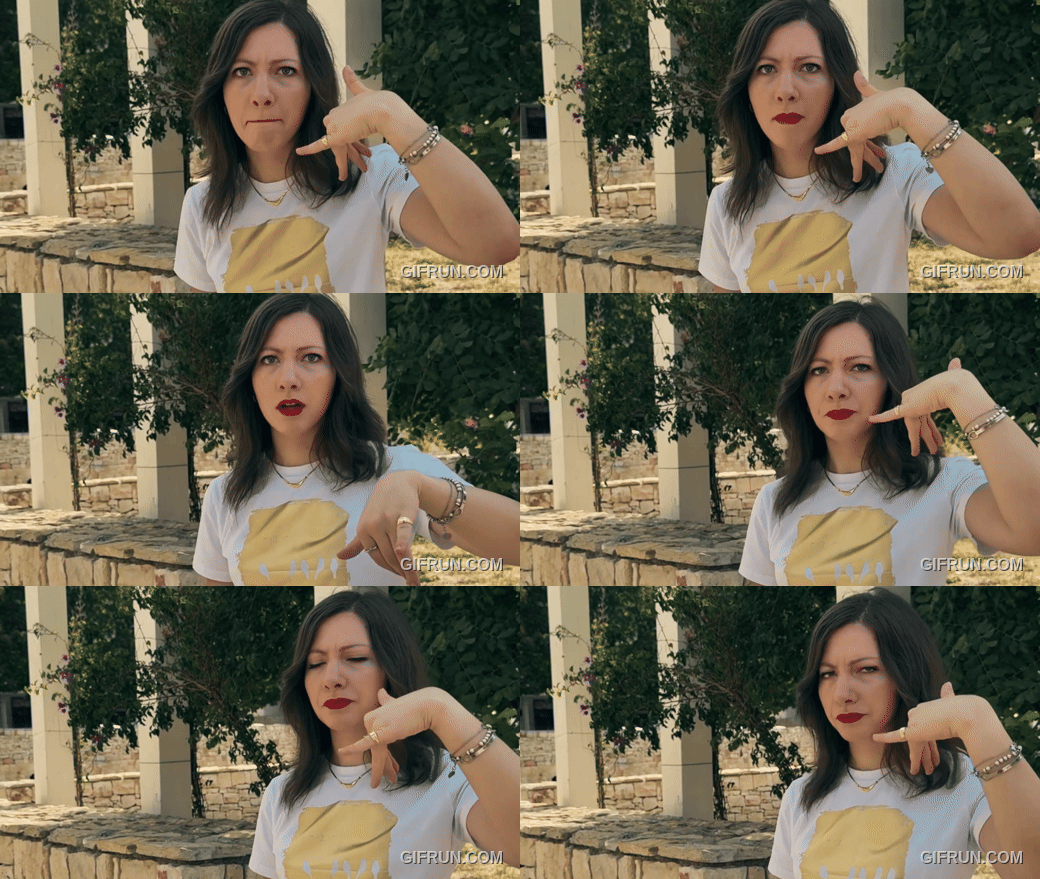
A gesture that mimics the phone call and the agreement to be in touch. You perform it by bringing your closed fist hand with thumb and pinky extended to your ear, mimicking the shape of a classic telephone (or smartphone held that way). The gesture can be accompanied by a hand movement as if to say “ti chiamo io” [“I’ll call you”] or “chiamami tu” [“you call me”]. The facial expression is friendly and smiling, communicating the intention to maintain contact.
This gesture evolved from the shape of classic handset telephones, where the receiver actually had that shape with earpiece and microphone at the ends. Even in the smartphone era, this gesture has remained unchanged and immediately recognizable. It represents not only the physical action of calling, but also the social commitment to maintain contact, important in Italian culture where relationships are actively cultivated.
Usage contexts: It is used to agree on a future phone call when saying goodbye, to quickly communicate with someone you pass on the street that you’ll talk later, to remind someone that they need to call, to promise to call when urged to do so, or simply to keep social contact alive when there’s no time for long conversations. It is particularly used in crowded urban contexts where you need to quickly communicate the intention to stay in touch.
50. “Che Noia!” [How Boring!]
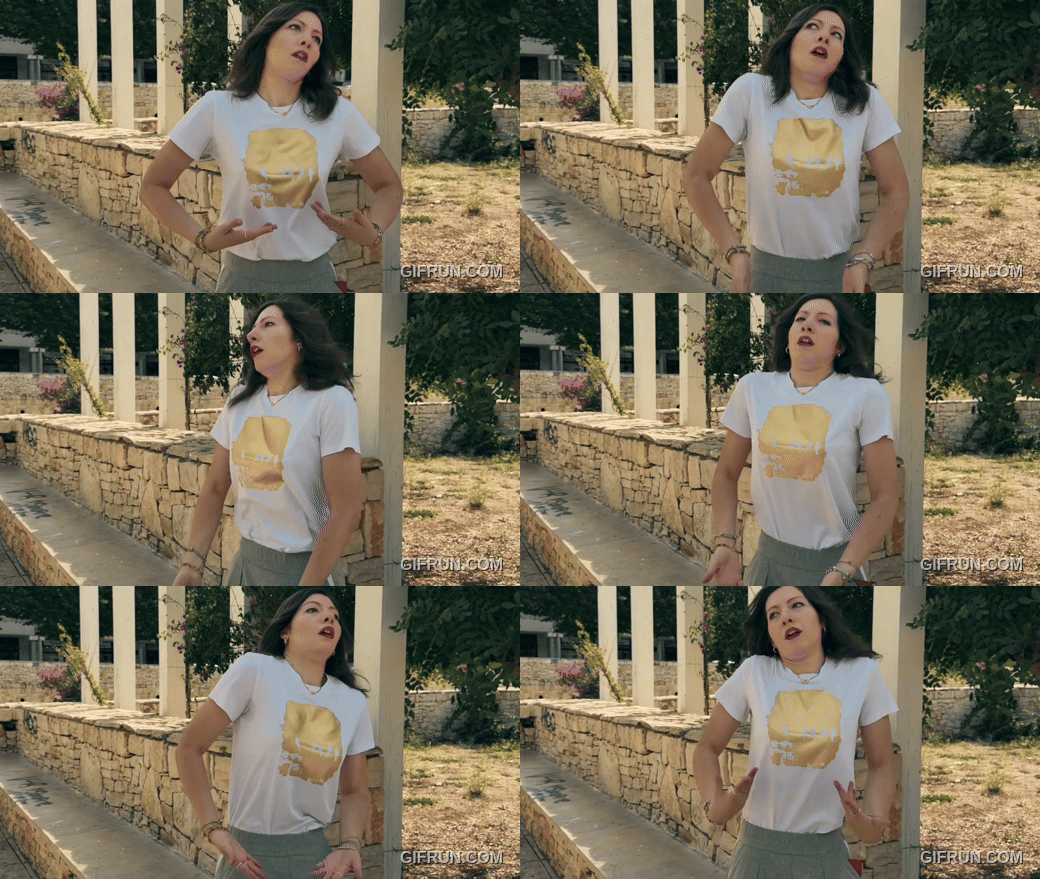
A gesture that expresses deep boredom and oppressive heaviness. You perform it by waving your arms and hands downward with a tired and languid movement, as if dragging an invisible weight or as if your arms themselves had suddenly become too heavy to hold up. The palms can face downward and the hands move with little energy, almost “falling” repeatedly. The facial expression shows extreme tedium and mental exhaustion: half-closed eyes or looking into space with a dull gaze, mouth slightly open or with downturned corners, relaxed eyebrows communicating total lack of stimulus. The whole body seems to sag under the weight of boredom, shoulders curve slightly forward. The message is: “che pesantezza” [“what heaviness”], “non se ne può più” [“can’t take it anymore”], “è una tortura” [“it’s torture”].
This gesture has origins in the physical representation of the emotional weight of boredom, where the lack of stimuli and interest is expressed through a body that literally “loses energy” and “becomes heavy.” The arms waving downward mimic the feeling of being crushed by tedium, of no longer having the strength to react or be interested. It is deeply rooted in Italian culture of total expressiveness, where even passive states of mind like boredom must be actively and theatrically communicated. The gesture transforms an internal experience (feeling bored) into a visible external performance that involves the whole body.
Usage contexts: It is used to communicate deep and unbearable boredom during tedious situations that seem never-ending: endless and unproductive work meetings, monotonous school lessons, prolonged waits with nothing to do (examples sale d’attesa, code burocratiche, ritardi nei trasporti [waiting rooms, bureaucratic queues, transport delays]), long and repetitive speeches, monotonous and repetitive tasks. It is particularly common among students during boring lessons, in offices during dragging meetings, or in any situation where you feel “trapped” in an activity devoid of stimuli. It represents the Italian difficulty in hiding even negative emotions, preferring to communicate them openly rather than suffer them in polite silence.
51. “Che Fortuna!” [What Luck!]
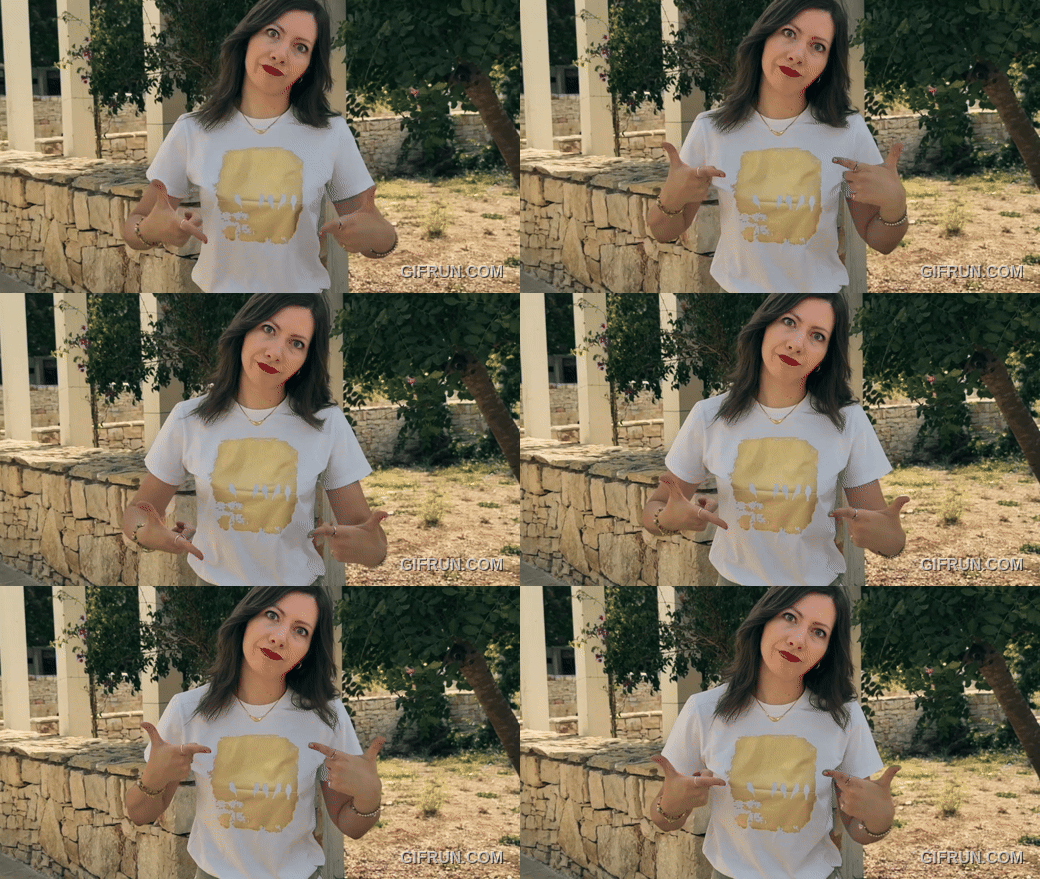
A gesture that expresses admiration for extraordinary luck. You perform it by forming a gun with both hands (thumb raised and index finger extended, other fingers closed), and moving them from bottom to top with a decisive and repeated movement, as if shooting toward the sky or lifting something precious. The movement starts at waist or hip height and rises energetically upward, often repeated several times to emphasize the extent of the luck. The facial expression shows amazement mixed with benevolent envy: wide eyes, raised eyebrows, mouth open in an expression of disbelief, often accompanied by a smile that acknowledges others’ luck. The gesture communicates: “incredibile” [“incredible”]!, “beato te!” [“lucky you!”], “hai una fortuna sfacciata!” [“you have shameless luck!”].
This gesture has origins in Italian popular culture of expressing luck through direct and unfiltered bodily metaphors. The upward movement symbolizes the ascent of good fortune, something precious that elevates, a gift from destiny that arrives from above. It is deeply rooted in Italian culture where luck is seen as a powerful and capricious force that distributes its favors unpredictably, and when someone is kissed by it, this deserves to be openly recognized, even with a certain dose of good-natured and playful envy. The gesture allows expressing admiration for others’ luck while maintaining a light and complicit tone.
Usage contexts: It is used to recognize and celebrate extraordinary luck of someone: unexpected wins (examples lotterie, scommesse, giochi [lotteries, bets, games]), incredibly favorable coincidences (examples trovare parcheggio impossibile, evitare per un soffio situazioni negative [finding impossible parking, narrowly avoiding negative situations]), opportunities fallen from the sky (examples offerte di lavoro perfette, occasioni irripetibili [perfect job offers, once-in-a-lifetime opportunities]), successes obtained with evident luck component (examples passare un esame studiando solo l’argomento uscito, incontrare la persona giusta al momento giusto [passing an exam having studied only the topic that came up, meeting the right person at the right time]). It represents the Italian relationship with the concept of luck: recognized as a real and important force, celebrated when it favors, good-naturedly envied when it touches others, always with that component of lightness that allows admiring others’ good fortune without real bitterness.
52. “Che Figura! Che Imbarazzo” [What Embarrassment! How Awkward!]

A gesture that expresses shame and embarrassment, fundamental in Italian culture where “bella figura” [“good impression”] and “brutta figura” [“bad impression”] have enormous social importance. You perform it by bringing one hand to your forehead in a sign of despair, or by bringing both hands to your face, covering it partially or completely. It can also be done with both hands squeezing the cheeks. The facial expression shows mortification, with eyes avoiding others’ gaze.
This gesture has deep origins in Italian shame and honor culture, where making “bella figura” [“good impression”] or “brutta figura” [“bad impression”] has important social implications. Covering the face is a universal instinctive gesture of protection when feeling shame, but in Italian culture it is particularly codified and loaded with social meaning. It represents the desire to hide, to disappear from others’ sight after committing an embarrassing mistake.
Usage contexts: It is used after embarrassing public mistakes (examples inciampare, chiamare qualcuno col nome sbagliato, essere scoperti in situazioni compromettenti [stumbling, calling someone by the wrong name, being discovered in compromising situations]), to comment on others’ particularly embarrassing situations, to express vicarious embarrassment (when someone close to us makes a bad impression), to playfully dramatize small social errors. It is one of the most common gestures in Italian social life, where awareness of one’s image is constant and important.
53. “Che Buono! Che Bello!” [How Good! How Nice!]

A gesture of enthusiastic appreciation and enjoyment. You perform it by bringing your joined fingers to your mouth and then opening your hand outward with an expanding movement, often accompanied by a loud kiss on the fingers before opening. It can also be done by clenching your fist near your heart and then opening the fingers like an explosion of joy. The facial expression shows pure pleasure: closed or half-closed eyes, blissful smile, expression of ecstasy.
This gesture is closely related to the famous “chef’s kiss” but has a broader application: it can refer not only to food, but to anything beautiful, pleasant or well done. It has origins in the gesturing of sensory appreciation, where pleasure is “kissed” and then “released” into the air as if to share it. It is deeply rooted in Italian culture of aesthetic and sensory enjoyment.
Usage contexts: It is used to express supreme appreciation (examples cibo delizioso, spettacoli magnifici, esperienze memorabili [delicious food, magnificent shows, memorable experiences]), to compliment whoever created something beautiful, to share with others the pleasure of a positive experience, to comment on something aesthetically perfect. It is one of the most used gestures in everyday Italian life, where appreciation of beauty and pleasure is an integral part of culture, from gastronomy to art, from nature to human relationships.
54. “Cerca di Fartelo Entrare nella Testa!” [Try to Get It Through Your Head!]
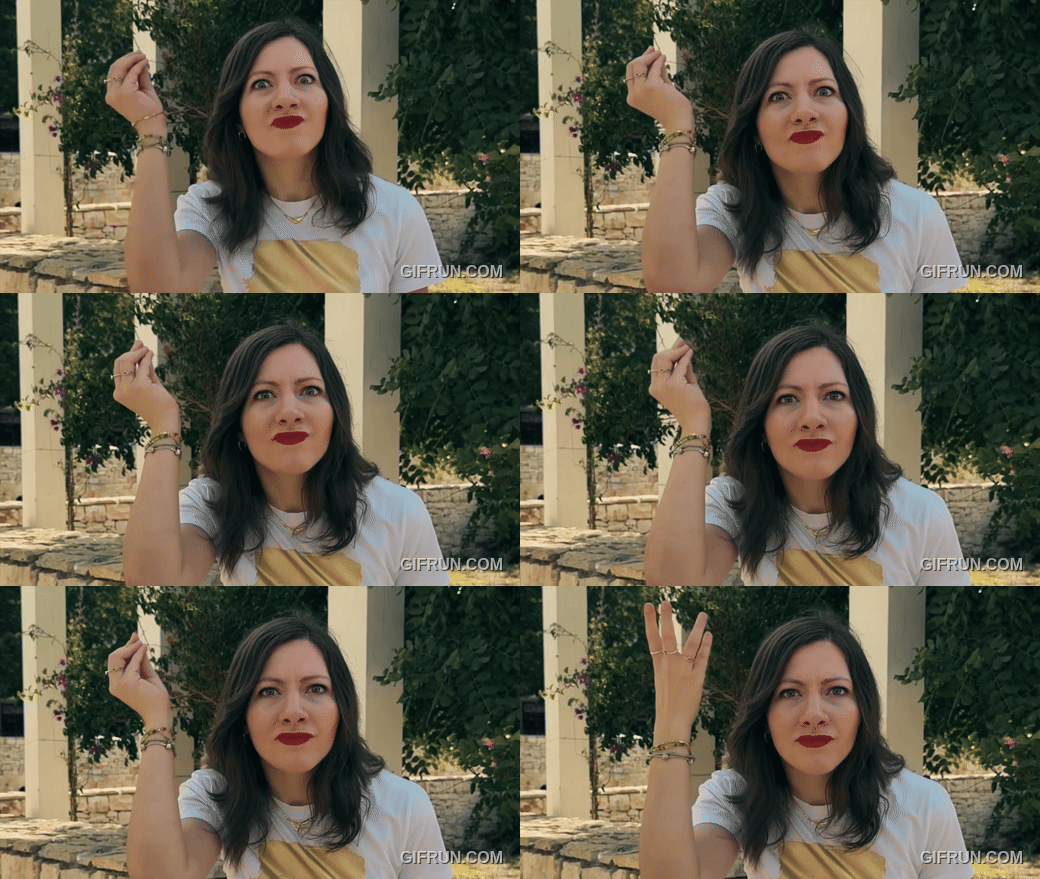
A gesture of exasperated invitation to understand something obvious. You perform it by pointing your index finger at your temple and making small circular movements or tapping gently, as if trying to physically push an idea into your head. The movement can be insistent and repeated. The facial expression shows frustration mixed with determination: furrowed eyebrows, intense gaze, mouth that can be pressed in a line of contained exasperation.
This gesture has origins in the metaphor of the head as a container of knowledge and understanding. The finger pointing at the temple symbolically indicates where the information should enter and be processed. The circular or tapping movement represents the effort needed to “insert” the concept into a head that seems resistant to understanding. It is deeply rooted in Italian educational culture and in communication between people with different levels of understanding.
Usage contexts: It is used when trying to make someone understand something they resist accepting (examples spiegazioni ripetute che non vengono comprese, concetti ovvi che l’interlocutore non coglie, situazioni dove qualcuno sembra deliberatamente ottuso [repeated explanations that are not understood, obvious concepts that the interlocutor doesn’t grasp, situations where someone seems deliberately obtuse]), to express frustration toward someone’s intellectual slowness or stubbornness, to emphasize the importance of understanding a crucial concept. It is particularly common in educational contexts, family discussions where patience is tested, or work situations where effective communication is essential. It represents the Italian frustration when clarity of explanation meets resistance or slowness in understanding, but also the determination not to give up until the message gets through.
55. “Ce ne Andiamo” [We’re Leaving]
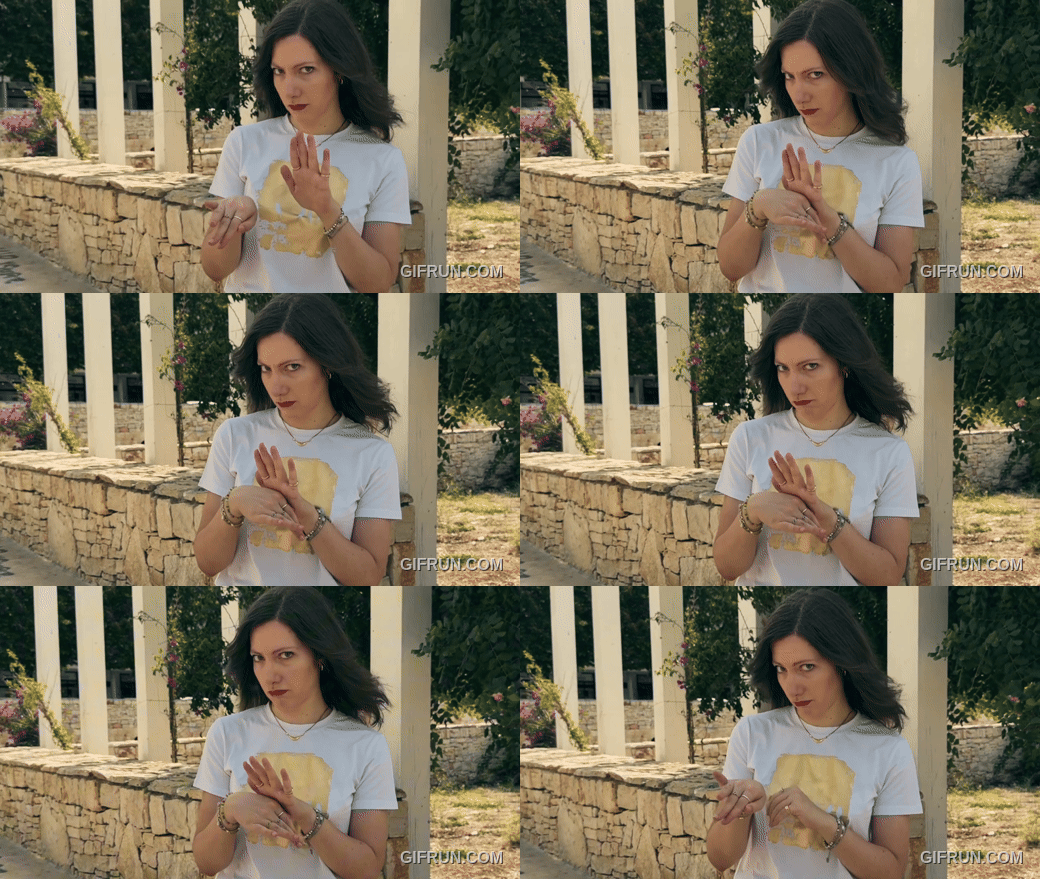
A gesture that announces departure. You perform it by making a movement with your thumb toward the exit or away from the current location, often accompanied by tilting your head in the same direction. It can also be done with the whole hand indicating the direction of exit. The facial expression can vary: neutral if it’s a simple functional departure, satisfied if you’re happy to leave, apologetic if you’re leaving earlier than expected.
This gesture has origins in the universal need to communicate movement and direction. The thumb or hand pointing indicates the direction of movement, while the accompanying body language (slight body turn, preparatory movements) reinforces the message. It is a practical and direct gesture that allows announcing intentions without long verbal explanations.
Usage contexts: It is used to signal departure from social events, meetings, gatherings (examples feste, riunioni, cene [parties, meetings, dinners]), to coordinate with companions when it’s time to leave, to politely announce you’re leaving without interrupting ongoing conversations, to respond non-verbally to questions about intentions. It is particularly useful in noisy contexts where speaking is difficult, or in formal situations where discretion is appreciated. It represents the Italian need to communicate clearly even routine actions like leaving, ensuring everyone is informed and coordinated.
56. “Calma! Stai Calmo!” [Calm Down! Stay Calm!]

A gesture of soothing and de-escalation. You perform it by moving both hands with palms facing down in a slow downward movement, as if physically pushing agitation downward and away. The movement is calm and deliberate, repeated several times with rhythm that induces tranquility. The facial expression is reassuring: soft gaze, relaxed features, sometimes a gentle smile, calm and measured tone of voice if speaking.
This gesture has origins in the universal physical metaphor of “lowering” tension, where agitation is visualized as something elevated that needs to be brought down. The downward hand movements symbolically “compress” and “calm” the emotional energy that is too high. It is deeply rooted in Italian conflict management culture, where direct emotional expression is accompanied by equally direct attempts at reconciliation and de-escalation.
Usage contexts: It is used to calm someone who is agitated, angry or anxious (examples litigi che stanno escalando, persone in preda al panico, situazioni di stress elevato [arguments that are escalating, people in panic, high-stress situations]), to de-escalate tense situations before they explode, to reassure someone worried or scared, to ask others to lower their voices or calm their reactions. It is particularly common in family contexts during arguments, in public situations where composure is needed, or whenever someone’s emotional intensity needs to be modulated. It represents the Italian ability to recognize when emotions are running too high and the need to actively intervene to restore balance, demonstrating that expressiveness and emotional control are not opposites but complementary skills.
57. “Beviamo Qualcosa di Alcolico” [Let’s Drink Something Alcoholic]

A gesture that invites to drink together in a social and celebratory context. You perform it by mimicking holding and raising a glass, bringing your closed hand (as if holding a glass) to mouth level and making a toasting movement upward, or tilting it as if drinking. The movement is more theatrical and celebratory than the simple water-drinking gesture. The facial expression is cheerful and inviting: smile, bright eyes, raised eyebrows in invitation.
This gesture has origins in Mediterranean convivial culture, where alcoholic drinking (especially wine) is not just consumption but a social ritual of connection and celebration. The gesture of raising the imaginary glass mimics the toast, a universal gesture of friendship and shared joy. It is deeply rooted in Italian culture where aperitifs, wine with meals, and after-dinner drinks are important social moments.
Usage contexts: It is used to propose an aperitif or drink together (examples dopo il lavoro, per celebrare qualcosa, per rilassarsi insieme [after work, to celebrate something, to relax together]), to invite to a bar or pub, to suggest socializing over drinks, to celebrate a success or occasion. It is particularly common in early evening when Italian aperitif culture is at its peak, among colleagues as a way to decompress after work, or whenever there’s a desire to transform a simple meeting into a more festive and relaxed social moment. It represents the Italian love for conviviality where drinking is never just about alcohol but about sharing time and joy with others.
58. “Beviamo dell’Acqua” [Let’s Drink Some Water]
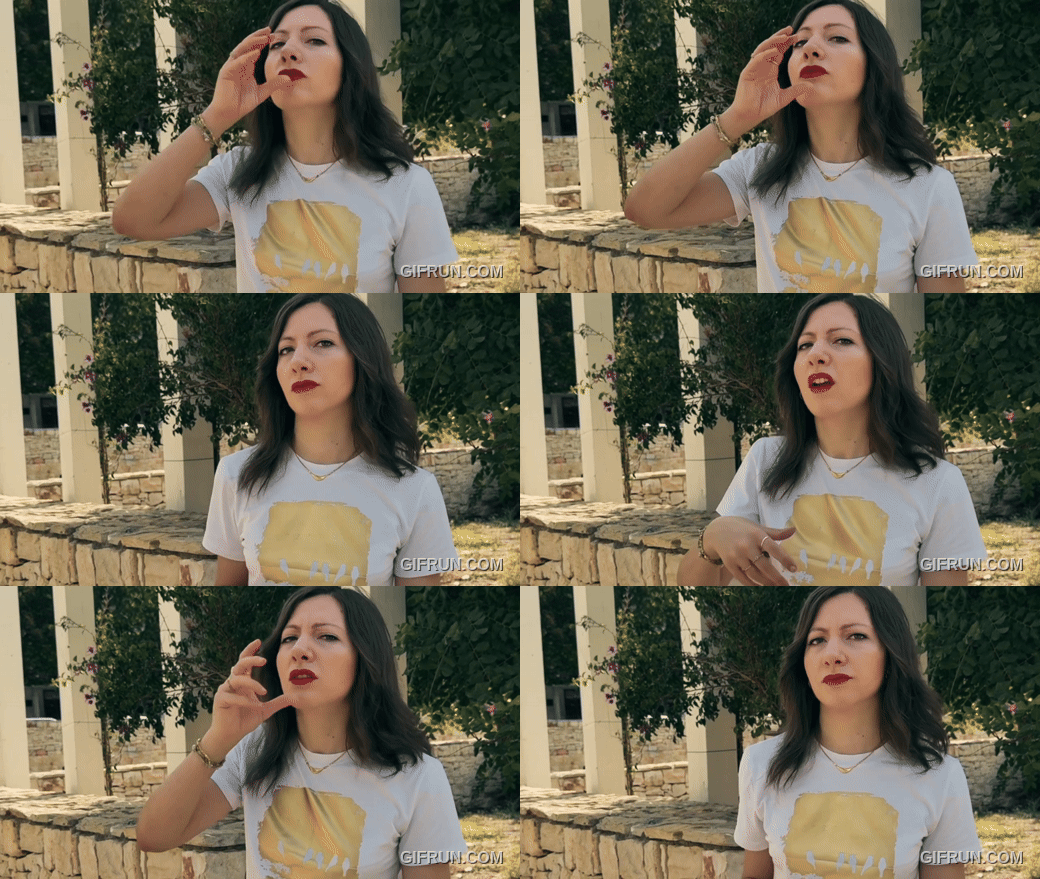
A simple gesture that expresses thirst or offer of water. You perform it by bringing your closed hand shaped like an imaginary glass to your mouth, with a tilting movement as if drinking, but more delicately than the alcohol gesture. Alternatively, you can point at your throat with a finger making an up and down movement. The facial expression may show thirst (tongue passing over lips, expression of need) or be neutral if it’s a simple offer.
This gesture has origins in the primary need to communicate the need for water, one of the fundamental physiological needs. Unlike the gesture for drinking alcohol, this is more neutral and functional, without the social and festive connotations of the other. It directly mimics the action of drinking, but the movement is generally smaller and less theatrical, reflecting the daily and necessary nature of water compared to the celebratory nature of alcohol.
Usage contexts: It is used to communicate that you are thirsty and want water, to offer water to guests or diners, to ask for water at restaurants or bars in noisy environments where it’s difficult to be heard, to remind someone to hydrate (particularly with children or elderly). It is one of the most functional gestures and least loaded with social meaning, used daily in every context where the need for water manifests.
59. “Attento, Possono Rubarti Qualcosa” [Careful, They Might Steal Something from You]

A gesture of warning about possible theft. You perform it by making a quick finger movement as if stealing something, mimicking the act of pickpocketing, or touching your pocket or bag. It can also be done by pointing at your own pocket and then making a “disappearance” gesture with your hand. The facial expression is serious and vigilant, with a gaze that scrutinizes the surrounding environment.
This gesture has origins in the need to warn discreetly of theft danger, particularly important in urban and tourist contexts where pickpockets operate. It is a gesture that must be discreet so as not to alarm potential thieves, but clear enough to be understood by those who need to be warned. It represents Italian culture of mutual vigilance and community protection.
Usage contexts: It is used to warn someone of theft risk in crowded or dangerous places, to remind tourists or distracted people to pay attention to their valuables, to signal the presence of suspicious people, to share information about areas known for thefts. It is a gesture of solidarity and mutual protection, particularly important in urban contexts where thefts are a real and daily concern.
60. “Andiamo a Fumare” [Let’s Go Smoke]

A gesture that invites to take a cigarette break. You perform it by mimicking the act of smoking: you bring index and middle fingers to your mouth as if holding an imaginary cigarette, often accompanied by a movement that mimics inhaling and exhaling smoke. Alternatively, you can make the gesture of lighting an imaginary lighter. The facial expression is neutral or interrogative if it’s an invitation, relaxed if it’s a statement.
This gesture has origins in smoking culture as a social break, particularly important in Italy where cigarettes are traditionally associated with moments of relaxation and conversation. Even with the declining number of smokers and increasingly strict restrictions, the “cigarette break” maintains its social value as a moment of work interruption and opportunity for informal socialization, often even for non-smokers who accompany.
Usage contexts: It is used to invite to take a cigarette break during work or long events, to coordinate break moments among smoking colleagues, to propose going out and talking privately (even without actually smoking), to justify a temporary exit from boring or stressful situations. It is particularly common in work contexts where smoke breaks are an important moment of decompression and informal socialization among colleagues.
61. “Acqua in Bocca!” [Keep It Secret!]
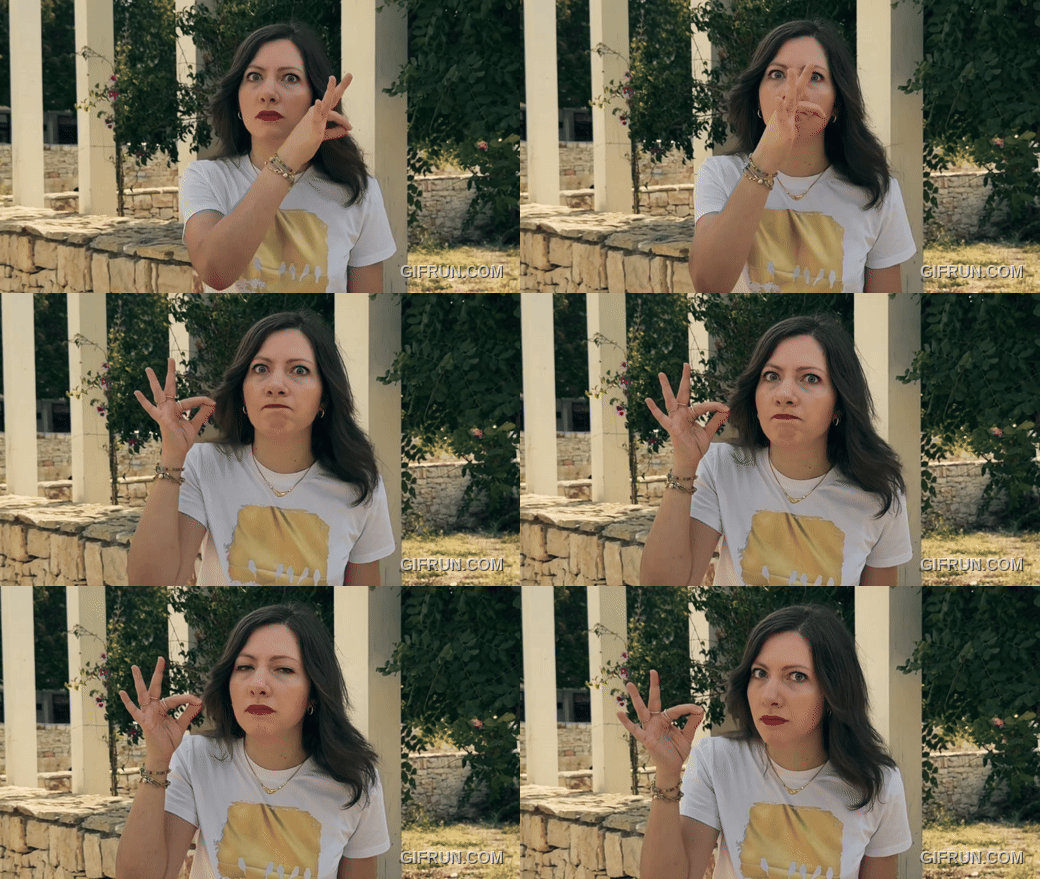
A gesture that requires absolute secrecy. It is performed by mimicking the action of closing a zipper over the mouth: you move your index finger and thumb together from one side of the closed lips to the other, as if closing a zip. Alternatively, you can bring your fingers to your lips and then “turn an imaginary key” to “lock them.” The facial expression is serious and complicit, with an intense gaze that emphasizes the importance of the secret.
This gesture has origins in the culture of secrecy and discretion, important values in traditional Italian society. The metaphor of the mouth closing like a zipper is very visual and effective. It is deeply rooted in communication between confidants, where the ability to keep secrets is an appreciated quality and the violation of trust is severely condemned socially.
Usage contexts: It is used when sharing a secret and you want to make sure it won’t be revealed (personal secrets, surprises in preparation, confidential information), to remind someone who has promised to keep a secret, to emphasize the importance of discretion on a delicate topic, or to create complicity in private conversations. It is common in intimate friendships, family contexts, and whenever information is shared that should not be spread.
62. “Accidenti, Mamma Mia!” [Wow, Oh My!]
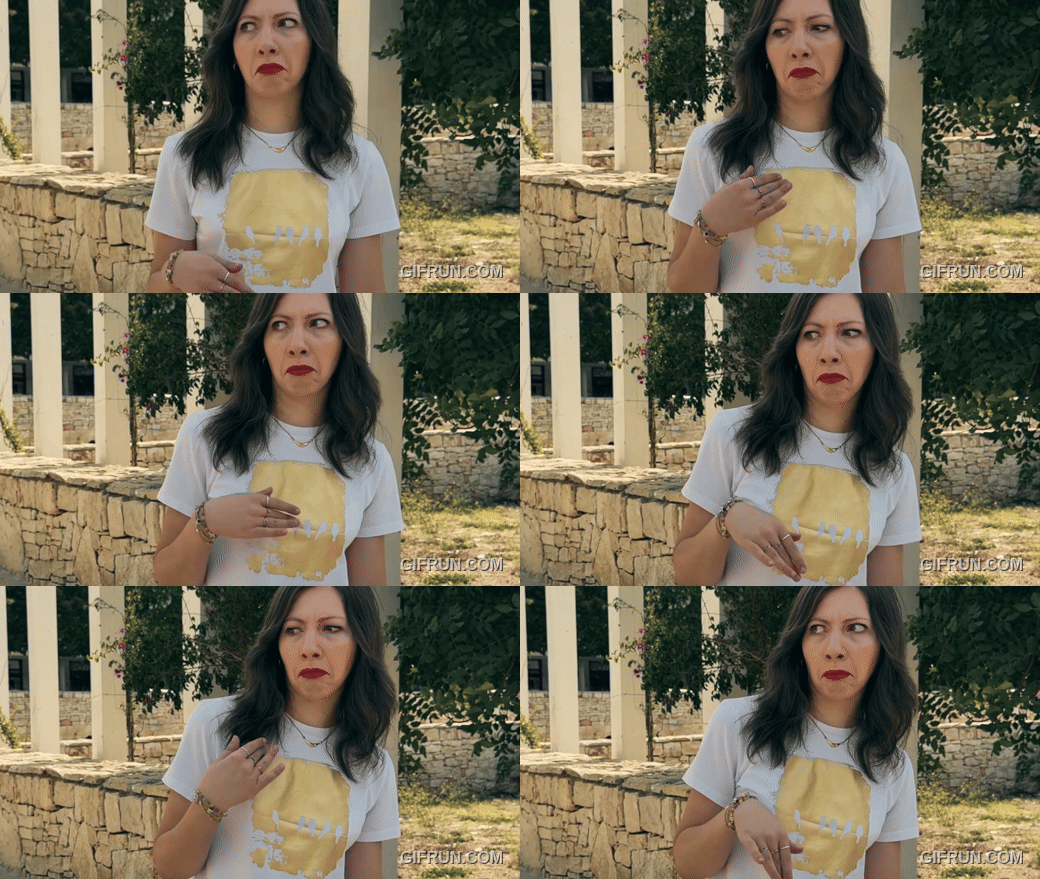
A gesture of intense surprise and strong emotional reaction. It is performed with an open hand in the shape of a paddle, held vertically with fingers together and extended, that moves up and down rapidly in front of the face or chest, as if “fanning” the air to cool down or to dispel the shock. The movement is rapid and nervous, repeated several times with an accelerated rhythm. The facial expression shows controlled astonishment: wide-open eyes staring at the source of surprise, eyebrows raised to the maximum, tight and sealed mouth in a thin line or slightly contracted, as if holding back an exclamation or trying to process what has just been seen or heard. The gesture communicates: “wow!“, “incredible!“, “I can’t believe it!“, “what a shock!“.
This gesture has origins in the automatic physical response to emotional shock, where the body tries to “disperse” the energy of intense emotion through repetitive movements. The hand moving like a paddle represents the attempt to “ventilate” away the astonishment, to cool down from the emotional “fever” caused by the surprising news or sight. It is deeply rooted in Italian culture of controlled expressiveness: the emotion is intense and must be manifested, but there is also an attempt to contain it, to manage it physically through movement. The sealed mouth indicates the effort not to scream or explode verbally, while the moving hand releases emotional energy in a socially acceptable way.
Usage contexts: It is used to react to shocking and surprising news or events: unexpected revelations that completely change a situation (secrets unveiled, hidden truths that emerge), dramatic or incredible news (narrowly avoided accidents, dangerous situations escaped by a hair), particularly juicy and unexpected gossip (couples forming or separating unexpectedly), surprising results (unexpected victories, incredible defeats), shocking prices (both too high and inexplicably low). It represents the Italian ability to express shock while maintaining a certain composure, where the body speaks but the voice remains controlled, allowing the communication of the intensity of emotion without completely losing social control.
63. “Ma Che Vuoi?” [What Do You Want?] (The Most Iconic Gesture)
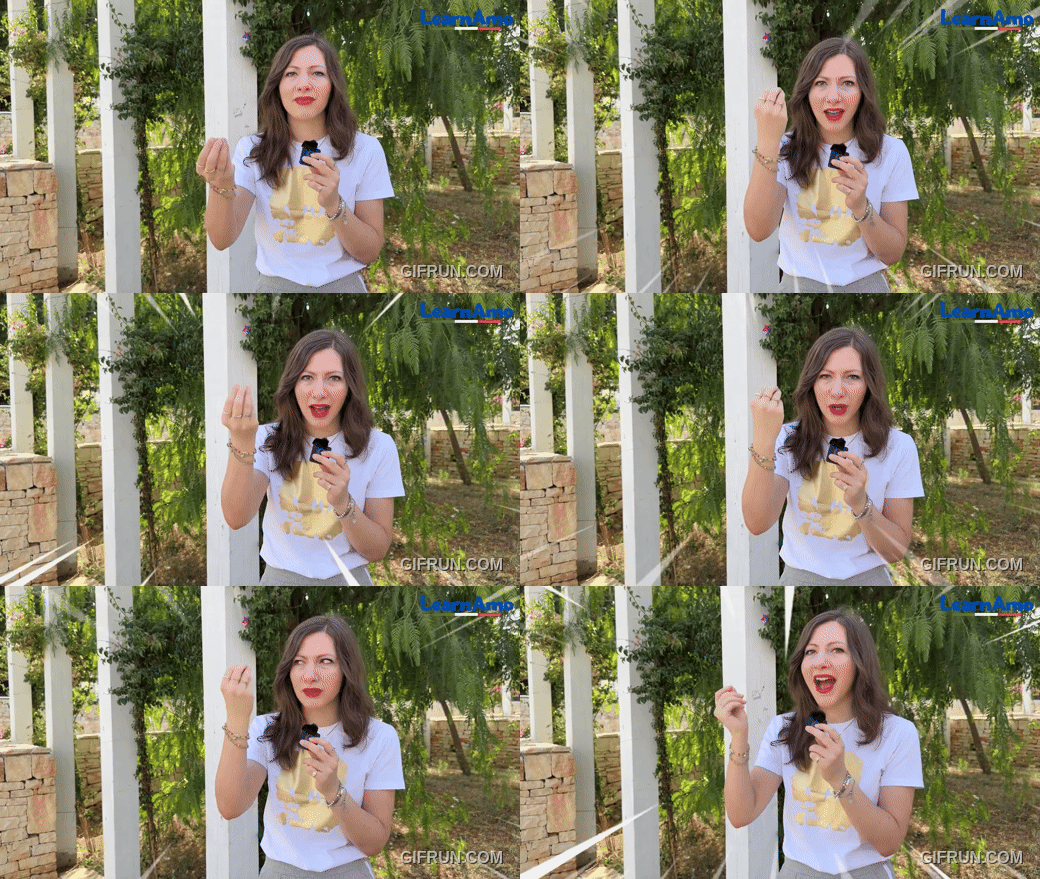
The most famous Italian gesture in the world, a universal symbol of Italianness. It is performed by joining all the fingers of the hand (thumb, index, middle, ring, and pinky) with the tips touching to form a “bud” or “pinecone,” and repeatedly moving the hand up and down at chest or face level. The movement starts from the wrist and can be more or less ample. The facial expression is questioning, perplexed, or exasperated, with furrowed eyebrows and lips sealed or half-open.
This gesture is so iconic that it has become the very symbol of Italian gesturing, recognized and imitated around the world. Its exact origins are debated, but they certainly lie in Neapolitan and southern gesturing, later spreading throughout Italy and beyond. The movement of the united fingers represents the gathering and concentration of a question, a request for clarification, or a contestation. It is probably the most studied, represented, and caricatured gesture of Italian culture.
Usage contexts: It is used in infinite communicative situations: to ask for explanations when you don’t understand something, to express exasperation toward repeated or inappropriate requests, to contest incomprehensible or illogical statements, to ask what someone wants from us, to express perplexity in the face of strange behaviors. It is the most versatile gesture in the Italian repertoire, used daily by everyone and perfectly represents the Italian approach to communication: direct, expressive, emotional, and immediately understandable. It is the gesture that, more than any other, identifies Italy in the eyes of the world.
Do you really want to understand Italian from the basics? Combine gestures with the essential knowledge from the Beginner’s Guide (the topics you absolutely need to know) in our dedicated article!
Want the lesson PDF with exercises and solutions?
Join the LearnAmo AcademyCaricamento quiz in corso…
I found all those gestures fascinating. Is It possible to learn some naughty gestures? I worked in Rome as an au-pair many, many years ago, molti anni fa! I have studdid italian on and off for many yeats and I have a good vocabulary of Italian words! But I have always found the grammar very difficult and I struggle with Italian conversations becausr tbey speak so fastbin normal convetsation and I just get lost.
Thank you,
Patricia Dowd
Ciao Patricia! 😊 Grazie mille!
Rome is the perfect gesture school 🙌 And yes, there are naughty ones too! The most famous is “il gesto dell’ombrello” (raise a clenched fist and slap the inside of that elbow with your other hand), a very rude “up yours!” For the verbal side, our book “Parolacce… e come evitarle!” (https://learnamo.com/libro-parolacce/) will make you smile 😉 As for fast conversations, try saying “Scusi, può parlare più piano?” and keep listening a little every day. Your ear will get there!
il #9 può significare anche
“Ma che sei matto ???”