


When learning a new language, one of the first things that we are taught often is weather terminology. However, if we want to express ourselves like true Italians, we need to go beyond basic expressions such as “fa caldo” (“it’s hot“), “fa freddo” (“it’s cold“) or “è nuvoloso” (“it’s cloudy“). In fact, there are many advanced expressions that can elevate the way we talk about the weather, making it sound more natural and varied. In this article we will explore some of these expressions, explaining their meaning and usage.
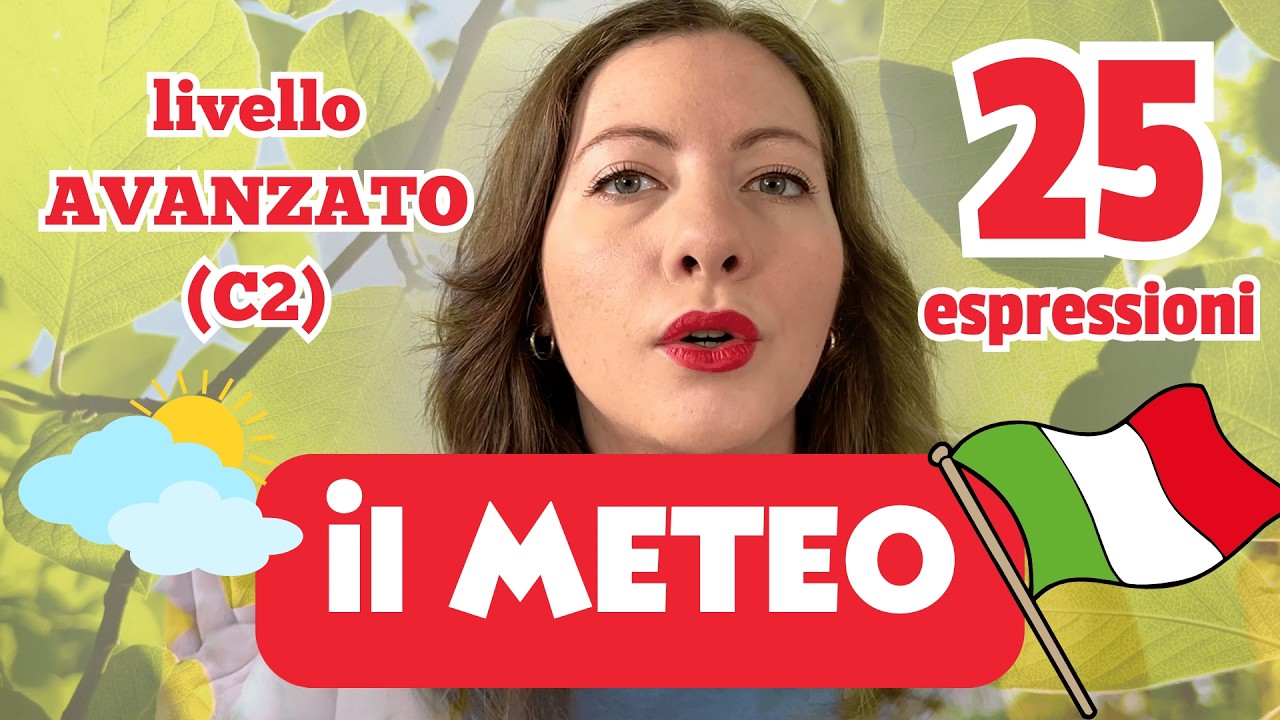
Talking about the WEATHER in Italian: level C2!
1. Tempo clemente
(Mild weather)
This phrase refers to mild and favorable weather conditions: weather that is neither too hot nor too cold, without precipitation or fierce winds. It’s the perfect weather for being outdoors and it conveys a sense of pleasentness and well-being.
Inclemente: (intemperate) it means the opposite, i.e., severe or bad weather conditions.
2. Si prevede una burrasca
(A gale is forecast)
The term “burrasca” (gale) indicates a sudden and violent storm, especially at sea, but it can also be used to talk about severe storms on land.
3. L’afa è insopportabile
(The stuffiness is unbearable)
The term “afa” (stuffiness) descibes a humid, sweltering heat. Even if the temperature is not extremely high, the high humidity makes the heat feel more intense, creating a sticky and uncomfortable feeling.
4. Canicola
(Heatwave)
The “canicola” (heatwave) is the hottest time of summer, carachterized by high temperatures and sweltering heat, which typically takes place during July and August. It indicates a dry and intense heat.
5. Il cielo è plumbeo
(The sky is leaden)
The adjective “plumbeo” (leaden) comes from the word “piombo” (lead) and refers to a dark gray colour. It indicates a very dark and threatening sky, often a forerunner of rain and thunderstorms.
6. Si gela
(It’s freezing)
This expression conveys a sense of intense, almost paralyzing cold, capable of “freezing something”.
7. C’è un vento che taglia la faccia
(This wind cuts through your face)
This expression describes a particularly cold and biting wind: the image of the wind “cutting” the face avokes a feeling of physical pain caused by the cold.
8. Piove a dirotto/a catinelle
(It’s raining cats and dogs)
It describes a very heavy and continuous rain, as if the sky was emptying out of water.
9. Il sole picchia
(The sun is beating down)
This expression gives the idea of the sun “hitting” hard, emphasizing a scorching heat that can become almost unbearable.
10. Nebbia fitta
(Thick fog)
The fog is so dense that it reduces the visibility to almost zero.
11. La pioggia battente
(Pouring rain)
It describes rain that falls with great intensity, strength and persistence. The adjective “battente” (pouring) implies that it “hits” violently on the ground, roofs, or windows.
12. Un freddo pungente
(A bitter cold)
It indicates a type of cold that pierces the skin as if it were a needle. The cold strikes in an almost painful way.
13. C’è una leggera foschia
(There is a slight mist)
The term “foschia” states a light fog that reduces visibility, but is not as dense as proper fog.
14. Cielo terso
(Clear sky)
It describes a completely clear, cloudless sky with particularly crisp and clean air.
15. Pioviggina
(It’s drizzling)
The verb “piovigginare” (to drizzle) denotes light, thin rain with very small raindrops.
16. Un’aria frizzante
(Crisp air)
This expression indicates a feeling of freshness and lightness in the air, often associated with the first days of autumn or spring.
17. Il cielo è una cappa
(The sky is a hood)
The sky is completely covered by low, gray clouds, creating a feeling of oppression or heaviness.
18. Sta montando un temporale
(A storm is brewing)
This expression describes a thunderstorm that develops gradually, increasing in intensity.
19. Un tempo da lupi
(Wolf weather)
It describes exceptionally bad weather conditions, such as heavy rain, freezing wind or a storm.
20. Giornata uggiosa
(Gloomy day)
A “giornata uggiosa” (gloomy day) is a gray, rainy, dreary day that often evokes feelings of melancholy or sadness.
21. Si sta alzando una brezza
(A breeze is rising)
The “brezza” (breeze) is a light and pleasant wind, often felt at sunset or during summer evenings.
22. L’aria è irrespirabile
(The air is unbreathable)
This expression describes an atmospheric condition in which the air is heavy and breathing is difficult, often due to humidity, extreme heat, or pollution.
23. C’è una leggera brezza marina
(There is a light sea breeze)
It refers to a particularly refreshing light wind coming from the sea.
24. È scoppiato un temporale
(A storm broke out)
It indicates a thunderstorm that starts suddenly, forcefully and violently, like an explosion.
25. Un acquazzone estivo
(A summer downpour)
It refers to heavy but short-lasting rain, typical of summer days.
By using these new expressions, we can assure that you will make a difference and you’ll be able to expand your vocabulary even when the topic of discussion is weather and climate!
Do you want to take Italian lessons with our qualified native teachers? Purchase your Italiano Intensivo package!
But this is not the end of the story, as you will be able to catch up and study other WEATHER idiomatic expressions through another one of our articles.
See you next time!
Want the lesson PDF with exercises and solutions?
Join the LearnAmo AcademyCaricamento quiz in corso…
Podcast: Play in new window | Download (Duration: 14:24 — 20.0MB)
Iscriviti: Apple Podcasts | Spotify | Android | iHeartRadio | Podcast Index | TuneIn | Deezer | RSS | Altri...