


How many of you know the word “circa”? I bet almost everyone. In fact, “circa” is a widespread word in many European languages and it derives directly from the Latin word “circa”, which literally means “about”, “approximately”. However, precisely because it is so common, using it too often can make you become banal and repetitive. Therefore, in this article I want to show you every alternative you can use to replace the word “circa”.
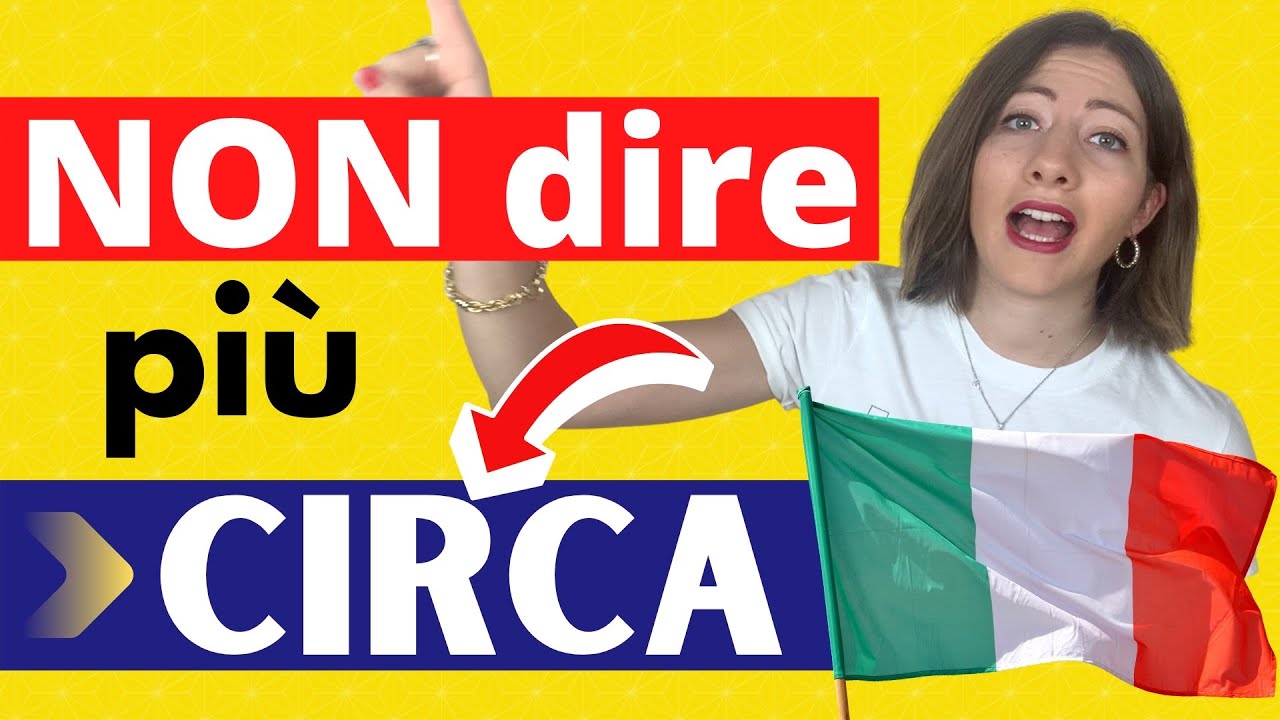
How to replace “circa” in Italian
With regard to quantities, measurements, or dates
Usually, “circa” is used when talking about numbers such as quantities, measurements, or dates.
Among the most common alternatives we can find:
– “all’incirca”> “about, around, approximately”;
– “approssimativamente”> “approximately, roughly”;
– “più o meno”> “more or less”;
– “pressappoco” >“roughly, about, approximately”;
– “su per giù”> “more or less, roughly, approximately”;
– “a occhio e croce”> “roughly.”
For example, imagine being at the hairdresser while she is about to cut your hair:
– “Quanto li vuole tagliare?” > “How much hair do you want me to cut?”
– “Mah, non saprei… Più o meno come l’altra volta. Diciamo… approssimativamente 5 centimetri.”> “Well, I don’t know..more or less like the last time. Let’s say…approximately 5 cm.”
Or when asking someone for their tiramisù recipe:
– “Quanto cacao serve da spolverizzare sulla superficie?” > “How much cocoa powder do I need to sprinkle on top?”
– “Mah, a occhio e croce ne serviranno due cucchiaini. Saranno all’incirca 10 grammi.” > “Well, two teaspoons more or less. They should be approximately equal to 10 grams.”
With regard to approximate positions in space
In some cases, we do not refer to numbers, but rather to the approximate position of something in space. For example, while looking at a tall building we could say:
– “Dove si trova la tua finestra?” > “Where is your window?”
– “Su per giù all’altezza di quel cornicione grigio”. > “At the height of that gray cornice more or less.”
With regard to unsure measurements
In other cases, “circa” can be used when we are reporting data or measurements we are not 100% sure about, to have some margin of error. In these situations,in addition to the ones mentioned above, the most common alternatives are:
– “se non (mi) sbaglio”> “If I’m not mistaken”;
– “se non ricordo male” > “If I remember correctly”;
– “se la memoria non mi inganna” >“If my memory serves me”;
– “se ricordo bene”> “If I recall correctly.”
For example:
– “Ti ricordi quante sono le pagine da studiare per l’esame di martedì?”> “Do you remember how many pages do we have to study for Tuesday’s exam?”
– “Non ne sono sicura ma, se non ricordo male, dovrebbero essere 175”> “I’m not sure but, if I remember correctly, they’re 175.”
In the case in which we are referring to quantities or measurements, it’s possible to replace “circa” with other expressions, in order to give a better estimate of the actual quantity mentioned, under or above the real one. For example, while talking about the Leaning Tower of Pisa, which is exactly 57 metres, instead of saying: “ la Torre di Pisa è alta circa 60 metri” (“ The Leaning Tower of Pisa is about 60 metres”) we could say: “La Torre di Pisa è alta poco meno di 60 metri” “ The Leaning Tower of Pisa is a little less than 60 metres”
Or, while talking about the length of the Po river, which is precisely 652 km long, we could say: “Il fiume Po è lungo poco più di 650km. (“The Po river is a little longer than 650 km”). And so on.
However, you can even add the entire expression “poco più o poco meno” (more or less) after mentioning the quantity you are not completely sure about.
For example:
Alla festa c’erano 50 persone, poco più o poco meno.” > At the party there were 50 people, more or less.”
Stop reading Italian.
Start speaking it.
Online lessons in groups of 4, organised by level and goals, with qualified teachers. Pick the day and time that suit you from the available slots.
Max 4 students:
there’s a seat for you
With the meaning of “riguardo a” (about, regarding, as to…)
Another use of “circa”, definitely less common but still possible, is with the meaning of “riguardo a”. For example, your university professor could email you: “Circa l’argomento della sua tesi, preferirei discuterne di persona” > “Regarding your thesis topic, I would like to discuss it in person”. Here, the most popular alternatives are:
– “riguardo a”> “In regard to, about, as regards…”;
– “per quanto riguarda” > “as regards, with regard to…”;
– “in merito a”> “with respect to, with regard to, about…”;
– “relativamente a” >“as regards, with regard to, with respect to…”;
– “a proposito di” > “speaking of, with regard to…”;
-“per quanto concerne” > “As for, regarding, with regard to, concerning…”.
Then the same professor could write us:
“A proposito della sua tesi… Quando pensa di iniziare a scriverla?” > “Speaking of your thesis…When do you think you are going to start writing it?”
And we could reply to him:
“Relativamente alla sua richiesta, vorrei avvalermi della facoltà di non rispondere”> “As regards your question, I would like to assert my right to remain silent.”
Which translates into: “Non ho nessuna voglia di iniziare a scrivere la tesi e di sicuro non lo farò oggi. Arrivederci”> “I have absolutely no desire to start writing my thesis and I’m not going to do it today for sure. Goodbye.”
These were all the possible alternatives you can use to replace “circa”! If you found this lesson useful, I suggest you to watch the one on the invariable nouns and adjectives too.
Make sure to take a look at our online clothing store LearnAmo Collection (super cool merch!).
Want the lesson PDF with exercises and solutions?
Join the LearnAmo AcademyLet’s see if you’ve mastered the contents of this class. Have a go at completing the exercises!
Caricamento quiz in corso…
Podcast: Play in new window | Download (Duration: 9:01 — 8.3MB)
Iscriviti: Apple Podcasts | Spotify | Android | iHeartRadio | Podcast Index | TuneIn | Deezer | RSS | Altri...