


Inclusive language in Italian is one of the most debated and controversial topics in contemporary Italian. You come across it in newspapers, universities, and social media — and at the centre of the debate there is often an unusual symbol, the schwa, which most people had never seen before encountering this topic.
Speaking Inclusively in Italian
What Is Inclusive Language and Why Is It Being Discussed in Italian?
Inclusive language is an approach to using language that aims to exclude no one — in particular, not to make invisible those people who do not identify with the masculine or feminine gender, or who identify as non-binary.
The topic is felt with particular intensity in Italian for a structural reason: Italian is a language with a strong gender marking. Almost all nouns and adjectives have a grammatical gender — masculine or feminine — and there is no real neutral, as exists in English with the pronoun “they” or in German with “es”.
Traditionally, when referring to a mixed group of people, Italian uses the masculine plural as a generic form. For example:
- «I ragazzi sono arrivati» [The boys/kids have arrived] — even if the group includes women.
- «Gli studenti devono consegnare il compito» [The students must hand in the assignment] — even if it is also addressed to female students.
This phenomenon is called the overextended masculine or generic masculine. For many people it represents a problem, because it makes women and non-binary people linguistically invisible. And it is precisely from this reflection that the debate about how to intervene was born.
The Proposed Solutions
Over the years — especially in the last decade — various solutions have been proposed to make Italian more inclusive. Here we detail them.
A) Double Gender (or “Splitting” / “Rhetorical Reduplication”)
The most traditional solution consists of citing both forms — masculine and feminine — within the same text or speech.
For example: «Cari ragazzi e care ragazze…» [Dear boys and dear girls…] or «Gli studenti e le studentesse devono consegnare il compito.» [The male and female students must hand in the assignment.]
- Advantages: it is grammatically correct and requires no linguistic innovation.
- Disadvantages: it quickly becomes long and repetitive, especially in formal texts. A sentence such as «tutti i cittadini e tutte le cittadine, tutti i lavoratori e tutte le lavoratrici…» [all male and female citizens, all male and female workers…] makes reading considerably heavier.
B) The Slash (/)
Widely used in writing, the oblique slash is inserted between the masculine and feminine endings. For example: «Caro/a studente/studentessa…» [Dear student…] or «I/le ragazzi/e sono arrivati/e.» [The boys/girls have arrived.]
- Advantages: compact and visually clear in written text.
- Disadvantages: unusable in spoken language and impractical when the masculine and feminine forms differ greatly from each other — as in the case of “studente” and “studentessa”. Moreover, it does not include those who do not identify with either gender.
C) The Asterisk (*) and the At Symbol (@)
To explicitly include non-binary people as well, some communities have adopted the asterisk or the at symbol in place of gender endings. For example: «Car* student*…» [Dear student…] or «Amic@ mi@…» [My friend…]
- Advantages: it visually signals the intention to include more genders.
- Disadvantages: like the slash, it only works in writing, being impossible to pronounce. It therefore offers no solution for spoken language.
D) The Schwa: The Most Debated Proposal
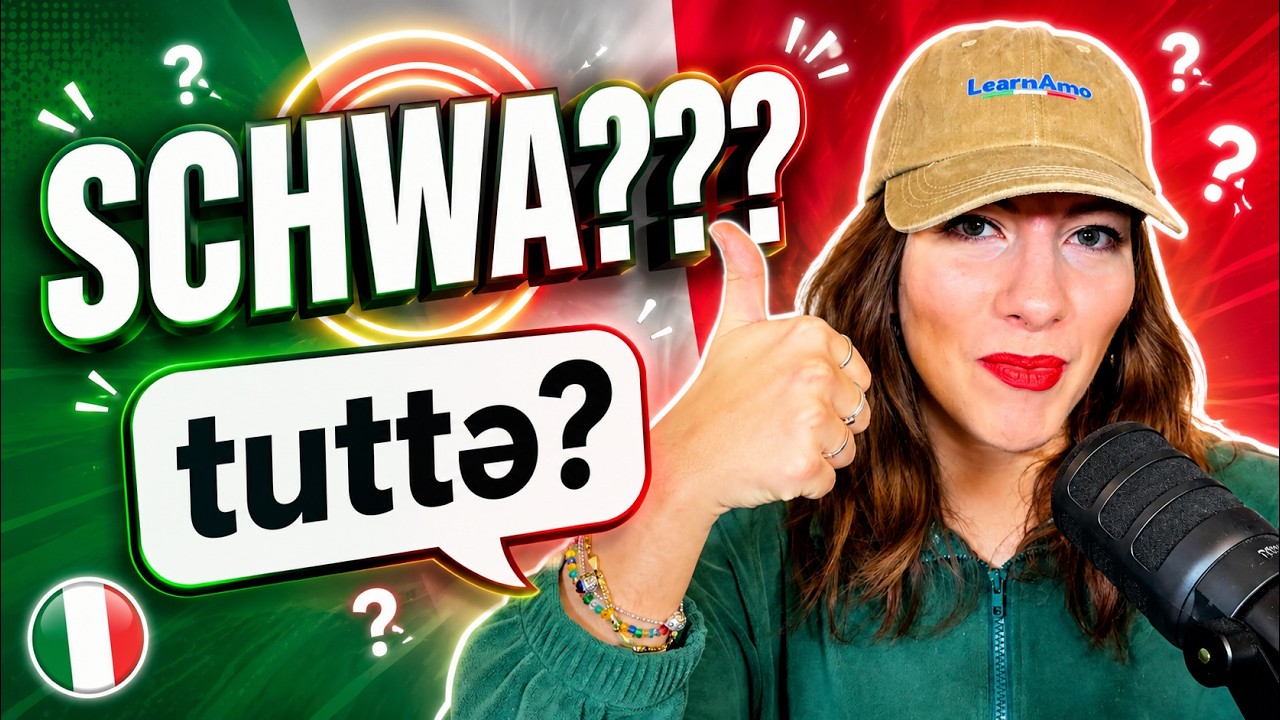
The proposal that has generated the most heated debate is that of the schwa (symbol: ə, plural ɜ). This is a central neutral vowel already present in international phonetics, indicated by the symbol ə of the International Phonetic Alphabet (IPA). The name “schwa” comes from the Hebrew scevà, a detail little known even among specialists.
In English, this sound is present in the “a” of «about» (/əˈbaʊt/) or in the “e” of «the» (/ðə/): it is a vague, neutral, indefinite sound — and it is precisely this neutrality that has made it the chosen symbol to represent an unmarked grammatical gender.
In Italian, the proposal is to use the schwa in place of gender endings, both in speech and in writing. Instead of bambino (masculine) or bambina (feminine), one would use bambinə. In the plural, ɜ (the “long schwa”) is used instead: «Cari studentɜ» instead of «cari studenti» or «care studentesse».
Who Proposed the Schwa in Italian?
There is often confusion about the origin of this proposal. The schwa applied to Italian was first introduced in 2016 by Luca Boschetto, through the website Italiano Inclusivo. It reached a much wider audience in 2019, when the sociolinguist Vera Gheno discussed it in her book Femminili singolari (ed. effequ). Gheno herself has always clarified that she is not the original author of the proposal, and that her intention was partly provocative: to open a public debate, not to dictate a new grammatical norm.
It is worth clarifying that some people have erroneously associated this proposal with the Accademia della Crusca, which for its part has categorically denied any involvement.
How Is the Schwa Pronounced?
The sound /ə/ is not part of standard Italian phonology. However, supporters of the proposal point out that very similar sounds already exist in some dialectal varieties of southern Italy: in Neapolitan and Sicilian, many final vowels tend to neutralise into a sound close to the schwa. One example is the Neapolitan word Nàpulə, in which the final indefinite vowel corresponds precisely to this sound.
Who Uses the Schwa?
The use of the schwa is widespread mainly in certain university and academic environments, in LGBTQ+ communities, in some progressive journalistic contexts and on social media, where it is more common among young people.
An Important Technical Limitation
The schwa presents a significant graphical problem: there is no standard uppercase version of the symbol ə. In contexts where capitalisation is required — titles, headings, official documents — the symbol creates practical difficulties. Added to this is the fact that it is not present on standard keyboards, making everyday writing less straightforward.
E) Other Solutions: The Inclusive “U”
A proposal that has remained quite marginal is that of using the final “u” as a neutral ending: «Caru amicu» instead of «Car* amic*». The problem is that in many Italian dialects — such as Sicilian — the final “-u” is already a typically masculine ending, making it paradoxically less inclusive than the generic masculine itself.
Stop reading Italian.
Start speaking it.
Online lessons in groups of 4, organised by level and goals, with qualified teachers. Pick the day and time that suit you from the available slots.
Max 4 students:
there’s a seat for you
How It Works in Practice: Concrete Examples
The following table shows how some common sentences would change by applying the schwa in place of traditional gender endings.
| Traditional form | Translation | With the schwa | Translation |
|---|---|---|---|
| Caro studente / Cara studentessa | Dear male/female student | Carə studentə | Dear student (gender-neutral) |
| Tutti gli studenti | All the students (masc. generic) | Tuttɜ gli studentɜ | All the students (gender-neutral) |
| Sei bellissimo / bellissima | You are very handsome / very beautiful | Sei bellissimə | You are very beautiful (gender-neutral) |
| I miei amici | My friends (masc. generic) | I miei amicɜ | My friends (gender-neutral) |
| Benvenuti / Benvenute | Welcome (masc.) / Welcome (fem.) | Benvenutɜ | Welcome (gender-neutral) |
The schwa replaces the final vowel that marks gender: -o (masculine) or -a (feminine) become -ə in the singular, while -i (masculine) or -e (feminine) become -ɜ in the plural. Articles are generally left unchanged, as modifying them too would involve an even deeper grammatical restructuring.
Criticisms of Inclusive Language
Inclusive language is not without criticism, even from those who share its underlying intentions. The most recurring objections relate to five main aspects.
- “Italian already has a generic masculine.” Many traditionalist linguists argue that the masculine plural is not really “masculine” in a biological sense, but an unmarked form — used by grammatical convention when gender is not relevant, and therefore already inclusive by definition.
- “The schwa creates accessibility problems.” A concrete and often overlooked point: the schwa can make reading significantly more difficult for people with dyslexia or other learning difficulties.
- “Nobody knows how to pronounce it.” For many Italians — and even more so for those studying Italian as a foreign language — the sound /ə/ is unusual and difficult to produce naturally.
- “There is no uppercase version.” As already mentioned, the absence of a standard uppercase version of the symbol ə creates concrete difficulties in formal texts.
- “It is not democratic: only a few people understand it.” Language is above all a communication tool. Modifying it in a way that is obscure to a portion of speakers risks producing the opposite effect to the one desired: excluding rather than including.
The Opinion of the Accademia della Crusca
The Accademia della Crusca has also weighed in on the topic of inclusive language — the oldest linguistic institution in Europe dedicated to Italian, founded in Florence in 1583 and still considered today the reference authority on the Italian language.
Its position is clear and reasoned. The Crusca has stated that the schwa and the asterisk should not be used, as they are graphic signs with no correspondence in standard spoken Italian. On the graphical level, it has pointed out that the schwa is a symbol of the International Phonetic Alphabet (IPA), not a letter of the Italian alphabet: using it in texts amounts to importing a technical sign into a context for which it was not conceived.
The Crusca has also expressed itself negatively on the use of pronouns alternative to lui/lei [he/she], on the revival of the neuter to refer to non-binary people, and on so-called “rhetorical reduplication” — that is, the double reference to both genders, such as «lavoratrici e lavoratori» [female and male workers] — considering it an uncomfortable and unnecessary solution.
The recommended solution is instead to resort to neutral or generic forms already present in the language: for example «persona» [person] instead of «uomo» [man], or «il personale» [the staff] instead of «i dipendenti» [the employees]. As an alternative, the unmarked masculine plural is suggested, used however with full awareness of its inclusive grammatical value.
On one specific point, however, the Crusca speaks out clearly in favour: the use of names of roles and professions in the feminine. Forms such as «la ministra» [the female minister], «l’avvocata» [the female lawyer], «la sindaca» [the female mayor] and «la magistrata» [the female magistrate] — long avoided or considered incorrect — are today explicitly recommended.
In summary: the Crusca says “yes” to the valorisation of the feminine in professional titles, “yes” to neutral forms already existing in the language, and a firm “no” to the schwa, the asterisk and any graphic sign that has no correspondence in spoken language. A technical position, but with very concrete consequences.
Frequently Asked Questions
Is the Schwa Compulsory in Italian?
No. The schwa is a proposal that emerged in academic and progressive circles, with no recognition in normative Italian grammar. The Accademia della Crusca has expressed itself clearly against its use in standard texts.
Should I Use Inclusive Language When Studying Italian?
No. It is useful to know the debate and to be able to recognise these forms when you encounter them — on social media, in certain journalistic or academic texts — but there is no obligation to adopt them. For exams and correct communication, the generic masculine and traditional forms remain the norm.
What Does the Accademia della Crusca Say About Professions in the Feminine?
On this point the Crusca is explicit: it recommends the use of feminine forms for names of roles and professions. «La ministra» [the female minister], «l’avvocata» [the female lawyer], «la sindaca» [the female mayor], «la magistrata» [the female magistrate] are correct and recommended forms, not exceptions or linguistic oddities.
Does the Schwa Already Exist in Any Italian Dialect?
Yes. Sounds very similar to the schwa are already present in some dialectal varieties of southern Italy: in Neapolitan and Sicilian, many final vowels tend to neutralise into a sound close to /ə/. A classic example is the Neapolitan word Nàpulə, in which the final vowel corresponds precisely to this sound.
Inclusive language is just one of the many facets of Italian — discover more in the article dedicated to how to stop translating and start thinking directly in Italian.
Do you want to take Italian lessons with our qualified native teachers? Purchase your Italiano Intensivo package!
Want the lesson PDF with exercises and solutions?
Join the LearnAmo AcademyLoading quiz…
Podcast: Play in new window | Download (Duration: 27:04 — 24.8MB)
Iscriviti: Apple Podcasts | Spotify | Android | iHeartRadio | Podcast Index | TuneIn | Deezer | RSS | Altri...