


Have you ever heard an Italian say “Vieni su!“ [Come up!], “Butta via quella roba!“ [Throw that stuff away!] or “Metti giù il telefono!“ [Put the phone down!] without understanding what they meant? Those are Italian phrasal verbs: expressions widely used in everyday spoken Italian, yet almost absent from grammar books. If you want to understand real Italian — the kind spoken on the street, at the bar, and at home — you absolutely need to know them.
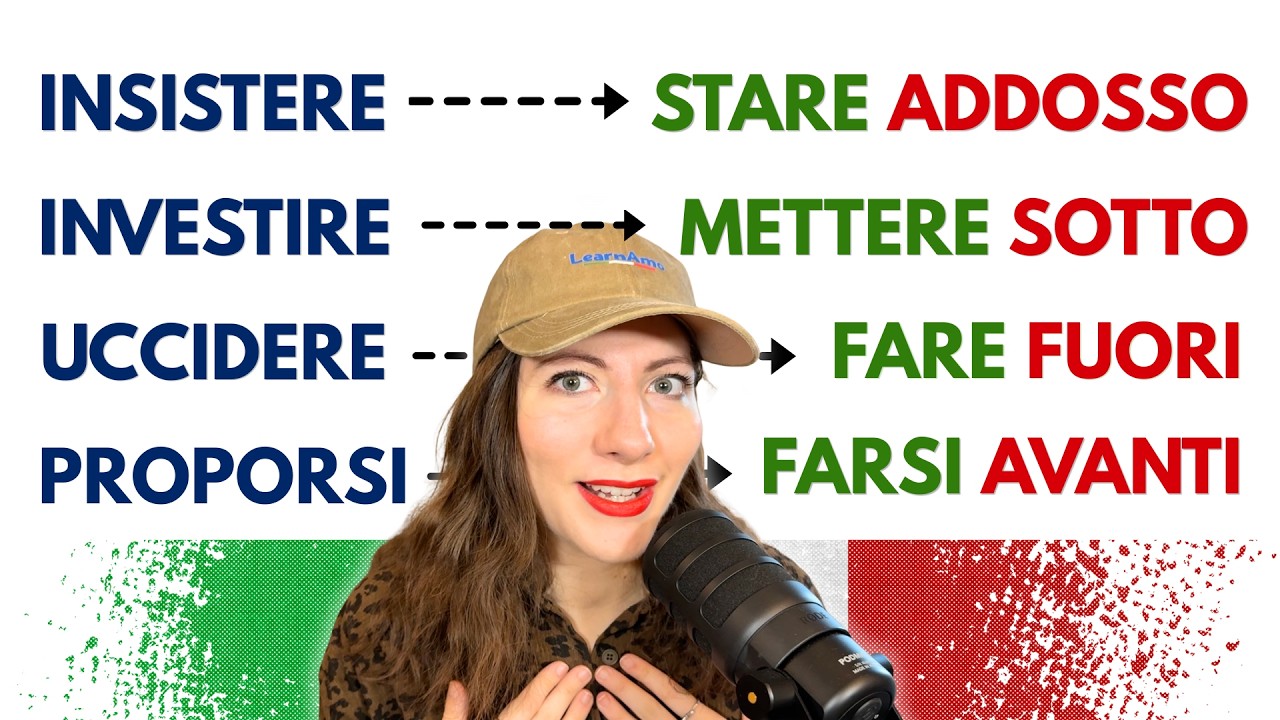
Verbi Sintagmatici [Phrasal Verbs]: Complete Guide with Examples
What Are Italian Phrasal Verbs?
An Italian phrasal verb is a verb made up of two elements: a base verb (usually a very common verb, such as andare, venire, mettere, buttare…) plus a particle, which is typically a locative adverb such as su, giù, via, fuori, dentro, dietro, avanti, addosso.
The key thing to understand is this: when the verb and the particle combine, the meaning changes! Knowing the verb and the particle separately is not enough — together they create a new meaning, often different from what you would expect.
Let’s look at an example. The verb mettere means “to put” or “to place”. The particle su indicates an upward direction. But mettere su? It doesn’t simply mean “to put something up high”. It can mean to organise, create, or start something!
Example: “Ho messo su un’attività” [I started a business, I set up a company]. See? The meaning is completely different!
How Italian Phrasal Verbs Compare to English Ones
If you already know English, you’ll find Italian phrasal verbs quite familiar, since they work in a very similar way. Just as to give up doesn’t simply mean “give + up”, so andare via is not simply “go + away” in the literal sense. The good news? In Italian there are far fewer of them than in English.
The Position of the Particle
When an Italian phrasal verb is used with a pronoun, the particle and the pronoun can shift position depending on the situation:
- “Butta via la scatola!” [Throw the box away!] → “Buttala via!” [Throw it away!] (the pronoun la attaches to the verb, the particle via stays after)
- “Metti giù il telefono!” [Put the phone down!] → “Mettilo giù!” [Put it down!]
With the imperative and the infinitive, the pronoun attaches directly to the verb, forming a single word, and the particle remains separate immediately after.
In compound tenses (passato prossimo, trapassato…), the particle always goes after the past participle:
- “Ho messo su il caffè” [I put the coffee on] – Correct form.
- “Ho su messo il caffè” – This is wrong!
The Most Common Italian Phrasal Verbs
Here is the list of Italian phrasal verbs you will hear most often in everyday Italian life, organised by the particle that accompanies them.
Verbs with “SU” [up]
Venire Su [To Grow Up, To Develop]
Meaning: Indicates the growth or development of someone or something.
Example: “Quel bambino è venuto su proprio bene!” [That child really grew up well!] = That child grew up well.
Mettere Su [To Start, To Organise / To Put On to Cook]
Meaning: Has two very common uses. It can mean to start a business or to put something on to cook.
Examples:
- “Hanno messo su un ristorante.” [They opened a restaurant.] = They opened a restaurant.
- “Metti su l’acqua per la pasta!” [Put the water on for the pasta!] = Put the water on to boil.
Tirare Su [To Lift / To Sniff / To Raise (a Child)]
Meaning: This phrasal verb is very versatile and has three main meanings: to physically lift something, to sniff (to inhale mucus), and to raise/bring up someone.
Examples:
- “Tira su quella scatola, è per terra.” [Pick that box up, it’s on the floor.] = Lift that box.
- “Smettila di tirare su col naso, usa un fazzoletto!” [Stop sniffling, use a tissue!]
- “L’ha tirato su da sola quel figlio.” [She raised that son on her own.] = She raised him on her own.
Andare Su [To Go Up, To Increase]
Meaning: Indicates an increase or a rise.
Examples:
- “I prezzi sono andati su di nuovo.” [Prices have gone up again.] = Prices have increased.
- “La febbre è andata su durante la notte.” [The fever went up during the night.] = The fever rose.
Verbs with “GIÙ” [down]
Buttare Giù [To Knock Down / To Jot Down / To Demoralise]
Meaning: One of the Italian phrasal verbs with the richest range of nuances. It can mean to physically demolish something, to quickly write something down, or to demoralise someone.
Examples:
- “Hanno buttato giù il muro.” [They knocked down the wall.] = They demolished the wall.
- “Butta giù due righe per l’email.” [Jot down a couple of lines for the email.] = Quickly write an email.
- “Questa notizia mi ha buttato giù.” [This news really got me down.] = This news demoralised me.
Mettere Giù [To Put Down / To Hang Up the Phone]
Meaning: Indicates the action of setting or placing something down, or hanging up the phone.
Examples:
- “Metti giù quel vaso, lo rompi!” [Put that vase down, you’ll break it!] = Put down that vase!
- “Ha messo giù il telefono senza salutare.” [He hung up without saying goodbye.] = He hung up.
Tirare Giù [To Lower / To Swear (Informal)]
Meaning: Means to lower something, or, in a very colloquial sense, to swear or use profanity.
Examples:
- “Tira giù la tapparella, entra troppo sole.” [Pull the shutter down, too much sun is coming in.] = Lower the shutter.
- “Quando si arrabbia, tira giù delle parolacce!” [When he gets angry, he lets out some terrible swear words!] = He swears terribly. (This is very colloquial.)
Venire Giù [To Fall, To Collapse / To Rain Heavily]
Meaning: Indicates something that falls or collapses, or that it is raining very heavily.
Examples:
- “È venuto giù il soffitto!” [The ceiling came down!] = The ceiling collapsed.
- “Viene giù acqua a catinelle!” [It’s raining cats and dogs!] = It’s raining extremely hard. (A very common expression when it’s pouring.)
Andare Giù [To Go Down / To Be Digested / To Accept]
Meaning: In a physical sense it means to go down or to be swallowed/digested. In a figurative sense it means not to accept something.
Examples:
- “Questa medicina non mi va giù.” [I can’t get this medicine down.] = I can’t swallow it.
- Figuratively: “Questa cosa non mi va giù.” [I just can’t accept this.] = I don’t accept it, I can’t stand it.
Verbs with “VIA” [away]
Andare Via [To Leave, To Go Away / To Disappear]
Meaning: Indicates the action of leaving or going away, or the fact that something disappears.
Examples:
- “Devo andare via, è tardi.” [I have to go, it’s late.] = I have to leave.
- “Questa macchia non va via!” [This stain won’t come out!] = This stain won’t disappear.
Buttare Via [To Throw Away / To Waste]
Meaning: Means to throw something in the bin, or to waste time, money or opportunities.
Examples:
- “Butta via quelle scarpe vecchie!” [Throw those old shoes away!] = Throw them in the bin.
- “Non buttare via il tuo tempo!” [Don’t waste your time!] = Don’t waste your time.
Portare Via [To Take Away / To Steal]
Meaning: Indicates the action of taking something elsewhere, or can mean to steal.
Examples:
- “Il cameriere ha portato via i piatti.” [The waiter took the plates away.] = He cleared the plates from the table.
- “Mi hanno portato via il portafoglio!” [They stole my wallet!] = They stole my wallet!
Mandare Via [To Send Away, To Dismiss Someone]
Meaning: Means to send someone away, to make them leave, or to fire them.
Example: “Il capo lo ha mandato via.” [The boss fired him / sent him away.] = The boss fired him / sent him away.
Tirare Via [To Remove, To Pull Off]
Meaning: Indicates the action of removing or pulling off something.
Example: “Tira via quella pellicola dal telefono.” [Pull that screen protector off the phone.] = Remove that screen protector.
Verbs with “FUORI” [out]
Venire Fuori [To Come Out, To Emerge, To Turn Out]
Meaning: Indicates that something emerges, is discovered, or turns out in a certain way.
Examples:
- “Alla fine è venuto fuori che aveva ragione lui.” [In the end, it turned out he was right.] = In the end it emerged, it was discovered.
- “Come è venuta fuori questa torta?” [How did this cake turn out?] = How did it turn out?
Tirare Fuori [To Take Out / To Bring Up a Topic]
Meaning: Means to physically take something out, or to bring up a topic in conversation.
Examples:
- “Tira fuori le chiavi dalla borsa.” [Get the keys out of the bag.] = Take the keys out of the bag.
- “Non tirare fuori questa storia adesso!” [Don’t bring this up now!] = Don’t bring up this topic now!
Buttare Fuori [To Throw Out, To Expel]
Meaning: Indicates the action of expelling or throwing someone out of a place.
Example: “L’hanno buttato fuori dal locale.” [They threw him out of the venue.] = They threw him out of the venue.
Saltare Fuori [To Show Up Unexpectedly]
Meaning: Indicates something that appears unexpectedly or pops up out of nowhere.
Examples:
- “È saltato fuori un problema all’ultimo momento.” [A problem came up at the last minute.] = An unexpected problem came up.
- “Dopo anni, è saltata fuori una foto di quando ero bambina.” [After years, a photo from when I was a child turned up.] = An old photo turned up.
Verbs with “DENTRO” [in/inside]
Mettere Dentro [To Put in Jail (Colloquial) / To Insert]
Meaning: In a colloquial sense it means to put in prison. In a literal sense it means to insert something into a container.
Examples:
- “L’hanno messo dentro per tre anni.” [They put him inside for three years.] = They put him in prison.
- “Metti dentro i vestiti nell’armadio.” [Put the clothes away in the wardrobe.] = Put away the clothes in the wardrobe.
Tirare Dentro [To Involve]
Meaning: Means to involve someone in a situation, often against their will.
Example: “Non tirarmi dentro questa storia!” [Don’t drag me into this!] = Don’t involve me in this matter!
Verbs with “DIETRO” [behind]
Stare Dietro (a Qualcuno/Qualcosa) [To Keep Up With, To Look After]
Meaning: Indicates the action of keeping up with someone or looking after someone or something.
Examples:
- “Non riesco a stargli dietro, è troppo veloce!” [I can’t keep up with him, he’s too fast!] = I can’t keep up with him.
- “Con tre figli, non è facile stargli dietro.” [With three children, it’s not easy to keep up with them.] = It’s not easy to look after them.
Lasciarsi Dietro [To Leave Behind]
Meaning: Indicates the fact of leaving something behind, often problems or unresolved situations.
Example: “Si è lasciato dietro un sacco di problemi.” [He left a lot of problems behind him.] = He left many unresolved problems behind.
Verbs with “ADDOSSO” [on one]
Mettere Addosso [To Put On / To Blame]
Meaning: Can mean to put on clothing or to place blame on someone.
Examples:
- “Mettiti addosso qualcosa di pesante, fa freddo!” [Put something warm on, it’s cold!] = Put on something heavy.
- “Mi hanno messo addosso (addossato) la colpa!” [They pinned the blame on me!] = They blamed me!
Stare Addosso (a Qualcuno) [To Breathe Down Someone’s Neck, To Pressure]
Meaning: Means to insist, to put pressure on or to constantly monitor someone.
Example: “Il mio capo mi sta sempre addosso.” [My boss is always on my back.] = My boss constantly monitors me and puts me under pressure.
Verbs with “AVANTI” [forward/ahead]
Andare Avanti [To Go On, To Continue]
Meaning: Indicates the action of going on or continuing something.
Examples:
- “Andiamo avanti con la lezione.” [Let’s go on with the lesson.] = Let’s continue.
- “Non posso andare avanti così!” [I can’t go on like this!] = I can’t continue living this way!
Mandare Avanti [To Run, To Keep Going]
Meaning: Indicates the action of managing or keeping something running, such as an organisation, a family or a business.
Example: “È lei che manda avanti tutta la baracca.” [She’s the one who keeps the whole show running.] = She’s the one who manages everything. (“La baracca” figuratively refers to an organisation, a family, a company…)
Farsi Avanti [To Step Forward, To Volunteer]
Meaning: Indicates the action of volunteering or taking the initiative.
Example: “Se nessuno si fa avanti, lo faccio io.” [If no one steps forward, I will.] = If no one volunteers, I will.
Stop reading Italian.
Start speaking it.
Online lessons in groups of 4, organised by level and goals, with qualified teachers. Pick the day and time that suit you from the available slots.
Max 4 students:
there’s a seat for you
Summary Table of Italian Phrasal Verbs
Here is a summary table to keep the most important Italian phrasal verbs always at hand:
| Particle | Phrasal Verb | Main Meaning | Example |
|---|---|---|---|
| SU [up] | Venire su | To grow up, to develop | “È venuto su bene” [He grew up well] |
| Mettere su | To start / To put on to cook | “Ho messo su un’attività” [I started a business] “Metti su l’acqua per la pasta!” [Put the water on for the pasta!] | |
| Tirare su | To lift / To raise (a child) | “Tira su quella scatola” [Pick that box up] “L’ha tirato su da sola” [She raised him on her own] | |
| Andare su | To go up, to increase | “I prezzi sono andati su” [Prices have gone up] “La febbre è andata su” [The fever went up] | |
| GIÙ [down] | Buttare giù | To knock down / To demoralise | “Hanno buttato giù il muro” [They knocked down the wall] “Questa notizia mi ha buttato giù” [This news got me down] |
| Mettere giù | To put down / To hang up | “Metti giù il telefono” [Put the phone down] “Ha messo giù senza salutare” [He hung up without saying goodbye] | |
| Tirare giù | To lower / To swear | “Tira giù la tapparella” [Pull the shutter down] | |
| Venire giù | To fall / To rain heavily | “È venuto giù il soffitto” [The ceiling came down] “Viene giù acqua a catinelle” [It’s raining cats and dogs] | |
| Andare giù | To go down / To not accept | “Questa cosa non mi va giù” [I just can’t accept this] | |
| VIA [away] | Andare via | To leave / To disappear | “Devo andare via, è tardi” [I have to go, it’s late] “La macchia non va via” [The stain won’t come out] |
| Buttare via | To throw away / To waste | “Butta via quelle scarpe vecchie” [Throw those old shoes away] “Non buttare via il tuo tempo” [Don’t waste your time] | |
| Portare via | To take away / To steal | “Ha portato via i piatti” [He took the plates away] “Mi hanno portato via il portafoglio” [They stole my wallet] | |
| Mandare via | To send away, to fire | “Il capo lo ha mandato via” [The boss fired him] | |
| Tirare via | To remove, to pull off | “Tira via quella pellicola” [Pull that screen protector off] | |
| FUORI [out] | Venire fuori | To emerge, to turn out | “È venuto fuori che aveva ragione” [It turned out he was right] |
| Tirare fuori | To take out / To bring up a topic | “Tira fuori le chiavi” [Get the keys out] “Non tirare fuori questa storia” [Don’t bring this up] | |
| Buttare fuori | To throw out, to expel | “L’hanno buttato fuori dal locale” [They threw him out of the venue] | |
| Saltare fuori | To show up unexpectedly | “È saltato fuori un problema” [A problem came up] | |
| DENTRO [in/inside] | Mettere dentro | To put in jail / To insert | “L’hanno messo dentro per tre anni” [They put him inside for three years] |
| Tirare dentro | To involve | “Non tirarmi dentro questa storia!” [Don’t drag me into this!] | |
| DIETRO [behind] | Stare dietro | To keep up with / To look after | “Non riesco a stargli dietro” [I can’t keep up with him] |
| Lasciarsi dietro | To leave behind | “Si è lasciato dietro un sacco di problemi” [He left a lot of problems behind] | |
| ADDOSSO [on one] | Mettere addosso | To put on / To blame | “Mettiti addosso qualcosa di pesante” [Put something warm on] |
| Stare addosso | To pressure, to monitor | “Il capo mi sta sempre addosso” [My boss is always on my back] | |
| AVANTI [forward/ahead] | Andare avanti | To go on, to continue | “Andiamo avanti con la lezione” [Let’s go on with the lesson] |
| Mandare avanti | To run, to manage | “Manda avanti tutta la baracca” [She keeps the whole show running] | |
| Farsi avanti | To step forward, to volunteer | “Se nessuno si fa avanti, lo faccio io” [If no one steps forward, I will] |
Frequently Asked Questions
What Is the Difference Between an Italian Phrasal Verb and a Verb Followed by a Preposition?
The key difference is that in an Italian phrasal verb, the combination of verb + particle creates a new and different meaning from that of the individual components. For example, “mettere su” (to start) has a completely different meaning from “mettere” + “su” (to place up high). With a simple verb followed by a preposition, on the other hand, the meaning remains compositional — that is, the sum of the meanings of the individual elements: “salire su una scala” [to go up a ladder] retains the literal meaning of both words.
Are Italian Phrasal Verbs Also Used in Formal Written Language?
Italian phrasal verbs are predominantly used in spoken language and informal writing. In formal written language, the corresponding simple verbs are generally preferred. For example, a formal text would use “demolire” [to demolish] rather than “buttare giù”, or “proseguire” [to proceed] rather than “andare avanti”. However, some phrasal verbs such as “venire fuori” or “andare avanti” are so widespread that they can appear even in semi-formal contexts.
Where Does the Particle Go in Compound Tenses?
In compound tenses (passato prossimo, trapassato prossimo, etc.) the particle always goes after the past participle. The correct form is therefore: “Ho messo su il caffè” [I put the coffee on] and not “Ho su messo il caffè”. Similarly: “Ha buttato via le scarpe” [She threw the shoes away] and not “Ha via buttato le scarpe”.
Are Italian Phrasal Verbs the Same as English Phrasal Verbs?
They are very similar in how they work: in both cases a base verb combines with a particle to create a new meaning. However, there are some important differences. In Italian, phrasal verbs are fewer in number than in English. Furthermore, in Italian the particle has a less flexible position than in English: it cannot be separated from the verb by a long object in the same way. Finally, in Italian many phrasal verbs have a formal equivalent (a single verb) that is often lacking in English.
How Do Pronouns Behave with Italian Phrasal Verbs?
With the imperative and the infinitive, the pronoun attaches to the verb and the particle remains separate after it: “Buttala via!” [Throw it away!], “Mettilo giù!” [Put it down!]. With finite tenses (indicative, subjunctive, etc.), the pronoun precedes the verb as usual: “Lo butto via” [I’m throwing it away], “Lo metto giù” [I’m putting it down]. With compound tenses, the pronoun goes before the auxiliary and the particle after the participle: “L’ho buttato via” [I threw it away], “L’ho messo giù” [I put it down].
If you want to learn more about verbs, don’t forget to try the verbs test in the dedicated article.
Do pronominal verbs trip you up and fill you with doubts? Turn confusion into confidence with our exclusive course:“Da «Non ce la faccio più» a «Ora me la cavo»: i verbi pronominali in 30 giorni.” With fun, bite-size lessons and targeted practice, you’ll learn to use them naturally in just one month.
Want the lesson PDF with exercises and solutions?
Join the LearnAmo AcademyLoading quiz…
Podcast: Play in new window | Download (Duration: 25:29 — 23.3MB)
Iscriviti: Apple Podcasts | Spotify | Android | iHeartRadio | Podcast Index | TuneIn | Deezer | RSS | Altri...