


Are you ready for today’s lesson? No books! You’ll only need 3 tools: a fork, a knife and a spoon! In this lesson you are going to learn the 20 most delicious dishes in Italy!
The Best Italian Dishes
TORTELLINI → Emilia Romagna
Tortellini are a kind of pasta stuffed with ham, mushrooms or meat and are great with broth or ragu. But do you know why they have this form? The legend goes that in 1200 a young and beautiful woman decides to stay in a inn during the night and the inn owner, attracted by her beauty, stops outside her room to spy her through they keyhole. What strikes him most is her belly button! So, when he begins to make the dinner, mindful of her belly button, he decides to create a type of pasta similar to it and with meat inside! Interesting, isn’t it?

CARBONARA → Lazio
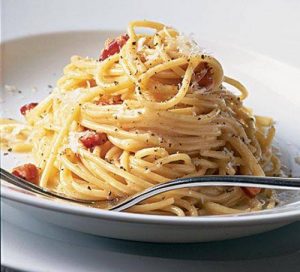
Are you going to spend your weekend in the Italian capital? If you visit Rome, you can’t miss carbonara! Eggs and jowl bacon are the main ingredients together with pecorino cheese and pepper. Don’t trust the imitations: the original one doesn’t have cream, nor onion, garlic, or butter!
PIZZA → Campania
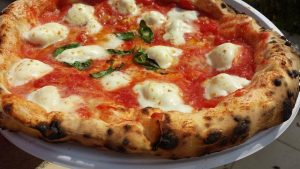
If you want to respect Italian traditions, you have to try the original pizza, characterized by the three colors of the Italian flag: red as the tomato, while as the mozzarella cheese and green as the basil! We call it Margherita!
[Do you want to find out more about the history of pizza Margherita?]
In any case, there are various types of pizza, each one has its own ingredients, but, please, don’t ask for Hawaiian pizza… Italians don’t quite like it!
ORECCHIETTE E RAPE → Puglia
It’s a mix of goodness, simplicity and lightness: the turnips, a vegetable, are associated with a handmade pasta which reminds us of small ears, that’s why they are called “orecchiette”! In 1500, the ability to make “recchjtedd” (this is a dialectal word used in Puglia to denote this pasta called “orecchiette”) was considered a sort of woman’s dowry.

ARANCINI → Sicilia
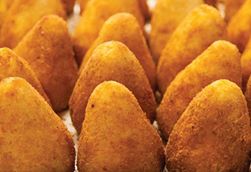
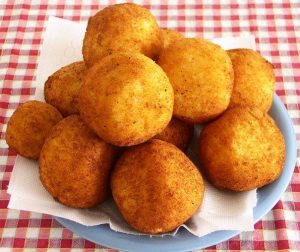
If you are going to Sicily, you have to try arancini: fried rice balls with ragu, peas and cheese! By the way, there is also an ancient dispute surrounding the name of this dish: arancino o arancina? Masculine or femminine? The answer depends on the city and the shape: near Palermo people call them “arancine” (femminine) and they have a round shape, which reminds us of an orange. However, near Catania, and in dictionaries as well, they are called “arancini” (masculine) and have a drip-like shape.
ARROSTICINI → Abruzzo
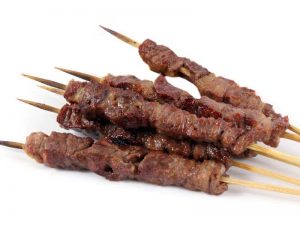
Arrosticini are a sheep meat second dish! The meat is cut in small slices and roasted, that’s why they are called “arrosticini”! The legends goes that in 1930s two shepherds had a old sheep whose meat was too hard to eat, so they decided to cut it in small pieces to make it easier to eat.
TROFIE CON PESTO ALLA GENOVESE → Liguria
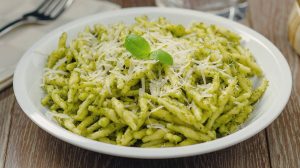
Liguria, in particular Genova, is well known for its “pesto”, which is a sort of sauce made of basin, pine nut, olive oil and garlic. You must eat it with a kind of pasta known as “trofie, typical of this region: its shape reminds us of a “corkscrew”. Some people consider this past as the poorer version of “gnocchi” because they are simply made of water and flour.
POLENTA CONCIA → Valle d’Aosta
This dish originates from the union of two typical products in this region: polenta (boiled cornmeal) and fontina cheese! Polenta, mixed with fontina cheese, is perfect to keep you warm in the long and cold Alpine nights.

Stop reading Italian.
Start speaking it.
Online lessons in groups of 4, organised by level and goals, with qualified teachers. Pick the day and time that suit you from the available slots.
Max 4 students:
there’s a seat for you
RISI E BISI → Veneto
This was a traditional dish in the Serenissima Repubblica di Venezia: it was given to the Doge during San Marcos’s day, the 25 of April. The main ingredients? As the name suggests, “risi”, that is rice, and “bisi”, that is peas.

CANEDERLI → Trentino – Alto Adige
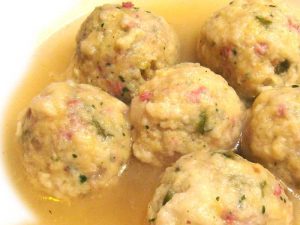
Canederli are an extremely famous dish in Trentino-Alto Adige, but their name derives from German, in particular from Bavaria, where they are called Knödel. They are small balls made of bread and other ingredients which can vary from area to area, but they usually are speck, cheese, milk and chive.
BAGNA CAUDA → Piemonte
It’s a condiment made of garlic, olive oil and anchovy served with both raw and cooked vegetables. This Piemontese traditional dish dates back to Middle ages, when peasants used to make this dish to find relief from cold and starvation.

PANE FRATTAU → Sardegna
This very peculiar dish is made of crispy slices of pane Carasau (typical Sardinian bread) are mixed with tomato and pecorino cheese sauce. At the end, they put an egg cooked in sheep broth.
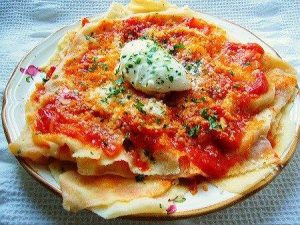
LAGANE E CECI → Basilicata
It’s an ancient recipe, handed down from generation to generation. Lagane are a type of pasta similiar to tagliatelle, but much larger, around 2-3 cm. Together with chickpeas and tomato sauce, they are perfect during a cold winter night.
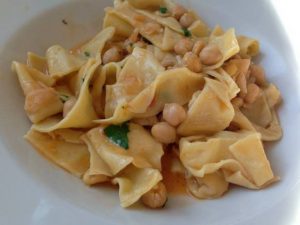
FRICO → Friuli Venezia Giulia
Frico is a sort of omelet with cheese, potatoes and butter. It was the typical dish eaten by lumberjacks and peasants, who brought it with them when they worked in the countryside. Once again a poor and simple dish… This is the secret of Italian dishes: simplicity!
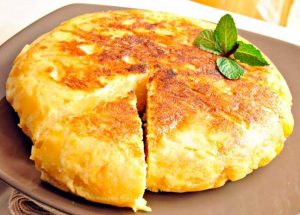
FILEI ALLA ‘NDUJA → Calabria
This typical pasta from Calabria is often eaten together with ‘nduja, a type of spreadable salami! Be careful though: it’s super spicy!
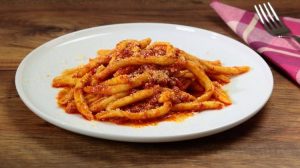
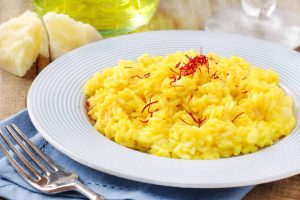
RISOTTO ALLA MILANESE → Lombardia
This dish has a peculiar golden color, the result of the use of zafferano, which gives it an affluent appearance. The recipe dates back to 1500s, when the assistant of a painter, who loved the zafferano color, suggested the cook to add this ingredient to the risotto which was going to be served during the painter’s daughter wedding. The reaction? A total success!
OLIVE ASCOLANE → Marche
They are stuffed with meat and then fried. This dish dates back to 1800s, when the cooks of noble families decided to come up with an idea to use the considerable amounts of meat they had.

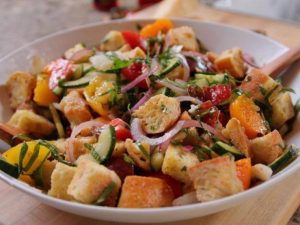
PANZANELLA → Toscana
Panzanella is a summer dish which does not require any cooking step. Boccaccio called it “pan lavato” (washed bread). It’s stale bread softened with water and with the addition of red onion, basil, olive oil and vinegar.
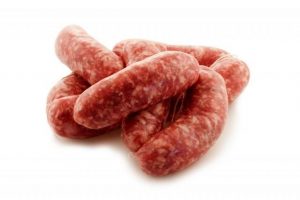
SALSICCIA DI NORCIA → Umbria
Umbria is full of mountain areas and its inhabitants have always been committed to pastoralism. They developed techniques to store meat and make the famous and super delicious sausage known as “Salsiccia di Norcia”: try it yourself!
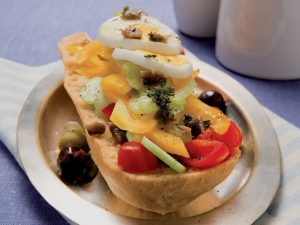
COMPOSTA MOLISANA → Molise
A dish you mustn’t forget to eat in Molise is composta molisana: a fresh, colorful and summery! Basically, it’s a sort of salad with tomatoes, peppers, cucumbers, capers and eggs. To top it off, this recipe requires the typical taralli from Molise called “vescottera” (this word means “cooked twice” in the dialects spoken in Molise).
Alright, that’s all for today! We are sorry if you guys have got acquolina in bocca (mouth watering)!
Let us know what the typical dish and food is in your region and country!
And don’t miss our VLOG in THE FOOD CAPITAL!
Want the lesson PDF with exercises and solutions?
Join the LearnAmo AcademyLet’s see if you’ve mastered the contents of this class. Have a go at completing the exercises!
Caricamento quiz in corso…