


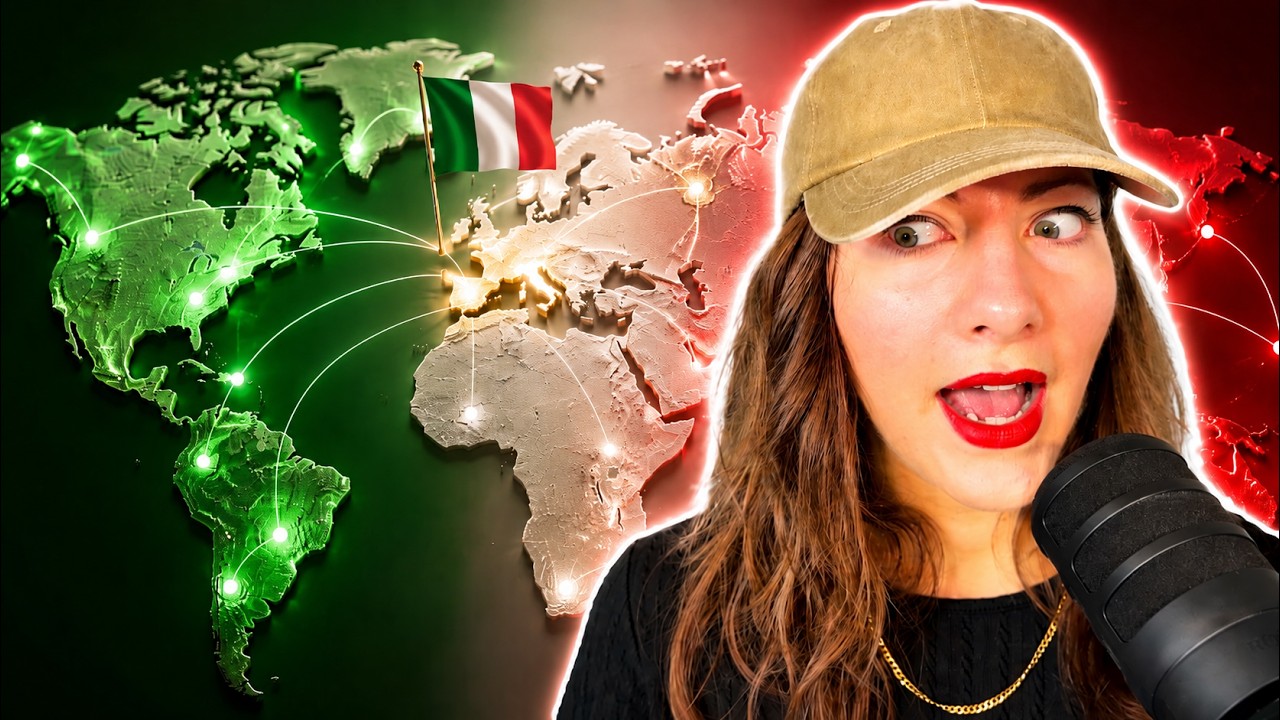
In how many countries around the world is Italian spoken? If the answer that comes to mind is “just one, Italy”, get ready for a surprise. You could order a cappuccino in Italian in Switzerland, in Croatia, even in a small corner of Argentina or the United States. Our language travels much more than you think and, when it goes abroad, it leaves surprising traces in the local languages.
Countries, Communities and Curiosities
Italian is a language far more widespread than one might imagine. Besides being an official language in several countries, it’s present in many communities scattered around the world thanks to history and emigration. Let’s discover together where it’s spoken and what traces it has left.
The Countries Where Italian Is an Official Language
Let’s start with the certainties. Besides Italy, there are other places where Italian is an official language, used in everyday life and in administrative documents.
Switzerland
Switzerland has four national languages: German, French, Italian, and Romansh. Italian is the main language of the Canton of Ticino and of some valleys of the Canton of Grisons. In Lugano or Bellinzona, signs, menus, and conversations are all in Italian, and even the laws and official documents of the Confederation are translated into Italian.
Swiss Italian, however, has many words “all its own”, which no one in Italy would use: they are called Helvetisms. The language has colored this regional Italian in a charming way, as the examples below show.
| Helvetism | Meaning in Italy |
|---|---|
| Natel | Mobile phone |
| Azione | Special offer, discount |
| Sacco | Backpack |
| Riservare | To book (from French réserver) |
If someone from Ticino tells you “ti chiamo sul natel” [I’ll call you on your mobile] or you see at the supermarket “questo prodotto è in azione” [this product is on offer], now you know what it means. It’s precisely these small differences that make Swiss Italian unique. To discover other varieties of standard Italian and accents, there’s a dedicated guide.
San Marino
San Marino is one of the smallest States in the world and is located completely inside Italian territory: it’s what is called an enclave. Here Italian is the official language, so you won’t have any communication problems.
Vatican City
In Vatican City too, Italian is the language of everyday and administrative use. The official language of the most solemn acts of the Church is Latin, but in everyday life Italian is spoken. In fact, Italian has become a kind of lingua franca of the Vatican: the language that people of different nationalities use to understand each other.
Slovenia and Croatia: the Istria Region
Italian is an official language also outside Italy, in Slovenia and Croatia, precisely in the region of Istria. In Slovenia it’s co-official in some coastal municipalities, such as Koper, Izola, and Piran; in Croatia it’s an official language at the level of the Istria Region, alongside Croatian.
What does co-official mean? It means that one language coexists with another, on equal terms. In Istria, street signs and public documents are written in two languages, and there’s also a historic Italian community with schools and newspapers in Italian.
Where Italian Is Not Official, but Feels at Home
There are places where Italian is not an official language, and yet you’ll hear it a lot. The reason is just one word: emigration. Between the end of the 19th century and the 20th century, millions of Italians left the country in search of work, taking with them their suitcase, their dreams, and their language.
Argentina and Lunfardo
If there’s a country where the Italian heritage is very strong, it’s Argentina: a large part of the population has Italian origins. Italian has even influenced the sound of the local Spanish: the Spanish of Buenos Aires has a very “sing-song”, melodic intonation, which recalls the way Italians speak.
In the local dialect of Buenos Aires, called lunfardo, there are many words of Italian origin:
| Word in lunfardo | Meaning | Italian origin |
|---|---|---|
| Laburar | To work | From “lavorare” |
| Fiaca | Laziness | From “fiacca” |
| Mufa | Bad luck, bad mood | From “muffa” |
| Morfar | To eat | From Italian slang expressions |
In Argentina, an attentive ear will always recognize a little piece of Italy in the middle of Spanish.
Stop reading Italian.
Start speaking it.
Online lessons in groups of 4, organised by level and goals, with qualified teachers. Pick the day and time that suit you from the available slots.
Max 4 students:
there’s a seat for you
Brazil and Talian
Especially in the south of Brazil there are entire communities of Italian origin. In some areas they even speak talian, a language born from the encounter between the dialetto veneto of the emigrants and Portuguese. To discover the richness of the Italian dialects, you can check out the dedicated guide.
Talian has kept the grammar and vocabulary of Venetian: the chair is still called carega and the fork is called piron, just like in Veneto. However, it has “borrowed” Portuguese words to indicate the things the emigrants didn’t know: to say “clog”, for example, the Portuguese word tamanco is used.
Today talian is recognized as cultural heritage of Brazil. There’s even a municipality, called Serafina Corrêa, where talian is a co-official language alongside Portuguese.
The Most Surprising Linguistic Curiosities
Italian has left traces in really distant places, giving rise to curious linguistic borrowings and true hybrid languages. For other curiosities about the Italian language, there’s a dedicated guide.
United States, Canada and Australia
In these countries there are large communities of Italian descent. In the big American cities you’ll still find the famous “Little Italy” neighborhoods, the Italian quarters, where Italian survives in families and restaurants.
Here a curious linguistic phenomenon was born: a kind of Italian mixed with English. The emigrants Italianized many English words:
| Italianized word | English origin | Correct Italian |
|---|---|---|
| Storo | Store | Negozio |
| Giobba | Job | Lavoro |
| Bosso | Boss | Capo |
Be careful: it’s not correct Italian and shouldn’t be used in your homework. It is, however, a fascinating testimony of how a language adapts when it travels. It’s a phenomenon similar to that of the linguistic borrowings like anglicisms and gallicisms present in the Italian of Italy.
Eritrea and the Tigrinya Language
The most surprising curiosity takes Italian all the way to Africa. In Eritrea, for historical reasons linked to the colonial past, Italian has left a very deep mark. Many Italian words have entered Tigrinya, the most spoken local language.
Often these are words linked to objects, foods, and clothing brought by the Italians:
| Word in Tigrinya | Italian origin |
|---|---|
| Makina | Macchina [Car] |
| Pasta | Pasta |
| Gonà | Gonna [Skirt] |
An Eritrean can therefore use words of Italian origin without even knowing it. After a few years of interruption, since 2024 in Asmara, the capital, courses in Italian language and culture have started again.
A Living Language That Transforms Itself
In all these places Italian hasn’t stayed “frozen”: it has mixed, changed shape, adapted. This is precisely the beauty of living languages: they travel, meet other languages, and transform. To better understand these mechanisms, you can read the guide on the mysteries of the Italian language.
Summary Table: Italian Around the World
Here’s a table that summarizes where Italian is spoken outside Italy and with what status. To dive deeper into the hybrid languages born from Italian like talian, there’s a dedicated guide.
| Place | Status of Italian | Notes |
|---|---|---|
| Switzerland | Official language | Canton of Ticino and Grisons; presence of Helvetisms |
| San Marino | Official language | Enclave within Italian territory |
| Vatican City | Language of everyday use | Lingua franca; Latin for solemn acts |
| Slovenia and Croatia | Co-official language | Istria region |
| Argentina | Not official | Strong influence on lunfardo |
| Brazil | Not official (talian co-official in Serafina Corrêa) | Talian from the dialetto veneto |
| USA, Canada, Australia | Not official | Communities of Italian descent, “Little Italy” |
| Eritrea | Not official | Borrowings in Tigrinya; courses in Asmara since 2024 |
Frequently Asked Questions
In How Many Countries Is Italian an Official Language?
Besides Italy, Italian is an official language in Switzerland, San Marino, and Vatican City. It’s also a co-official language in some areas of Slovenia and Croatia, in the Istria region.
What Are Helvetisms?
Helvetisms are words or expressions typical of the Italian spoken in Switzerland, which are not used in Italy. Some examples are natel (mobile phone), azione (special offer), and riservare (to book).
What Is Talian?
Talian is a language spoken in the south of Brazil, born from the encounter between the dialetto veneto of the Italian emigrants and Portuguese. Today it’s recognized as cultural heritage of Brazil.
Why Are There So Many Italian Words in Argentina?
Because of the great Italian emigration between the 19th and 20th centuries. A large part of the Argentine population has Italian origins, and this has influenced both the sound of the local Spanish and the vocabulary of lunfardo, the dialect of Buenos Aires.
Is Italian Spoken in Africa Too?
Yes. In Eritrea, for historical reasons linked to the colonial past, Italian has left many words in the Tigrinya language. Since 2024, moreover, courses in Italian language and culture have started again in Asmara.
Want the lesson PDF with exercises and solutions?
Join the LearnAmo AcademyLoading the quiz…
Podcast: Play in new window | Download (Duration: 23:32 — 21.5MB)
Iscriviti: Apple Podcasts | Spotify | Android | iHeartRadio | Podcast Index | TuneIn | Deezer | RSS | Altri...