Skip to content

beginner-eng

Italian classes and exercises for beginner students (A1/A2).

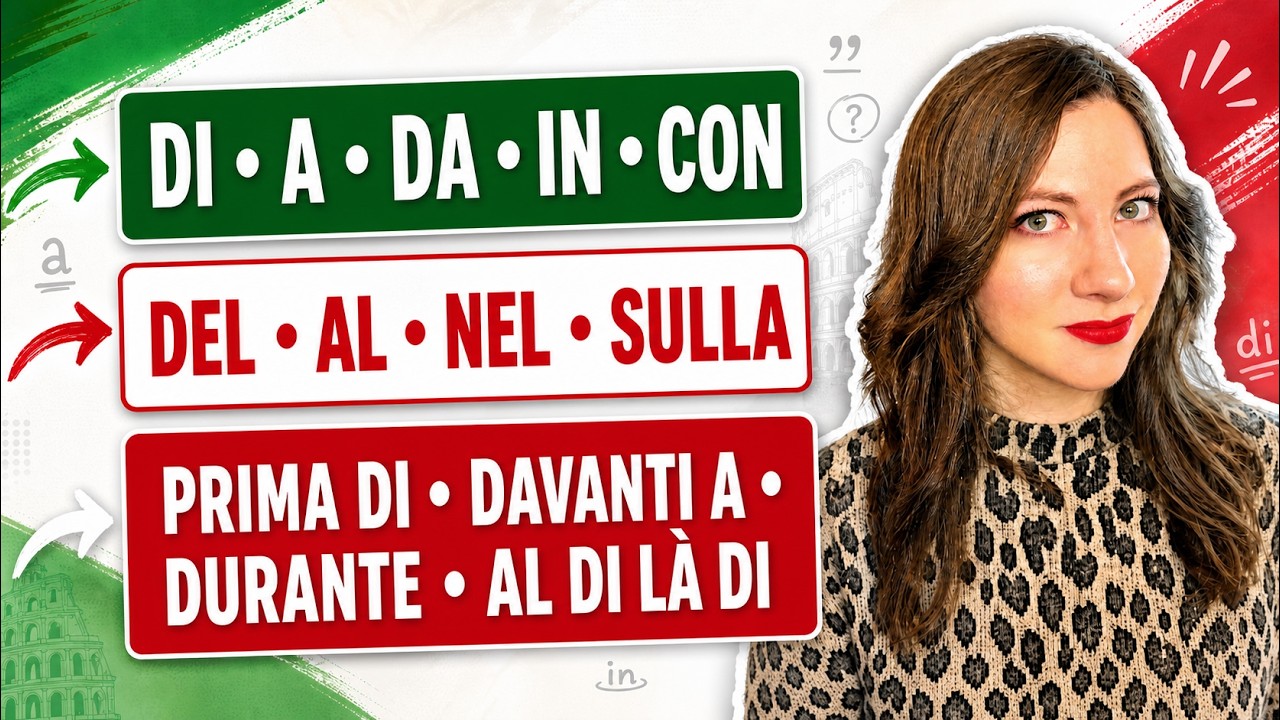
Learning Italian PREPOSITIONS: Easy and Clear Guide

    Have you ever wondered why in Italian we say vado A Roma [I go to Rome] but vengo DA Milano [I come from Milan]? Or why sometimes we use sul tavolo [on the table] and other times sopra il tavolo [above the table]? Prepositions are one of the most important and complex aspects of the Italian language. In this complete guide, you’ll see how to use them correctly.
    YouTube thumbnail

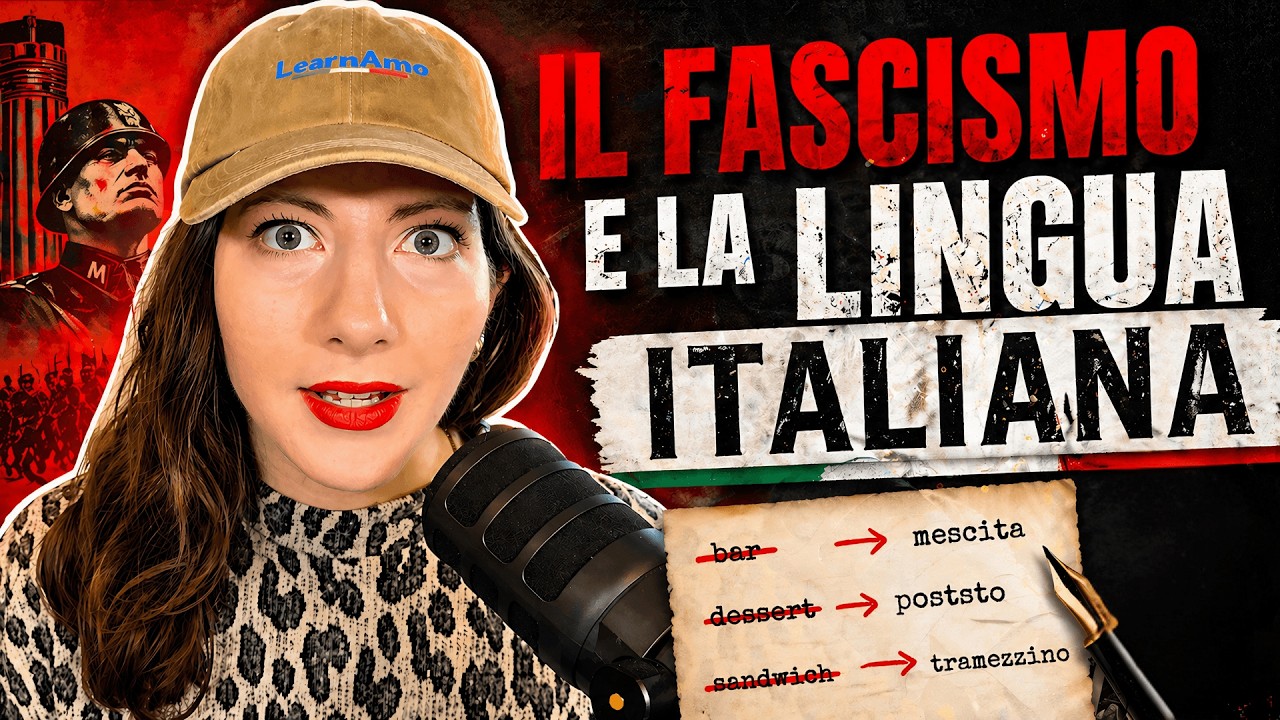
    Mussolini and the Italian Language: How Fascism Reshaped a Nation’s Words

      When you study Italian, you learn a language rich in history. But there is a lesser-known chapter: the 1920s and 1930s, when Benito Mussolini and the fascist regime decided to intervene directly in the Italian language — modifying it, purifying it, and using it as a tool of power. Language is never neutral: whoever controls words, controls thought. Fascism understood this perfectly.

      YouTube thumbnail

      How to Learn Italian Watching Netflix | A1 → C2

        Do you have Netflix and want to improve your Italian? There are films and TV series in Italian that are perfect for learning from the comfort of your couch, suitable for every level, from absolute beginner to advanced. In this article, you’ll find six recommendations — 3 films and 3 TV series for each level, from A1 to C2 — along with explanations on how to use them most effectively to improve listening comprehension, expand your vocabulary, and get used to different Italian accents.

        YouTube thumbnail

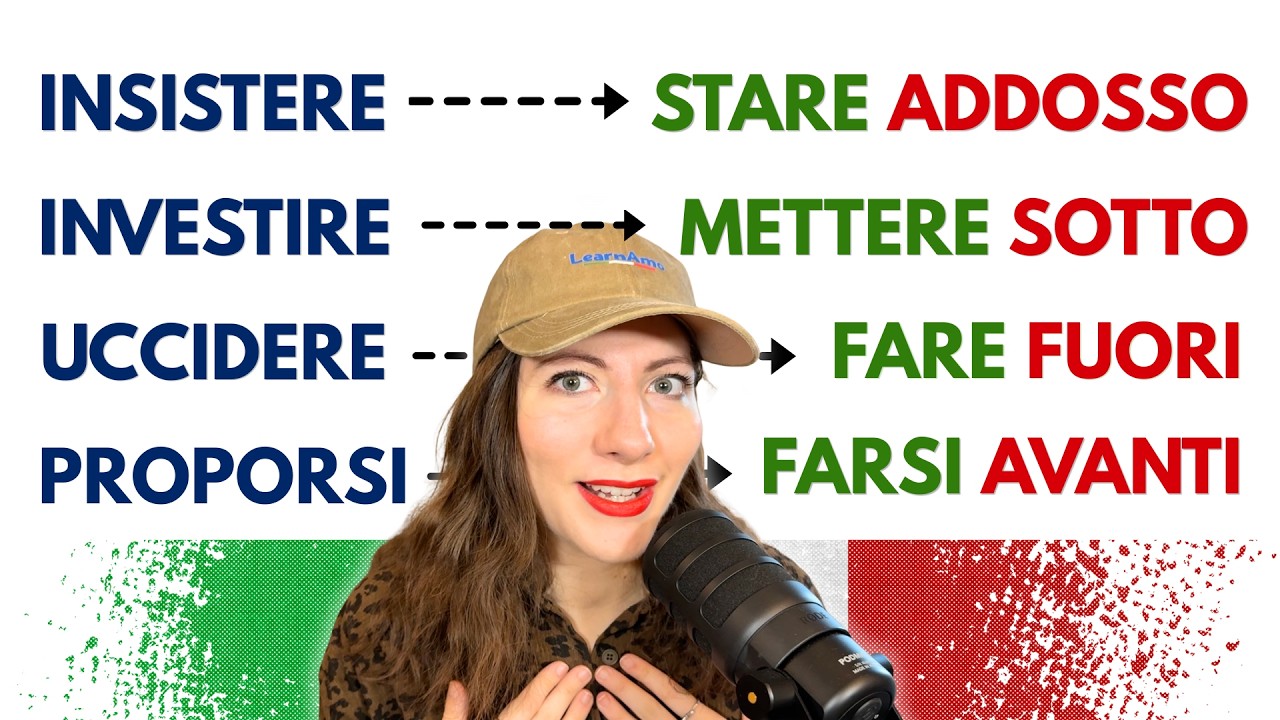
        Italian Phrasal VERBS: What They Are, How They Work and When to Use Them

          Have you ever heard an Italian say Vieni su! [Come up!], Butta via quella roba! [Throw that stuff away!] or Metti giù il telefono! [Put the phone down!] without understanding what they meant? Those are Italian phrasal verbs: expressions widely used in everyday spoken Italian, yet almost absent from grammar books. If you want to understand real Italian — the kind spoken on the street, at the bar, and at home — you absolutely need to know them.

          YouTube thumbnail

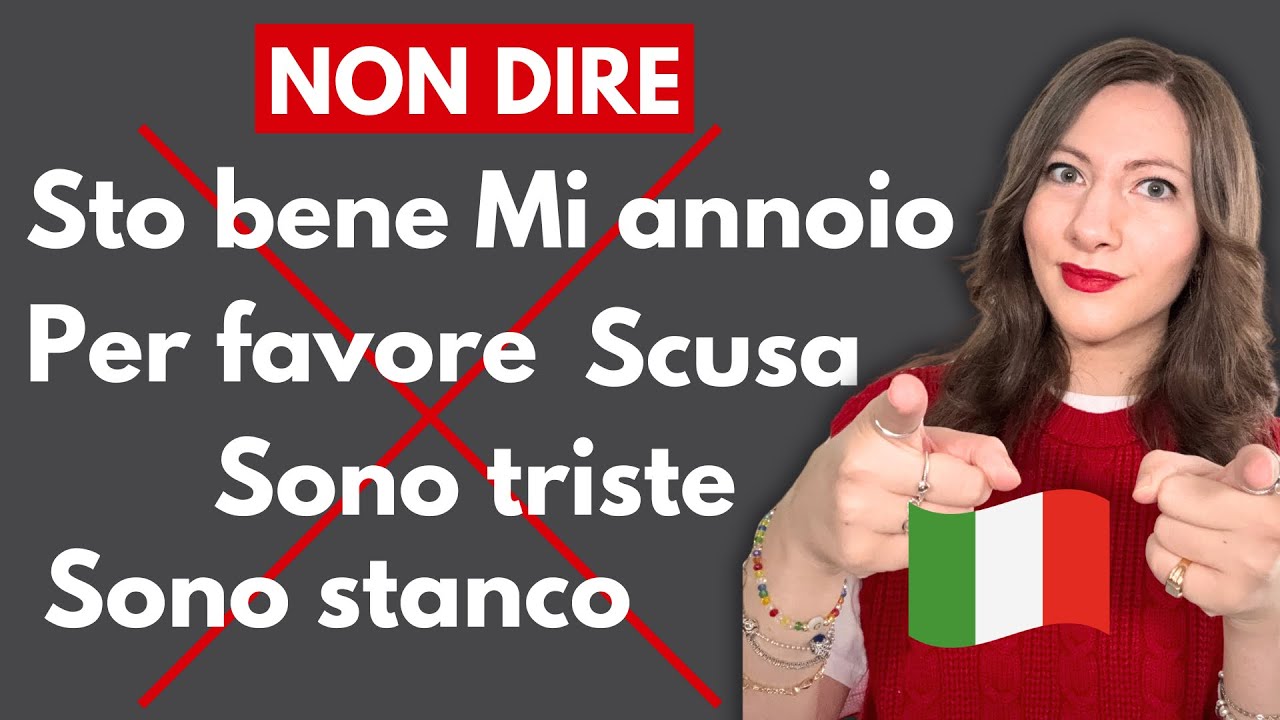
          Don’t Be Repetitive: Make These Substitutions

            Words like «per favore» [please], «mi dispiace» [I’m sorry], «sto bene» [I’m fine], «sono stanco» [I’m tired], «sono triste» [I’m sad] and «mi annoio» [I’m bored] are among the most used in Italian — but always using them only in their basic form can make your Italian sound repetitive and unnatural. In this article you will find 30 alternatives to enrich your vocabulary and speak in a more varied, precise and authentic way.

            YouTube thumbnail