


Has it ever happened to you to walk into an Italian kitchen and feel a little lost? The grandmother says: “Prendi lo scolapasta e scola la pasta, poi manteca con un po’ d’acqua di cottura!” [Take the pasta strainer and drain the pasta, then mantecare it with a bit of cooking water!], and you stand there, with the ladle in your hand, without understanding anything. In this article you’ll find everything you need to find your way around: the names of the objects present in every Italian kitchen, the most used verbs to prepare and cook food and some idiomatic expressions that Italians use every day, even outside the stove.
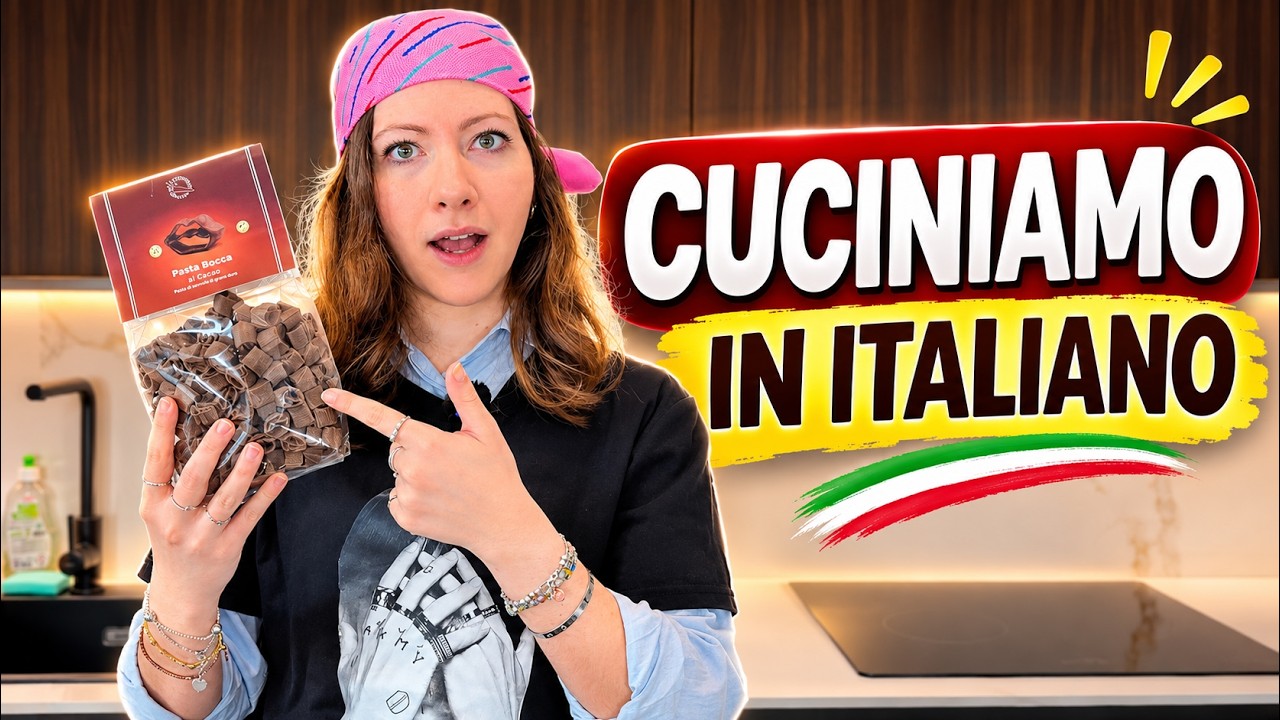
Useful Words in an Italian Kitchen
In Italy, the kitchen isn’t simply a room of the house: it’s a real cultural ritual, and the Italian gastronomic tradition is one of the main keys to entering the country’s daily life. If you want to speak with Italians, sooner or later you’ll end up talking about food. Often sooner. And to do it naturally, you need precise words: objects, verbs and expressions that aren’t always found in grammar textbooks.
The Word “Cucina” and Its Three Meanings
Let’s start with the most important word: cucina. In Italian it has three distinct meanings, which change completely depending on the context. It’s a single word that does three different jobs, a bit like an Italian mum.
| Meaning | Example |
|---|---|
| The room of the house | “Sono in cucina” [I’m in the kitchen] |
| The piece of furniture with the stove | “Abbiamo comprato una cucina nuova” [We bought a new kitchen] |
| The gastronomic style | “Amo la cucina italiana” [I love Italian cuisine] |
Kitchen Appliances: from the Frigo to the Oven
The most common kitchen appliances are the frigorifero [fridge], the forno [oven], the microonde [microwave], the fornelli [stove burners] (or the piano cottura [cooktop]) and the lavastoviglie [dishwasher]. In everyday conversation, almost all Italians prefer the shortened form il frigo to the long version frigorifero: two syllables instead of five. It belongs to the large category of invariable nouns, like la foto or la moto, and in the plural it stays the same: un frigo, due frigo.
Utensils: Pentola, Padella and Company
One of the most common confusions among those who study Italian concerns the difference between pentola and padella. They are two different utensils: the pentola [pot] is tall and is used to boil (the pasta water, the broth, the soup), the padella [pan] is low and is used to fry, sauté or stir-fry. A little mnemonic trick: the pentola is tall like a tower, the padella is flat like a pizza.
Other very common utensils are the mestolo [ladle, for serving soups and sauces], the cucchiaio di legno [wooden spoon, for stirring], the frusta [whisk, for beating eggs], the grattugia [grater, for cheese], the mattarello [rolling pin, for rolling out dough] and, of course, lo scolapasta [pasta strainer].
Lo Scolapasta and Compound Nouns Verb + Noun
Two important grammatical notes about this word. The first concerns the definite article: you say lo scolapasta, because the word begins with “s + consonant”, not “il scolapasta”. The second concerns the plural: gli scolapasta, invariable. Why?
Scolapasta is a compound word made of verb + noun (scola + pasta), and when the noun is feminine or already plural, in the plural the word stays identical. The same happens with il cavatappi [the corkscrew] (cava + tappi, already plural) and l’apriscatole [the can opener] (apri + scatole, feminine). Watch out, however: with a masculine singular noun the rule changes, as in il grattacielo / i grattacieli [the skyscraper / the skyscrapers]. A small rule, but useful for not making a bad impression at the utensils store.
Apparecchiare la Tavola: Plates, Cutlery and Stoviglie
When you put on the table everything needed to eat, in Italian you say apparecchiare la tavola [to set the table]. The vocabulary of the house, in this case, becomes particularly rich.
| Category | Elements |
|---|---|
| Plates | Piatto piano [flat plate, for the second course], piatto fondo [deep plate, for pasta and soup] |
| Glasses and cups | Bicchiere [glass: water, wine], tazza [cup: cappuccino, milk], tazzina [small cup, for coffee] |
| Cutlery (posate) | Forchetta [fork], coltello [knife], cucchiaio [spoon], cucchiaino [teaspoon] |
| Textiles | Tovaglia [tablecloth, large], tovagliolo [napkin, individual] |
Plates, glasses and cutlery, together with pentole and padelle, are collectively called stoviglie [dishes and utensils]. That’s why the machine that washes them is called lavastoviglie: another verb + noun compound word, invariable in the plural (una lavastoviglie, due lavastoviglie).
Two cultural conventions that are useful to know from the start. The cappuccino, in Italy, is drunk almost exclusively in the morning, never after lunch or dinner: a cappuccino at nine in the evening is a small culinary taboo. And to twirl spaghetti you use only the fork, never the spoon: using the spoon can generate the same reaction that an Italian would have in front of pineapple on pizza.
The Verbs for Preparing Ingredients
After the objects, the verbs. These are the ones that appear in almost all Italian recipes, and luckily they are almost all regular in -are.
- Tagliare [to cut]: “Taglia la cipolla a pezzettini.” [Cut the onion into small pieces.]
- Tritare [to mince, cut into very small pieces]: “Trita l’aglio e il prezzemolo.” [Mince the garlic and the parsley.]
- Sbucciare / pelare [to peel]: “Sbuccia le patate.” [Peel the potatoes.]
- Grattugiare [to grate]: “Grattugia il parmigiano.” [Grate the parmesan.]
- Sbattere [to beat]: “Sbatti le uova con la frusta.” [Beat the eggs with the whisk.]
- Impastare [to knead, to work flour and water with the hands]: “Impasta per dieci minuti.” [Knead for ten minutes.]
- Mescolare / girare [to mix / stir]: “Mescola il sugo con il cucchiaio di legno.” [Mix the sauce with the wooden spoon.]
A useful detail for students: almost all these verbs end in -are and follow the regular conjugation of the first class. One of the few times when Italian grammar offers good news.
The Verbs for Cooking and Seasoning
Cooking verbs are more numerous and precise, because they describe different techniques. Every Italian recipe contains at least two or three.
- Bollire [to boil]: “L’acqua bolle.” [The water is boiling.] (Pasta is thrown in only when the water boils, never before.)
- Cuocere [to cook]: “Cuoci la pasta per otto minuti.” [Cook the pasta for eight minutes.]
- Friggere [to fry]: “Friggo le patatine nell’olio.” [I’m frying the chips in the oil.]
- Arrostire [to roast]: “Arrostiamo la carne.” [Let’s roast the meat.]
- Soffriggere [to lightly fry on low heat]: “Soffriggi la cipolla nell’olio.” [Lightly fry the onion in the oil.]
- Rosolare [to brown, cook on high heat until golden]: “Rosola la carne in padella.” [Brown the meat in the pan.]
- Saltare [to sauté, cook quickly in a pan on high heat, moving the food frequently]: “Salta le zucchine in padella con un filo d’olio.” [Sauté the courgettes in the pan with a drizzle of oil.]
- Scolare [to drain]: “Scola la pasta” [Drain the pasta], with the strainer.
- Mantecare [to mantecare, to mix energetically at the end of cooking, often with butter, cheese or a little cooking water, to make the dish creamy]: “Manteca il risotto con il parmigiano.” [Mantecare the risotto with parmesan.]
- Salare / pepare [to salt / to pepper]: “Sala l’acqua della pasta.” [Salt the pasta water.]
Two useful technical notes. If you mince and lightly fry together onion, carrot and celery, you obtain the famous soffritto, the base of many Italian sauces, ragùs and stews. And when a recipe asks for “q.b.”, the most mysterious abbreviation of Italian cuisine, it means quanto basta [as much as needed]: a deliberately imprecise measurement that requires the cook’s experience.
The verb mantecare, in particular, is the one the grandmother used at the beginning of this article. Anyone who has ever eaten a creamy parmesan risotto has eaten a mantecato risotto.
Cucinare or Cuocere? a Fundamental Distinction
One of the most classic confusions among those who study Italian concerns the difference between cucinare and cuocere. They seem similar, but they have different meanings:
| Verb | Meaning | Example |
|---|---|---|
| Cucinare | To prepare food, in general | “Stasera cucino io” [Tonight I’m cooking] |
| Cuocere | To expose food to heat | “La pasta deve cuocere dieci minuti” [The pasta must cook for ten minutes] |
In summary: io cucino la cena [I cook dinner], but la pasta cuoce nell’acqua [the pasta cooks in the water]. The subject of cucinare is almost always a person; the subject of cuocere is the food itself.
Attention: cuocere and friggere are irregular verbs. In the present tense: io cuocio, tu cuoci, lui cuoce, with past participle cotto; and io friggo, tu friggi, with past participle fritto. From these irregular forms come two words familiar to anyone eating at an Italian deli or sandwich shop: the prosciutto cotto [cooked ham] (participle of cuocere) and the fritto misto [mixed fry] (participle of friggere).
Imperative or Infinitive? the Style of Recipes
Italian recipes use two different verbal moods. The imperative in the second person singular is more direct and colloquial (“taglia la cipolla, mescola il sugo, aggiungi il sale”): it’s the style of cooking blogs, YouTube tutorials and grandmothers. The infinitive, instead, is more impersonal and technical (“tagliare la cipolla, mescolare il sugo, aggiungere il sale”): it’s the typical style of classic cookbooks and recipes written in a formal way. Both are correct.
Black Friday at LearnAmo
Discounts and gifts until November 30.
"Tasty" Idiomatic Expressions with Food
Italians talk about food even when they're not talking about food. The Italian language is extremely rich in idiomatic expressions with food, and a small sampling is enough to make an everyday conversation much more natural.
Essere Buono come il Pane
Literally "to be as good as bread", it means being a very kind and generous person, with a mild and willing character. A typical example: "Mio nonno è buono come il pane." [My grandfather is as good as gold.] The image comes from the simplest and most welcoming food of the Italian tradition, the one that is never missing from the table and that is shared with everyone.
Avere and Mettere le Mani in Pasta
Two similar expressions but with different meanings, which change completely depending on the verb. Avere le mani in pasta (literally "to have one's hands in the dough") means to be involved in something, to have many contacts or influence: "Chiedi a Marco, lui ha le mani in pasta dappertutto." [Ask Marco, he has his fingers in every pie.] Watch out, however, for mettere le mani in pasta: it means to get down to work, to start dealing directly with something, with a much more active sense. "Basta parlare: mettiamo le mani in pasta e cominciamo." [Enough talking: let's roll up our sleeves and begin.]
Tutto Fa Brodo and Cuocere nel Proprio Brodo
Two expressions that revolve around brodo [broth], a basic food of Italian peasant cuisine. Tutto fa brodo (literally "everything makes broth") means everything can be useful, even the smallest things: "Hai trovato 5 euro per terra? Tutto fa brodo!" [You found 5 euros on the floor? Every little helps!] Cuocere nel proprio brodo (literally "to cook in one's own broth"), instead, means to let someone manage on their own with their own problems, often after they have ignored advice: "Non mi ha voluto ascoltare? Lascialo cuocere nel suo brodo." [He didn't want to listen to me? Let him stew in his own juice.]
Fare la Frittata and Rendere Pan per Focaccia
Fare la frittata (literally "to make the omelette") means to mess things up, to make a mistake that makes a situation unrecoverable: "Ho detto a Giulia della festa a sorpresa… ho fatto la frittata!" [I told Giulia about the surprise party… I've blown it!] The image comes from the kitchen: once the eggs have been beaten and cooked, it's no longer possible to go back. Rendere pan per focaccia (literally "to give back bread for focaccia"), instead, means to respond to a wrong with another wrong, to take revenge: "Mi ha preso in giro davanti a tutti, ma io gli ho reso pan per focaccia." [He made fun of me in front of everyone, but I gave him a taste of his own medicine.]
Essere come il Prezzemolo
The image comes directly from Italian cuisine: parsley is the aromatic herb that is put practically everywhere. So essere come il prezzemolo (literally "to be like parsley") means to be always present everywhere, in every situation or event. "Luca è come il prezzemolo: lo trovi a ogni festa." [Luca is everywhere: you find him at every party.] An affectionate expression more than a critical one, used to describe very social people.
Cultural note: it's not a coincidence that so many Italian idiomatic expressions talk about pane, brodo, pasta and frittata. For centuries, in fact, these foods represented the base of the daily diet of Italians, especially of the poorest families. The language preserves the material memory of a civilisation that built its cuisine on few simple ingredients, declined in a thousand regional variants. Learning these expressions, as the guide on expressions of native Italian speakers also recounts, also means learning a piece of the country's social history.
Summary Table: Kitchen Vocabulary and Verbs
Here's a summary of the main terms and verbs covered in this guide, divided by category. It's the ideal starting point for finding your way among objects, techniques and actions of the Italian kitchen.
| Category | Key terms |
|---|---|
| Appliances | Frigo, forno, microonde, fornelli, lavastoviglie |
| Cooking utensils | Pentola, padella, mestolo, cucchiaio di legno, frusta, grattugia, scolapasta |
| Dishes and cutlery | Piatto piano, piatto fondo, bicchiere, tazza, tazzina, posate |
| Preparation verbs | Tagliare, tritare, sbucciare, grattugiare, sbattere, impastare, mescolare |
| Cooking verbs | Bollire, cuocere, friggere, arrostire, soffriggere, rosolare, saltare, mantecare |
| Idiomatic expressions | Buono come il pane, mani in pasta, tutto fa brodo, fare la frittata, pan per focaccia, come il prezzemolo |
Frequently Asked Questions
What Is the Difference between "Cucinare" and "Cuocere"?
Cucinare means "to prepare food" in a general sense, and almost always has a person as its subject: "Mia madre cucina benissimo." [My mother cooks very well.] Cuocere, instead, means "to expose food to heat", and has as its subject the food itself or the one who puts it on the heat: "La pasta cuoce per dieci minuti." [The pasta cooks for ten minutes.] A classic mistake is to say "la pasta cucina", but in Italian pasta doesn't cook by itself.
Why Do You Say "Lo Scolapasta" and Not "Il Scolapasta"?
Because in Italian, in front of words that begin with "s + consonant", the masculine singular definite article is lo, not il. The same rule applies to lo studente, lo zaino, lo specchio, lo spagnolo. In the plural, the article becomes gli: gli studenti, gli scolapasta. The word scolapasta, moreover, remains invariable in the plural, because it's a noun compound of verb + feminine noun.
What Does "q.b." Mean in Recipes?
The abbreviation q.b. means "quanto basta" [as much as needed], and it's one of the most typical conventions of Italian cuisine. It's used when it's not possible to indicate a precise quantity: it depends on personal taste, on the size of the ingredient or on the cook's experience. It almost always appears next to salt, pepper, oil and aromatic herbs.
What Is the Difference between "Soffriggere" and "Rosolare"?
Soffriggere means to cook on low heat, in a little oil, until the ingredient becomes soft and transparent (typically the onion). Rosolare, instead, means to cook on high heat until the ingredient becomes golden and crispy on the outside. In the same recipe you can first lightly fry the onion, and then brown the meat.
What Does It Mean to "Mantecare" a Risotto?
Mantecare means to mix energetically at the end of cooking, generally with cold butter and grated cheese (often parmesan), to obtain a creamy and shiny consistency. It's the indispensable final step for a good Italian-style risotto: without mantecatura, the risotto remains a dish of boiled rice with topping on top. The word comes from the Spanish mantecar, which in turn derives from manteca (butter).
Want the lesson PDF with exercises and solutions?
Join the LearnAmo AcademyLoading quiz...
Podcast: Play in new window | Download (Duration: 29:05 — 39.9MB)
Iscriviti: Apple Podcasts | Spotify | Android | iHeartRadio | Podcast Index | TuneIn | Deezer | RSS | Altri...